



Construction on the San Diego Zoo Safari Park’s Denny Sanford Elephant Valley began on November 14, 2022. But it was long before, when the first elephants were welcomed to the Safari Park, that the seeds were planted—literally.
Swazi, Ndlula, and Umngani, the herd’s founding females, were rescued in 2003. They arrived with a favorite food, napier grass (also known as “elephant grass” because of how popular it is with these pachyderms). Napier grass was recommended by the Nutrition team as browse, so Horticulture found a spot to grow it in the parking lot, tended it, and helped Wildlife Care harvest it fresh for the herd.
Years later, the news came that giant pandas were returning to the San Diego Zoo in 2024. To provide world-class care for the bears, Nutrition needed a wide variety of bamboo species, most of which would be planted at the Safari Park and cut daily. It would have been easy to clear out the napier grass and open up tens of thousands of square feet for bamboo. But the Horticulture team saw its true value; as a fast-growing, resilient plant native to the African savanna, the grass provided the perfect foundation for an immersive elephant habitat—exactly what the Architecture and Wildlife Care teams envisioned for Elephant Valley.
Horticulture, Wildlife Care, and Architecture worked together to weave napier grass into the design of Elephant Valley, eventually transplanting the grass that arrived with the elephants decades before. This was one of the first cycles of Elephant Valley, cycles of borrowing from the past to give to the future. And this evolution was rooted in communication, collaboration, and teamwork.
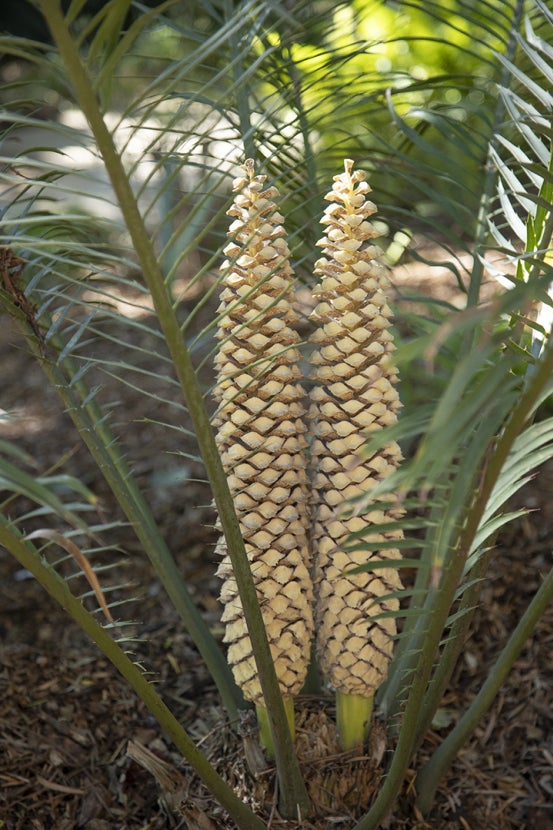
Poor man's cycad.
From the Ground Up
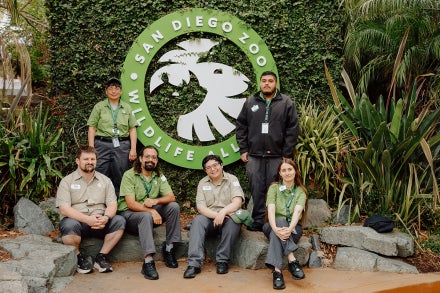
Elephant Valley is the largest project in San Diego Zoo Wildlife Alliance’s 110-year history. With so many moving parts, Architecture, Horticulture, Wildlife Care, and Nutrition had to be in constant communication throughout planning and construction. Mindy Albright, curator of mammals at the Safari Park, noted the process went more smoothly because the teams already worked so closely together. Mindy said, “We have a benefit that prior to this project, we’ve worked together for many, many years, so there is a real collaboration and understanding from each team of what the other team needs or is focused on, or how to help be better partners.”
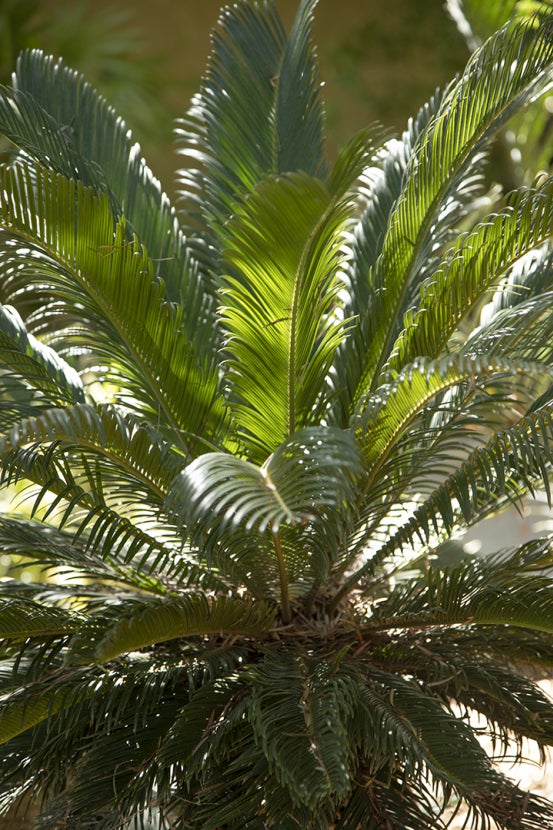
Sago palm.
Meetings about Elephant Valley started in 2019, with discussions moving from watercolor concept art to schematic plans and construction documents over the next three years. Each idea started a conversation about how the change would impact plants, animals, and people. If Architecture wanted to use a certain tree to create a natural separation between people and elephants, the other teams would ask questions: Would elephants be able to reach it? Is it safe for them to eat? If not, moving it into a guest path could impact ADA access, so is it better to adjust the path or bump out a wall?
The process was complex and ever-changing, but a huge advantage was having all of these teams together in-house as part of San Diego Zoo Wildlife Alliance. Because the teams could work together as colleagues, “we all have the same goal at the end of it,” said Keith Thomas, lead horticulturist at the Safari Park. “It's not just a money-based one, it is actually the experience of the elephants, the experience of the public, the conservation program. The whole thing is very immersive.”
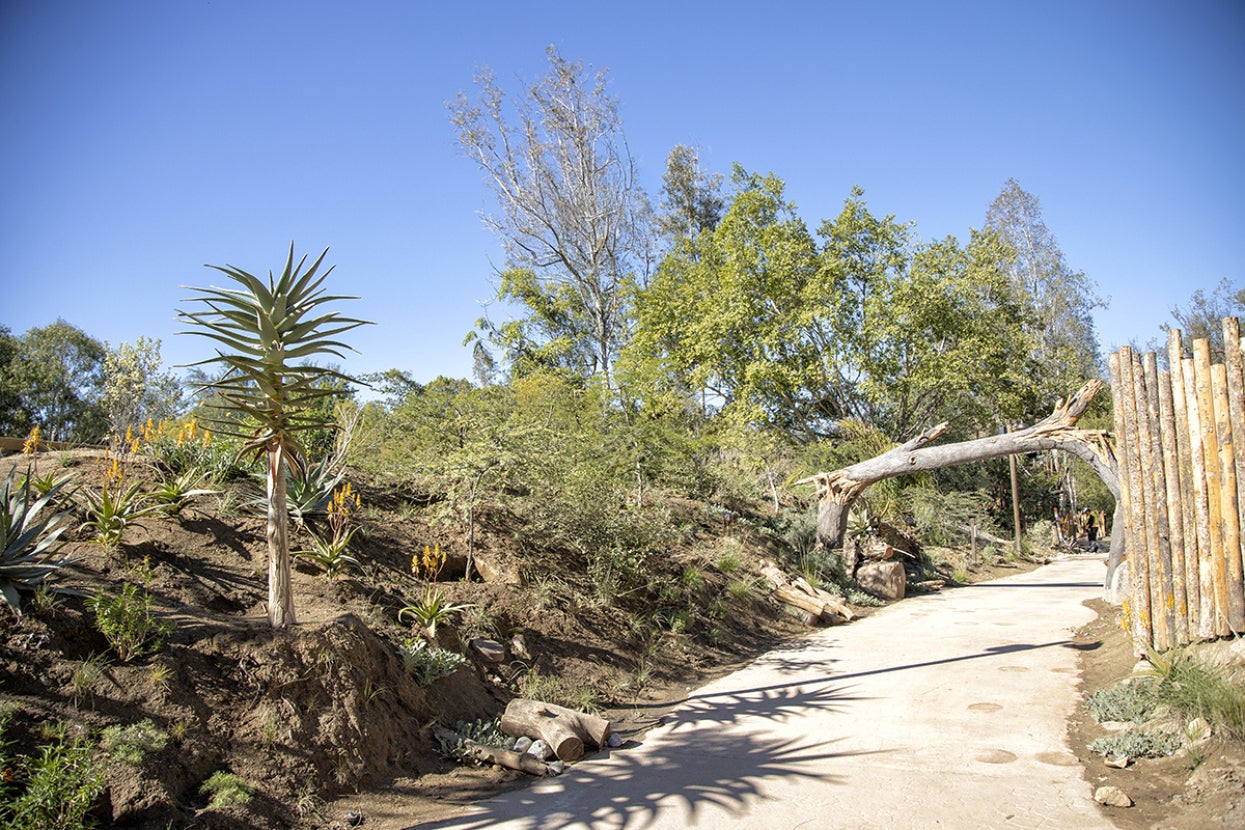
Winding paths guide guests through Elephant Valley’s thriving savanna ecosystem.
Arboreal Allies
The immersion is felt as Elephant Valley’s winding paths guide guests through a thriving savanna ecosystem. It’s vibrantly planted everywhere you look, but even so, the eye is drawn to the strikingly large coast live oak trees dotted throughout nearby Mkutano Park. The more botanically aware might point out that this species is not native to the African savanna, and wonder why it’s a focal point in a space where so much effort was put into creating an elephant’s natural environment.
The inclusion of the coast live oaks was not an oversight, but a conscious conservation action. Early in the project, it was decided these 50-year-old oaks were going to be protected in place, meaning the construction had to be planned around their protection. Raj Brown, director of horticulture at the Safari Park, noted how unique it was that coexistence with native species was a priority within the project. “Usually on construction projects, trees are an afterthought, even if the owner wants to keep them in place . . . the root zone is just driven over like it's a road. On our project, there was really an intentional focus to go ‘above and beyond’ with critical root zone protection and tree preservation.”
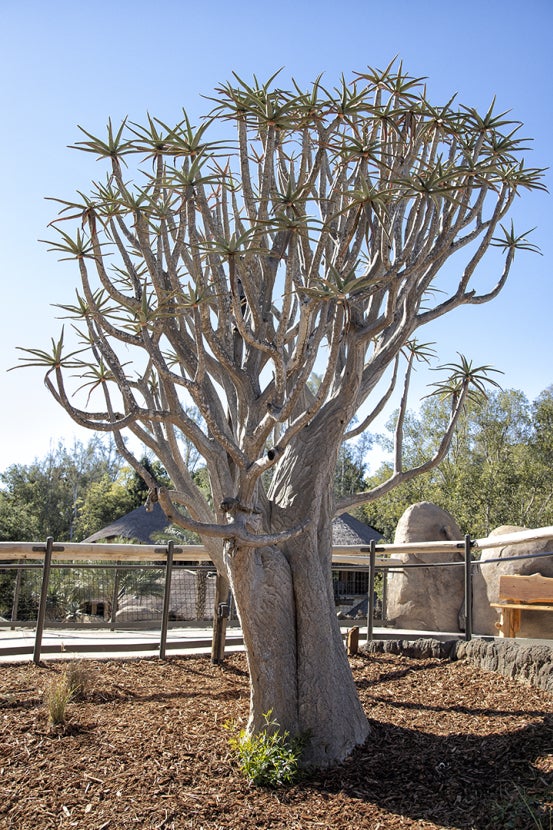
Kokerboom aloe relocated from Aloe Hill.
Raj explained that his team developed custom specifications for tree root zone protection, drawing on best practices from the International Society of Arboriculture—and the Architecture team successfully integrated those standards into the plans. “All of the trees that we have here are so cherished,” said Robyn Badger, architect at San Diego Zoo Wildlife Alliance. “The whole project is designed around the environment.”
“Preserving this oak grove was essential,” added Raj. “The design embraced these trees as part of the experience, yet early contractor plans suggested cutting through root zones for tent footings. It took tough conversations and creative alternatives, but we made preservation a priority.”
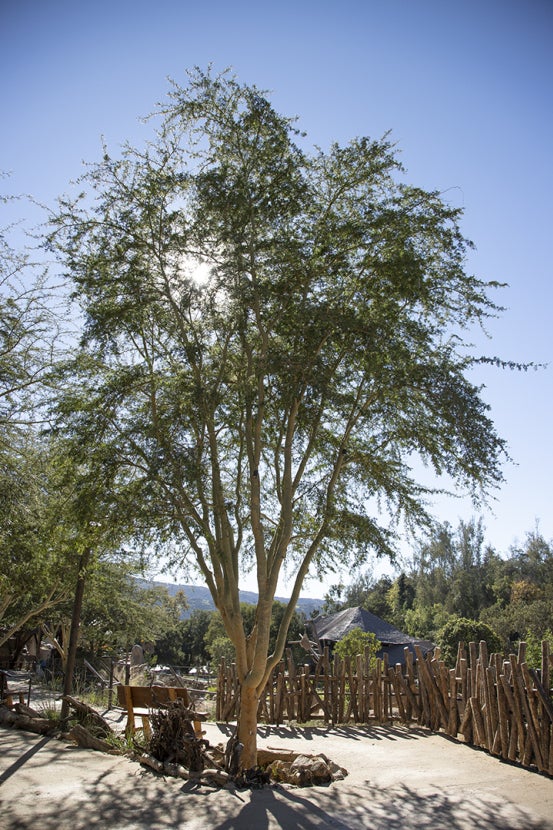
Pathways and guest areas were designed with tree protection in mind.
The teams had ongoing conversations about how to keep pathways and other guest areas ADA compliant while also protecting the trees. Keith explained that sometimes plans were altered on-site because they noticed a path was getting too close to a tree. “The design actually got tweaked to go around trees,” he said.
Raj called out one unique tool they used to make sure the trees were protected. An air spade allowed them to remove all topsoil and expose the root system without damaging the tree. “Understanding the exact location of the critical root zone allows us to make decisions as to where we're going to grade, where we're going to put footings, where are we not going to put footings, and a lot of that was an iterative process with the Architecture team, the design contractors, and the installation contractors to figure out how to best install these custom features within and around tree root zones to minimize impacts.”
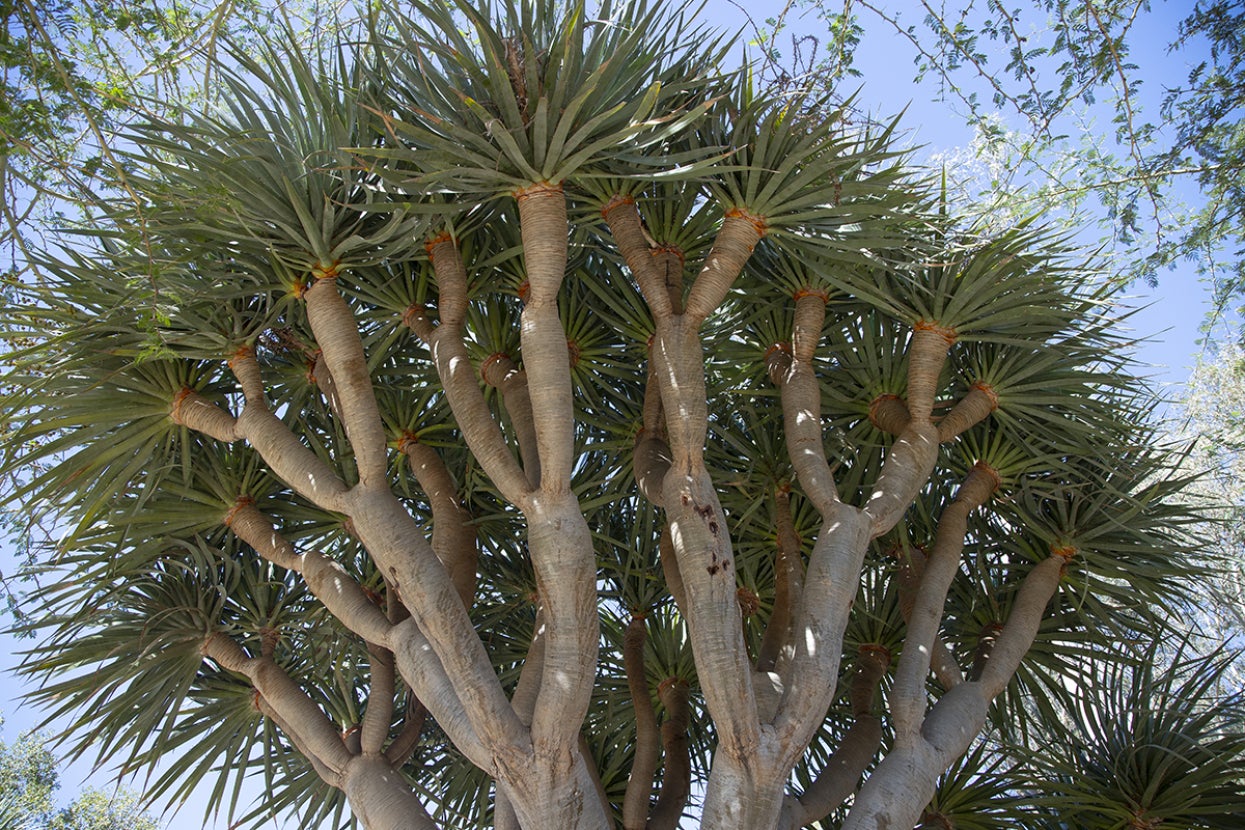
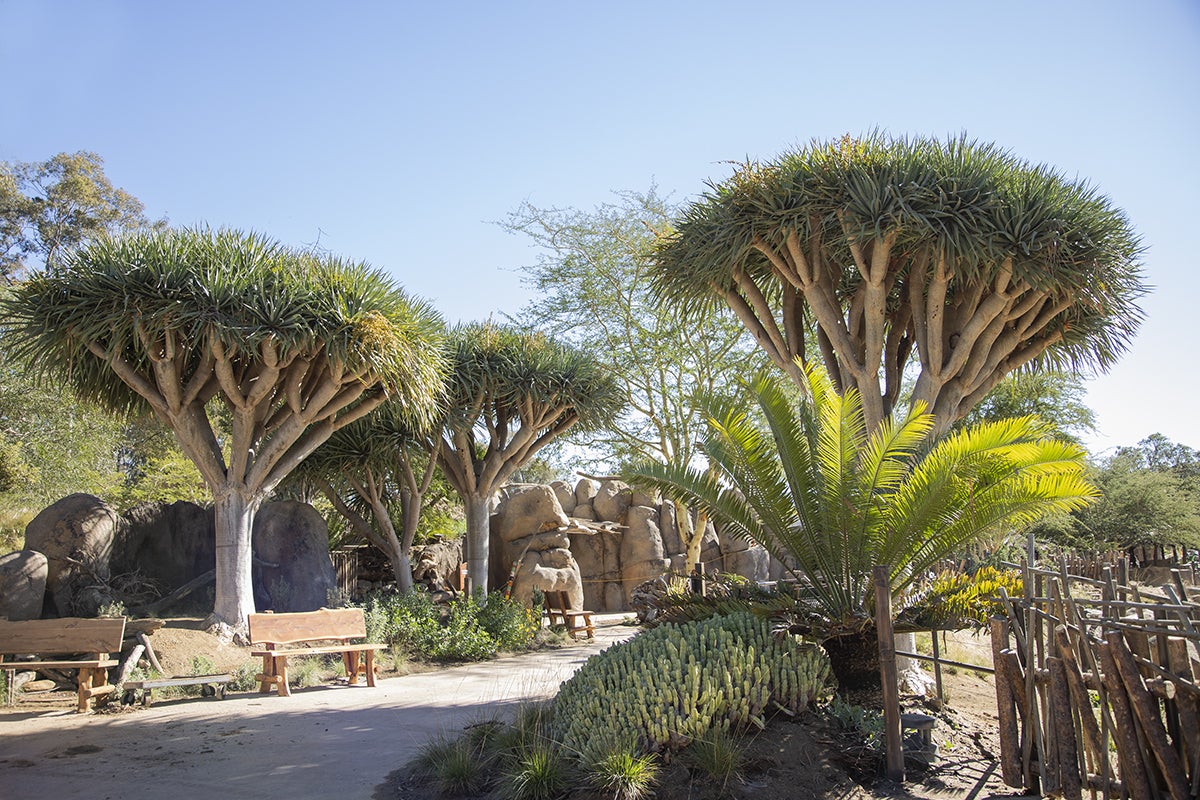
Dragon tree.
Protecting the trees extended far beyond just making sure they weren’t knocked down during construction. Keeping the trees healthy and vibrant throughout the project was just as important to the teams as the well-being of the elephant herd. During the early planning stages, the Horticulture team checked all proposed planting plans, as well as a special tree preservation plan. The Safari Park’s irrigation experts made recommendations for watering equipment and designed a custom filtration system so all of Elephant Valley’s irrigation could be handled with sustainable well water, not drinking water. Every week throughout the three-year construction period, the Horticulture team walked the site with the contractor to check the trees, make sure the protection fencing was still in place, and adjust irrigation levels as needed. “That's all pretty unique for this project. You really don't see that on construction sites, the level of care,” said Raj.
For Mindy, one of the really special things about the project was the focus on coexistence between people and wildlife. “For locals living in San Diego, it’s about being connected to the community and the environment that we live in here. And those oak trees really represent that . . . I love that they saved those oaks.”
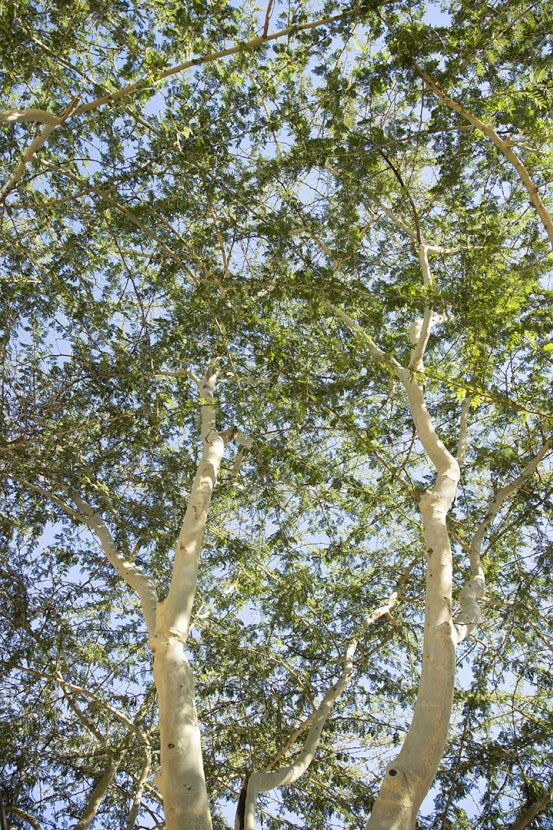
The lacy leaves of a fever tree shade Elephant Valley’s pathways.
Trees for Trunks
The coast live oaks are colossal because they are 50 years old. It takes months for new plants to look well-established, and years for a tree to become large enough to provide shade. So how do Elephant Valley’s rich gardens and massive trees feel like they have been there for decades?
The Horticulture team began planning years before construction started. Keith explained that in 2017, when his team knew Elephant Valley was becoming a reality, they started sourcing seeds for African trees and shrubs directly from South Africa, laying the groundwork for an authentic savanna landscape that would immerse guests in the elephants’ natural world.
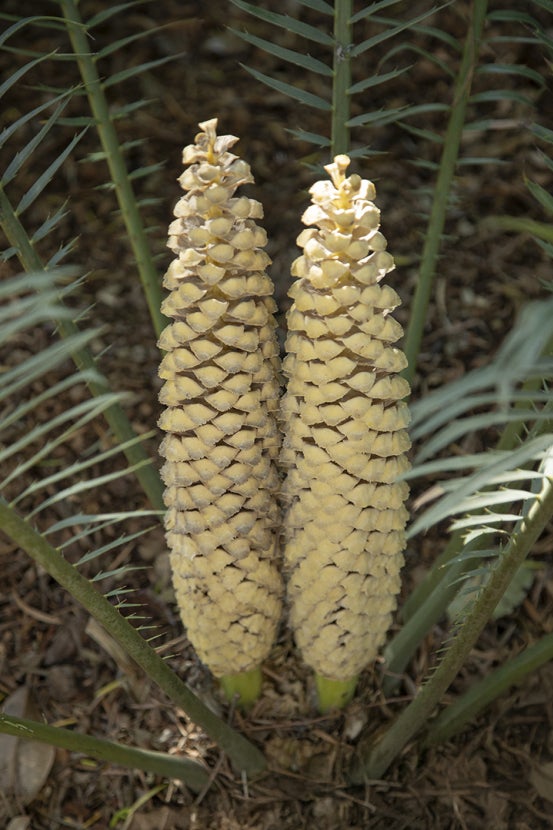
Poor man’s cycad is an African species curated specifically for Elephant Valley.
“Everything we grow in-house is stuff we cannot buy locally,” he explained. “If we can buy it, we're not going to grow it, just because we don't have enough time or areas to grow these things. So that's a nice thing, that we're able to grow ones that we can't buy anywhere else.”
The seed was gathered from native habitats, cleaned, and sorted. Due to permitting rules, only 50 seeds of a certain species could be purchased at a time, so it was a lengthy process. The Horticulture team brought in seeds for thorn trees, ficus trees, and shrubs they were confident could be used throughout the project, either along guest pathways or throughout the elephant habitats. After two seed buys, in 2018 and 2021, Horticulture produced 236 African savanna trees for Elephant Valley.
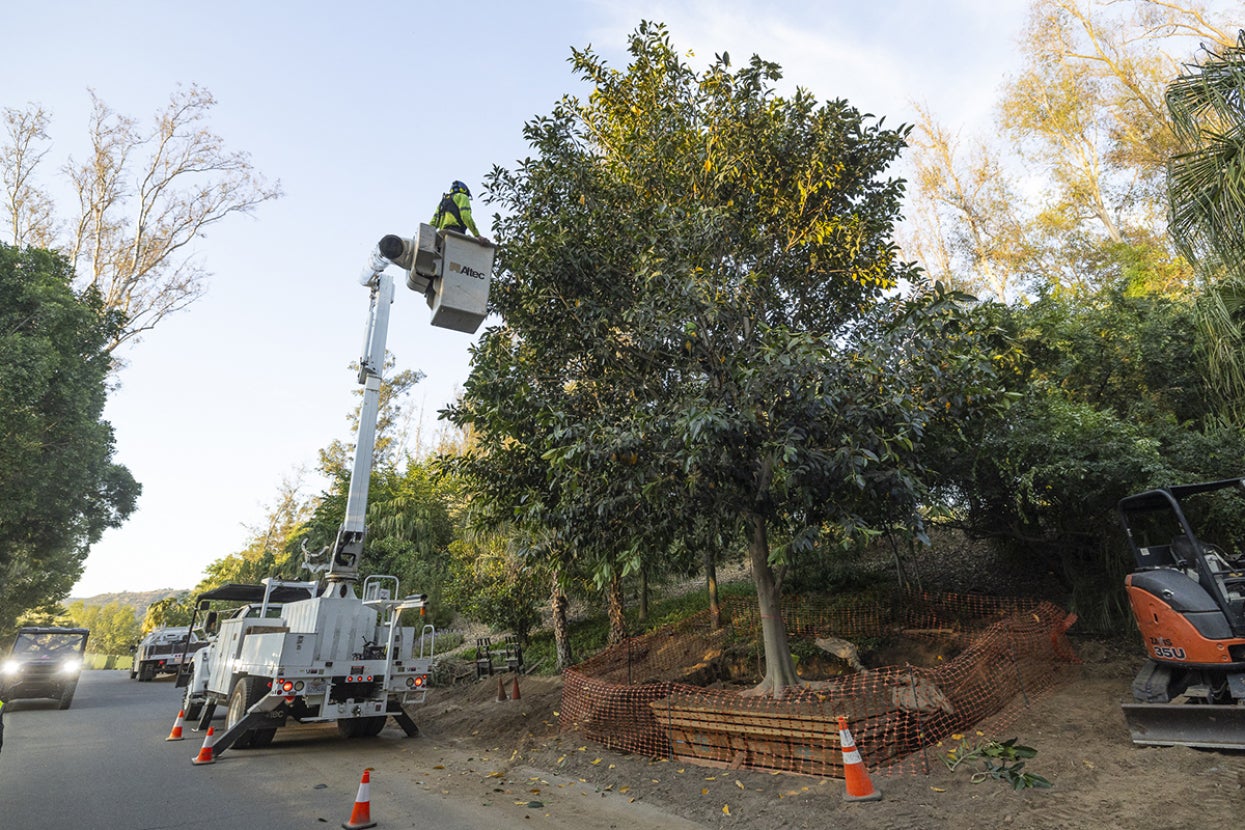
Mature trees, like this rusty fig, were sourced from around the Safari Park.
But Keith had the foresight to know even these wouldn’t be enough to cover the expansive area, and searched throughout the Safari Park to see what other plants could be used. At the start of construction, the Horticulture team surveyed and made plans for the trees in demolition zones. They excavated and boxed more than 100 palm, ficus, and cycad trees and put them into storage, ready to be used elsewhere. Trees that didn’t fit into the plan for Elephant Valley were reviewed by Nutrition to see if they could be accepted as browse for the elephants, ensuring nothing was wasted.
Even larger trees were brought from behind-the-scenes spots into places guests could enjoy. Tucked away on Aloe Hill—once glimpsed from the decommissioned monorail—and other sites stood rare botanical giants unique to the Safari Park, grown to extraordinary size through decades of expert care and San Diego’s ideal growing conditions. Two colossal ficus trees, each weighing more than 75,000 pounds, were relocated from a slope that was transformed into a drive path for Safari Excursions. Two others came from an elephant space that was being renovated. From other spaces around the Safari Park came several Dracaena dragon trees, aloes, and 30-year-old Vachellia thorn trees. These trees were anywhere from 25 to 40 feet tall and weighed up to 85,000 pounds.
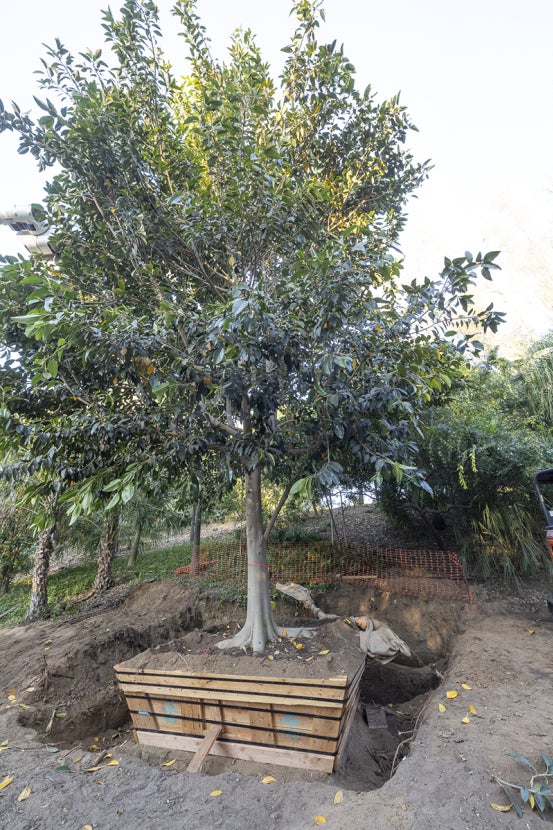
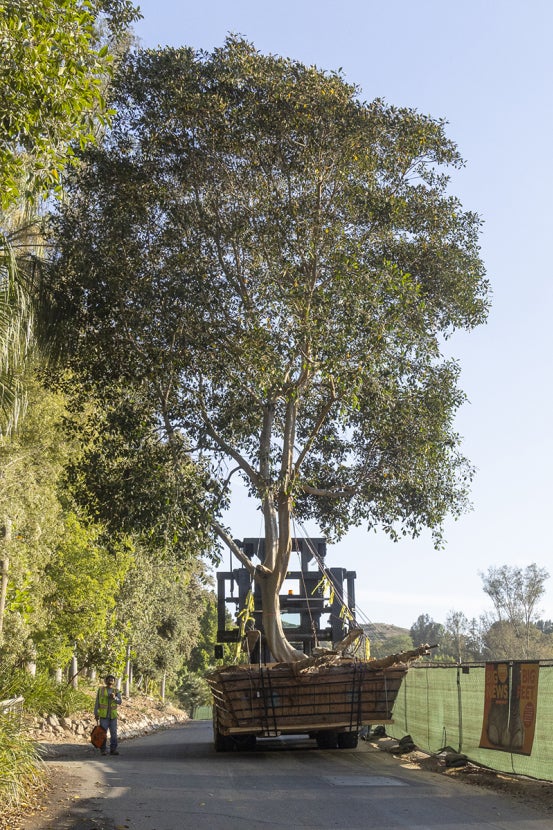
Once a tree is boxed, it’s ready to move. This rusty fig tree weighed 65,000 pounds, making it 13,000 pounds heavier than the entire herd at Elephant Valley.
Trees the size of buses can only be transported using a forklift and cranes. To get them across the Safari Park, construction carved out temporary dirt roads. “When they're moving, it is nearly a terrifying experience,” recalled Keith. “They just lift them up and they're balancing them and they're going through a construction site, and the construction site is not flat and smooth.”
The Horticulture team has decades of experience caring for these rare and unique trees, but replanting them was an entirely new challenge. “I think that’s a part of this project that’s difficult to communicate. A lot of the trees that we moved for the project, no one in this region is familiar with,” said Raj, meaning they had to figure out how to keep the traveling trees healthy and safe through extensive research.
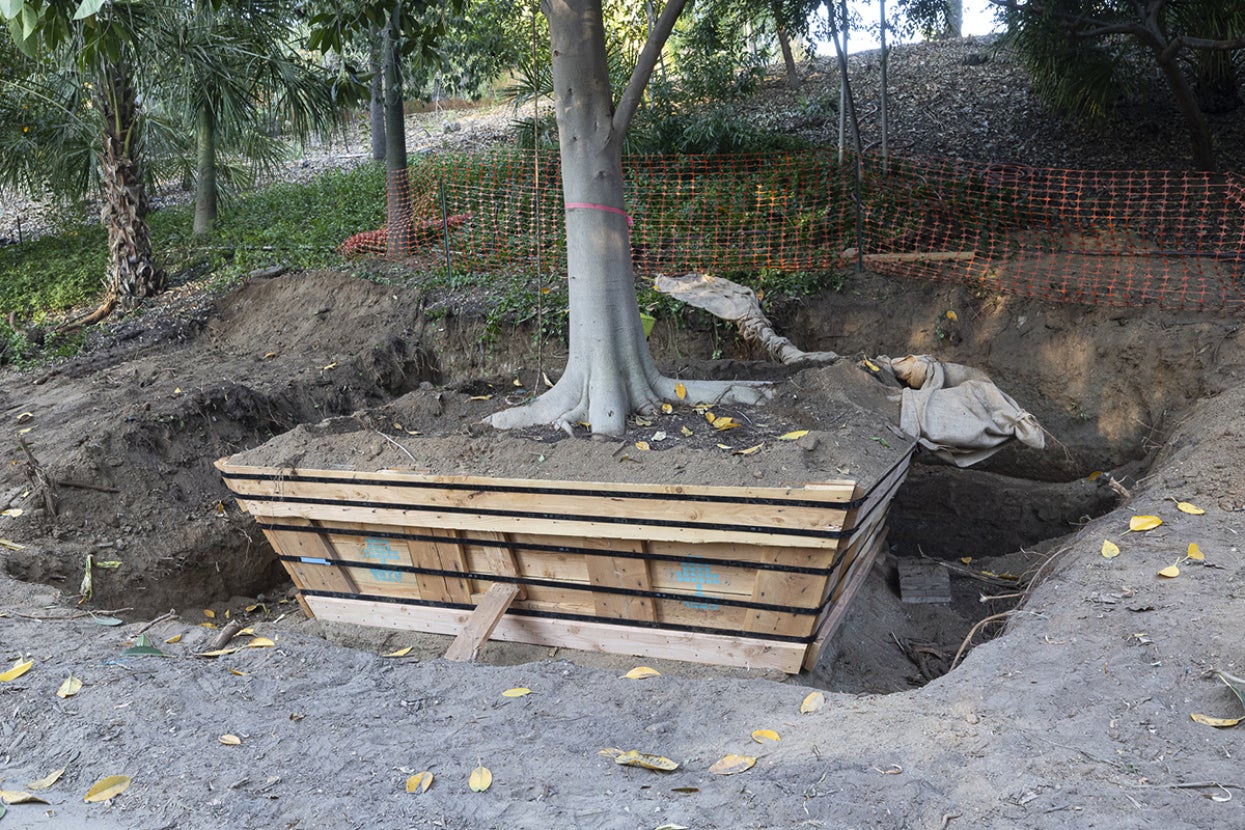
The sidebox method minimizes stress and impact when moving sensitive root systems.
Raj explained how the Horticulture and Architecture teams designed their own method of moving the trees, the “sidebox” method, which minimizes stress and impact on sensitive root systems. The process involves building a transport box around the roots one side at a time, giving cut roots time to heal while the rest of the system remains intact and supports the tree. Roots are precisely cut every two to three months, so boxing just one tree can take over a year.
The method’s effectiveness was proven on seven enormous acacia trees. Each boxed tree had to be craned over a bridge, transported to its new location, and carefully lowered into place—a process that took nearly two years. “What that effort gave us is something extraordinary,” said Raj. “These mature trees anchor the space and make Elephant Valley feel as if it’s always been here. You can’t buy trees like these, and they’re far too large to ever move down a public highway. They’re the foundation of an experience that will endure for generations.”
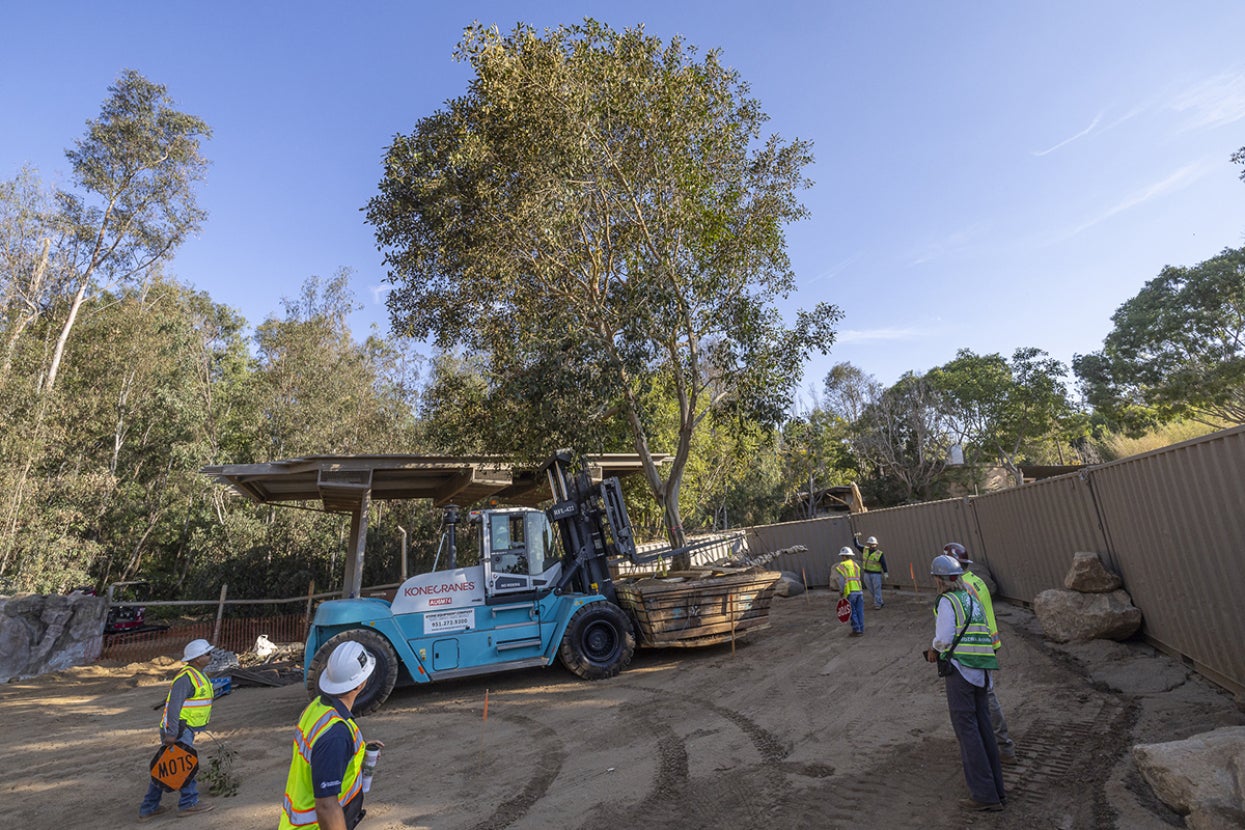
Once a tree is carefully lowered into place, it becomes part of the Elephant Valley experience for generations to come.
Quali-tree Control
It takes more than trees to fill a space the size of Elephant Valley, but before anything else could be planted, the teams had to be sure it could safely live around the herd of hungry herbivores. Elephants are almost always browsing, are very curious, and have a long reach, so everything in and around their habitat has to go through a vigorous vetting process.
After Architecture designed the look, and Horticulture came up with recommendations for what could work, a list was sent to the Nutrition team for a plant safety review and assessment. Jordyn Nylander, senior clinical nutritionist at San Diego Zoo Wildlife Alliance, and her team of nutrition coordinators evaluated over 150 possible plants for use in and throughout the area. During five separate safety reviews, they signed off on 12 new species that had never been assessed for use at the Safari Park; these were added to the 300 species already designated as appropriate for consumption by elephants in our care.
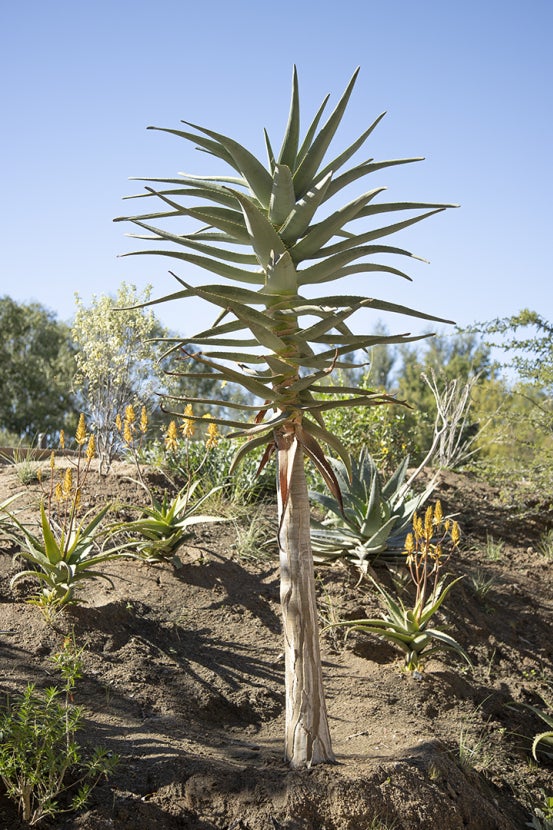
Aloe Hercules.
Elephant Valley’s plant review process followed the same rigorous standards used any time a new plant is introduced into an animal’s diet or habitat, ensuring every choice supports wildlife health and well-being. Often, plants can be approved or denied quickly because of toxicity or mechanical concerns, but the complexity of the assessment varies greatly depending on what information is readily available. Many of the plants reviewed for Elephant Valley aren’t commonly used as feed items in the United States, and about half of them didn’t have enough published information to make a definitive safety assessment. When this happened, Jordyn’s team reviewed results with Wildlife Care management and the Horticulture, Welfare, and Veterinary teams to discuss risks and make a collaborative decision.
Jordyn said she’s often asked what the “safe plants” are for a certain species, but it’s never a simple answer. “It depends on where that animal is living, how much it's going to eat, what time of year is it going to eat [the plant], plant part that may be consumed, all of those different factors. It’s a really complicated question to answer, and it requires a lot of different teams to make it work.”
Even if something is nontoxic, the Nutrition team might decide it should be used for special browse experiences rather than an everyday diet. “Rather than just saying, this is the appropriate thing to feed an elephant at this amount, [we’re] really working with the team and saying, ‘What does this day-to-day experience look like?’” explained Jordyn. “And then we'll make that diet a part of that experience, rather than being two separate things.”
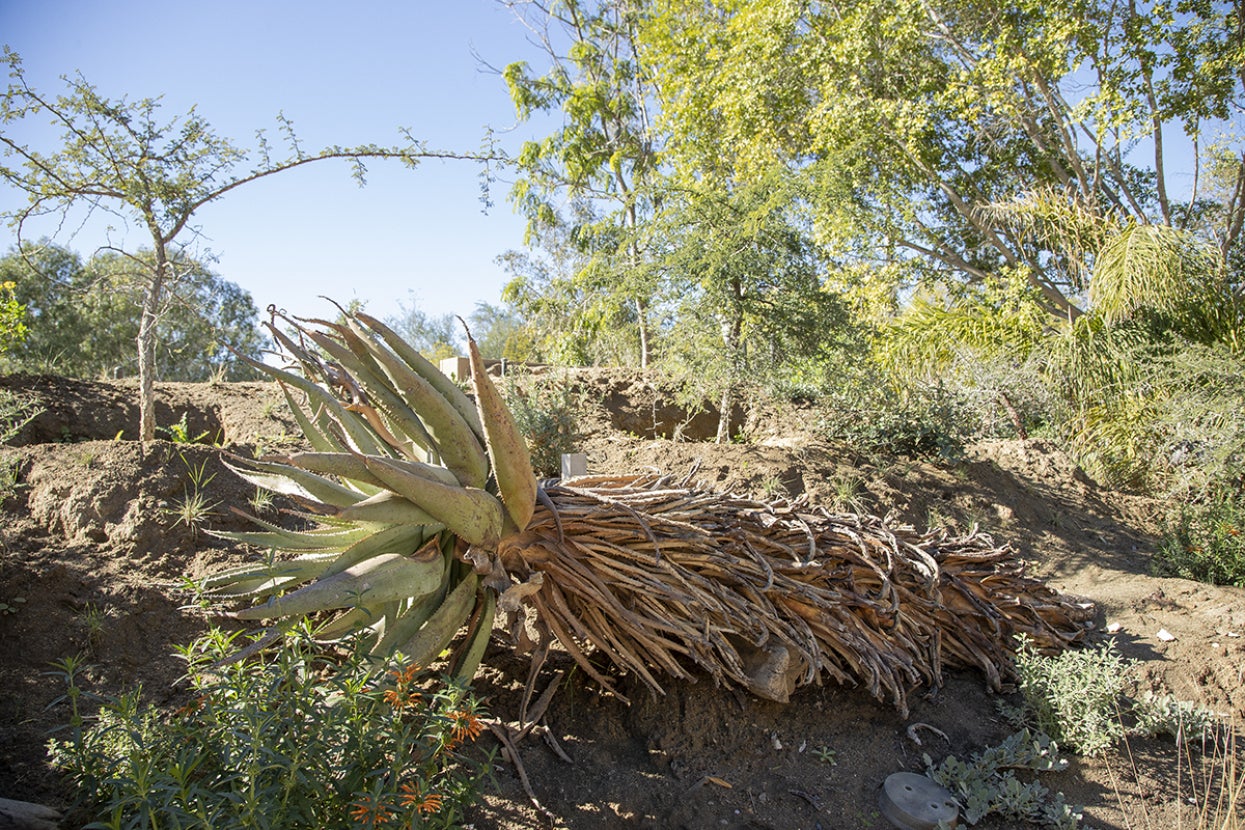
This cape aloe was relocated from Aloe Hill.
If something wasn’t ideal for elephant areas, the teams would pivot to find a substitute. Nutrition would guide the conversation by figuring out what the desired outcome was for introducing the proposed browse species. “Is it because we want to add novelty? Is it because we want to add processing time? Is it because we want to see them stretch for a plant? What is the reason behind the plant is the important part,” said Jordyn. “And if we get in a room and all talk that through, that's usually where it goes really well.”
While much of Jordyn’s day-to-day work wasn’t impacted by Elephant Valley, long-term benefits came from the conversations started with Horticulture and Wildlife Care because of the project. “It's been really nice as a future planning thing of, where do we want our elephants to be in five years?” she said. “It's been really nice to be able to restart a lot of those conversations.”
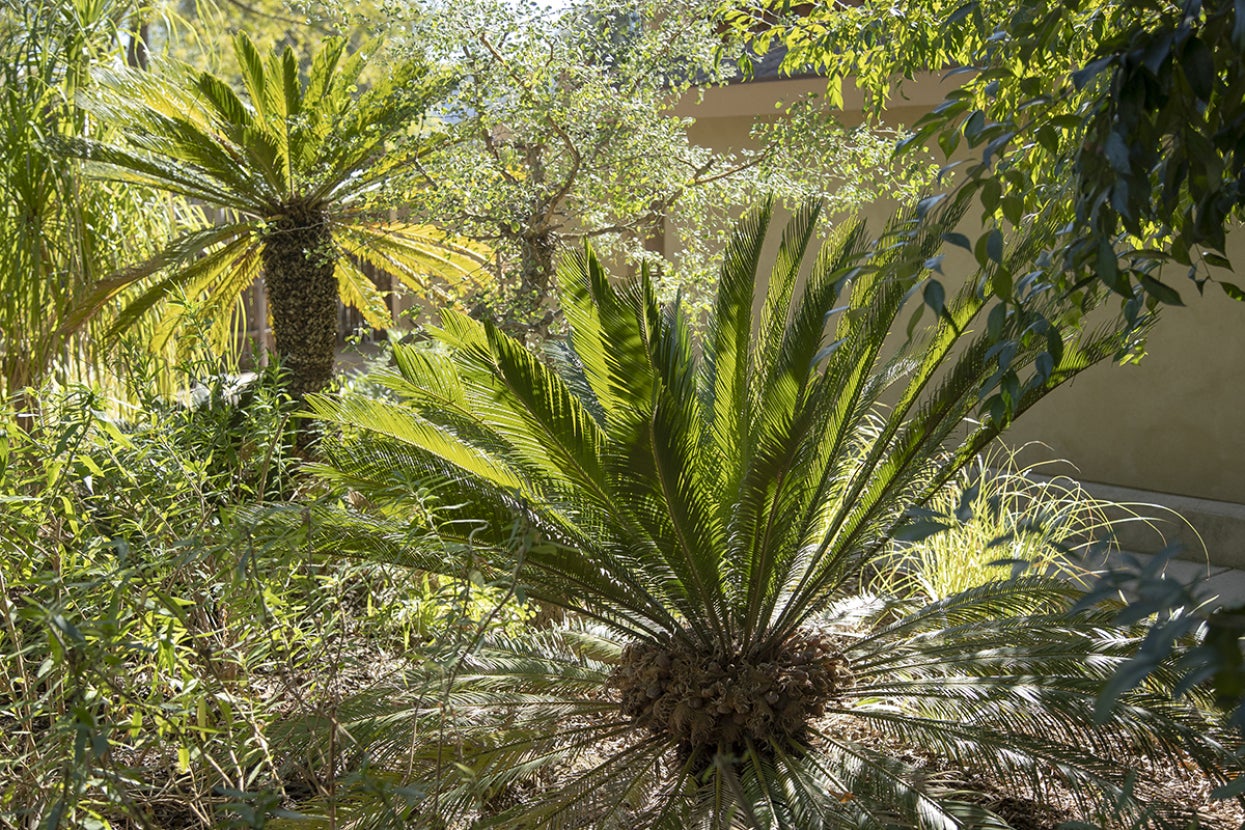
Sago palms.
Putting Down Roots
Once a plant was approved, it was time to start digging. Horticulture and Architecture collaborated to make sure there was room for every root. “We had already grown all these plants, and so we gave the list to the architects to say, this is what we have,” explained Keith. “And then they took those numbers and plugged them in to the design and where they would go in the theming.”
But plants are living things, and like all living things, they grow. And construction projects take time. A tree written into the plan in a 15-gallon bucket could easily be housed in a 36-inch box by planting time.
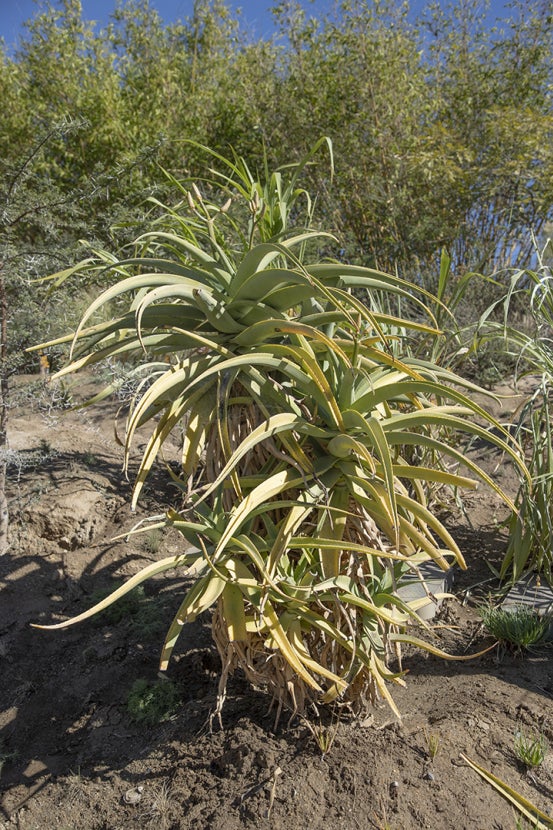
Dune aloe.
“At first, [Horticulture] gave us a list of what they had in five-gallon pots, or one-gallon pots,” recalled Robyn. “And then after two or three years, they'd say, ‘Oh, no, we had all these prices to plant these one-gallon and five-gallon pots. Now they're 24-inch boxes.’ So the price of planting all of them went up.”
And even on planting day, Keith said, “We're like, no, we don’t have that in that size, but I have it in this size.” Architecture frequently requested more or different plants because they were concerned a space looked too sparse. But sometimes the best thing is to let nature take its course.
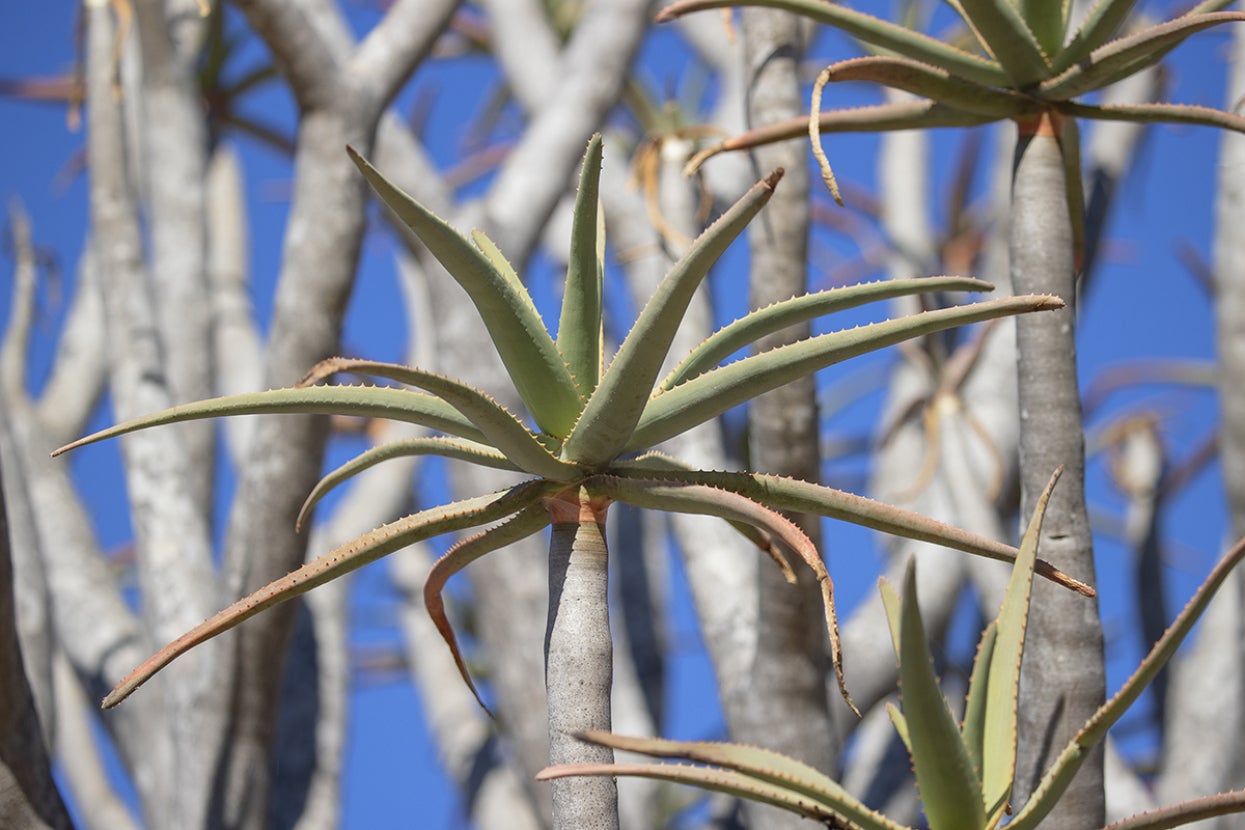
Kokerboom aloe.
As the months went by, the plants did what plants do: they grew. And with that came unexpected new ecosystems. “It created a whole secondary support system for our native wildlife,” said Mindy. She talked about how the Safari Park was already a major stop for migratory birds, and how some of the ones who chose to never leave its vibrant, protected habitats were now nesting in Elephant Valley’s trees. And next to Mkutano House, a marsh filled with plants native to California is thriving. “The marsh plants are spectacular,” said Robyn, noting the elephant watering hole had come to life with dragonflies.
The impact of such a diverse environment on the guest experience is undeniable. Mindy summed it up perfectly: “It makes you feel more immersed. This is what it would be like going on safari.”
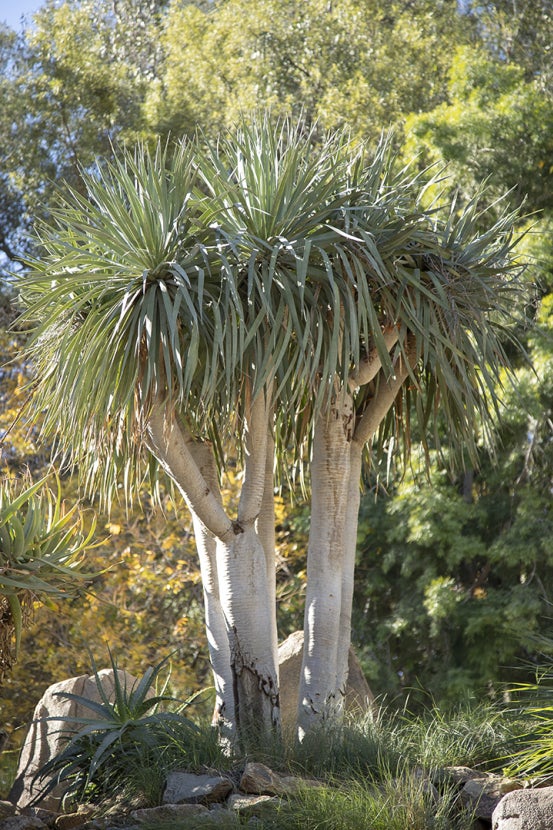
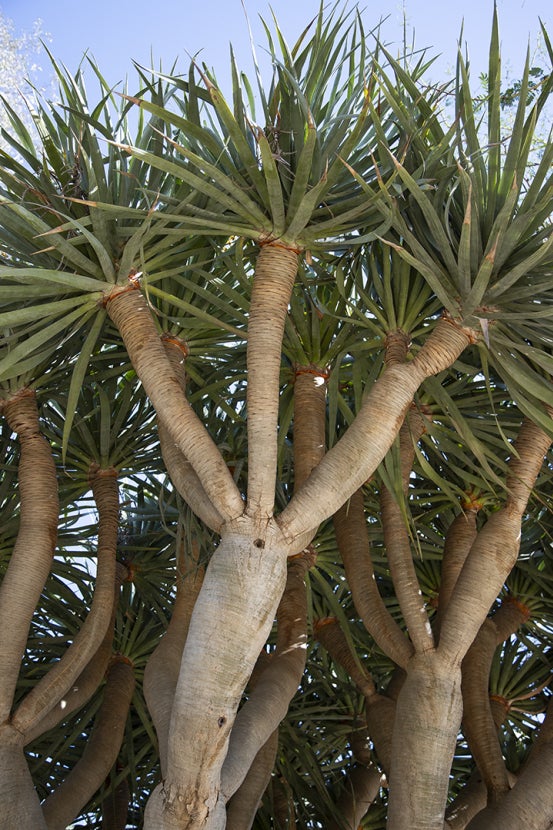
African dragon trees.
Seeded Over Centuries
When Elephant Valley opens on March 5, 2026, it will reflect much more than three years of active construction. With seeds purchased in 2018, grass welcomed alongside elephants in 2003, trees readied for future use over 30 years ago, and mighty oaks that have guarded the San Pasqual Valley for 50 years, the plants flourishing in their new environment are a culmination of something greater. It all comes back to the vision of San Diego Zoo Wildlife Alliance: a world where all life thrives.
“The horticulture complements the whole experience,” said Keith. He mentioned the concept of “the green blur,” where people look, but don’t really see the trees and other plants. “By us being able to show what trees go around [the elephants], to create the immersive experience for the public, it helps the public to see the importance of horticulture.”
“Horticulture is just as important, conservation-wise, as conserving elephants,” said Keith. “You’ve got to conserve the habitats to conserve them.”
San Diego Zoo Wildlife Alliance is committed to preserving elephant ecosystems, both in native habitats through our Savanna Conservation Hub and in our own backyard at Elephant Valley.