



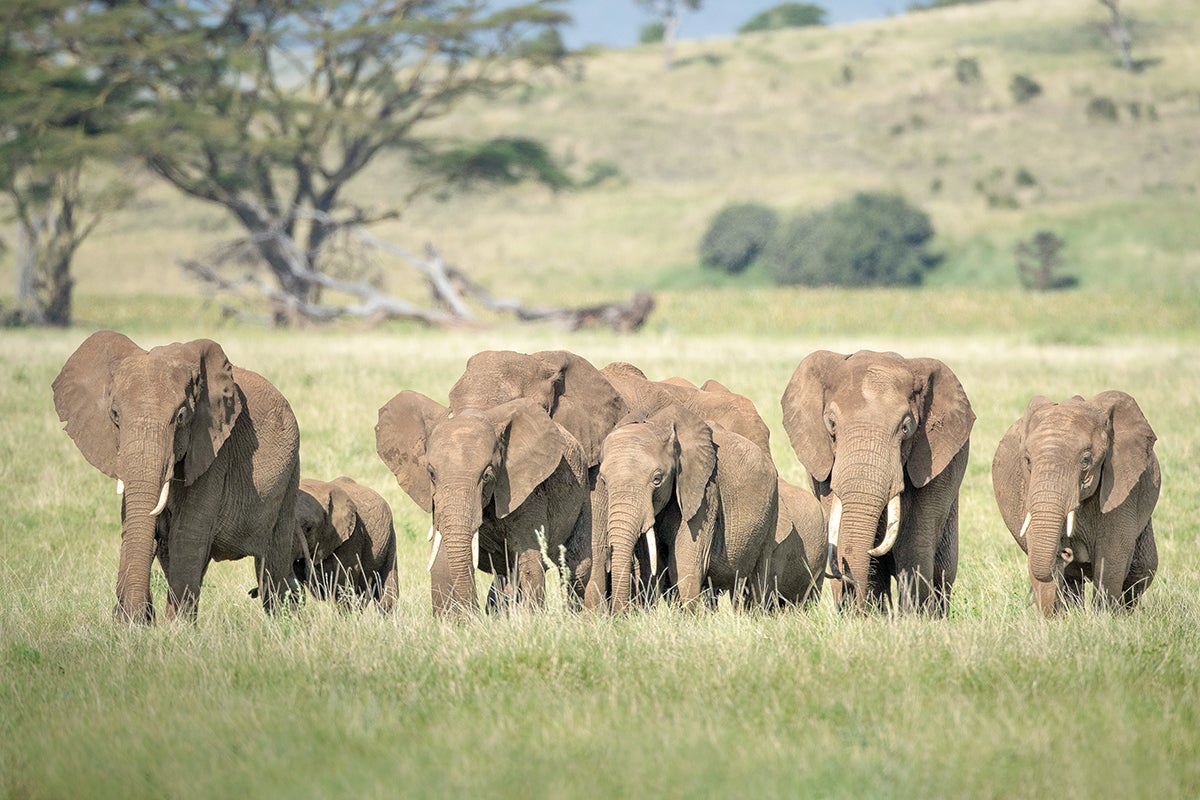

A group of elephants saunters grandly under the brilliant African sun, their massive bodies navigating vast, grassy surroundings. Walking side by side, these gentle giants command a presence on the savanna that’s truly unmatched. Elephants are the largest land animals on Earth, as well as a keystone species, meaning they help keep the health of their ecosystems in balance.
They typically move across the landscape together, as many elephants rely on the security and support of their social group, known as a herd. Elephants that live alongside one another in this way are deeply connected, from the most experienced elders all the way down to the littlest calves. Throughout their lifetimes, individuals often form meaningful partnerships that grow, adapt, and shift to meet their ever-changing needs. This dynamic group living can be the heartbeat that helps ensure each elephant thrives.
Discover how these crucial ties shape the extraordinary lives of elephants, and learn more about the fascinating social relationships you’ll encounter when you visit the San Diego Zoo Safari Park's reimagined Denny Sanford Elephant Valley next year.
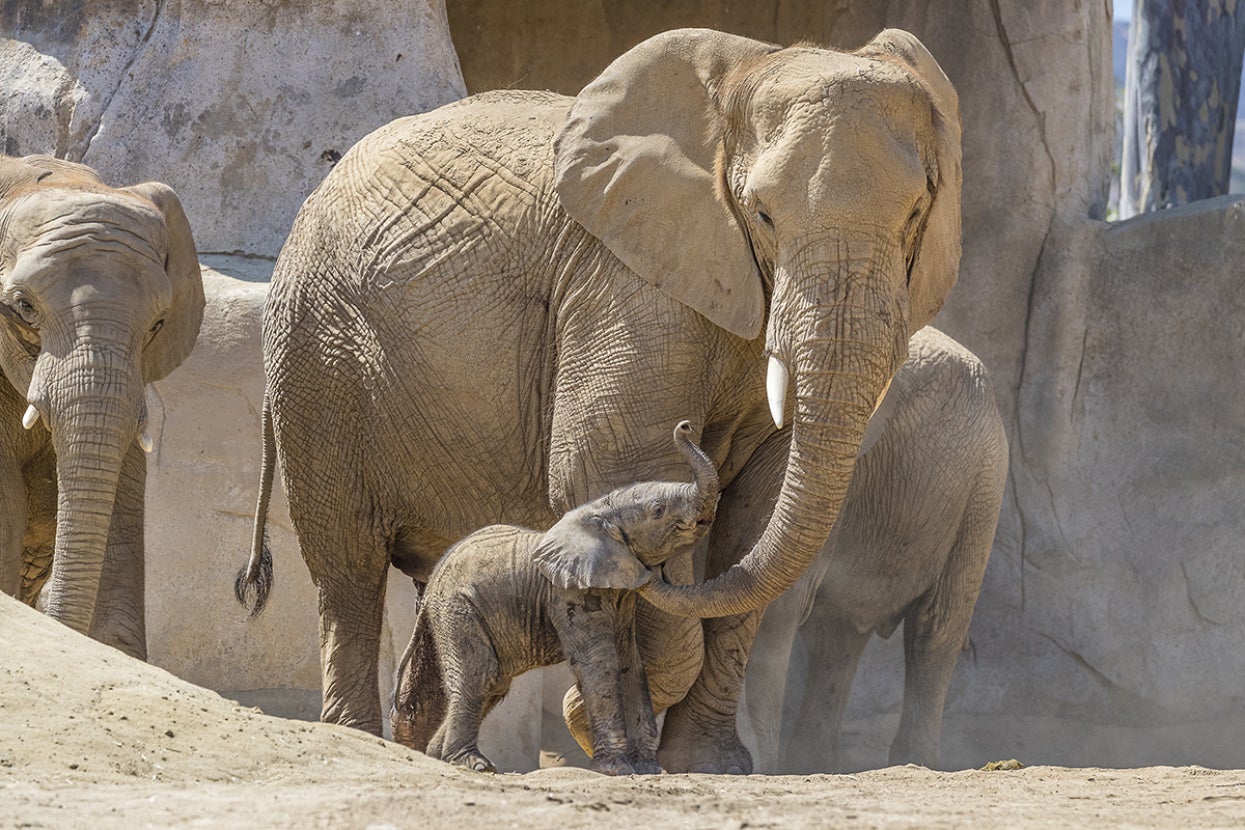
The matriarch ensures each elephant's well-being.
Large and in Charge
A herd is guided by the matriarch: the eldest, and usually biggest, adult female (cow). As the leader, the matriarch shoulders the responsibility of overseeing everyone, and her expertise earns her their trust and respect as a navigator, guardian, and teacher.
This role requires her to perform many duties, including keeping peace in the herd and helping find resources including food, water, and shelter. By sharing her knowledge, she ensures the well-being of the group while showing inexperienced elephants what they’ll need to be successful as they get older.
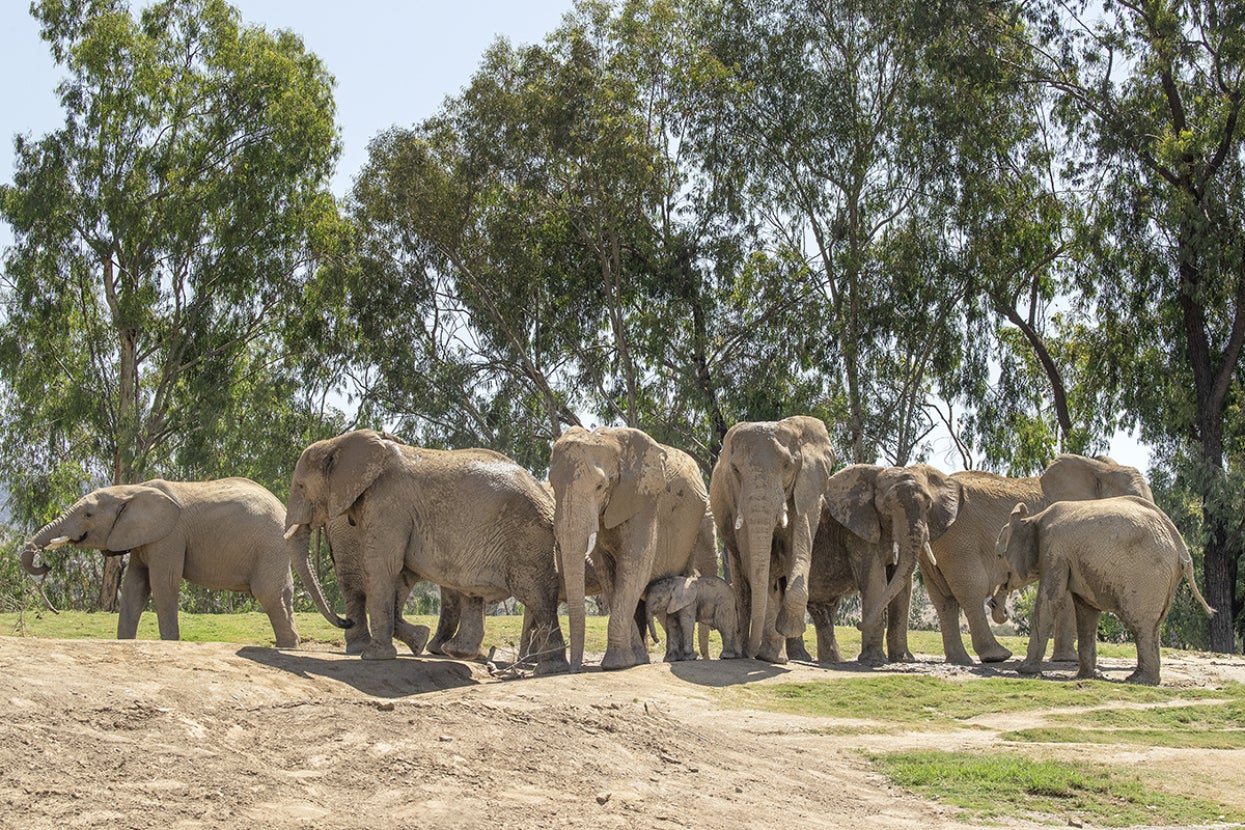
Calves rely on older elephants for safety and guidance.
Baby Steps
When a calf is born, one of its first formative bonds is with its mother—but she’s not the sole maternal figure. The herd’s cousins, sisters, and “aunties” also work together to raise the calf in a nurturing practice known as allomothering.
The little one relies on these mature elephants for safeguarding, nutrition, and guidance during the first few years of life. It’s also an opportunity for observation, as the young elephant takes note of how elders interpret and explore their environment. Through these relationships, the calf not only develops key social skills but also fosters deeper connections with certain cows, which may offer benefits like preferred access to favorite foods.
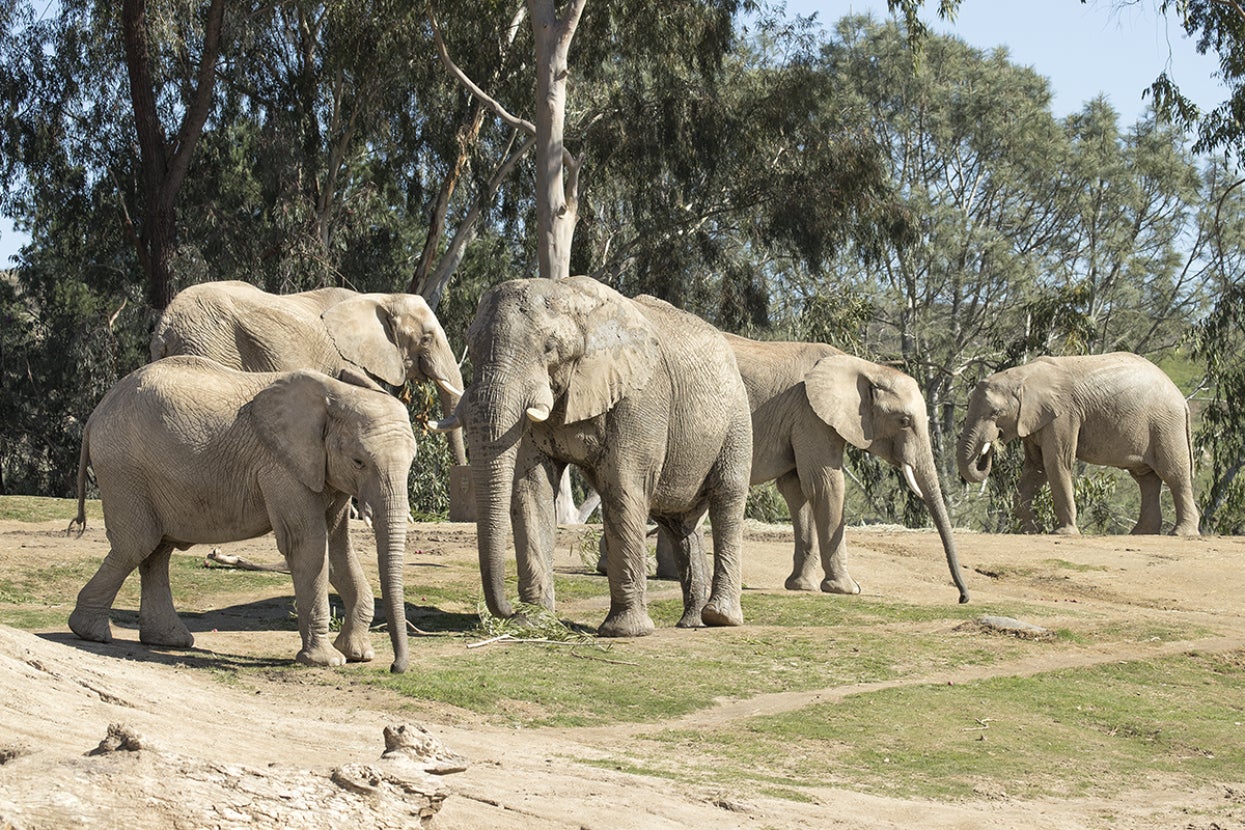
Herds provide protection for young and old elephants alike.
Safety in Numbers
Belonging to a herd can be especially crucial as a source of protection, for young and old alike. More elephants means more eyes scanning for threats, like predators, and more bodies to defend against them. When danger feels near, elephants often move into an instinctive “alert circle,” gathering shoulder to shoulder while tucking the smallest and most vulnerable securely in the center.
Click here to witness how the herd at the Safari Park engaged in this remarkable response during a 5.2 magnitude earthquake that shook Southern California this spring.
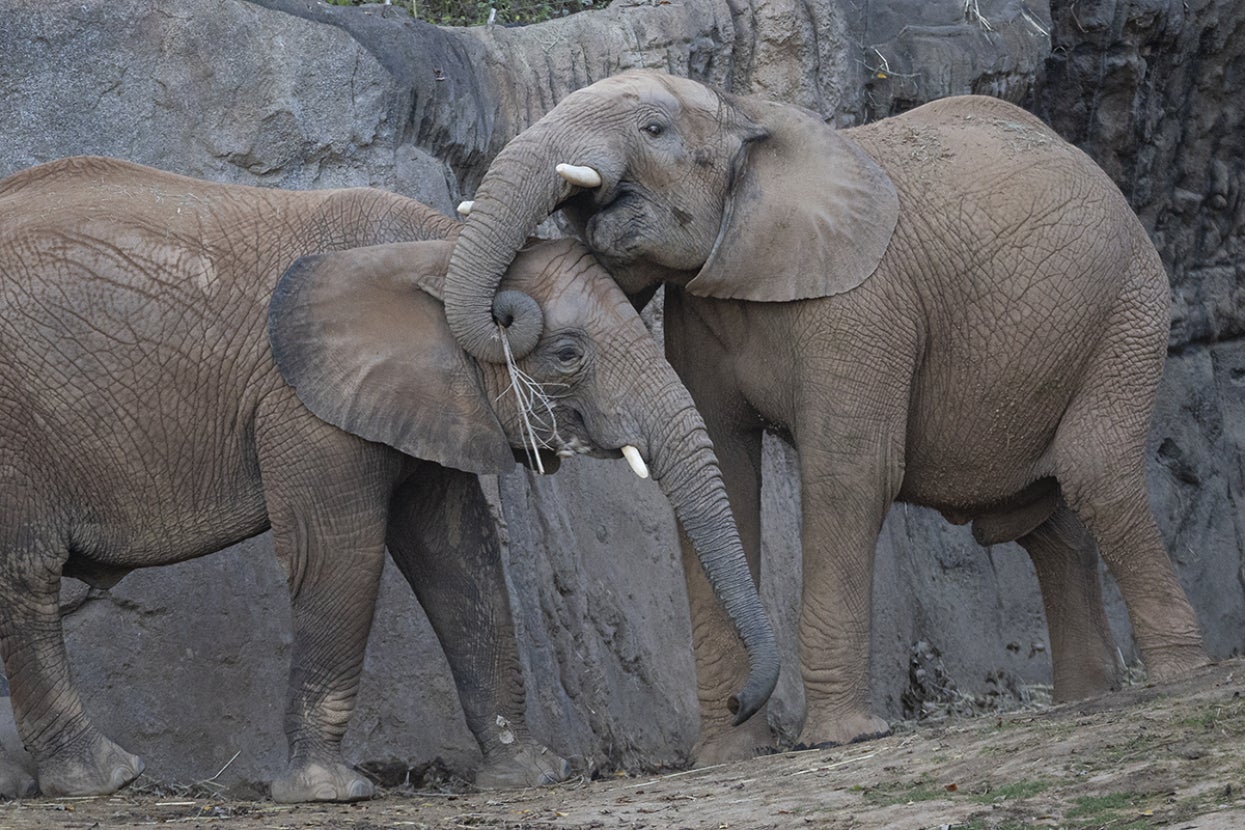
Male elephants naturally move into different social structures as they age.
Growing Up
As calves age, elephants naturally split into different social structures. While females generally stay in their original tight-knit groups, male elephants (bulls) will start spending less time with the herd and, once they reach maturity, leave it altogether.
This progression in bulls’ lives allows them to rely on their inherent independence by going it solo, or to continue a more social existence by joining what’s known as a bachelor herd. In this all-male group, younger members continue to study the eldest and most adept of the bunch. This arrangement can equip elephants with even more savvy and wisdom to prosper into adulthood, whether living alone, with a different bachelor herd, or periodically connecting with females to breed.
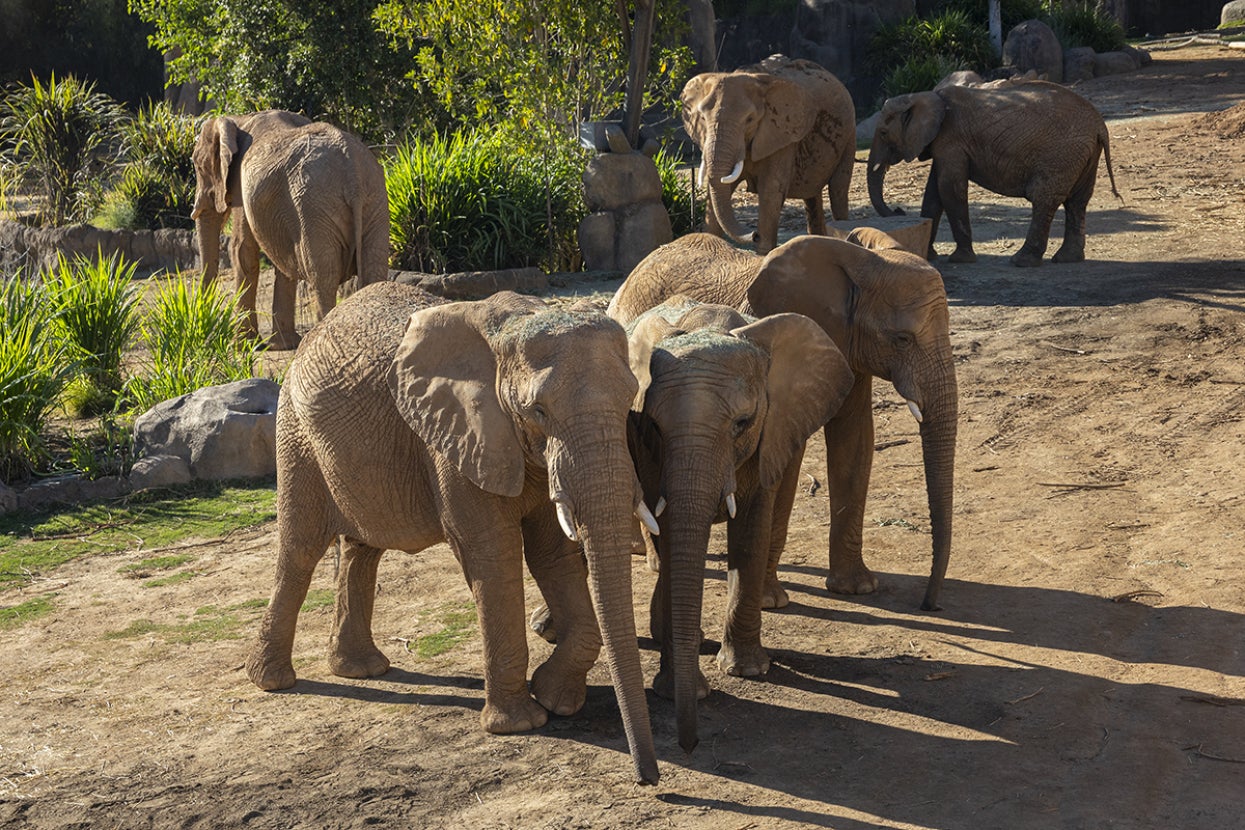
Social dynamics play a vital role in shaping the extraordinary lives of elephants.
Marching On
The countless forms of these social dynamics play a major role in each elephant’s existence. Opening in early 2026, the Safari Park's Elephant Valley will offer the herd we have the honor of caring for extraordinary opportunities to grow and strengthen their bonds. And thanks to devoted wildlife allies like you, we’re supporting vital conservation efforts that help guarantee their magnificent species thrives for many generations to come.
Discover more about elephants and our collaborative efforts to protect them through our Savanna Conservation Hub.