




Looking across a wintertime Arctic landscape, it’s ice as far as the eye can see, but dozens of species are thriving here. How does this frigid environment support them all? Even for the tundra’s terrestrial wildlife, it all starts in the ocean.
Polar bears are the critical link between the vibrant worlds above and below the ice. While polar bears’ crucial role as apex predators in the Arctic food web has been well documented, it has never been measured in a way that could accurately quantify their contribution to the ecosystem. Nicholas Pilfold, scientist on the Population Sustainability team at San Diego Zoo Wildlife Alliance, joined with researchers from University of Manitoba, Environment and Climate Change Canada, and University of Alberta to review existing studies and calculate how much food polar bears create for other Arctic species—and amplify what would be lost if global polar bear populations decline. Their findings, titled “Predators and Scavengers: Polar Bears as Marine Carrion Providers,” were published in the journal Oikos.
The team determined that a single polar bear kills an average of about 2,200 pounds of other marine mammals each year, and leaves behind about 30% of that, creating a substantial supply of food. There are approximately 26,000 polar bears living in 20 subpopulations worldwide, so nearly 17 million pounds of vital nutrients are made available annually for at least 11, and up to 18, other wildlife species across their range.
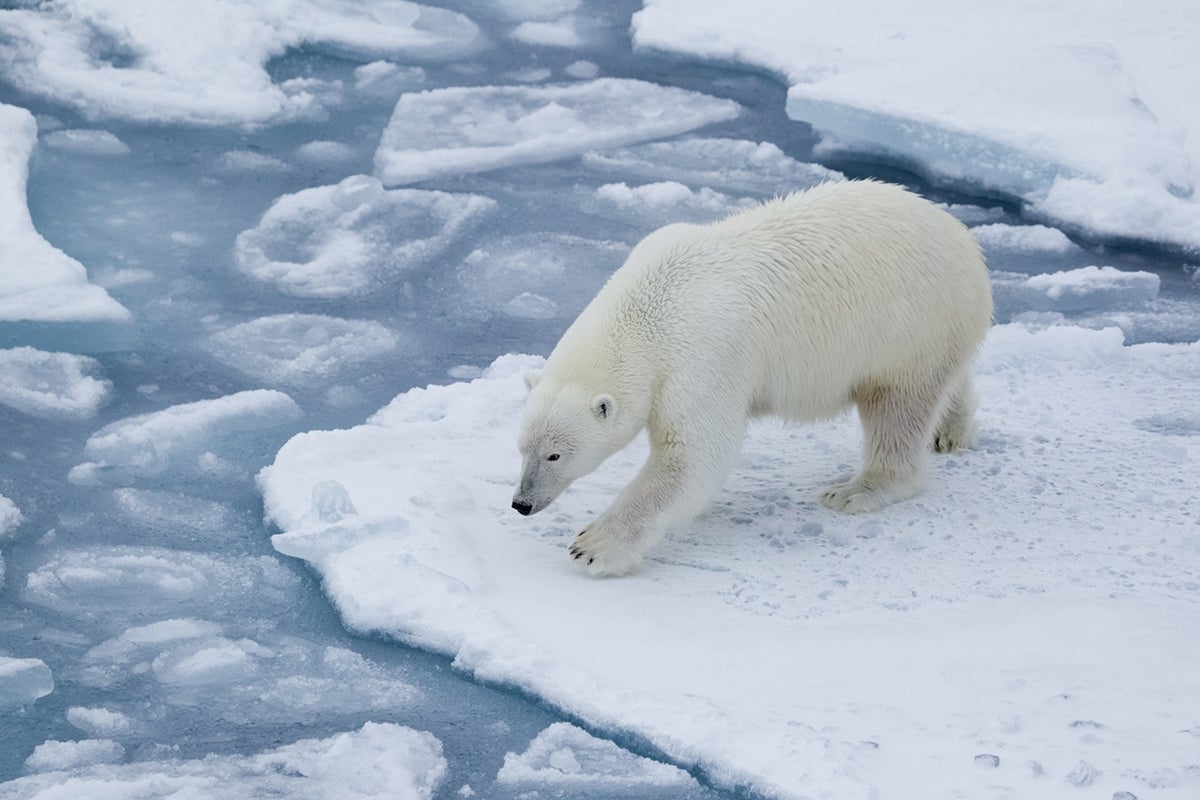
Polar bears are the only bears whose survival is dependent on sea ice. | Photo Credit: SeppFriedhuber/E+/Getty Images
Weaving the Web
Polar bears are marine mammals, meaning they need the ocean to survive. Their scientific name, Ursus maritimus, means “sea bear,” and they are the only bears whose survival is dependent on sea ice. Specifically, they rely on access to another marine mammal, ice seals, which are their primary prey.
Polar bears endure subzero temperatures in winter and a fasting period during the summer by building up a thick layer of fat. This fat comes from eating high-calorie seal blubber. During periods of heavy eating, usually in late spring or early summer, polar bears will kill one seal every three to five days.

Ringed seals are the primary food source for polar bears. They spend most of their time underwater. | Photo Credit: Rixipix/iStock/Getty Images Plus
Seals are an excellent source of both fat and meat, but they spend most of their time underwater, coming up only to breathe or bask on the ice. Polar bears wait patiently by seal breathing holes, sometimes for hours, until one comes up for air, then reach out, hook it with their massive paws, and haul it out of the water to eat. This transfer of resources from marine to terrestrial environments takes a huge amount of coordination, strength, and energy, far more than smaller species like Arctic foxes, ravens, and gulls can manage.
Polar bears are also unusual in that they don’t cache (hide) or guard carcasses to save them for later. This behavior is common in many apex predators because it prevents scavenging. But after polar bears eat their fill of blubber, they leave the rest of the seal behind. This meaty carcass, called “carrion,” becomes a crucial food source for scavengers, one that would be greatly missed if it were to disappear.
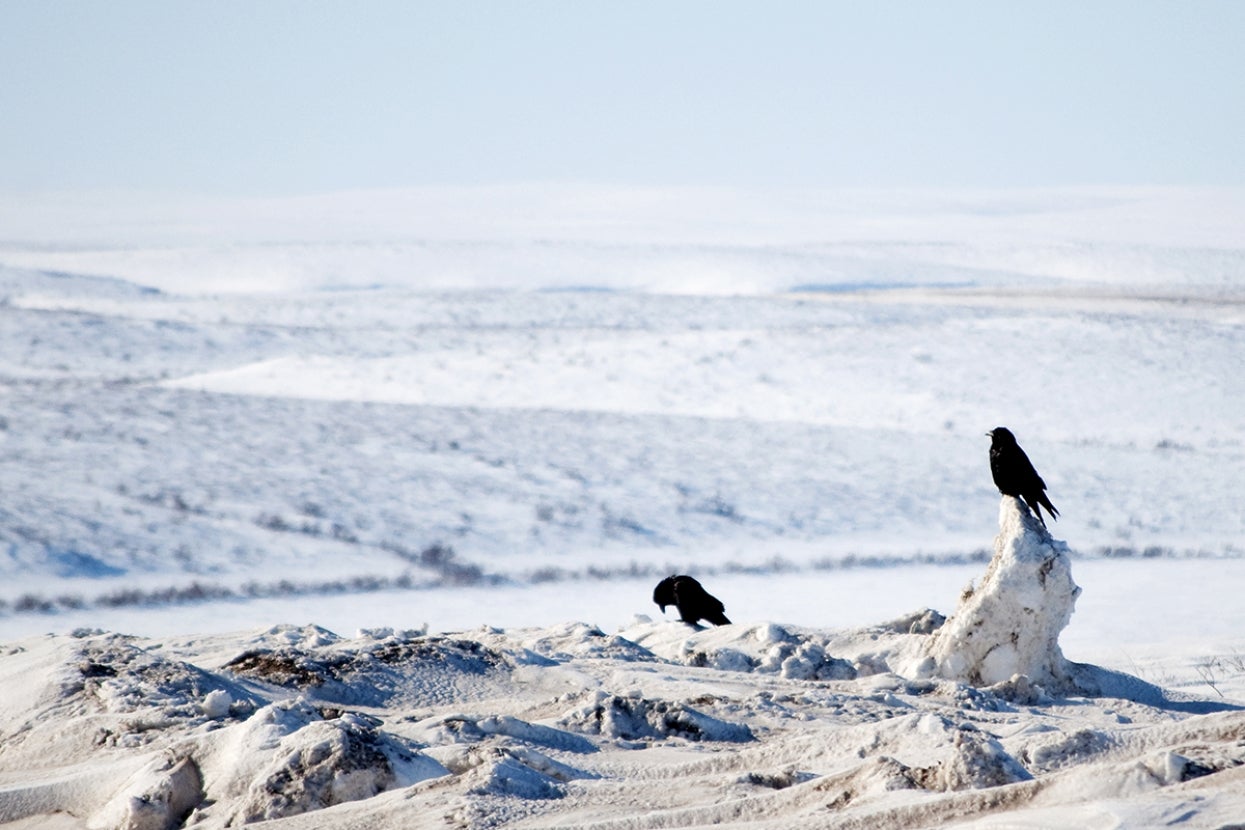
Carrion is a crucial source of food for Arctic scavengers, including ravens. | Photo Credit: John Adinolfi/iStock/Getty Images Plus
Carrion is a year-round feast for Arctic scavengers. Seals caught by polar bears during winter continue to benefit scavengers even as the temperatures warm in the spring and summer; because the Arctic is so cold in winter, leftover seal will freeze, preserving its nutrients until temperatures warm and it thaws enough for smaller animals like birds to be able to eat it. And when the temperatures get even warmer, and the sea ice starts to melt, the carrion will fall into the ocean, establishing resources for even more scavengers in the water and on the ocean floor and further supporting the food web. This study shows that declines in polar bear populations will have measurable consequences for the entire Arctic ecosystem.
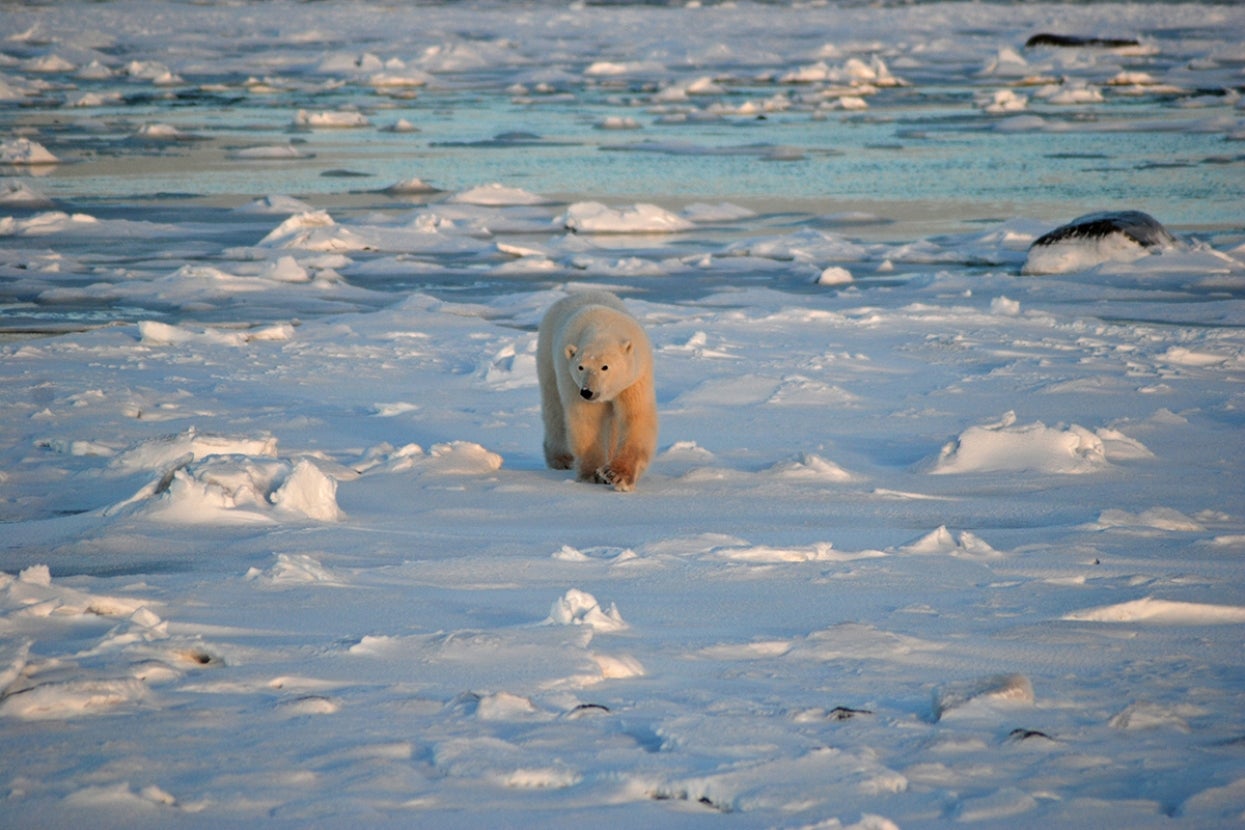
Changes in polar bear populations impact the entire Arctic ecosystem.
Polar Providers
There are few environments more challenging than the Arctic. Seasons are intensely varied, with average temperatures ranging from minus 90 degrees Fahrenheit in the winter to 68 degrees Fahrenheit in the summer. Few species can live there year-round because of the special adaptations needed to survive. Because of this, the Arctic food web is smaller and more fragile than those in other ecosystems. It’s called a “food web” because every part is connected; changes to the stability of one part of the web will impact the strength of the rest of the structure. The decline of a single species can bring down the entire ecosystem.

During the winter, most of an Arctic fox’s food will come from carrion. | Photo Credit: Alexey_Seafarer/iStock/Getty Images Plus
The study estimated that documented declines in just two of the 20 global polar bear subpopulations resulted in a loss of about 661,387 pounds of carrion from the food web. This is a significant loss of nourishment for species whose scavenging makes up a large part of their caloric intake. Carrion provides security during times of scarcity, such as a period of unusually harsh weather; for example, Arctic foxes primarily hunt rodents, but during the winter carrion can fill up to two-thirds of their diets. Carrion also supports young polar bears who are old enough to have weaned from their mother, but are not yet large or experienced enough to catch adult seals on their own. A smaller polar bear population would reduce the amount of carrion available within a certain area, so scavengers would need to travel farther to find food. Having to increase their energy output during the challenging Arctic winter could be deadly.
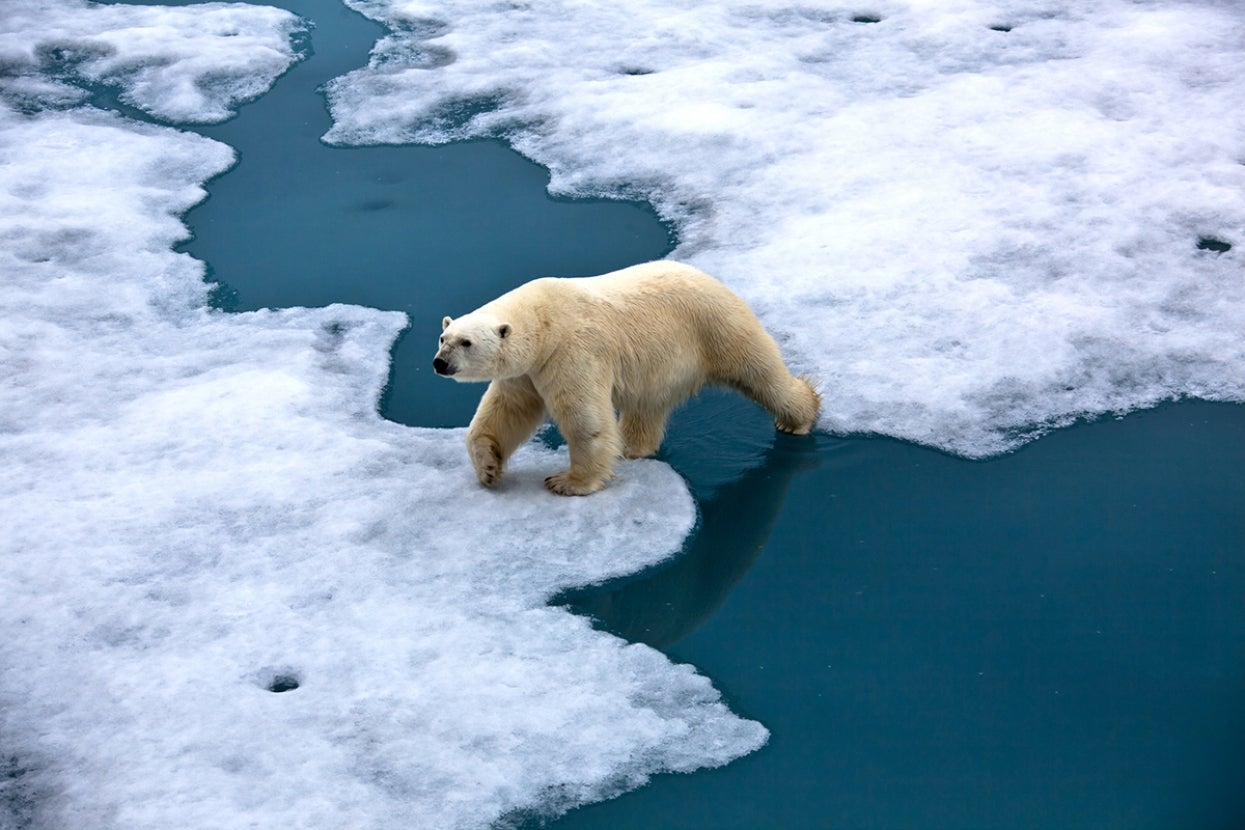
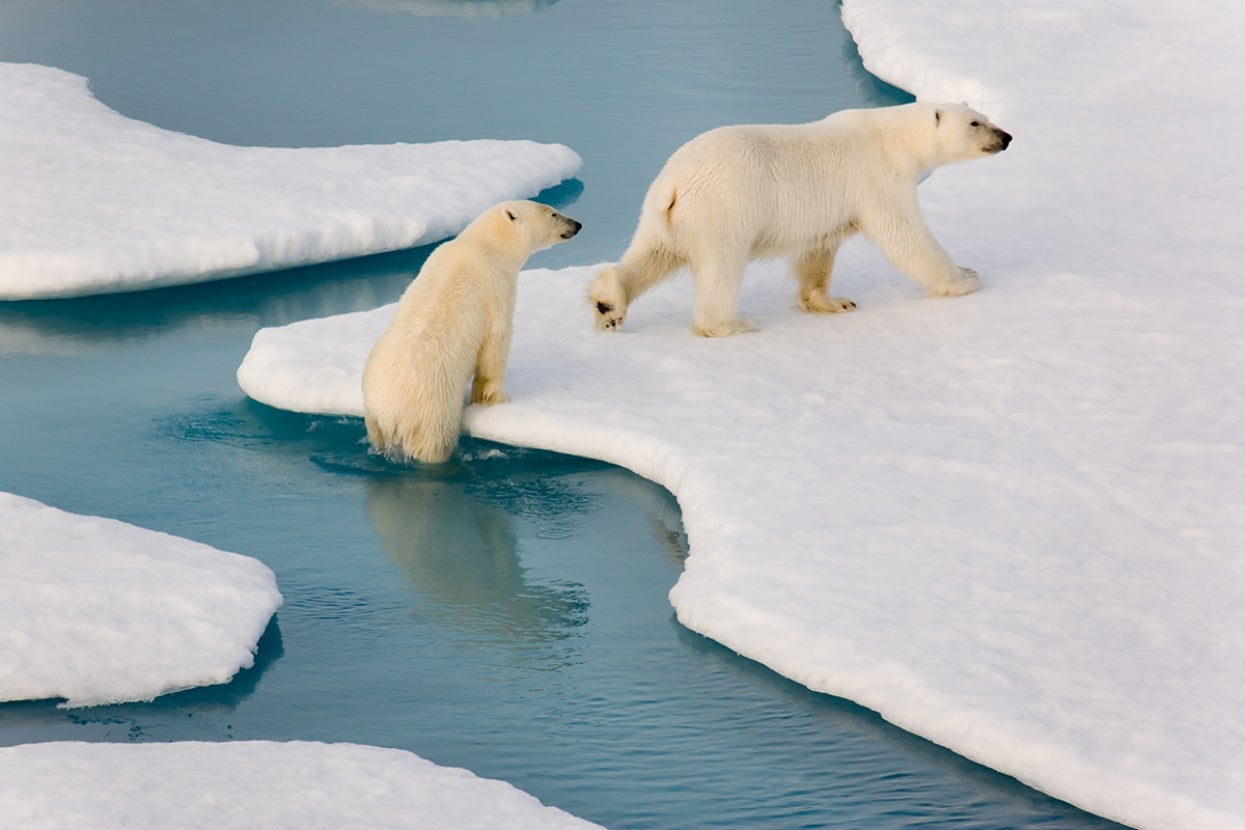
Decreasing sea ice levels creates challenges for all ice-dependent wildlife. | Photo Credit: SeppFriedhuber/E+/Getty Images
Changes in climate and habitat are two of the primary threats to apex predators and related food webs worldwide, but some of the highest impacts can be seen in the Arctic, which is warming at rates at least four times higher than the global average. This is causing sea ice to melt earlier in the year and form later, creating huge challenges for ice-dependent wildlife like polar bears and seals, as well as the scavengers relying on carrion. San Diego Zoo Wildlife Alliance is committed to protecting marine wildlife and ecosystems through our Oceans Conservation Hub. Combining our expertise with that of our partners worldwide through studies like this directly contributes to conservation efforts that benefit polar bears and other wildlife globally.
Experience the polar bears we have the honor of caring for at the San Diego Zoo and discover how your visits are helping support wildlife conservation worldwide.
(Top Image Photo Credit: KenCanning/iStock/Getty Images Plus)