



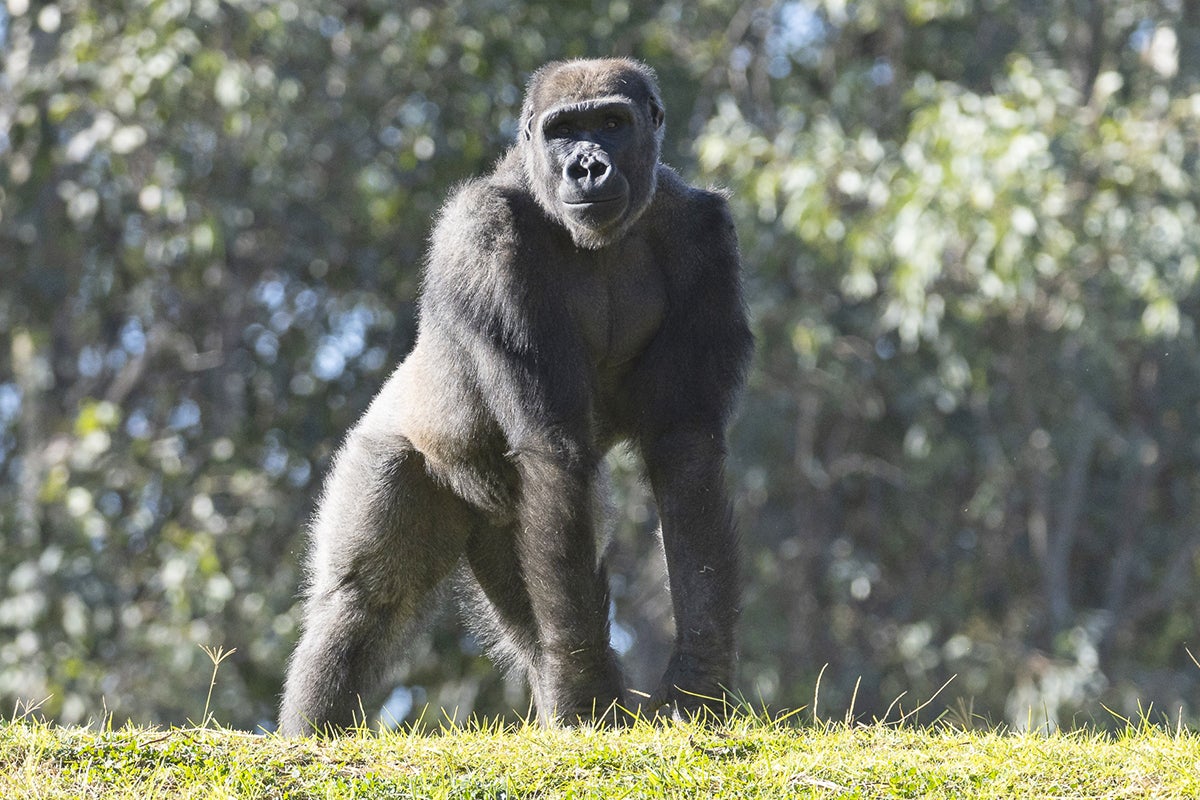
The relationship between San Diego Zoo and San Diego Zoo Safari Park wildlife care specialists and the species they care for is a special one. These wildlife experts spend hours, days, and years getting to know each individual, familiarizing themselves with not only physical characteristics, but behavioral habits and traits as well. For Mizani the western lowland gorilla, this keen awareness—along with top-notch medical care, collaboration, and innovation—would play a major role in his wellness journey.
The Power of Observation
Since its formation in late 2025, the gorilla bachelor troop at the Safari Park has settled into dynamic habitats specifically created for maturing males to socialize and develop their leadership skills. The five youngsters—Frank, 18; Monroe, 15; Mizani and Mokonzi, both 12; and Njemba, 10—spend much of their time chasing, wrestling, and foraging as they sort out group life just as bachelor gorilla troops would in native habitats. And as with all of the wildlife we have the honor of caring for at the Zoo and Safari Park, wildlife experts monitor and care for them around the clock, always looking for any subtle nuances out of the ordinary.
In the early hours of March 14, 2026, Mizani just wasn’t himself. Normally playful and enthusiastic about foraging, he was slightly subdued and showed little interest in his breakfast. In addition, says Ryan Sadler, DVM, DACZM, a senior veterinarian at the Safari Park, Mizani was reluctant to fully open his mouth and was squinting his eyes as if experiencing a headache. “Mizani’s symptoms were relayed to on-duty veterinarian Dr. Anthony Cerreta, who prescribed anti-nausea medications and a nonsteroidal anti-inflammatory drug [think ibuprofen] for pain,” Dr. Ryan explains, adding that when further monitoring revealed no improvement despite an adjustment in medications, it was time to look deeper.
For a better look at the affected area, Mizani received a computed tomography (CT) scan, which provided the veterinarians at the Safari Park’s Paul Harter Veterinary Medical Center with cross-sectional images of bones, blood vessels, and soft tissues inside his skull. The scan confirmed the suspected condition: mastoiditis (an infection around the inner ear) and sinusitis. Mizani had experienced this same issue previously before coming to the Safari Park. Given the chronic or reoccurring nature of Mizani’s condition, the Safari Park’s wildlife health specialists decided on a surgical procedure—a mastoidectomy—that would hopefully not only relieve Mizani’s discomfort; it would also prevent it from coming back. There was one complication: the veterinary team wasn’t aware of this procedure ever on a gorilla. They decided to consult with surgeons who had done the surgery on one of the next-closest species: humans.
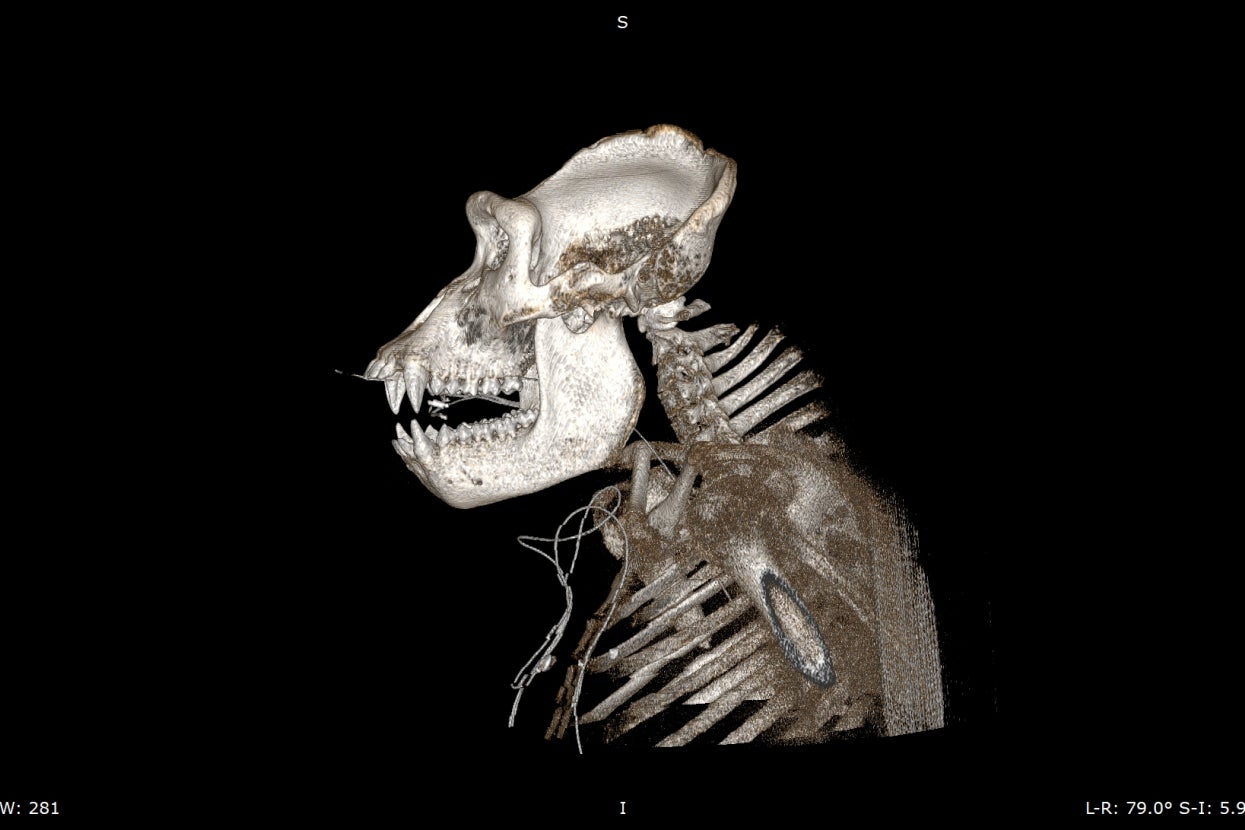
A Better Look: A three-dimensional reconstruction of a CT scan of Mizani's skull provided the veterinarians at the Safari Park’s Paul Harter Veterinary Medical Center with cross-sectional images of his bones, blood vessels, and soft tissue.
Just What the Doctors Ordered
On March 26, two Safari Park veterinarians worked side by side with University of California San Diego (UCSD) otolaryngologists and head and neck surgeons Dr. Jeffrey Harris, MD, PhD, and Dr. Krish Suresh, MD, to locate the problem area and remove affected parts of his mastoid bone along with any other affected tissue. Dr. Ryan regards the UCSD doctors’ contribution as invaluable. “These two surgeons are highly specialized in this particular surgery, and given the relatively similar anatomy and treatment approach, it was extremely beneficial to have their expertise in performing the surgery quickly and effectively,” he says. “Their assistance also allowed our veterinarians, who have expertise in gorilla medicine and anesthesia, to focus on making sure he was safely anesthetized and stable during the procedure.”
The surgery, performed at the Safari Park’s Harter Veterinary Medical Center, took about five hours from initial induction of anesthesia to recovery. Leading the team were veterinarians Dr. Ryan, Meredith Clancy, Anthony Cerreta, Rob Browning, Matthew Kinney, and Amanda Burke; who collaborated with the UCSD physicians throughout the procedure. Along with the medical outcome, Dr. Ryan was also impressed by the teamwork that helped make it such a success. “This procedure took a lot of collaboration, with well over 20 individuals from the Safari Park and UCSD being involved. The surgery itself took two surgeons and one operating room technician, as well as the entire Wildlife Health and Wildlife Care teams that helped care for him before, during, and after.”
Following his procedure, Mizani’s recovery was surprisingly quick, with his symptoms significantly improved the following morning. Back with the bachelor troop, Mizani was on the road to recovery. Happily, Mizani has been symptom free since the surgery, and within two weeks he was back to his normal care, activity level, and diet—celebrating a full recovery.
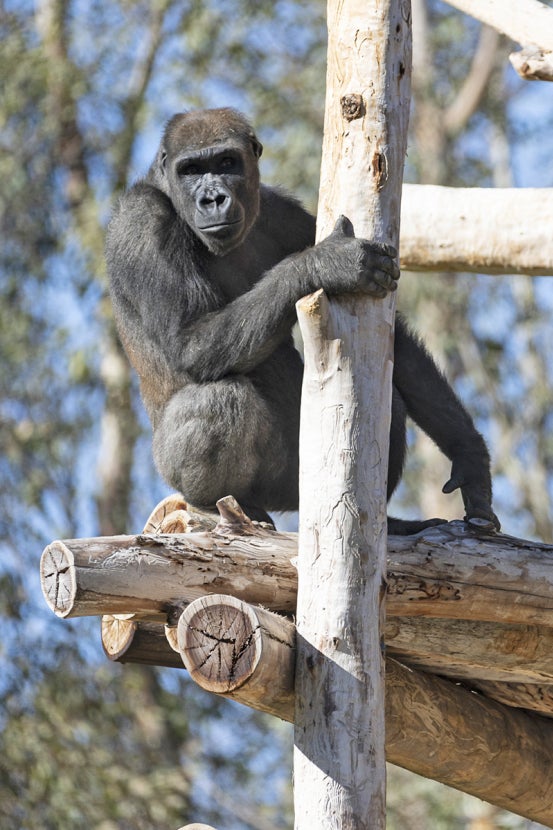
Mizani is back to his usual activity level, and has remained symptom free.
A Positive Outlook
Given the relatively rare occurrence of this disease in gorillas, Dr. Ryan shares that while the Safari Park team is hopeful that Mizani’s surgery minimized the chance of it coming back, they’re also planning a recheck exam soon to help guide long-term prognosis. He notes that along with the positive outcome for a young gorilla, Mizani’s case highlighted the incredible impact medicine can have when people work together. “This case was interesting because it was relatively unusual and unique, and even though I’ve been working with gorillas my whole career I’m always learning something new. It also made me appreciate how medicine is similar, while also being so different at times, across a variety of species,” Dr. Ryan says. “I think all of us in Wildlife Health are always thankful for our MD colleagues and their willingness to help, even on short notice. I’m also extremely proud of how quickly our team mobilizes quickly for a monumental task, and makes it appear as if it’s another routine day.”