



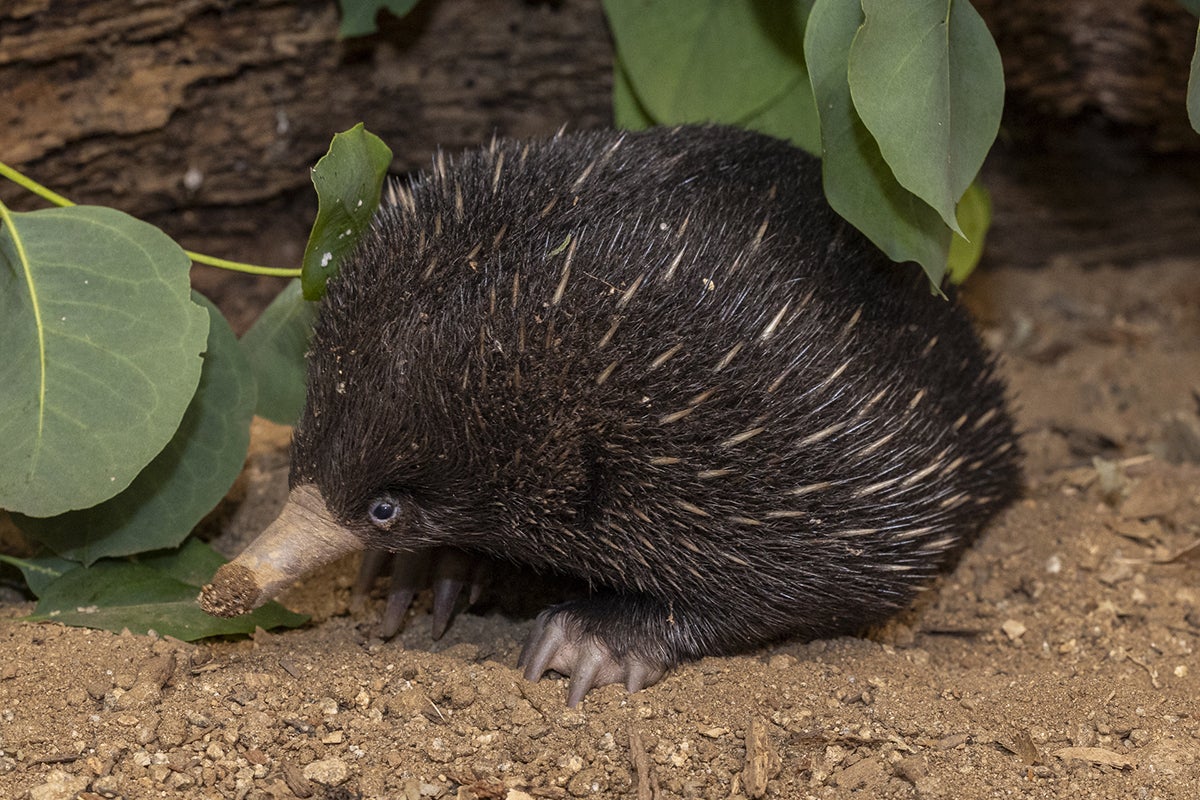
Sometimes, an echidna puggle can be a surprise. Usually, their presence becomes known when there’s movement within the pouch, or when little limbs begin to stick out here and there. Earlier this year, the short-beaked echidna, Kathryn, had a different surprise in store for the team at the San Diego Zoo Safari Park. She had not one, but two puggles in her pouch! These "twins" were hatched to the same mother during the same season—a momentous first for the North American population of echidnas.
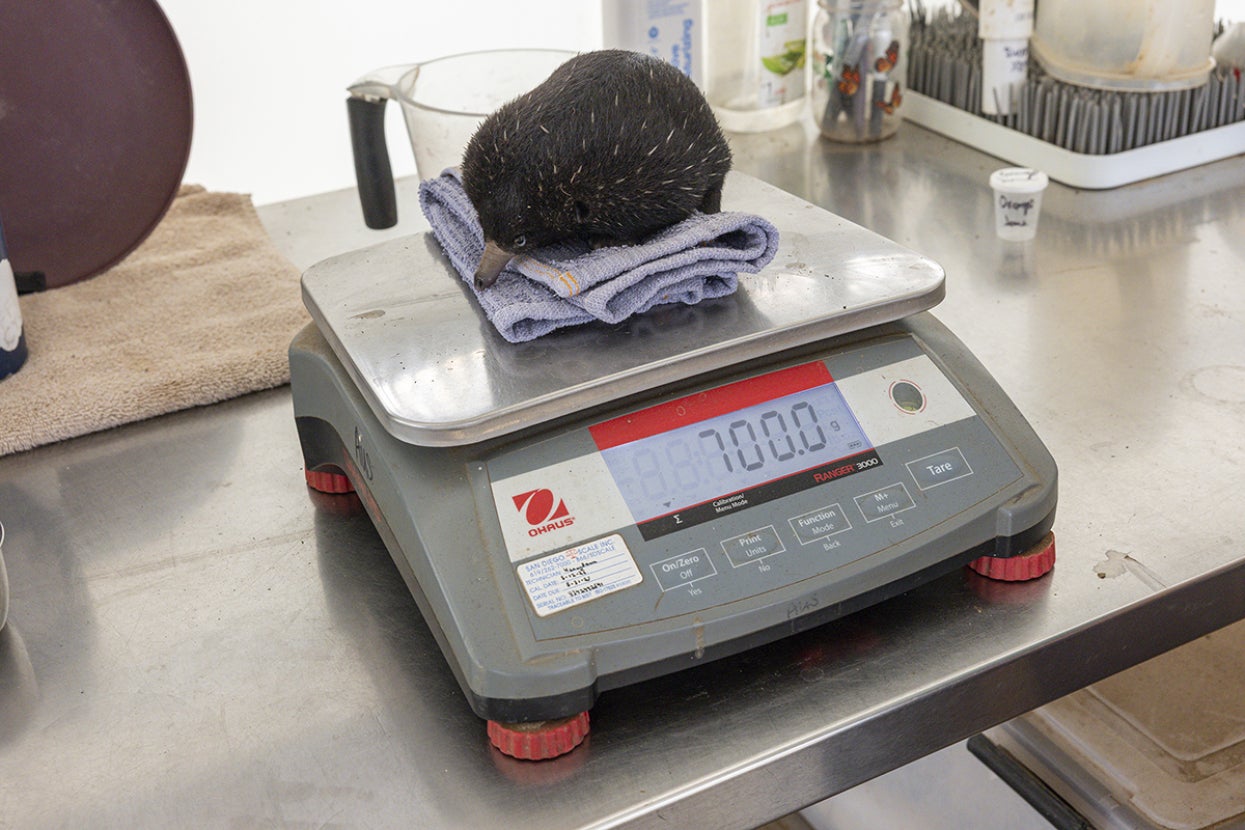
One of the echidna puggles being weighed to monitor growth.
Going Farther, Together
Echidnas are one of the oldest species on Earth. Despite this, there is still much we don’t know about them. Seven years ago, our teams decided that with our expertise and resources, we’d be able to help change that. From Wildlife Care to Wildlife Health and Veterinary Services, teams across San Diego Zoo Wildlife Alliance collaborated to get our echidna conservation program off the ground. They also developed close relationships with partners across our Australian Forest Conservation Hub to work together and learn a whole lot more about this one-of-a-kind species.
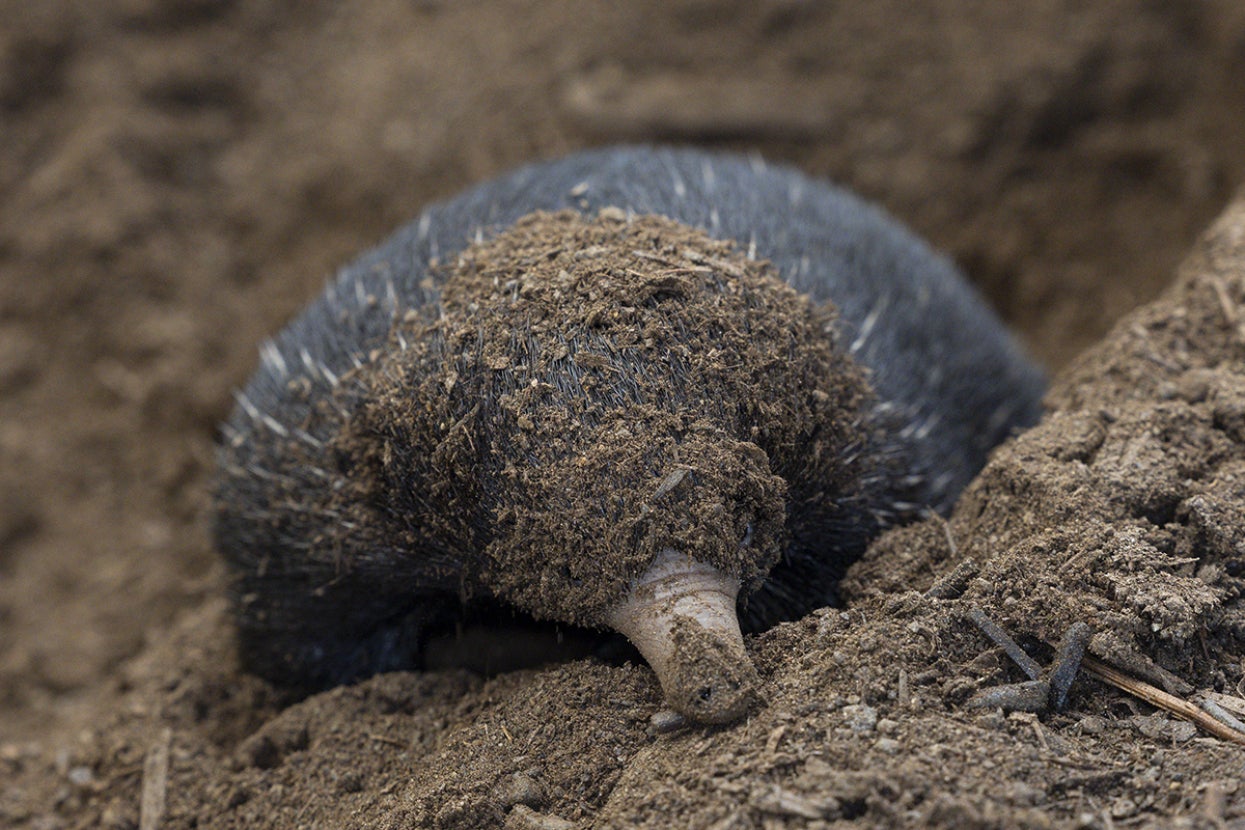
After growing enough, puggles are able to explore their world.
The Alliance teams participated in different studies that furthered our knowledge about echidnas. In one of the recent studies, we examined their basal metabolic rate, which provided crucial insights into how they process treatments for specific illnesses. We also collaborated with Taronga Conservation Society Australia to evaluate the microbiome of echidnas, leading to more accurate treatment and a better understanding of how to take care of them.
In 2023, we hosted our first summit about echidnas. The goal was to connect with each other about what we’ve discovered about them and how we can share that with other organizations caring for echidnas. The summits have quickly evolved, beginning as an organization-wide initiative and turning into an international one. Now, our team meets twice a year with echidna experts from around the globe to share information that we’ve learned, as well as to learn from them.
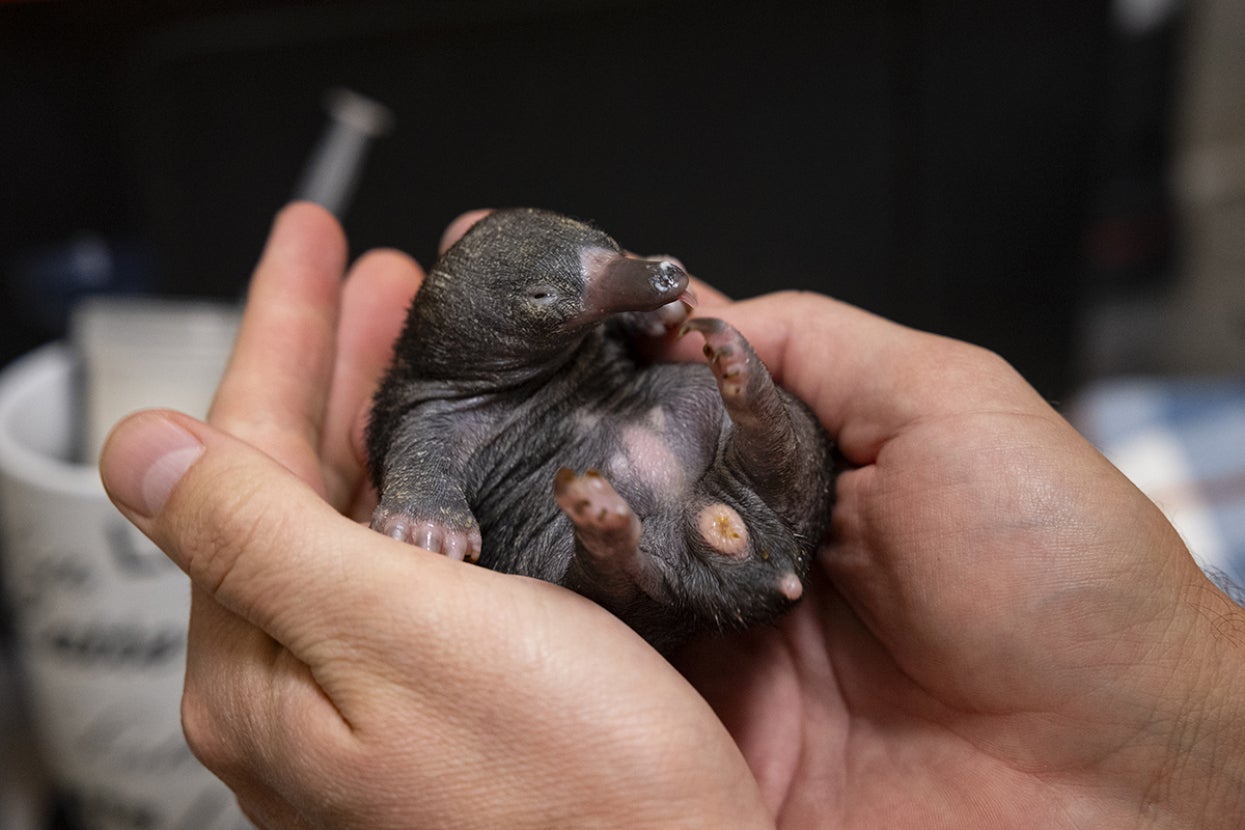
Puggles have a lot of growing to do!
The Puggles’ Progress
Echidnas are monotremes, which means they lay eggs. The only other mammals that do this are platypuses. The egg incubates in the mom’s pouch, and hatches about ten days later. When they’re hatched, puggles weigh only about half as much as one miniature marshmallow and are born without spines or fur. The puggle stays in the pouch for about two months as they begin to grow. When the puggle reaches about 40 days old, mom will begin preparing to deposit the puggle into the underground nursery burrow that she’s prepared.
Once the little one is too big to stay in the pouch, the mom will enter the nursery burrow and place the puggle at the back. Then mom will backfill it with dirt to keep them safe. Every few days, she’ll visit the puggle to feed them. After a few months of this, mom will cease backfilling the burrow to signal to the puggle that it’s safe for them to begin exploring the outside world. At this point, the puggle will continue nursing, but will begin investigating rotted logs for all types of interesting and delicious treats to eat.
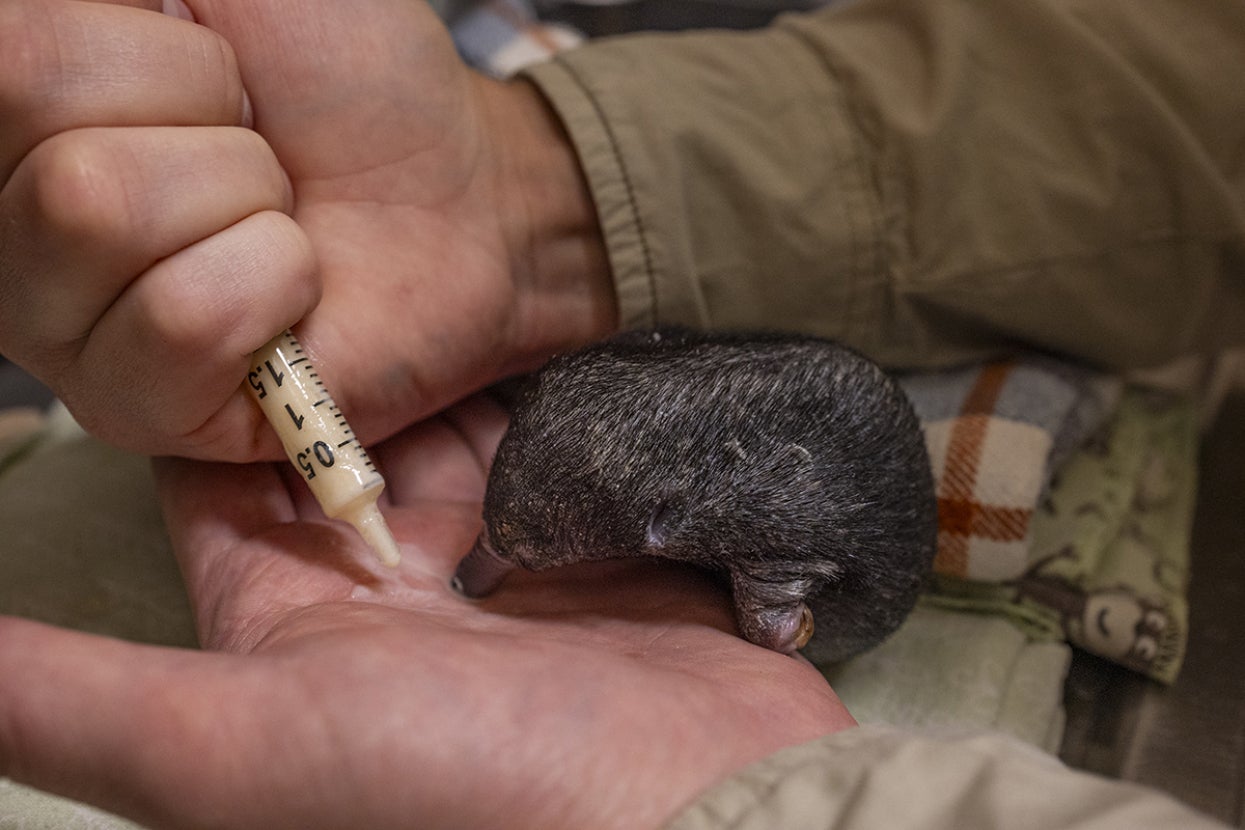
To help one of the puggles gain weight, it was brought into the state-of-the-art Harter Veterinary Medical Center to receive around-the-clock care.
For Kathryn’s two puggles, one is being raised in the burrow by mom. The other puggle wasn’t gaining weight, so it was brought to the Safari Park’s state-of-the-art Harter Veterinary Medical Center to receive around-the-clock care. This little one is successfully growing and becoming stronger everyday thanks to the dedicated team caring for it.
Recently, an unexpected breakthrough came from this care. With the support of our Australian partners, our veterinarians began consistently taking ultrasound images of the echidna puggle’s stomach. By doing this, they were able to better understand how quickly the formula the youngster consumed was being digested. The team then determined with more accuracy at what frequency the puggle needed to be fed. This discovery will alter how echidnas are cared for here in San Diego and across our Australian Forest Conservation Hub.
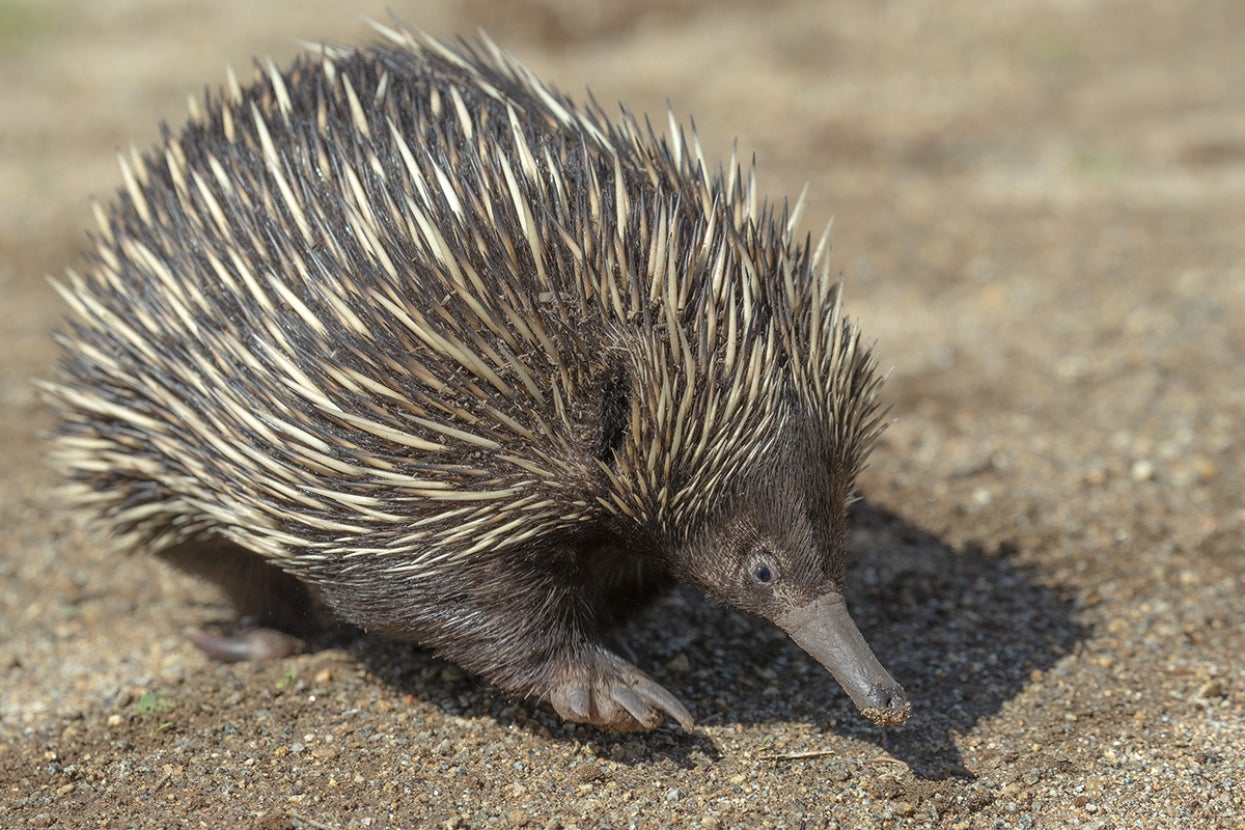
These fascinating animals are truly one-of-a-kind.
Wonder from Down Under
Echidnas show us that what makes us different is actually what makes us important. Their small bodies, spiny defense, and distinct beak spark fascination and connection. They’re unlike any other species, and they’re also incredibly important to their native habitats throughout Australia, Tasmania, Indonesia, and Papua New Guinea. So, the more we know about them, the better we’re able to save, protect, and care for them. With the help of wildlife allies like you, conservation partnerships, and a whole lot of teamwork, we’re creating a brighter future for echidnas worldwide.
Explore more about echidnas, platypuses, and more incredible wildlife as you discover how your support is making a difference for them through our Australian Forest Conservation Hub.