



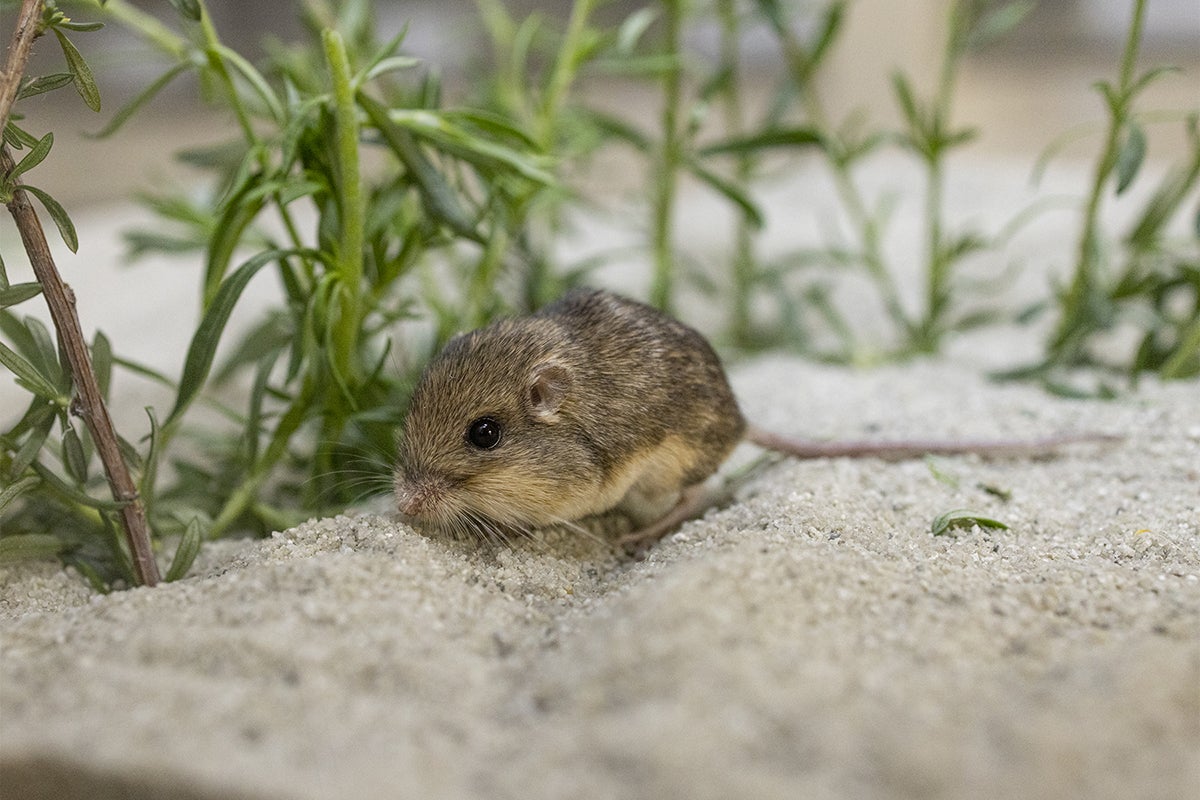

In 2006, after Pacific pocket mice were thought to be extinct, were rediscovered, and then emergency listed under the Endangered Species Act, San Diego Zoo Wildlife Alliance launched our Pacific Pocket Mouse Conservation Program. The program sought not just to prevent extinction, but to recover this critically endangered species in Southern California.
Over the last two decades, our team and partners have been committed to protecting, growing, and creating Pacific pocket mouse populations in their native range. We’ve made incredible advances in understanding species behavior, ecology, physiology, and genetics, as well as in establishing new populations and restoring and managing habitats. Just in time to celebrate our program’s 20th anniversary, we also reached two remarkable milestones in 2026: we helped establish the third reintroduced population of mice, and we released a cohort of super tiny superheroes in the first-ever genetic rescue mission for the species.
In honor of the 20th anniversary of our Pacific Pocket Mouse Conservation Program, here are 20 fun facts about what makes Pacific pocket mice so special, and so worth saving.
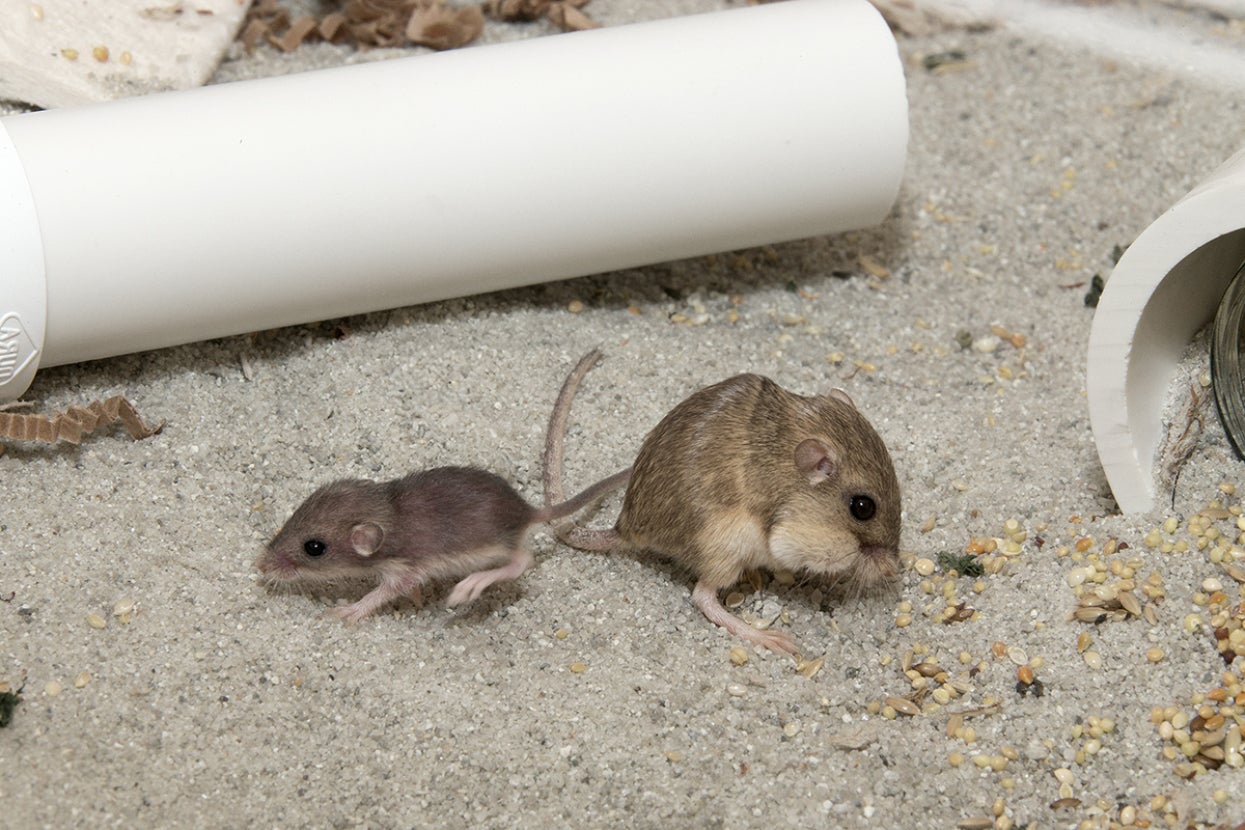
A tiny Pacific pocket mouse mom with her even tinier pup.
Meet the Pacific pocket mouse
A full-grown Pacific pocket mouse is the size of an adult human’s thumb. They’re one of the smallest mammals in North America.
An adult mouse weighs less than a nickel. A pup weighs as much as a penny.
- Pacific pocket mice are one of the most critically endangered mammals in the country. They are only found in Southern California.
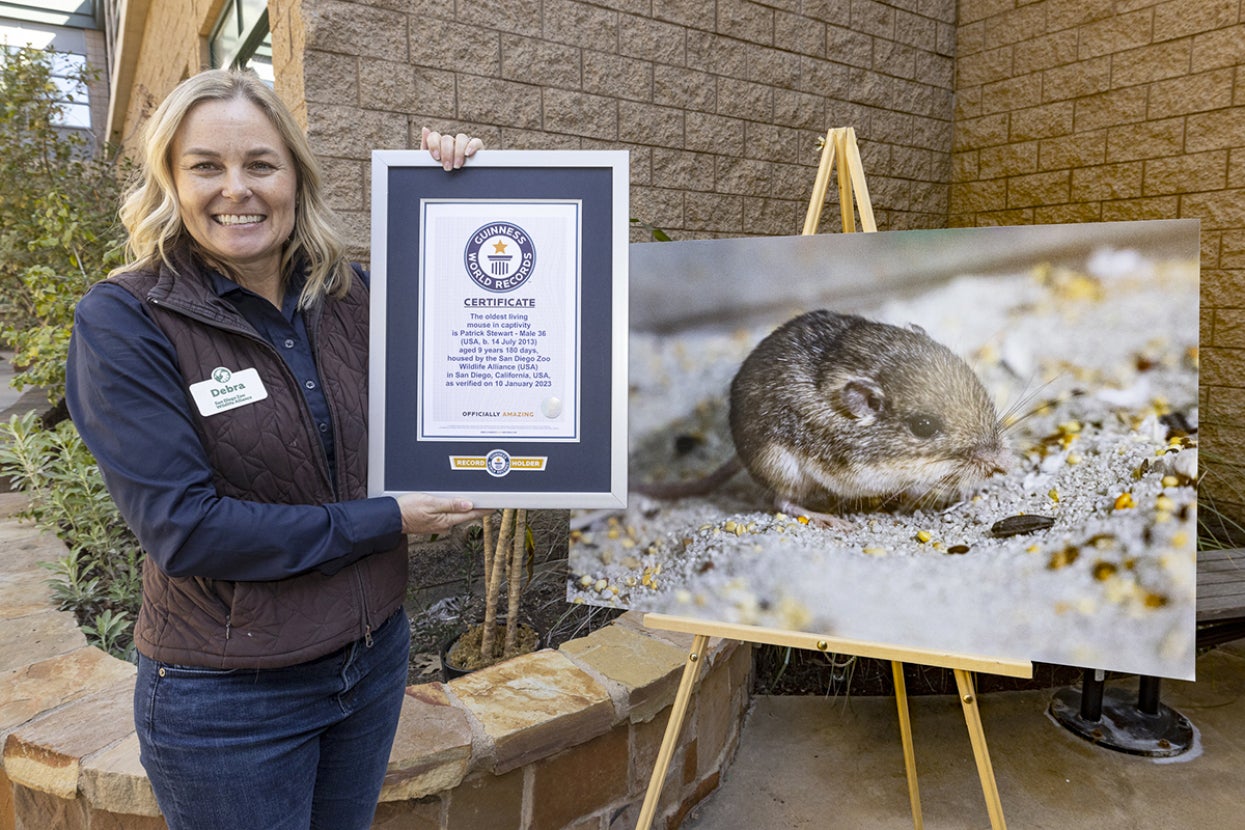
Patrick Stewart is an award-winning actor and an award-winning mouse.
The oldest Pacific pocket mouse lived to be nearly 10 years old. “Pat,” named after Sir Patrick Stewart, holds the GUINNESS WORLD RECORDSTM title for oldest mouse in human care.
- Pacific pocket mice are a subspecies of little pocket mice. In 1972, five little pocket mice named Fe, Fi, Fo, Fum, and Phooey orbited the moon on NASA’s Apollo 17 mission.
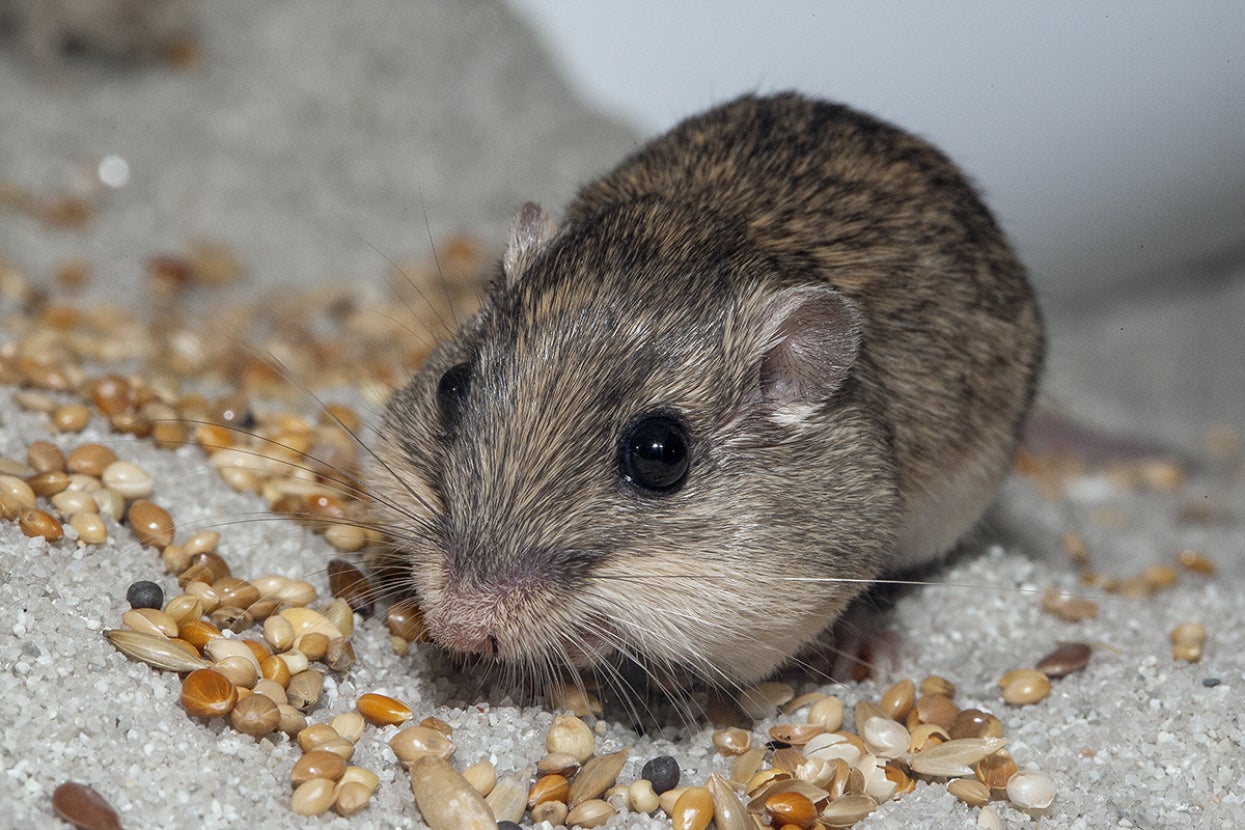
Pacific pocket mice stuff their cheek pockets with provisions for later.
What’s in a name?
Like true Southern Californians, these mice feel at home near the beach. They need to live within two-and-a-half miles of the Pacific coast, where temperature, moisture level, soil type, and the plant community combine to make their perfect environment.
Pocket mice are so named for their pocket-like cheeks, which they fill with food and nesting supplies. While hamsters and other rodents have storage pouches inside their mouths, pocket mouse pockets are on the outside of their mouths.
- Despite their name, pocket mice aren’t “true mice.” They are more closely related to beavers than to mice.
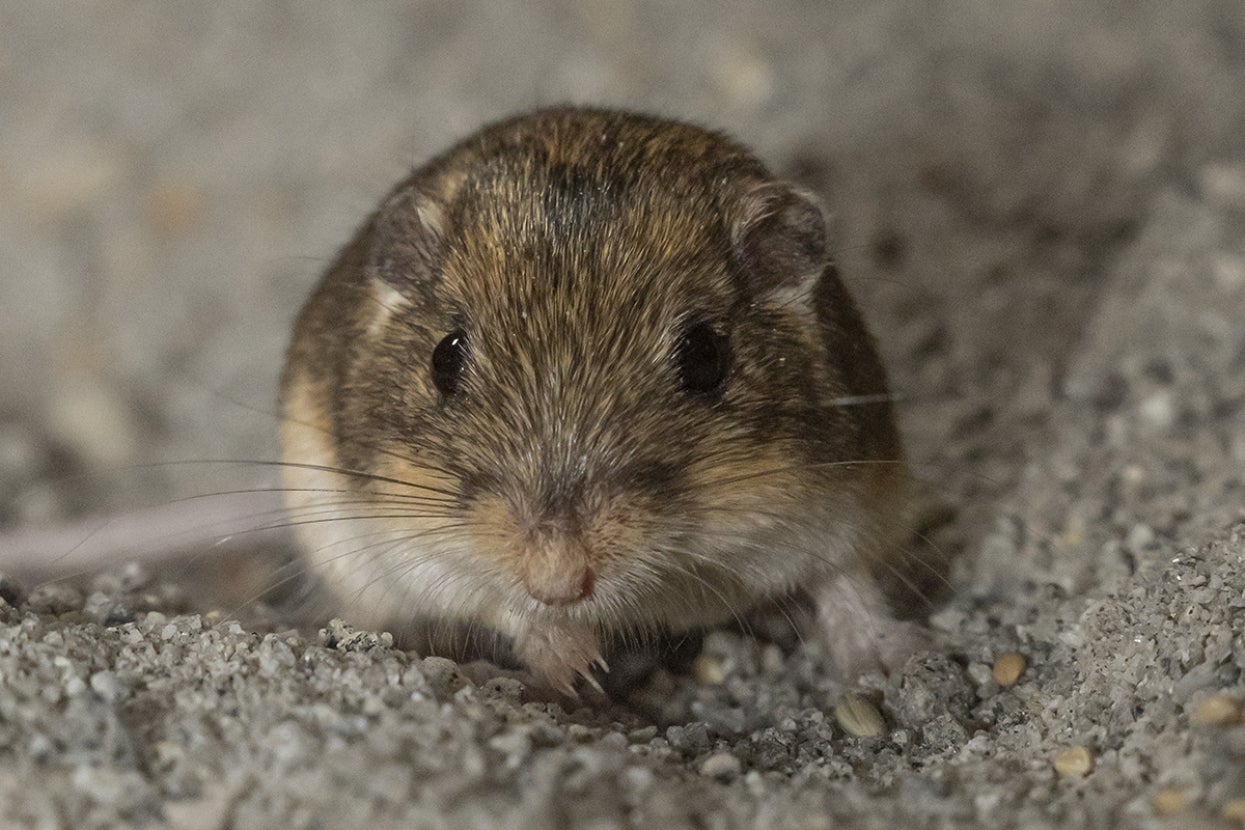
Pocket mice belong to the biological family Heteromyidae, not the "true mouse" family Muridae.
Home sweet home
Pacific pocket mice dig and live in underground burrows. They are solitary and fiercely territorial.
- Their habitat is called coastal sage scrub. Once found along the coast of California and Baja California (Mexico), today only as much of 15 percent of it remains, making it one of the most critically endangered ecosystems in the world.
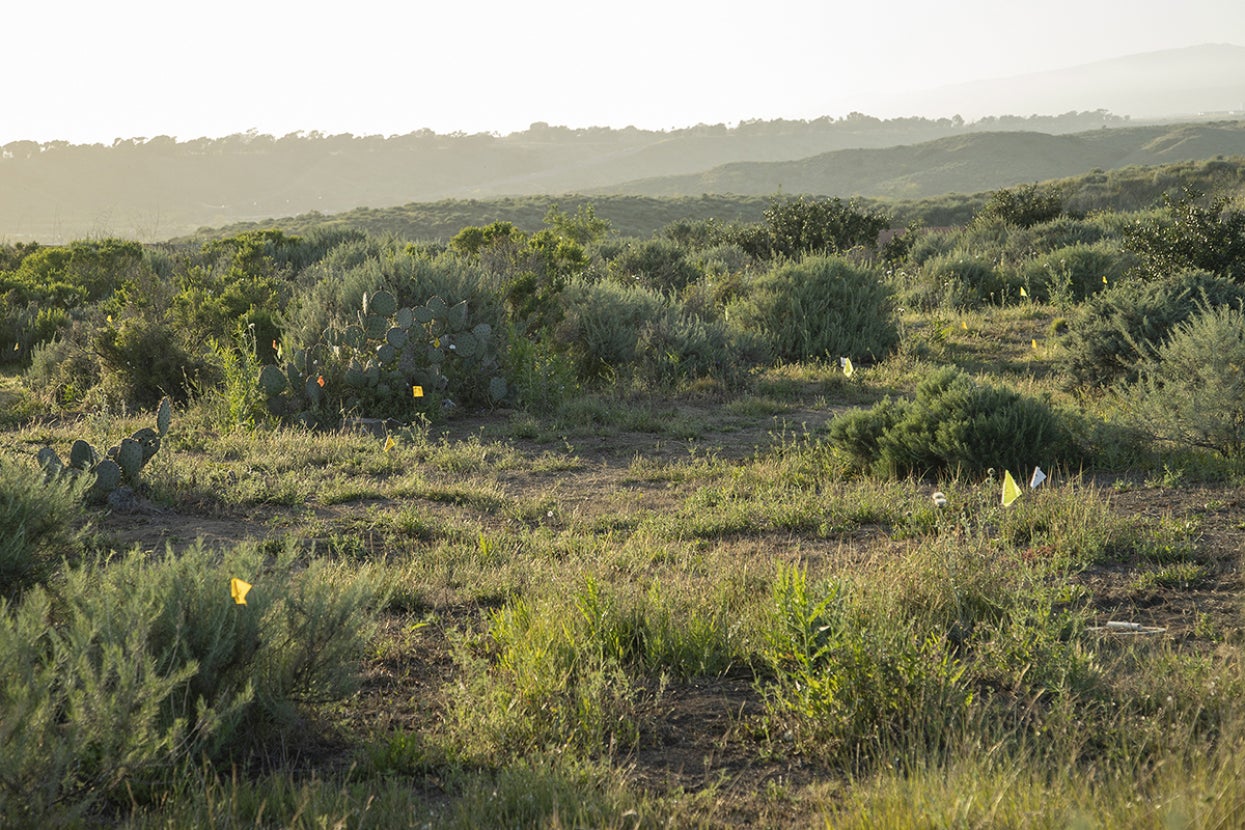
Coastal sage scrub habitat on Marine Corps Base Camp Pendleton serves as a protected site for pocket mouse releases.
- Pocket mice are ecosystem gardeners, dispersing native plant seeds through their droppings and cycling nutrients in the soil as they dig their burrows. These green-thumb-sized gardeners keep Southern California’s landscapes—and therefore the wildlife and local communities that depend on them—healthy and resilient.
Masters of survival
Because fresh water is scarce in their habitat, Pacific pocket mice evolved to need very little of it. They can go months without taking a sip, extracting most of their water from their food while their highly efficient kidneys help them retain almost all the moisture they consume.
The insides of their cheek pockets are lined with fur. This furry barrier helps prevent moisture loss as the mice fill and empty their pockets.
- As granivores, seeds are their primary diet. They forage seeds from around the landscape, stuff them in their pockets, and cache their stockpile of snacks in their burrows.
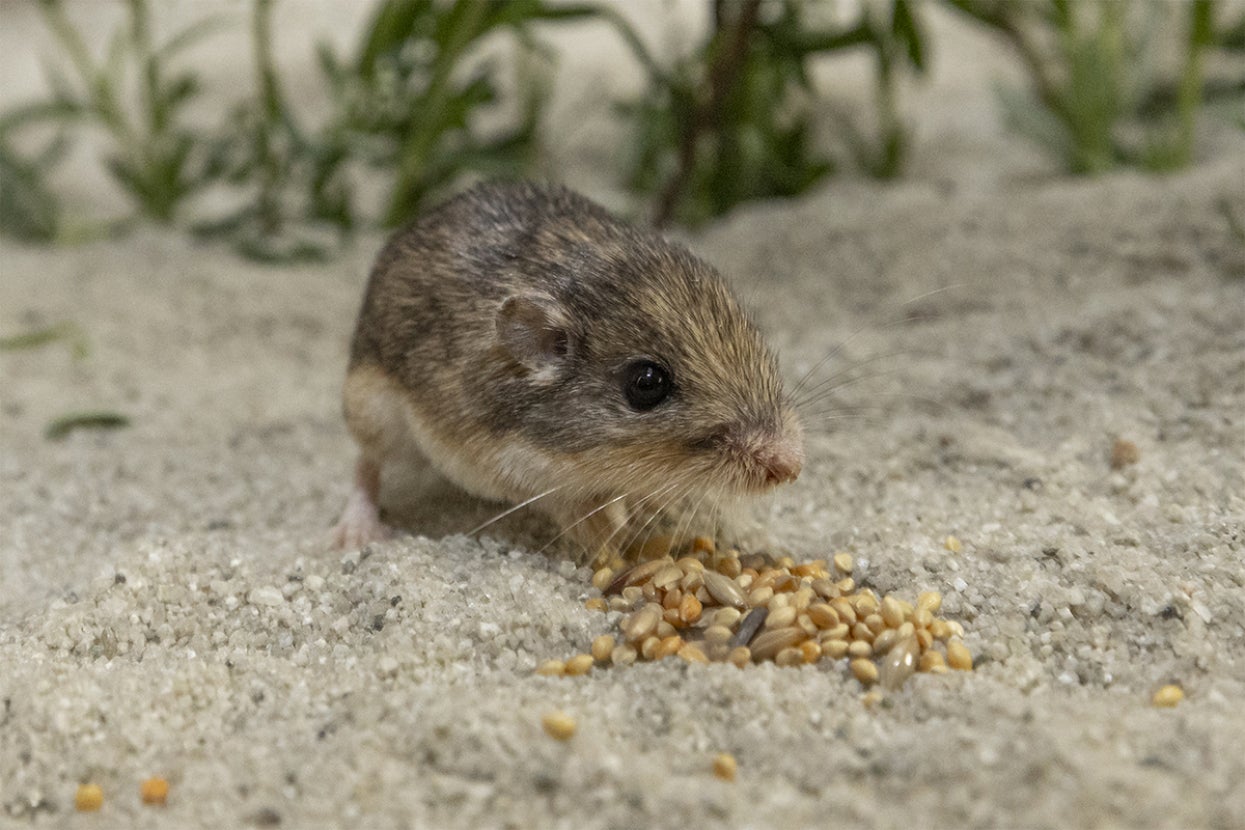
The seeds of native forbs, herbs, and grasses make up most of the pocket mouse diet.
Because they’re so small, these mice lose body heat and burn energy quickly. To compensate, they enter torpor—a daily power-saving mode in which their metabolism drops dramatically—during hot days and emerge at night, when it’s cooler.
Pacific pocket mice hibernate in their burrows through the winter to keep out of the cold and conserve energy while resources are scarce. They survive off their cache of seeds.
- These mice reach sexual maturity at just 35 days of age, so they can reproduce in the same season they were born. After a gestation of about 23 days, they give birth to an average litter of three to five pups.
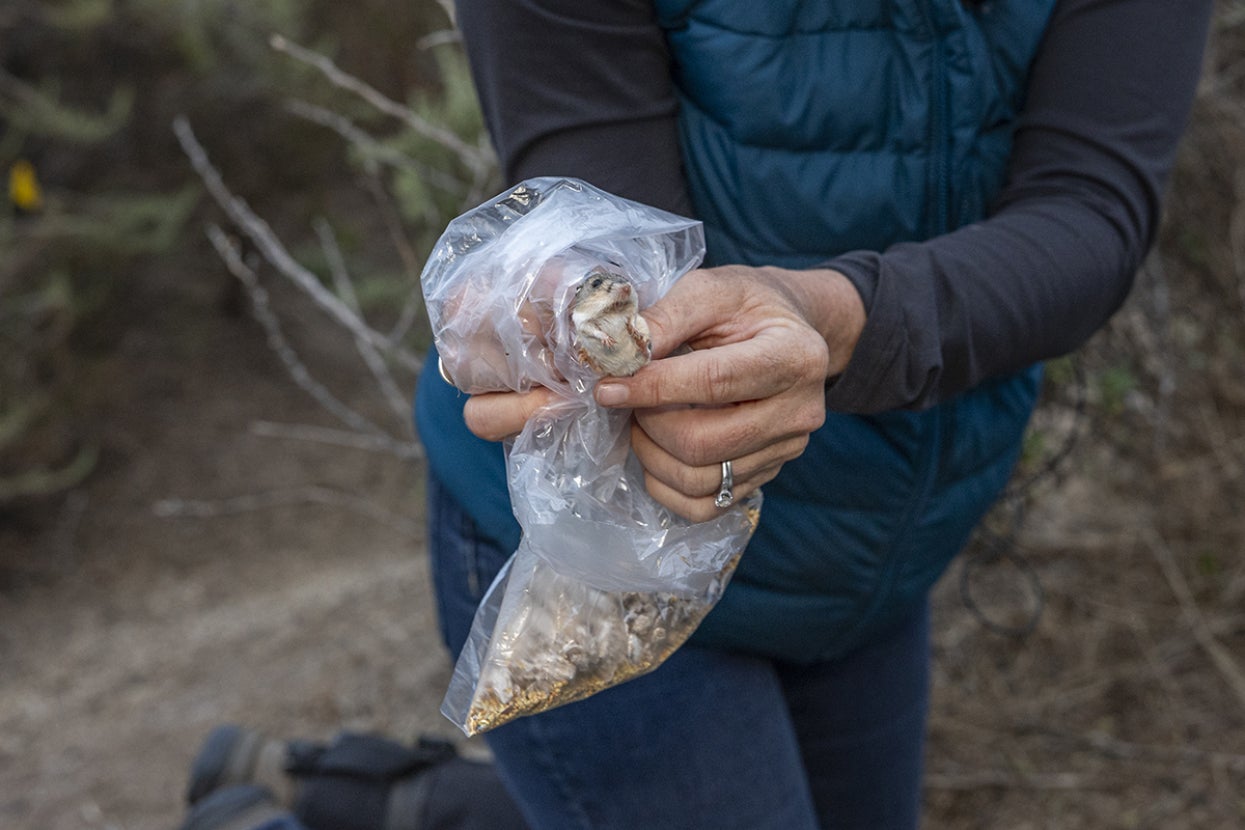
A super tiny superhero gets a final check in the field before release into native habitat.
Conservation comeback
Rapid housing and infrastructure development along the coast caused Pacific pocket mouse numbers to plummet so drastically that the species was thought to be extinct by the mid-twentieth century. In 1993, a small population was rediscovered in Orange County, reviving hope for recovery.
Only three original populations of Pacific pocket mice persist today. Together with our partners, San Diego Zoo Wildlife Alliance has established an additional three reintroduced populations in San Diego and Orange counties.
- San Diego Zoo Wildlife Alliance has released more than 500 Pacific pocket mice into new and existing populations. For the past 20 years—and for as many more as it takes—our conservation program has remained committed to ensuring this iconic species makes an enduring comeback.