




As humans we are invariably drawn to gorillas. The attraction seems to go beyond a simple fascination with the world’s largest primate, or even the pull of a shared ancestry. We are fascinated because, as with most nonhuman primates, we see so much of ourselves in them. Perhaps it’s the gaze at first. The look in their eyes is interpreted as contemplation, problem solving, or simple curiosity; all skills we pride ourselves on having and feel comfortable classifying when we notice them in other beings.
Social Studies
It could be the way we watch these great apes deal with each other. We recognize behaviors like play, anger, parental adoration, and even sometimes familial strife. It’s easy to surmise that gorillas are just like us, following an outdated (from a human perspective) but recognizable patrilineal social structure where everything fits into place. A massive silverback at the helm, with a handful of adult females all working together to tend to the success of the next generation of offspring. The reality, however, is so much deeper and complex, and possibly the true reason we are mesmerized. From a socioecological perspective (the study of how an ecosystem influences a social structure), gorillas seem to muddy the more traditional classifications of “male bonded,” or “female bonded.” These are simple descriptions used to denote which gender disperses (emigrates) from its natal group as an inbreeding avoidance strategy, and as a means to maximize genetic diversity. “Female bonded” means females and their offspring stay together (males then disperse at sexual maturity), forming the core of the community and developing deep bonds that may last a lifetime and are passed down to the next generation (think elephants). Whereas in rarer “male-bonded” species, males serve as the core of the community, forging strong alliances and managing the culture of the group (think chimpanzees). Both systems have a place for members that have reached an age in which they no longer contribute to reproduction but continue to help rear young and teach the skills needed to survive.
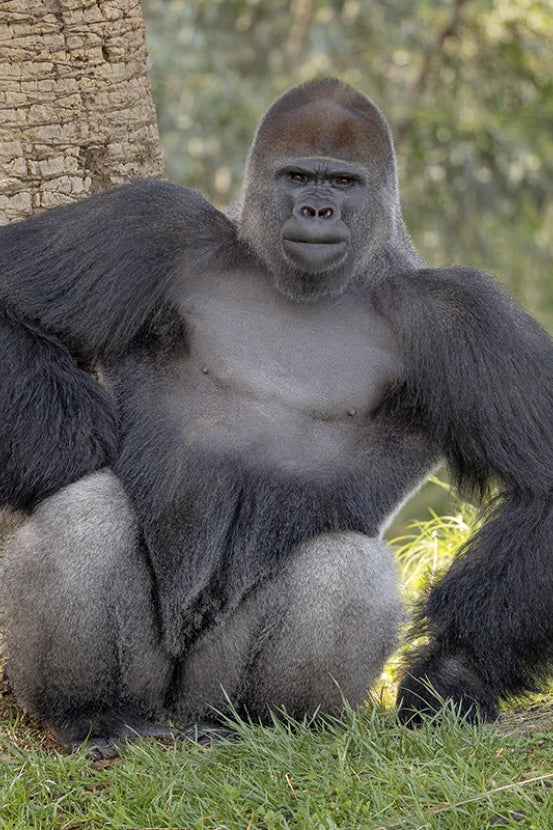
Frank is a member of the bachelor troop at the Safari Park.
Multiple Approaches to Troop Life
Gorillas don’t fall into either structure, or sometimes both, or sometimes a combination of any number of social systems. Regardless, for gorillas, the goals still remain the same: Protect your offspring, teach them the ways of the ecosystem, avoid predators, and live a rich social life. Gorilla social structure is more fluid and it, in some cases, is dependent on the competency of the silverback, as determined by the females in the troop. Female gorillas leave their natal troop when they reach sexual maturity and will seek out a new troop (with unrelated females) to join, with a silverback to mate with, and a safe place to raise offspring. Although they can and do form bonds with unrelated females in the troop, the most important relationship they maintain is with the silverback, and their own offspring.
All of the females contribute to the safety and rearing of the young to varying degrees, and if the resources (such as food and shelter) are plentiful, multigenerational troops can thrive. Non-reproductive females will often stay with a troop to benefit from the protection it provides, but also to help with the daily responsibilities of child rearing. If the females of any given troop decide the silverback is no longer capable of providing the right protection or guidance, they simply leave and join another troop. Some female gorillas can transfer multiple times over the course of their lives. This strategy maximizes their chances of living a safe and long life, while also offering the best conditions for their babies to grow.
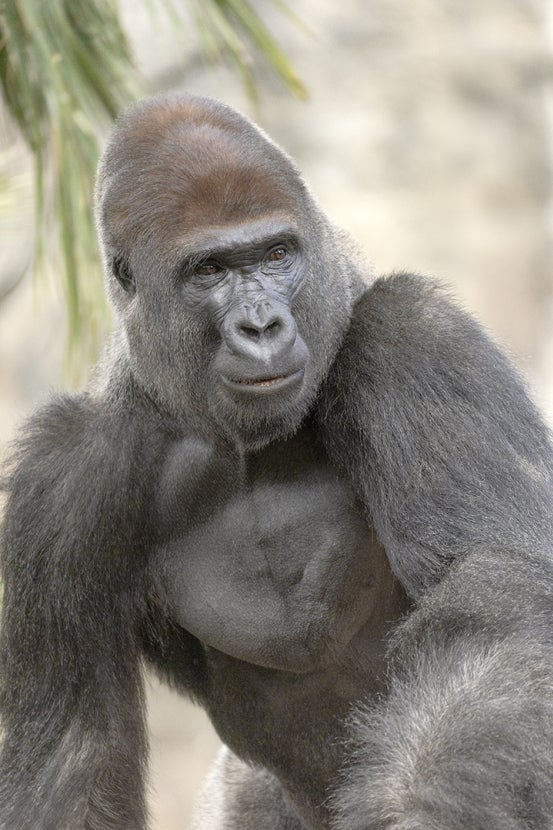
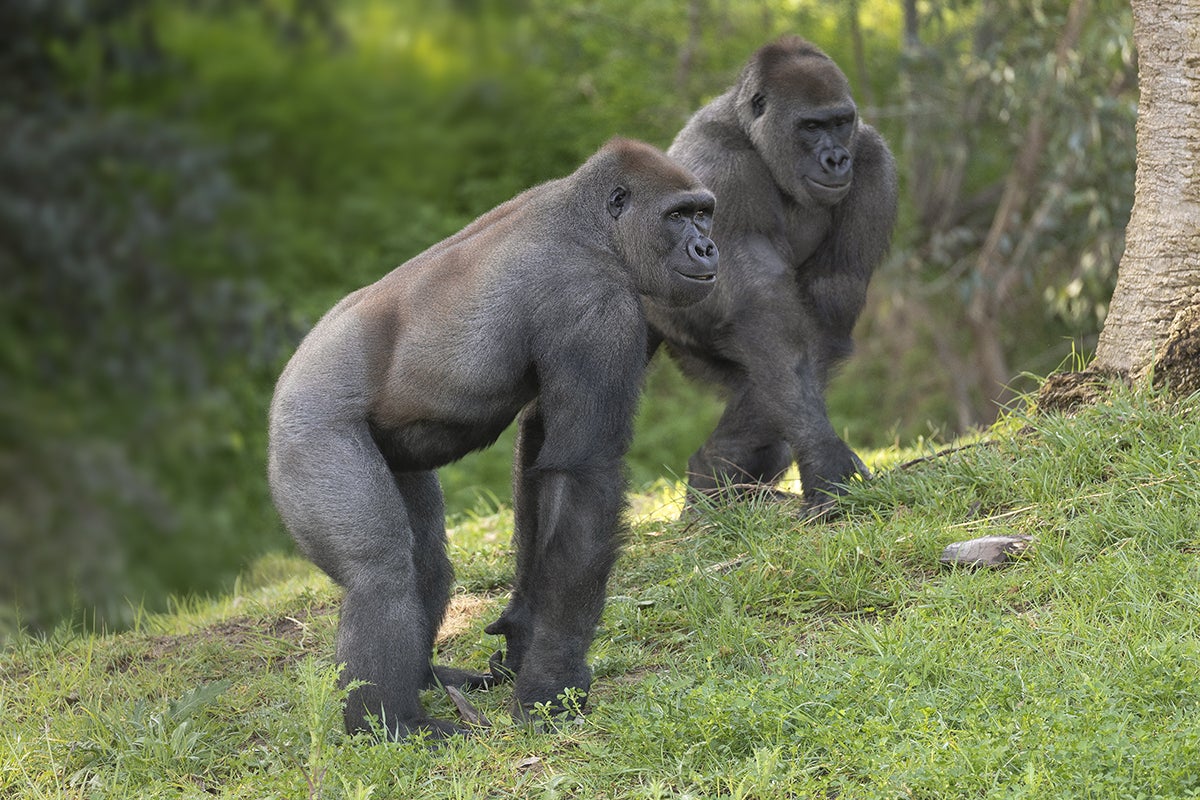
Ekuba keeps a watchful eye.
For male gorillas, things are a bit different. They also leave their natal troops at sexual maturity, but they don’t always leave alone, and they almost certainly don’t immediately join another troop. Sometimes brothers (or more likely half-brothers) leave the troop together, forming semi-nomadic bachelor troops. Sometimes males leave alone, and live solitary lives for a bit before joining a bachelor troop, or if they are lucky, eventually attracting some females and starting their own troop once they have gained enough experience. Regardless of how they end up living out the rest of their lives, male gorillas face significant pressure during this phase. Lots of males never become successful as troop leaders and are destined to stay on the periphery of troop life. When a male is ready to take on the challenges of leading a troop, they may have to fight to replace an aging male or rely on the often serendipitous “being in the right place at the right time” strategy.
The one thing that holds true for both male and female gorillas is the value of social skills and the ability to form and maintain relationships. Perhaps it is this set of familiar skills that we see when we dig into the lives of gorillas that draws us in. It’s possible that this depth of interpersonal relationships we consider to be “human” is what we marvel at when we watch gorillas navigate the ups and downs of troop life. Certainly, we can see the social maneuvering, the selective attention, and the unmistakable affection between parent and offspring as something unmistakable and familiar.
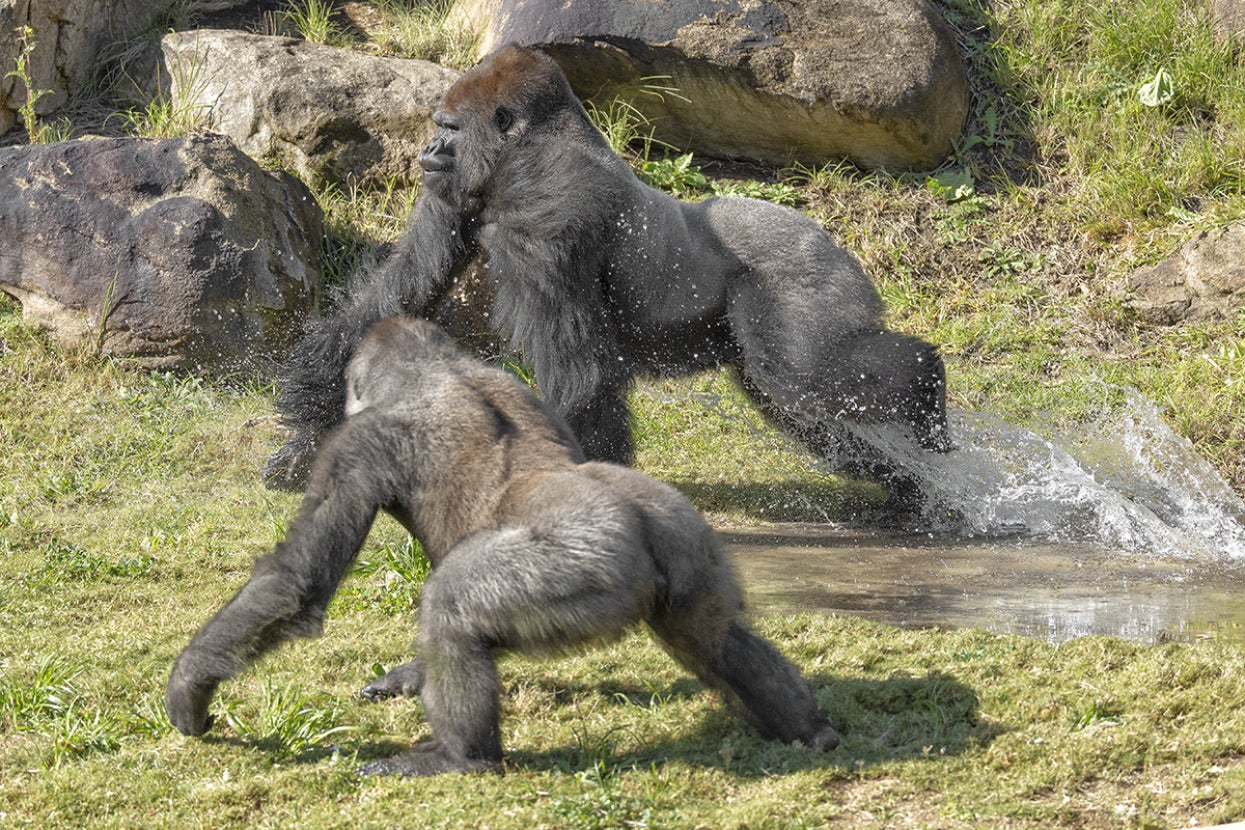
Njemba and Frank romp.
Family Ties at the Zoo and Safari Park
Members of San Diego Zoo Wildlife Alliance have, over the decades (11 to be exact!), seen all of these twists and turns pan out in the real lives of the gorilla troops for which we have had the honor of caring. Many will remember that Frank’s grandmother, Alvila, was instrumental in helping to raise Mandazzi and Maka, despite being past her reproductive years. The same could be said for her mother Vila at the Safari Park, who contributed stability and care to the growing troop under Winston’s long leadership tenure. Most guests also recognize that the transition of Jessica from the Zoo troop to the Park troop was as much a part of a natural gorilla lifestyle as the mixed groups of brothers living the bachelor life at the Zoo. Even behind the scenes, Wildlife Care teams continue to work tirelessly to monitor social signaling and dynamics of multiple iterations of social groups in our care, to maximize the chances that all gorillas have a rich social existence.
For most of the 20th century, people have studied the social structure of great apes (gorillas, chimpanzees, bonobos, orangutans) to glean insight into how ancient humans navigated a world without agriculture or technology. Scientists have often noted that social skills are often more critical than aggression or manipulation of the environment when it comes to long-term success in social nonhuman primates. Maybe that is what we see when we watch gorillas. Less of a mirror and more of an aspiration to a world where cooperation and respectful interactions lead to a better existence for all.