



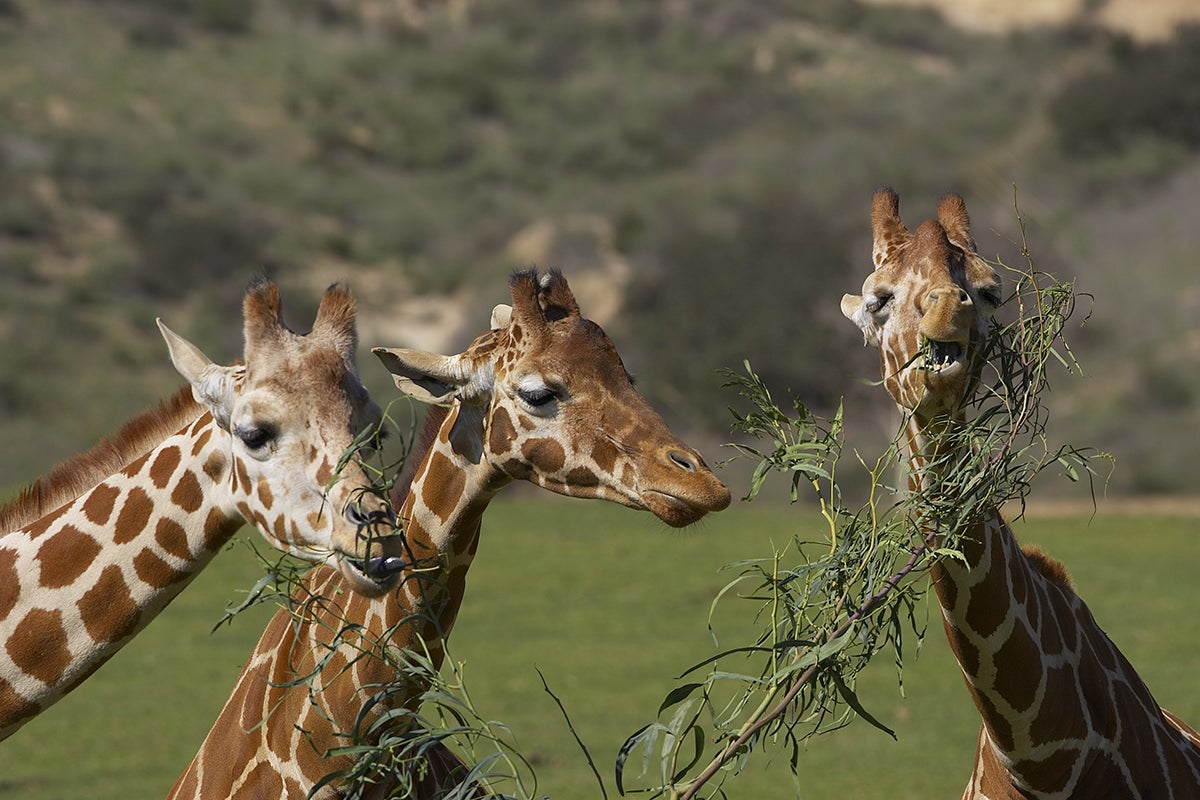

Familiar brown patches dot giraffes from the tip of their long neck down their body. Some giraffes’ patterns look like ragged oak leaves while others have more uniform, rectangular spots. Additional factors including what they eat and where they live determine the color of their coats, ranging from light tan to dark brown. These traits may make it easier to tell them apart, and there are even more differences between giraffes that go deeper than what meets the eye.
It’s long been accepted that there is one giraffe species with nine subspecies. But in response to growing scientific evidence, the International Union for the Conservation of Nature Species Survival Commission’s Giraffe and Okapi Specialist Group recently completed a taxonomic review. This groundbreaking assessment revealed that instead of one giraffe species, there are actually four: northern, southern, reticulated, and Masai.
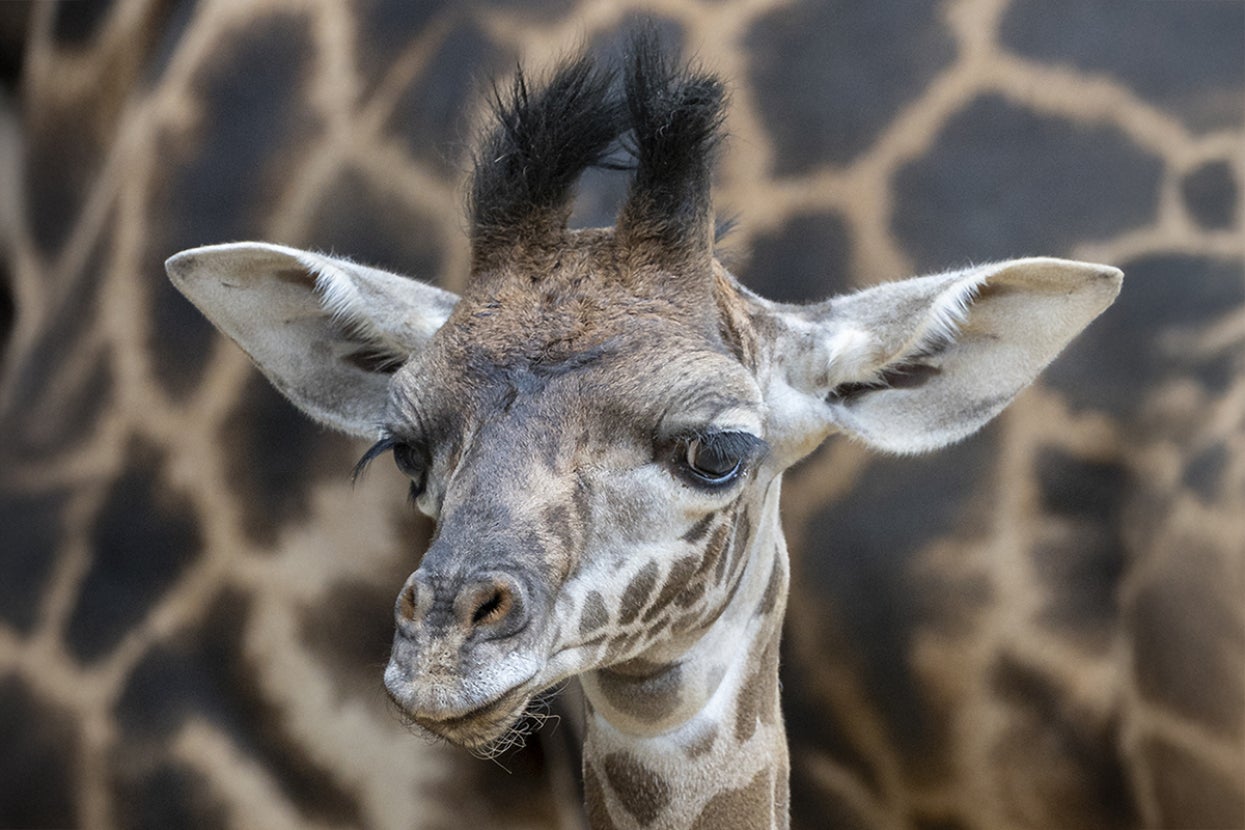
Lemayian, the Masai giraffe pictured above, was born at the San Diego Zoo during the summer of 2025.
The evaluation couldn’t have happened at a more crucial time for giraffe conservation. The world’s tallest land mammal is experiencing what conservationists call a "silent extinction." Giraffe populations are drastically decreasing due to habitat loss, changing weather patterns, and mounting challenges to human-wildlife coexistence. As a result, it’s increasingly challenging for giraffes to find the food, water, and safe spaces they need to survive and thrive.
Now a new door is opening to save and protect giraffes for generations to come. This landmark reclassification is reshaping what we understand about them and how we can address their conservation needs. With our partners, we can create specialized approaches to evaluate the threats each giraffe species faces, leading to informed solutions.
Discover a little bit more about the four species below.
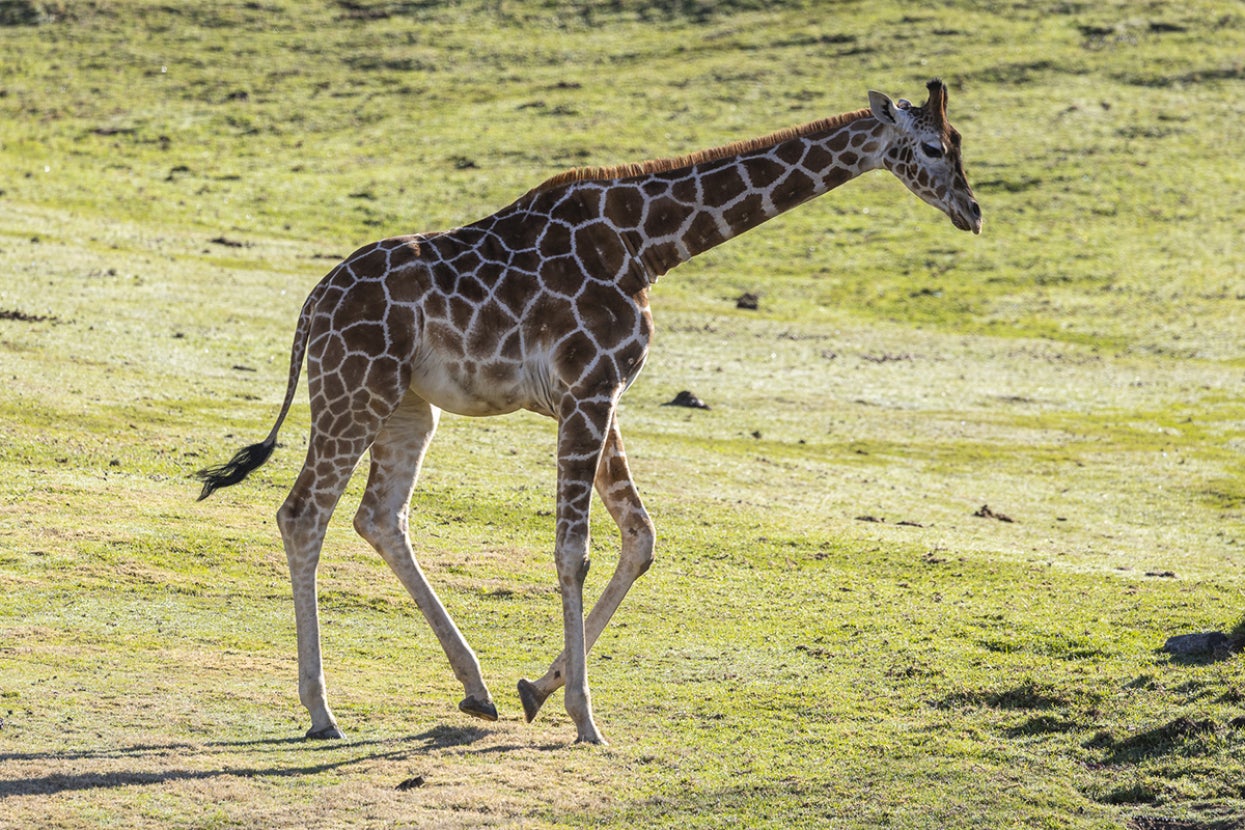
Northern giraffe Giraffa camelopardalis
Vulnerable
Subspecies: G. c. peralta (West African giraffe), G. c. antiquorum (Kordofan giraffe), G. c. camelopardalis (Nubian giraffe)
Northern giraffes’ native range spans across Western, Central, and Eastern Africa. They sport large, brown splotches separated by thick, beige lines.
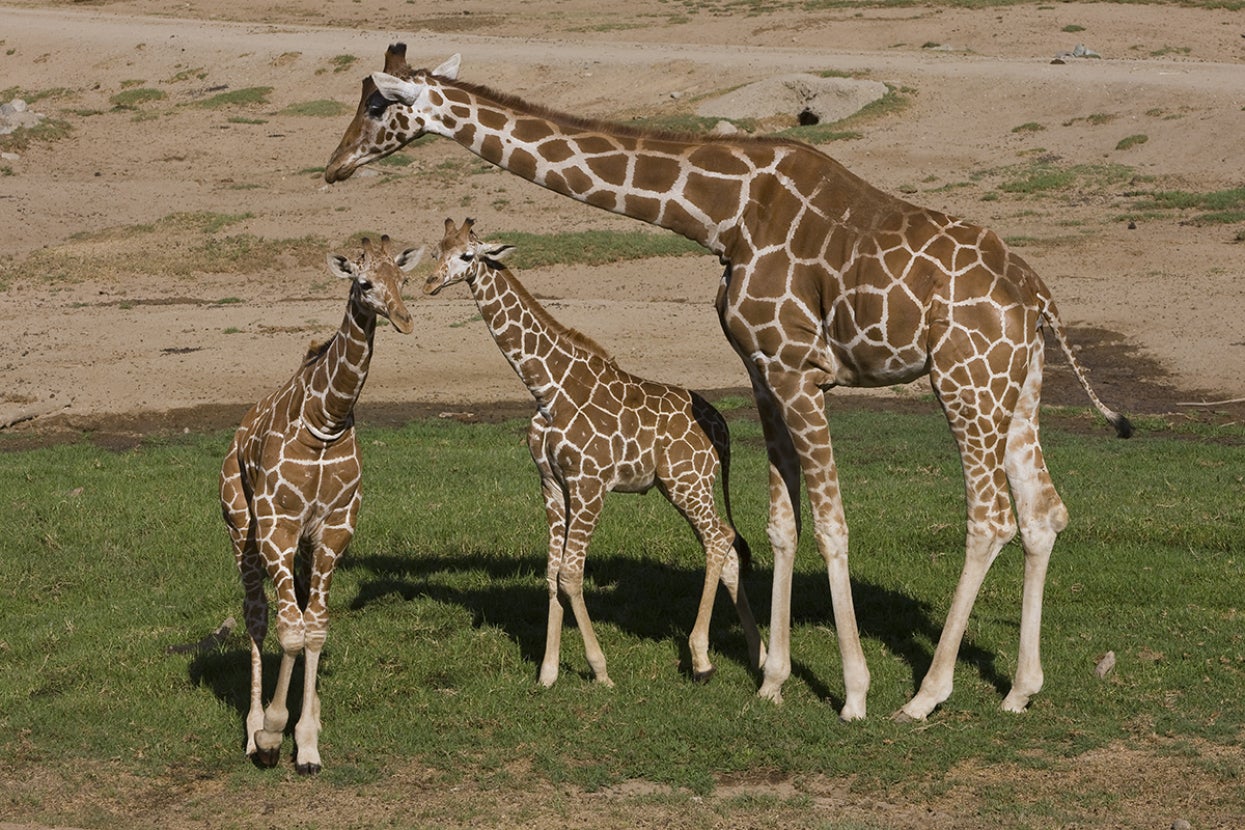
Reticulated giraffe Giraffa reticulata
Endangered
The reticulated giraffe, mostly found in northern Kenya, has a dark coat with narrow, web-like white lines.
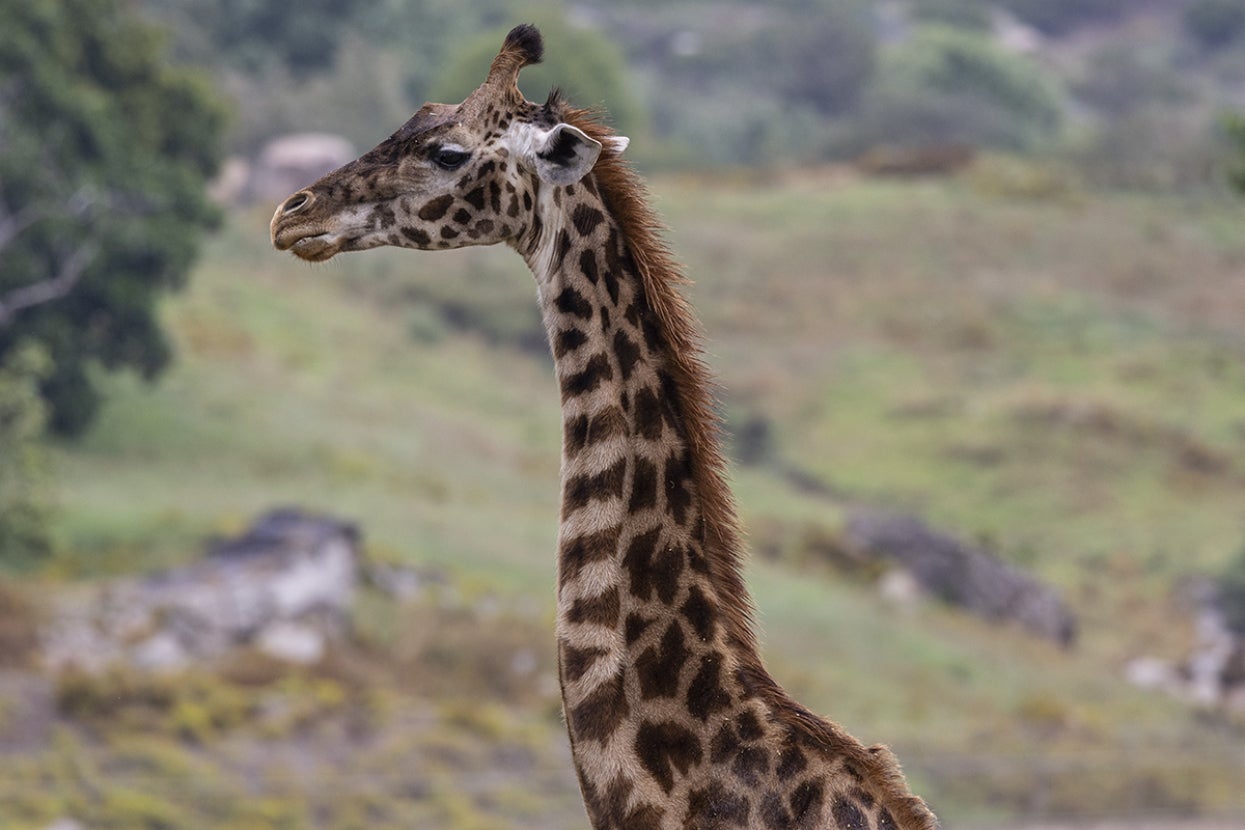
Masai giraffe Giraffa tippelskirchi
Endangered
Subspecies: G. t. tippelskirchi (Masai giraffe sensu stricto), G. t. thornicrofti (Luangwa/Thornicroft’s giraffe)
Masai giraffes live in Eastern Africa from Kenya to Tanzania and their spots create patterns that look like oak leaves. In 2025, we welcomed four Masai giraffe calves at the San Diego Zoo and San Diego Zoo Safari Park. These new arrivals are increasing the global population and strengthening the species’ genetic diversity.
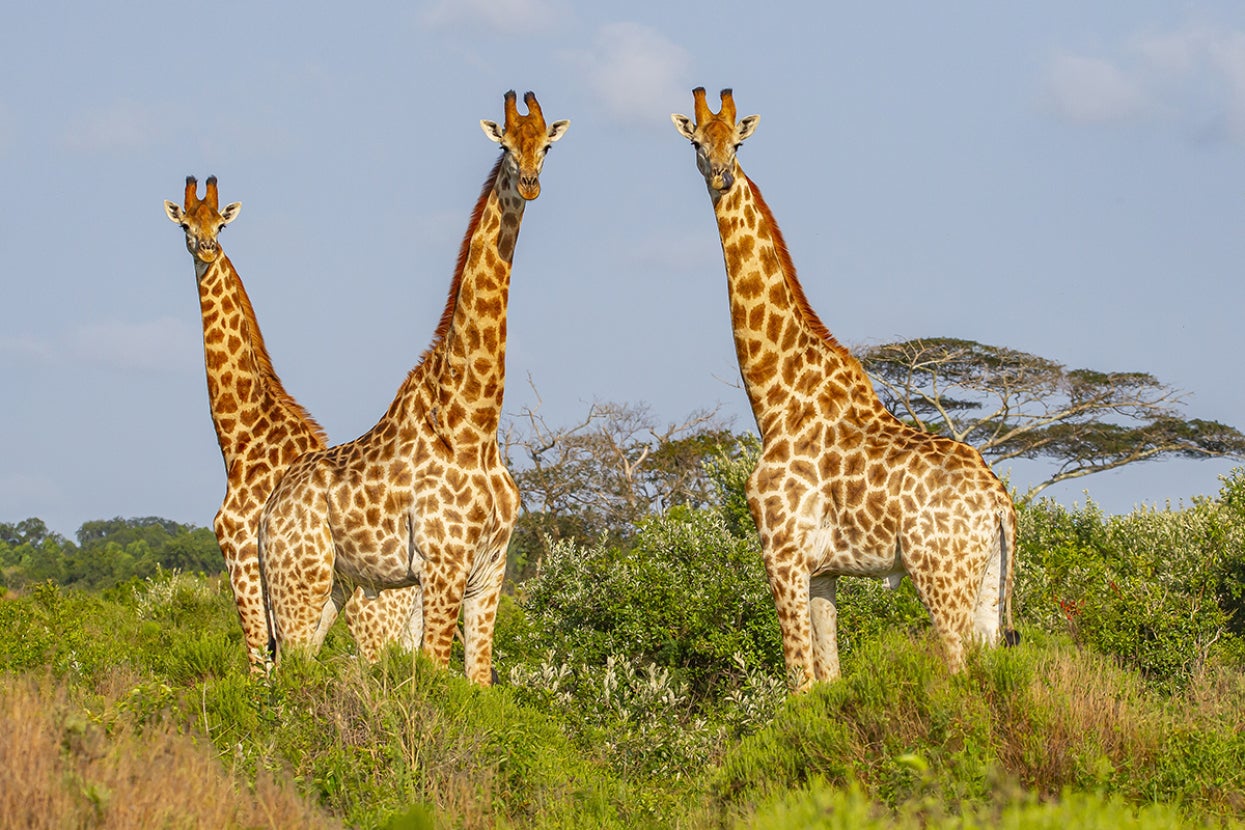
Photo Credit: Selim Kaya/iStock/Getty Images Plus
Southern giraffe Giraffa giraffa
Vulnerable
Subspecies: G. g. giraffa (South African giraffe), G. g. angolensis (Angolan giraffe)
Southern giraffes live throughout Southern Africa. They tend to have larger, rounded spots and a light tan coat.
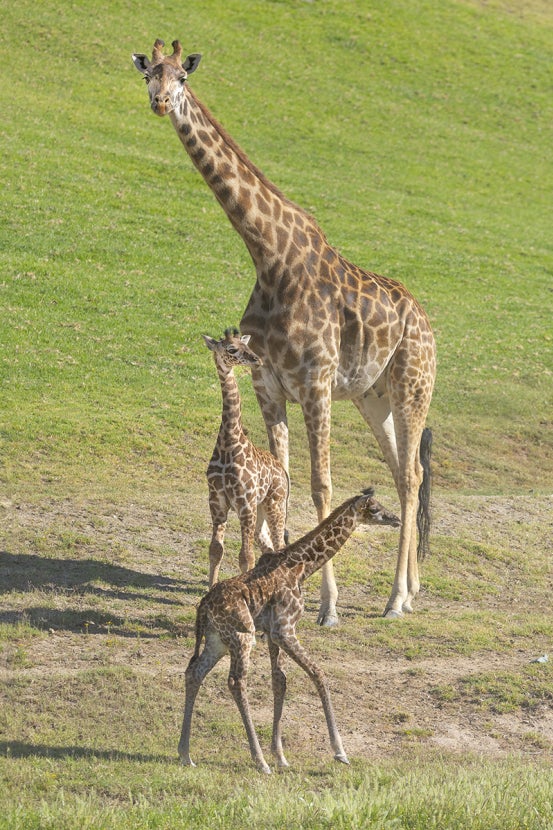
In 2025, we welcomed Masai giraffe calves, Subeera and Matope, to the Safari Park.
The distinct spots and towering necks of giraffes are an iconic—and vital—part of the savanna’s landscape. As a keystone species, they help maintain balance in their ecosystem by grazing on hard-to-reach leaves and dispersing seeds throughout the environment. Together with our partners, we’re working towards a brighter future for all four species through our Savanna Conservation Hub.
Test your knowledge about the different giraffe species on your next visit to the Zoo and Safari Park and make sure to keep an eye out for the not-so-little calves.
Discover how the support of wildlife allies like you is saving, protecting, and caring for giraffes worldwide through our Savanna Conservation Hub.