



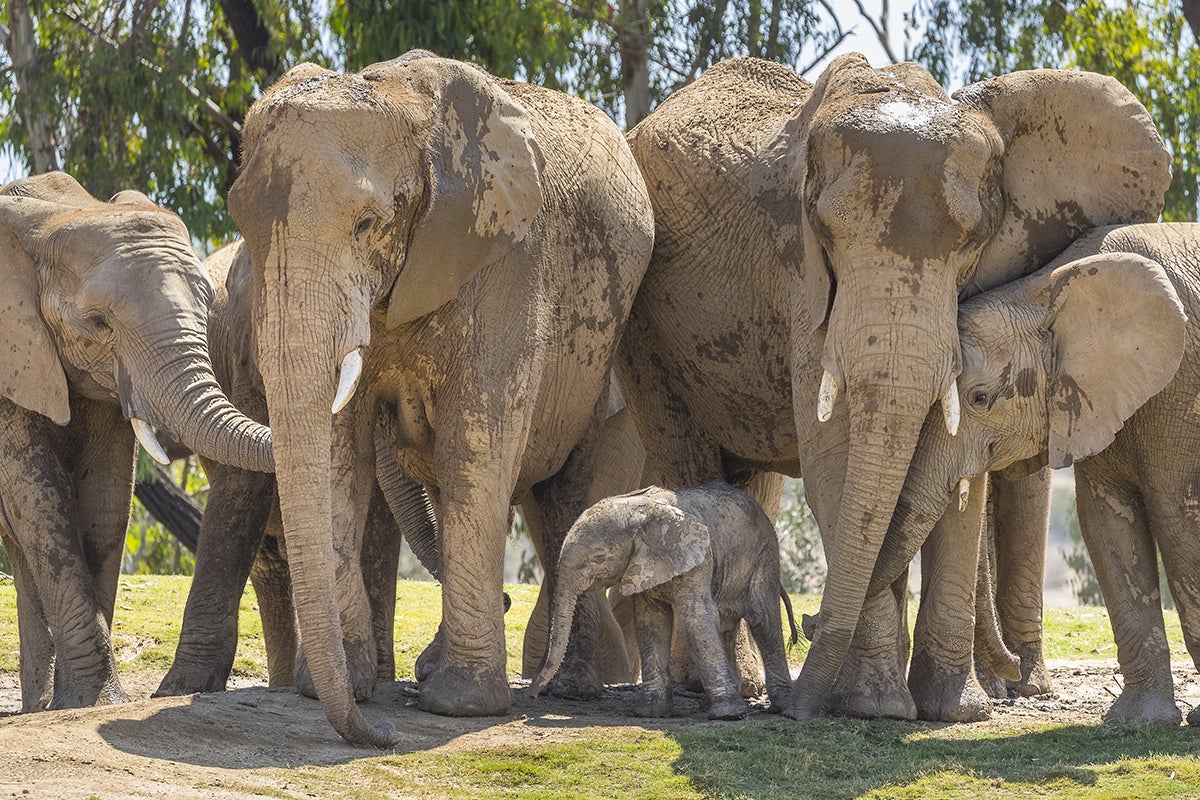

Being near a herd of elephants is an unforgettable experience. Whether you’re exploring Denny Sanford Elephant Valley at the San Diego Zoo Safari Park or Elephant Odyssey at the San Diego Zoo, there’s so much to see, hear, and learn from this keystone species. Here’s just a few of the many incredible moments you might notice as you walk beside them.
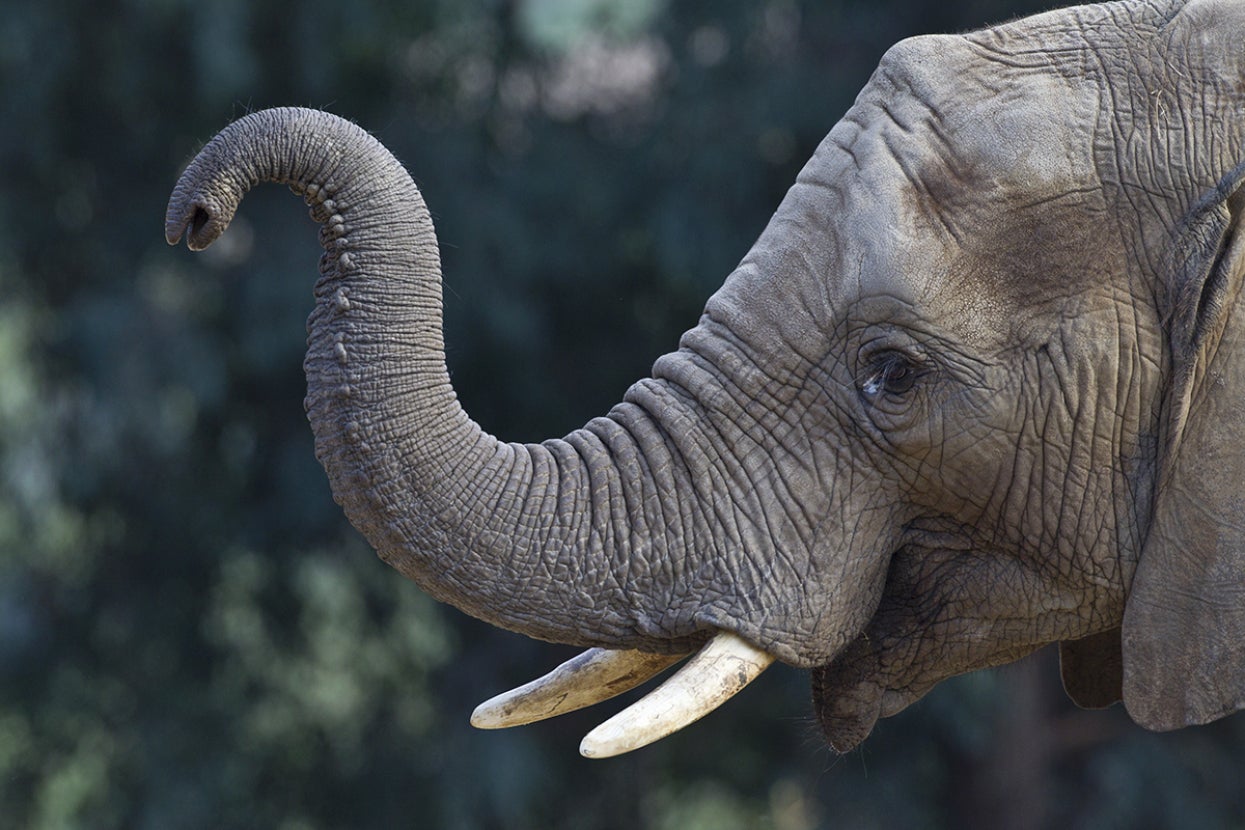
An elephant's trunk is formed by the fusion of their upper lip and nose.
Talk About Trunks
Can your nose lift 550 pounds (250 kg)? An elephant’s can! A trunk, or “proboscis,” is an organ unique to members of the Elephantidae family (elephants and extinct mammoths). It’s formed by the fusion of their upper lip and nose and has nostrils at the tip. It’s extremely versatile and very powerful.
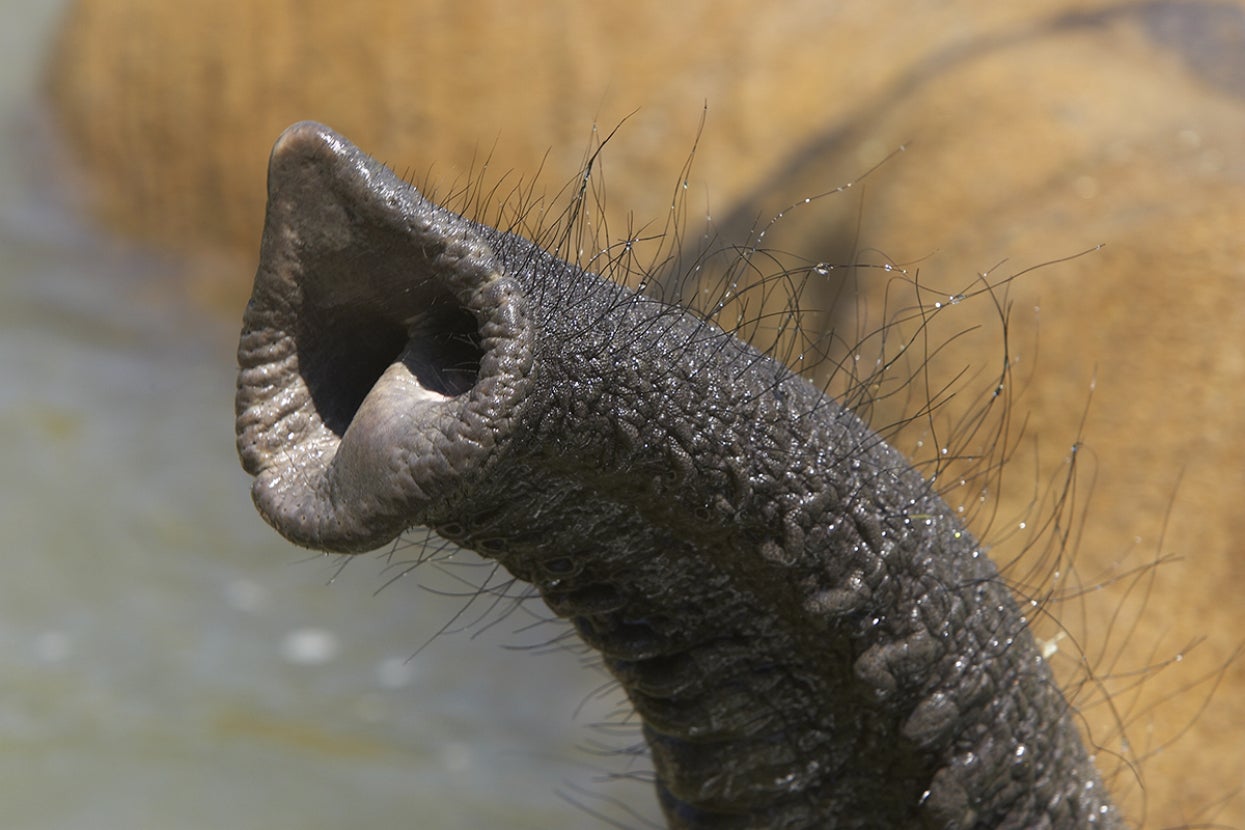
A trunk, or "proboscis," has nostrils at the tip.
A trunk has nearly 40,000 muscles and works like a hand, with the ability to twist, lift, grasp, and pinch. Flaps at the end of the trunk allow elephants to engage in dexterous motions as delicate as picking up a coin, just as a person would use their thumb and index finger. They can also display their awesome strength by throwing things to scare off a threat—their aim is pretty good, too!
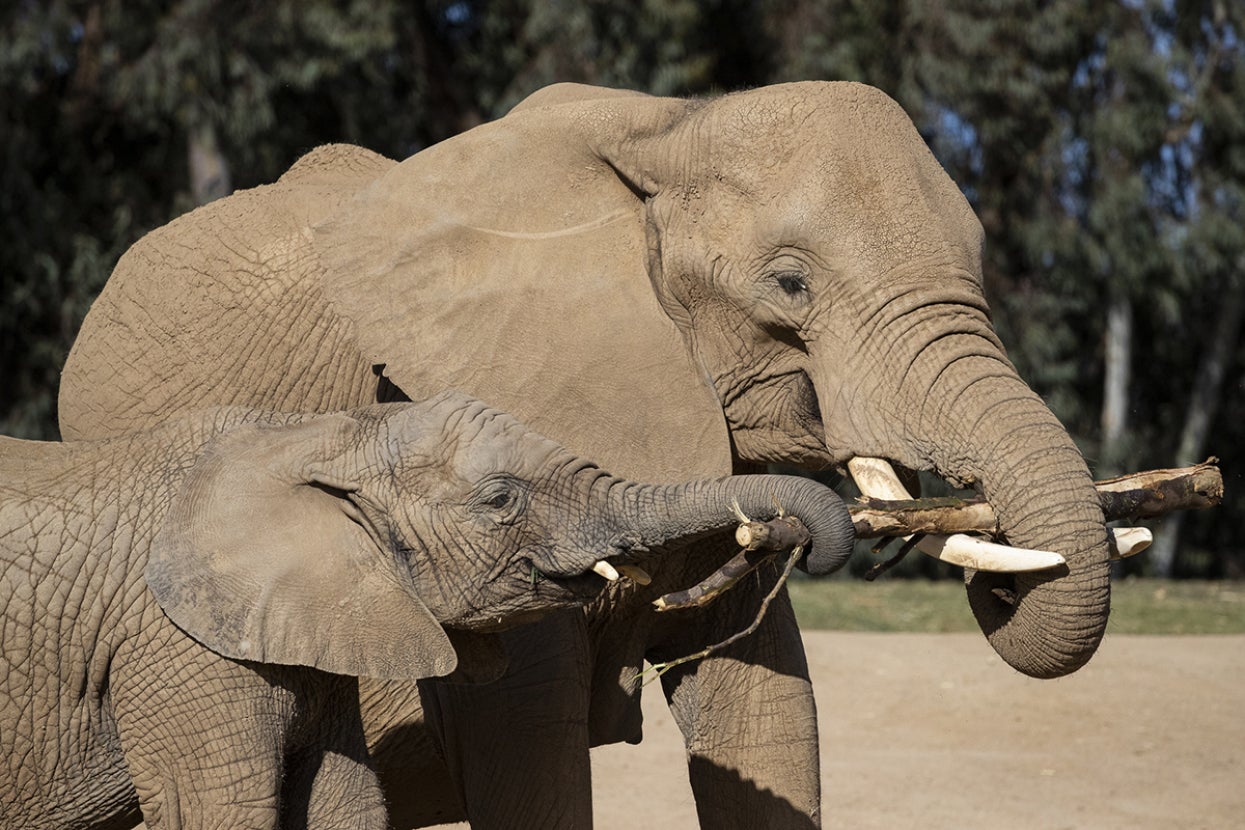
Elephant trunks have nearly 40,000 muscles and work like a hand.
EYES ON ELEPHANTS: Look for elephants using sticks or branches to scratch themselves in places their trunks and tails can’t quite reach.
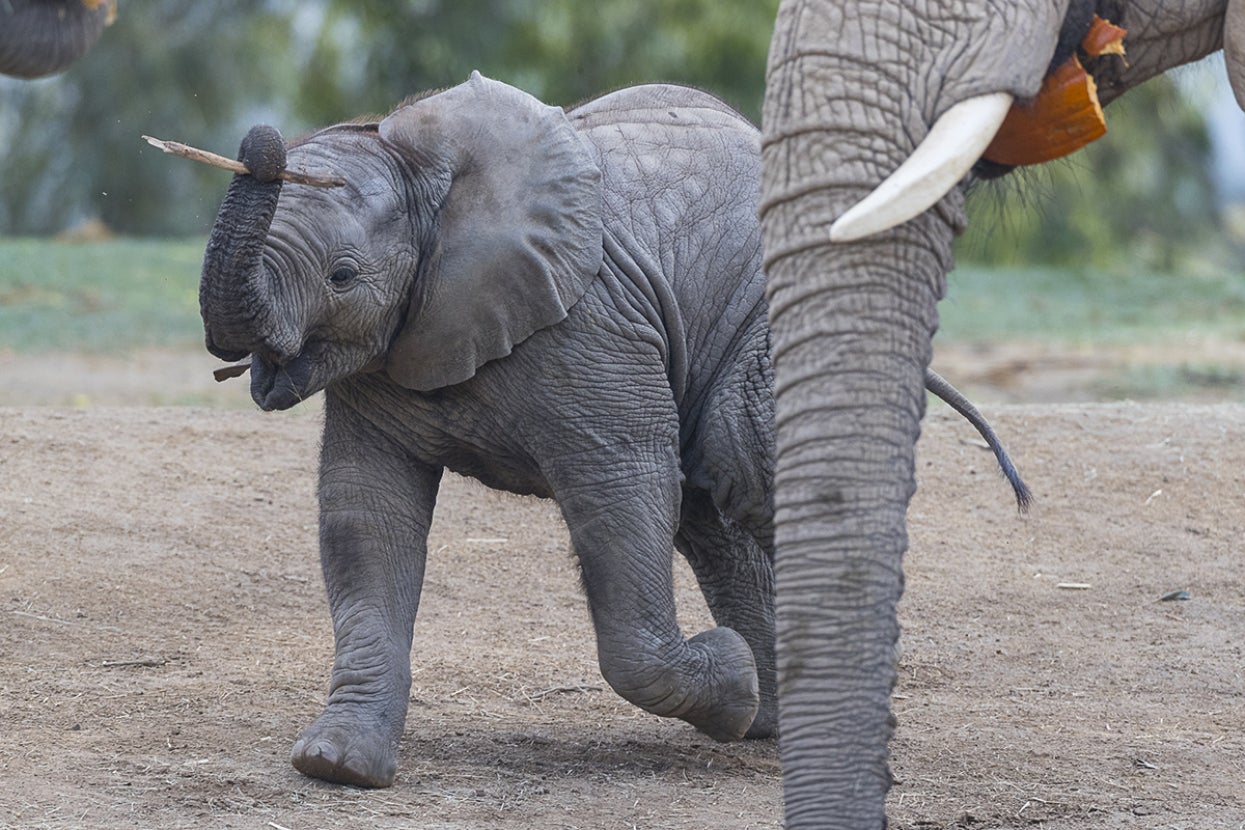
Flaps at the end of the trunk allow elephants to use it like a person would use their thumb and index finger.
The Nose Knows
Elephant trunks do normal nose things, too. Elephants have an excellent sense of smell. They can sniff something up to 7 1/2 miles (12 km) away, and even water underground. If they want to know more about what’s going on around them, they will raise their trunk in the air and swivel it to smell in all directions.

Elephants have an excellent sense of smell.
Elephants also use their trunks for breathing. That’s why they can swim underwater, using their trunk like a snorkel.
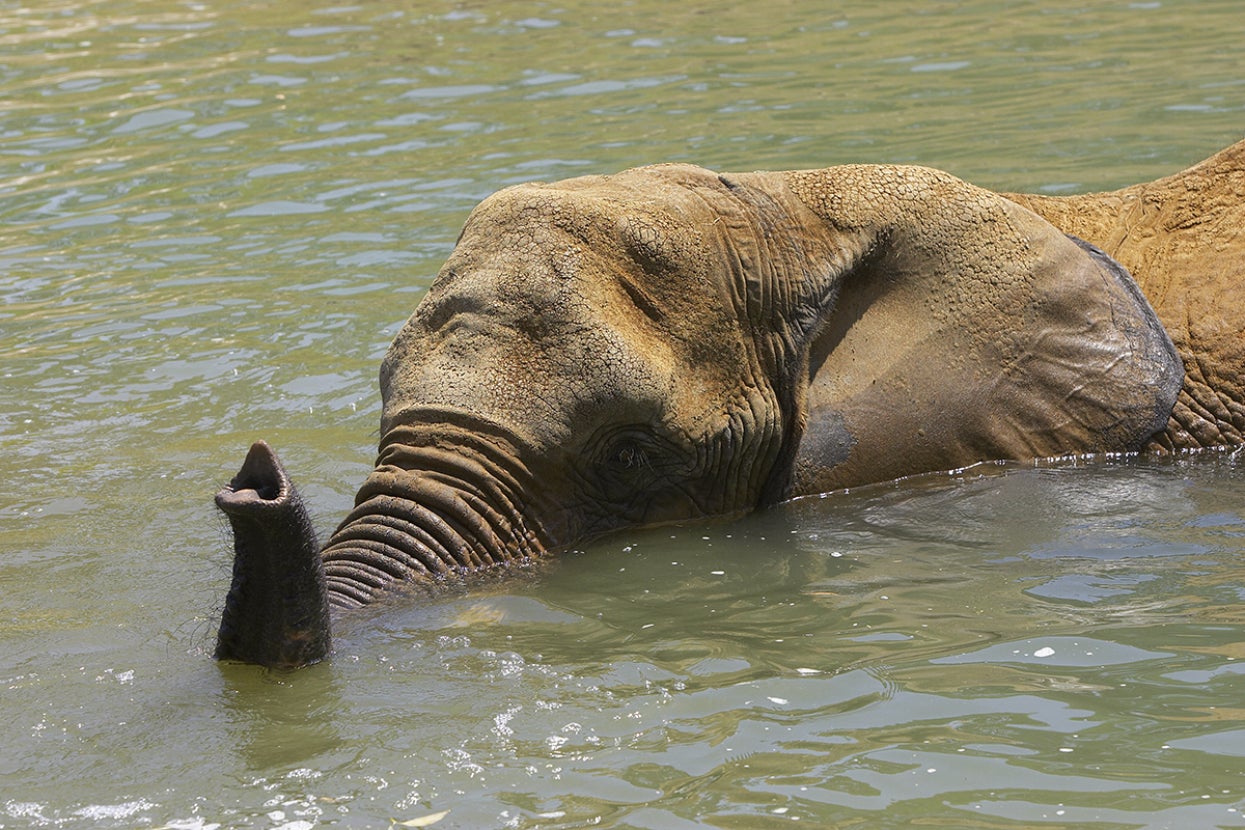
Elephants can swim underwater, using their trunk like a snorkel.
EYES ON ELEPHANTS: If you see an elephant stop what they are doing, raise their ears, and lift their trunks, something is going on! See if you can spot what it is.
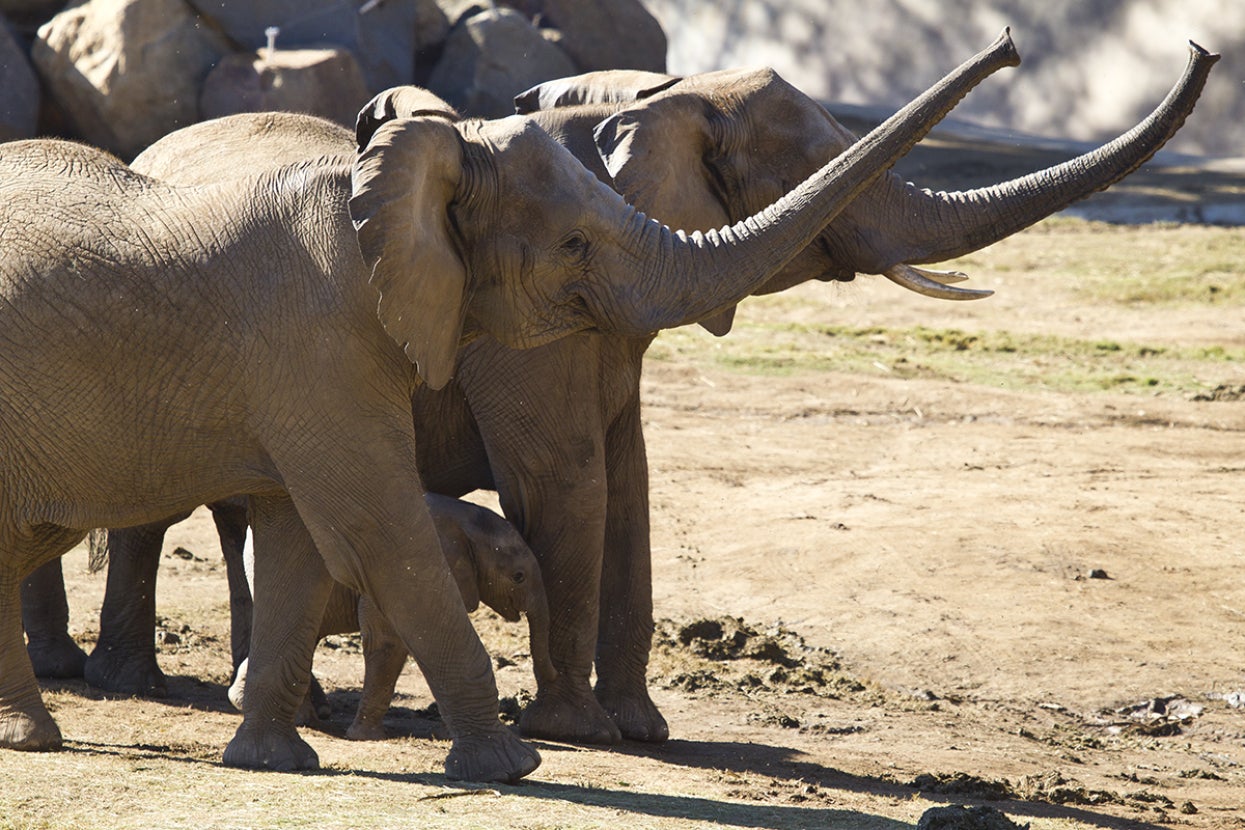
Elephants raise their trunks and sniff to figure out what's going on.
Sun-sitive Skin
Just like with people, an elephant’s largest organ is their skin. Theirs is a little bit larger, though, weighing up to 2,000 pounds (907 kg). Their thickest skin is on their backs and sides and measures 3/4 to 1 1/4 inches (2–3 cm), but skin behind their ears, around their eyes, and inside their trunk is as thin as paper. Elephant skin is extremely sensitive; even in the thickest areas, they can feel an insect landing.
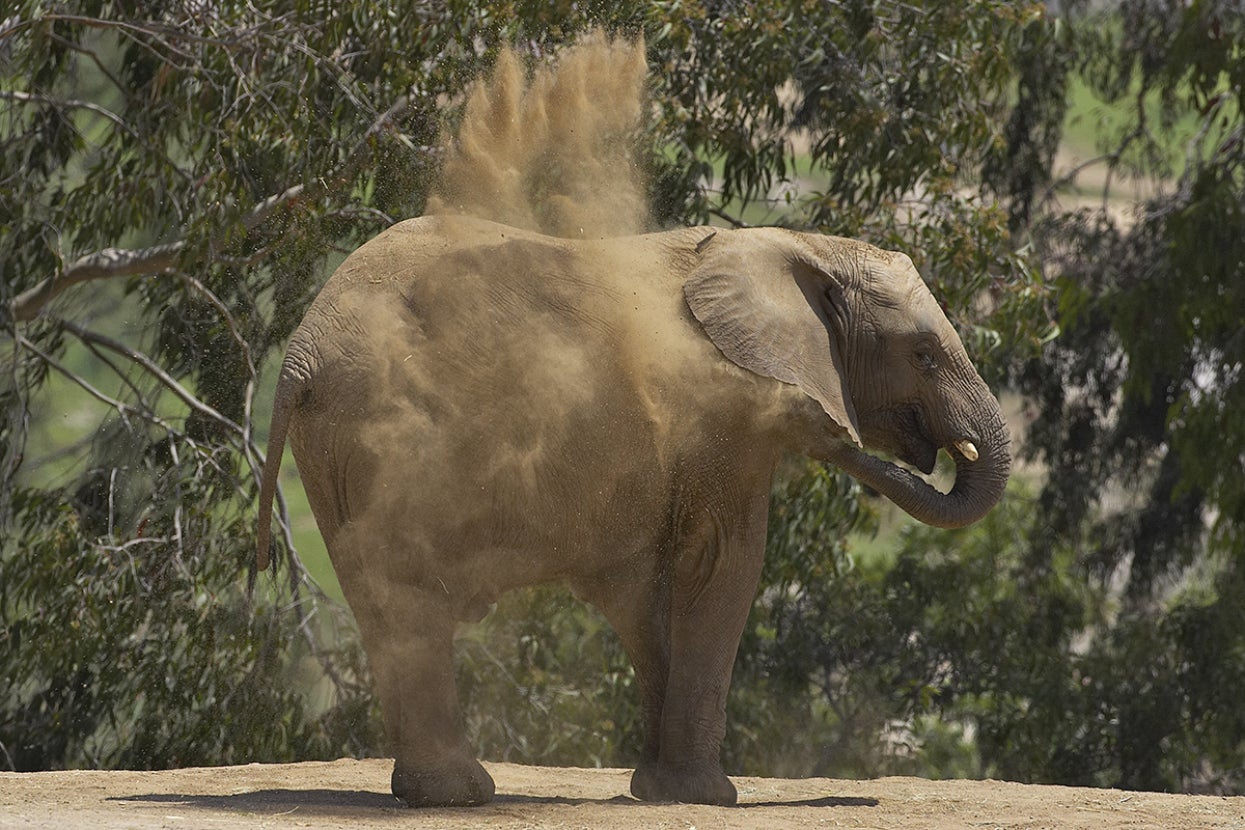
Dust baths protect elephants from the sun and insect bites.
EYES ON ELEPHANTS: Ever wonder why elephants have wrinkly skin? It’s not because of too much sun exposure—it actually prevents that! When elephants spray themselves with dust or roll in mud wallows, the crevices fill with dirt or mud, creating a layer of protection against the sun and keeping them cool. It also protects them against insect bites.

Rolling in mud helps elephants keep cool.
It's Getting Hot in Ear
African savanna elephants have the largest ears of the three elephant species. Elephants don’t have many sweat glands, and their ears help them cool down. The skin is thin, with blood vessels close to the surface; this radiates excess body heat and controls their temperature. They can also flap their ears to use them as fans.
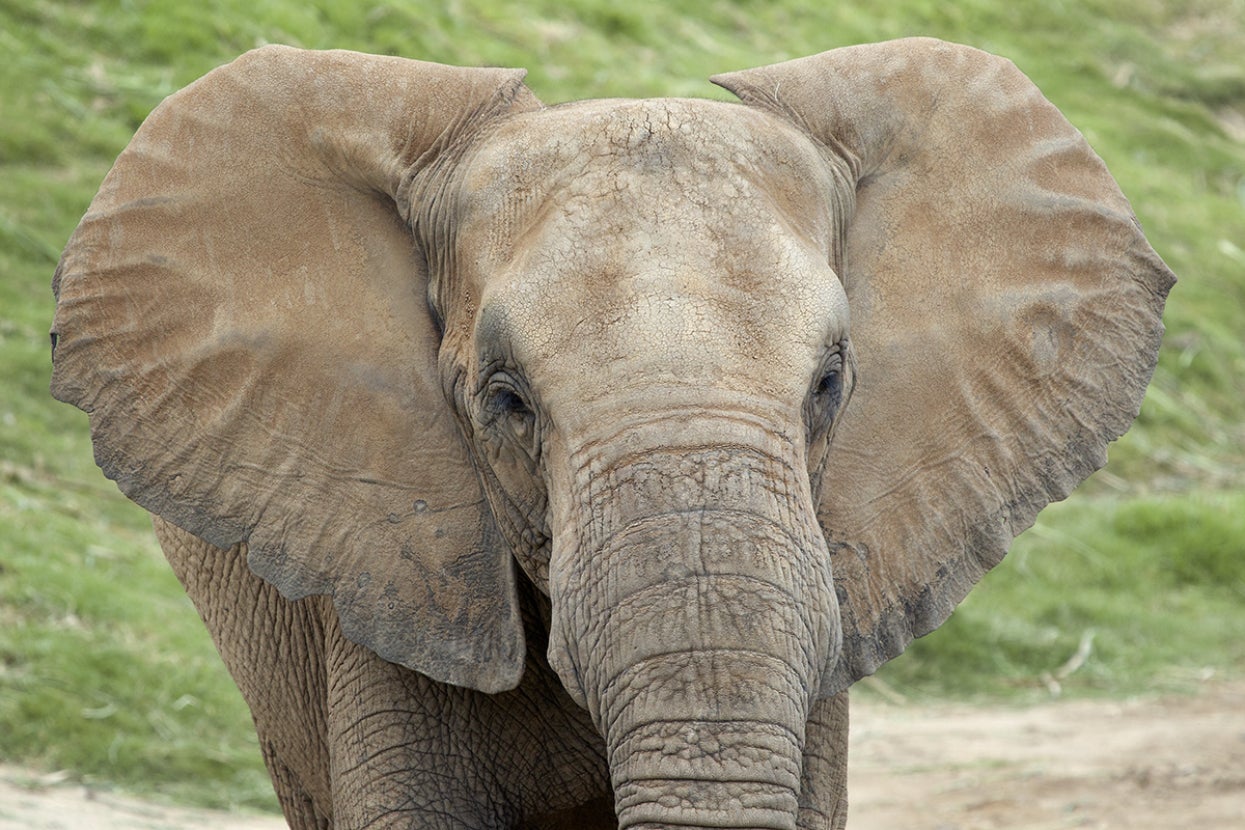
Elephants can flap their ears like fans to cool themselves off.
If you see an oily liquid running down the side of an elephant’s head, don’t worry—they do not have an ear infection! This is actually coming from temporal glands on the sides of their head. Secretions from the temporal glands can be caused by excitement, but they usually indicate increases in reproductive hormones.
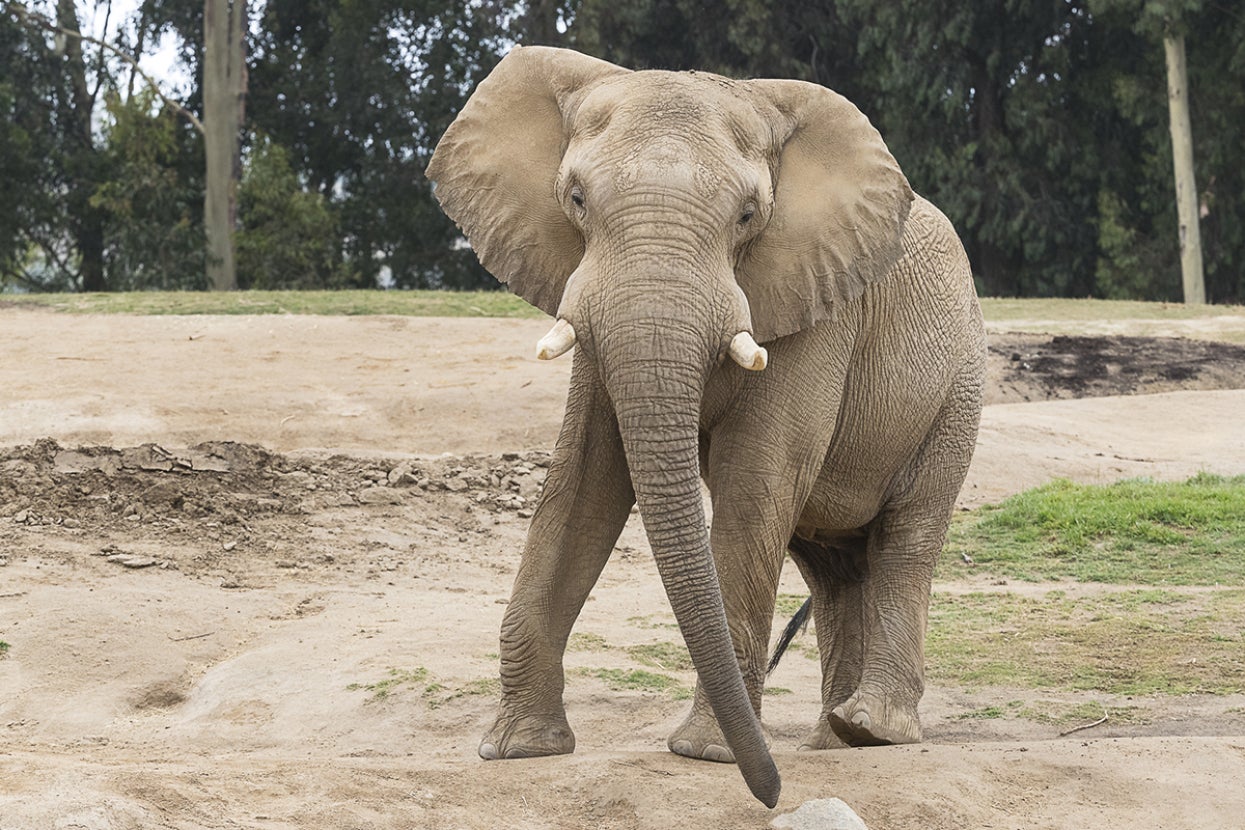
An elephant flapping their ears could be feeling excited or playful.
EYES ON ELEPHANTS: An elephant flapping their ears could be warm, but they might also be feeling excited or playful. This is different from when an elephant raises their ears high and spreads them wide; they do this when they are trying to be intimidating.
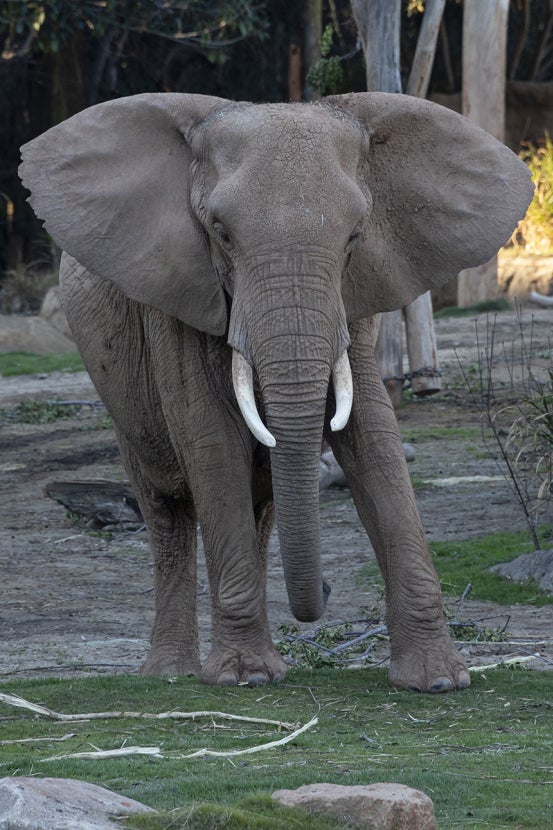
If an elephant raises their ears high and spreads them wide, they might be trying to look intimidating.
Soft Soles
When an elephant walks by, close your eyes and listen. What can you hear? Probably not much. Elephants walk on the tips of their toes, and their soles are made of fatty connective tissue that acts like a shock absorber. This spongy cushion muffles sound; even if they step on and break a stick, it won’t make a loud noise.
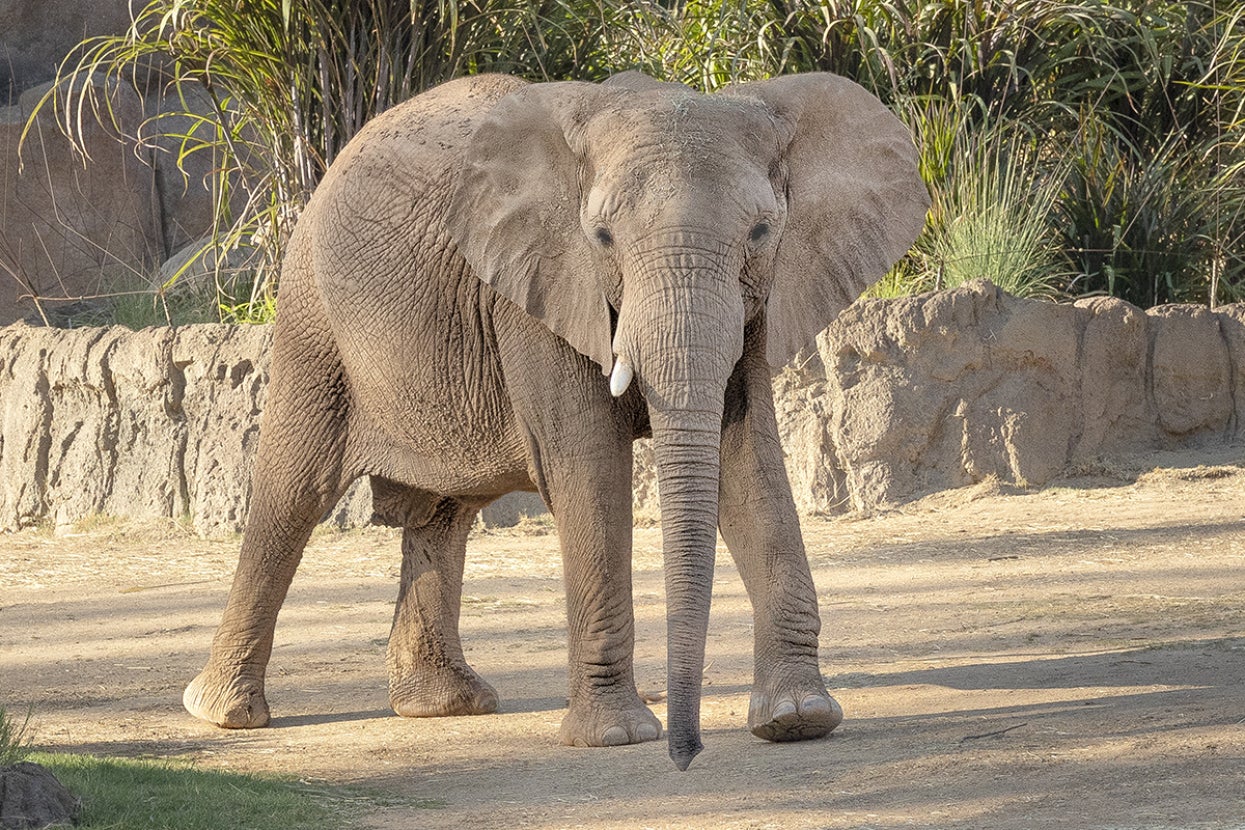
An elephant's feet have special adaptations that help them walk quietly.
This is also why elephants have a surprisingly bouncy gait for such a large animal. Watch an elephant on the move; you’ll be able to see their feet “squish” with each step.
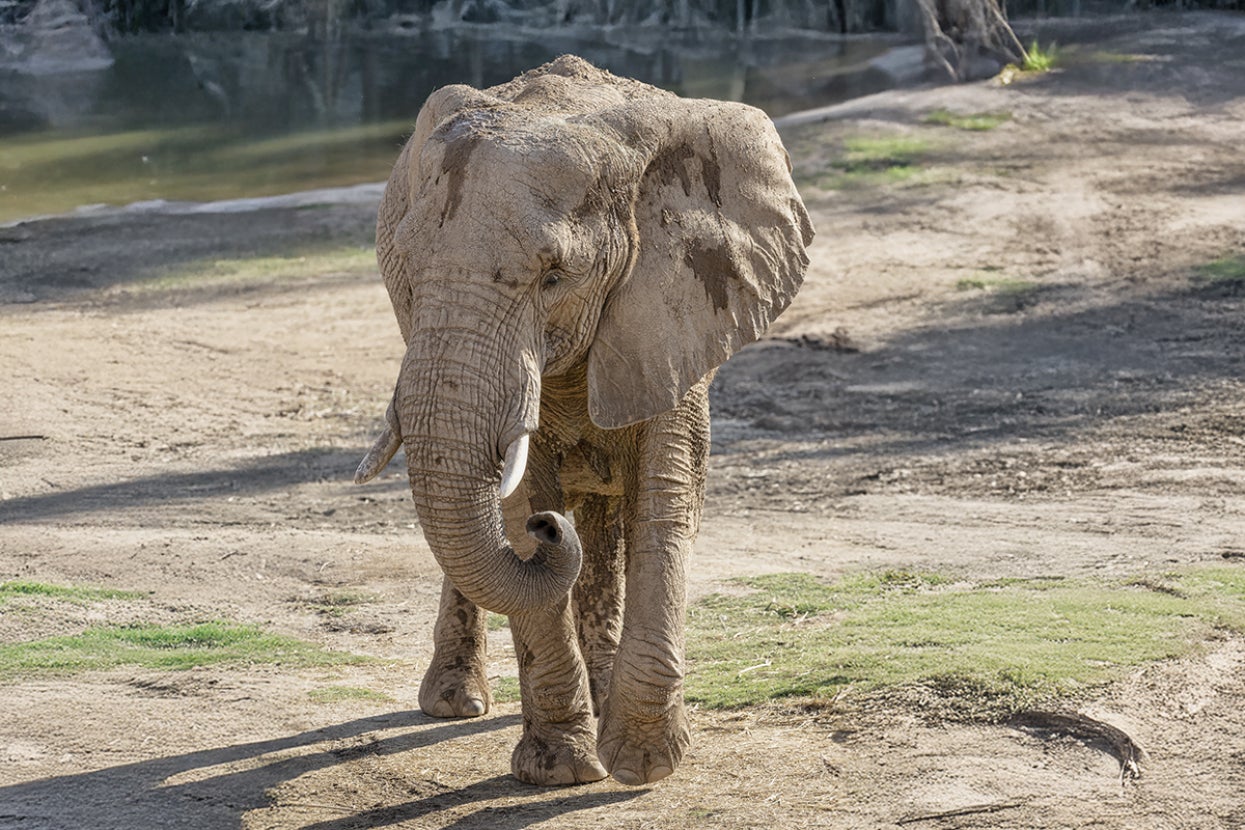
Elephant feet "squish" with each step.
EYES ON ELEPHANTS: African elephants have four toenails on their front feet and three on their back feet.
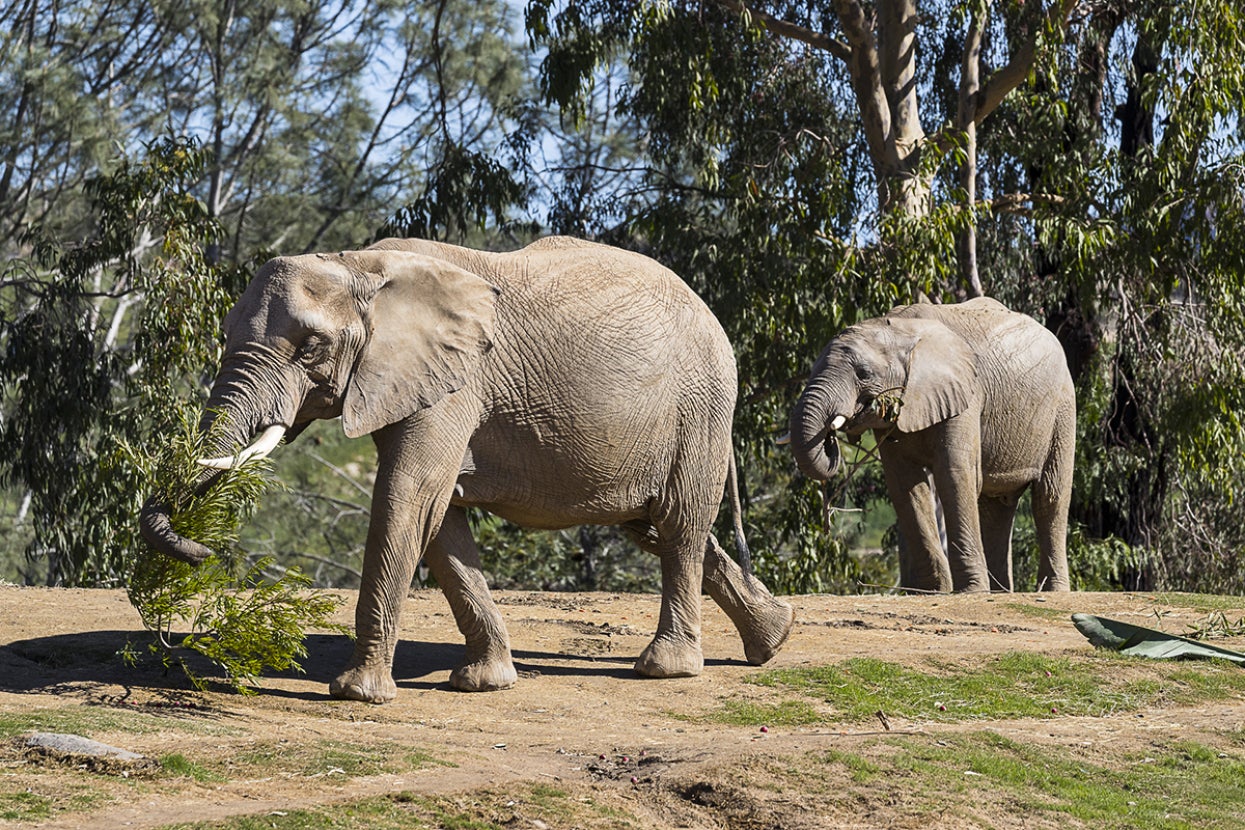
Elephants can use their trunks to pick, carry, and eat browse like tree branches.
Better Than a Spork
An elephant eats between 200 and 400 pounds (91–181 kg) of browse every day. They use their trunks to pick grasses, leaves, fruit, and other vegetation and place it in their mouths.
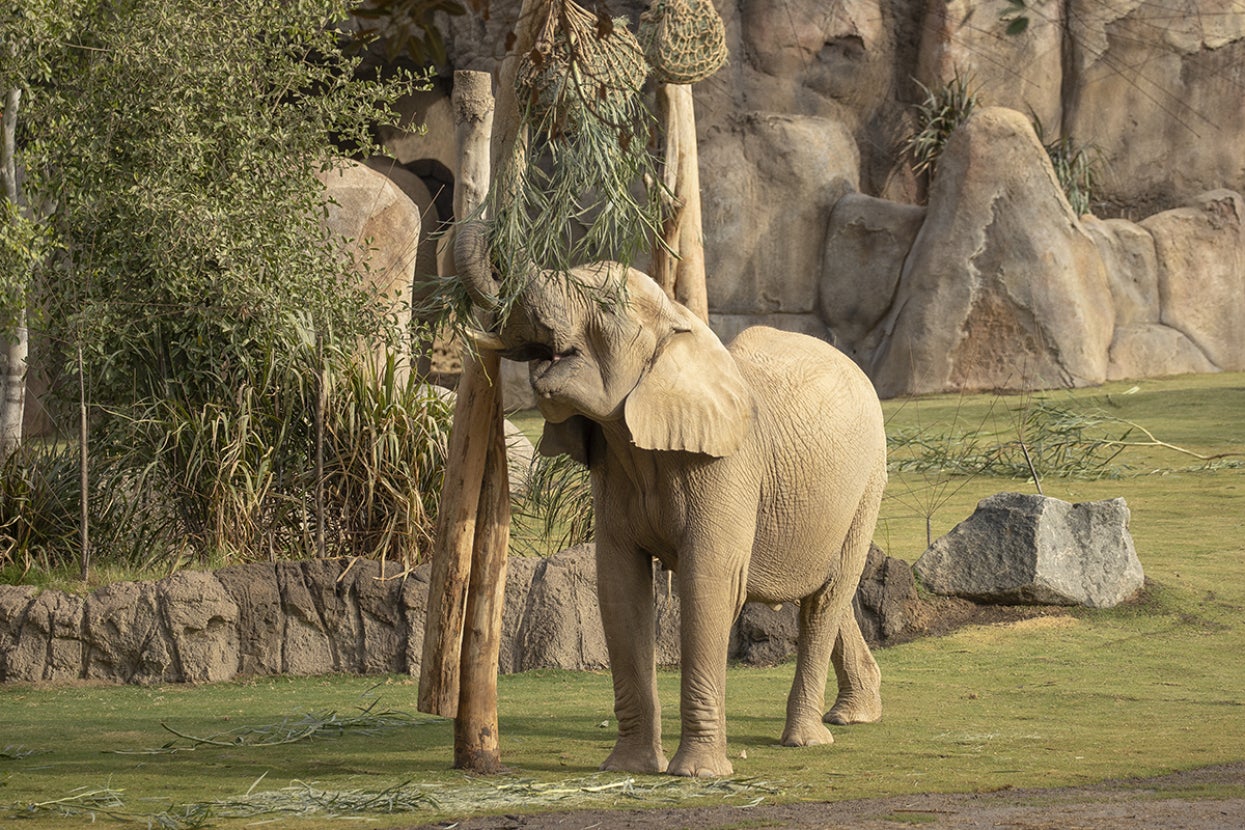
Long trunks can reach for browse high in trees.
Trunks are also used for drinking, but don’t worry, they don’t get water up their nose. Even though trunks look like straws, elephants use them by sucking the water up and then squirting it into their mouths. They can slurp up as much as 2 1/2 gallons (9.5 L) at a time!
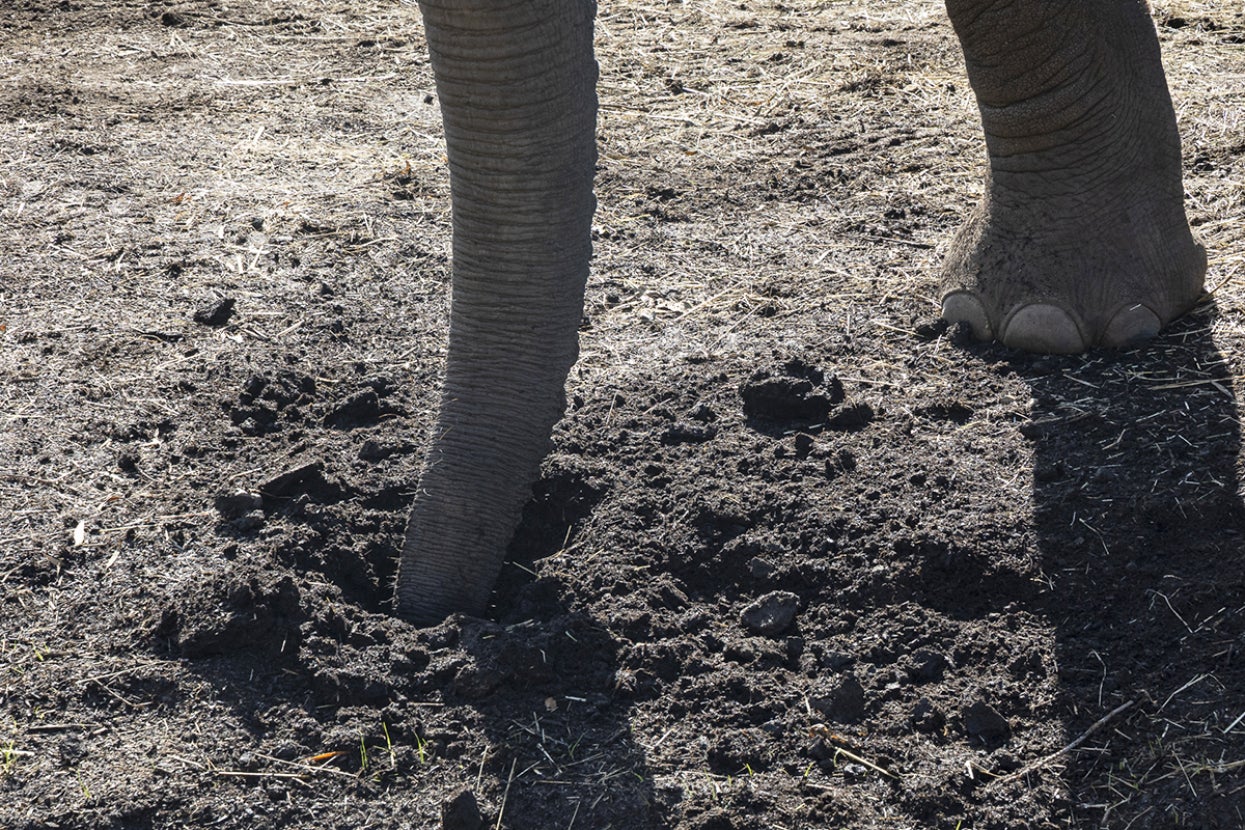
Trunks can be used to dig for food and water.
EYES ON ELEPHANTS: You won’t have to search too hard to find an elephant eating. Watch how they use their trunks for every part of the process—they will sniff to look for food, reach or dig to find it, and then grasp it to put into their mouths.
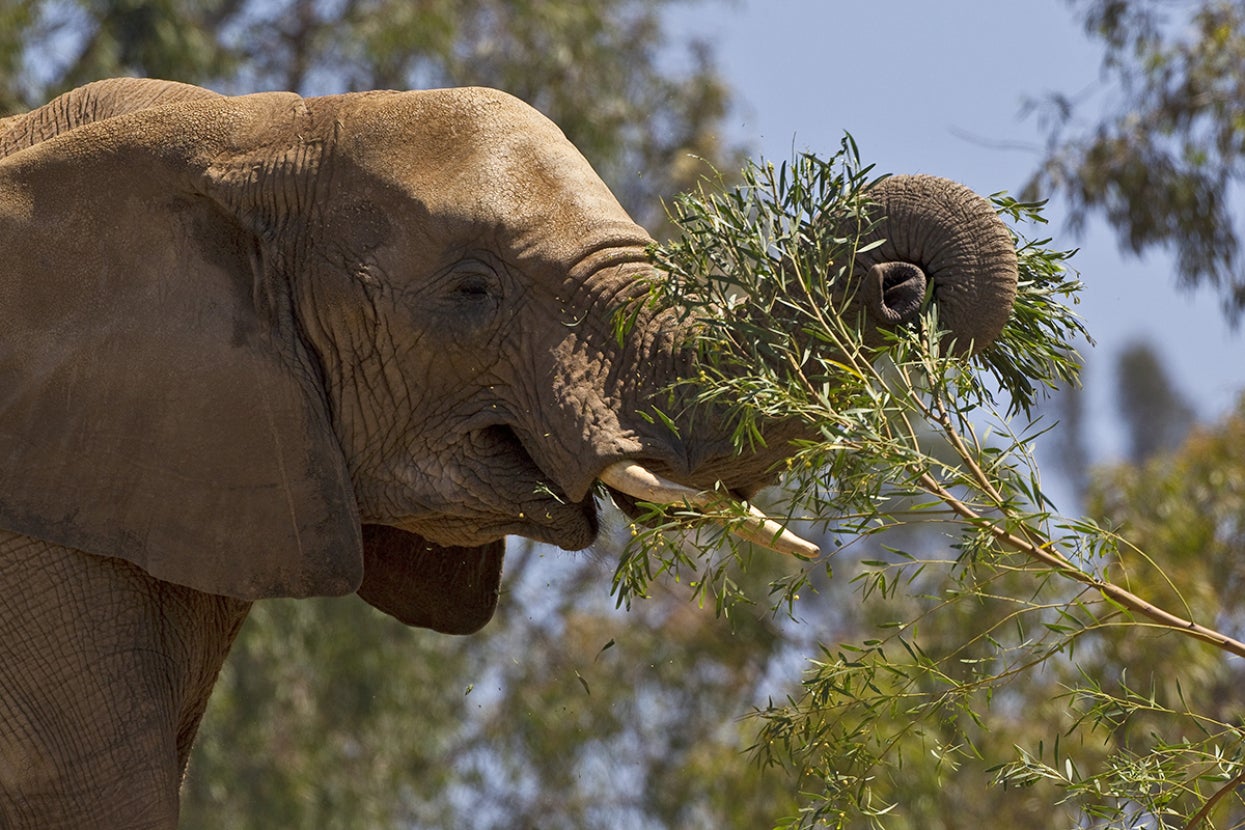
You won’t have to search too hard to find an elephant eating.
Group Chat
Elephants are highly social. They show affection, frustration, and nervousness, and recognize and respond to those emotions in each other. So why is everyone so quiet?
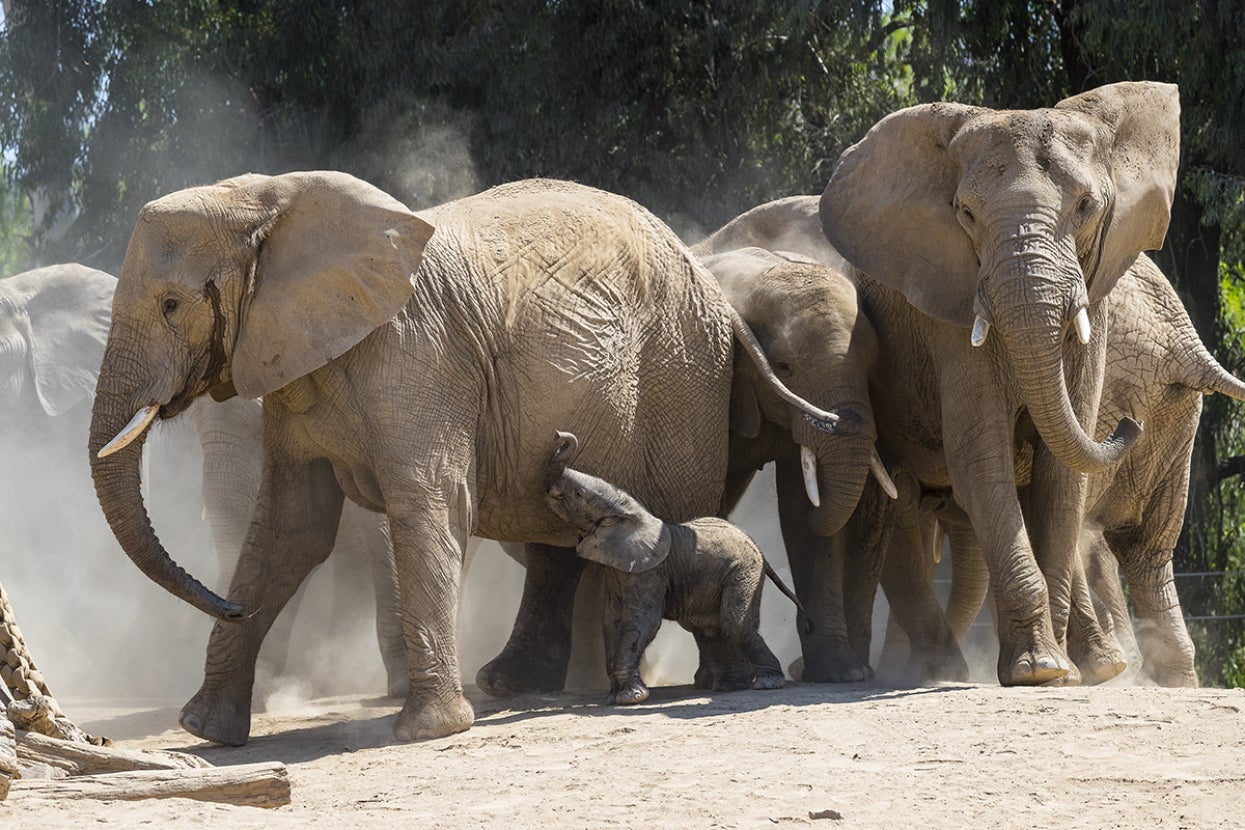
Even though elephants are pretty quiet, they are always communicating.
While elephants do make sounds people can hear—including trumpets, roars, snorts, and rumbles—they also communicate using frequencies that are below our range of hearing. These sounds travel through the air and the ground, with elephants sensing them as vibrations through their feet. These lower frequencies can be heard or felt by elephants up to 2 1/2 miles (4 km) away.
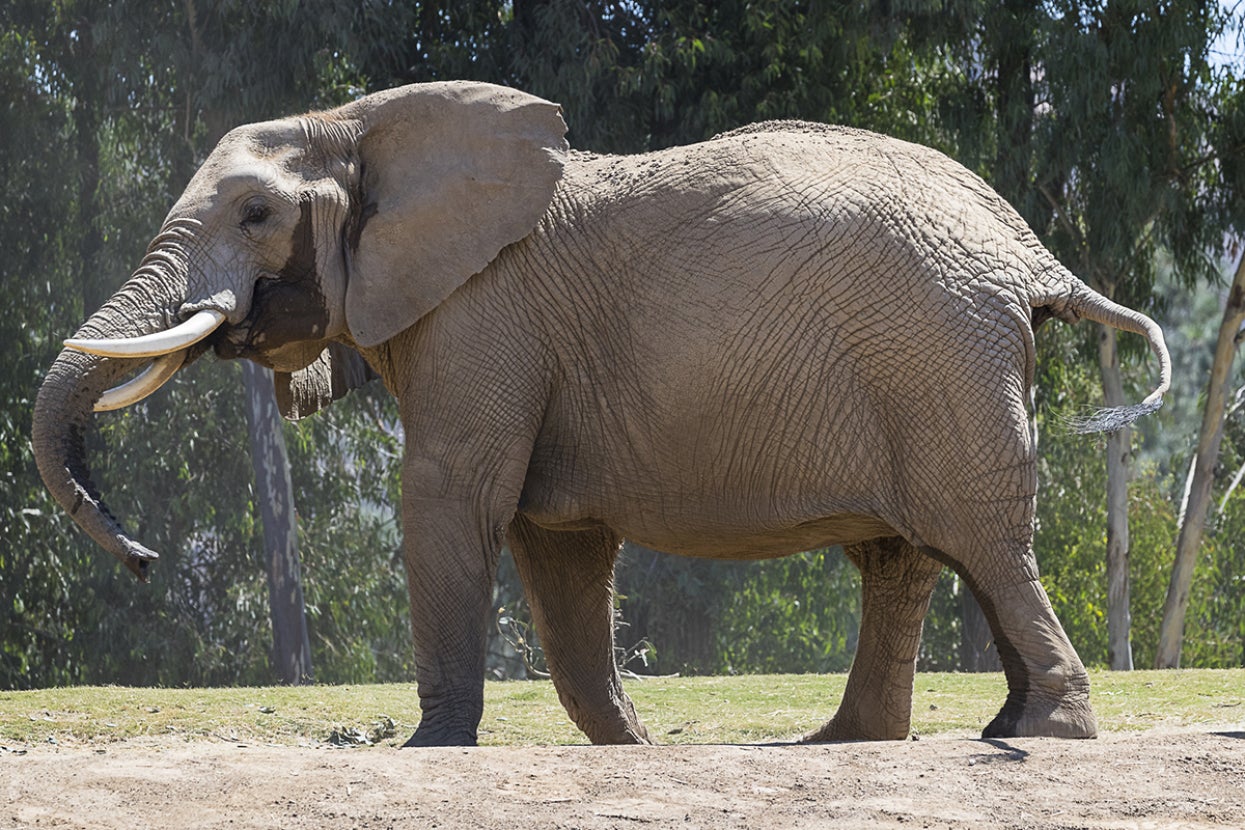
Elephants make many different sounds, including trumpets, roars, snorts, and rumbles.
If you see larger elephants forming a ring around the younger elephants, this is called an “alert circle.” These moments can happen during a celebration, like the arrival of a new calf. Sometimes it happens because there’s a new sound or smell, or the matriarch can’t find someone and wants to bring the herd together.
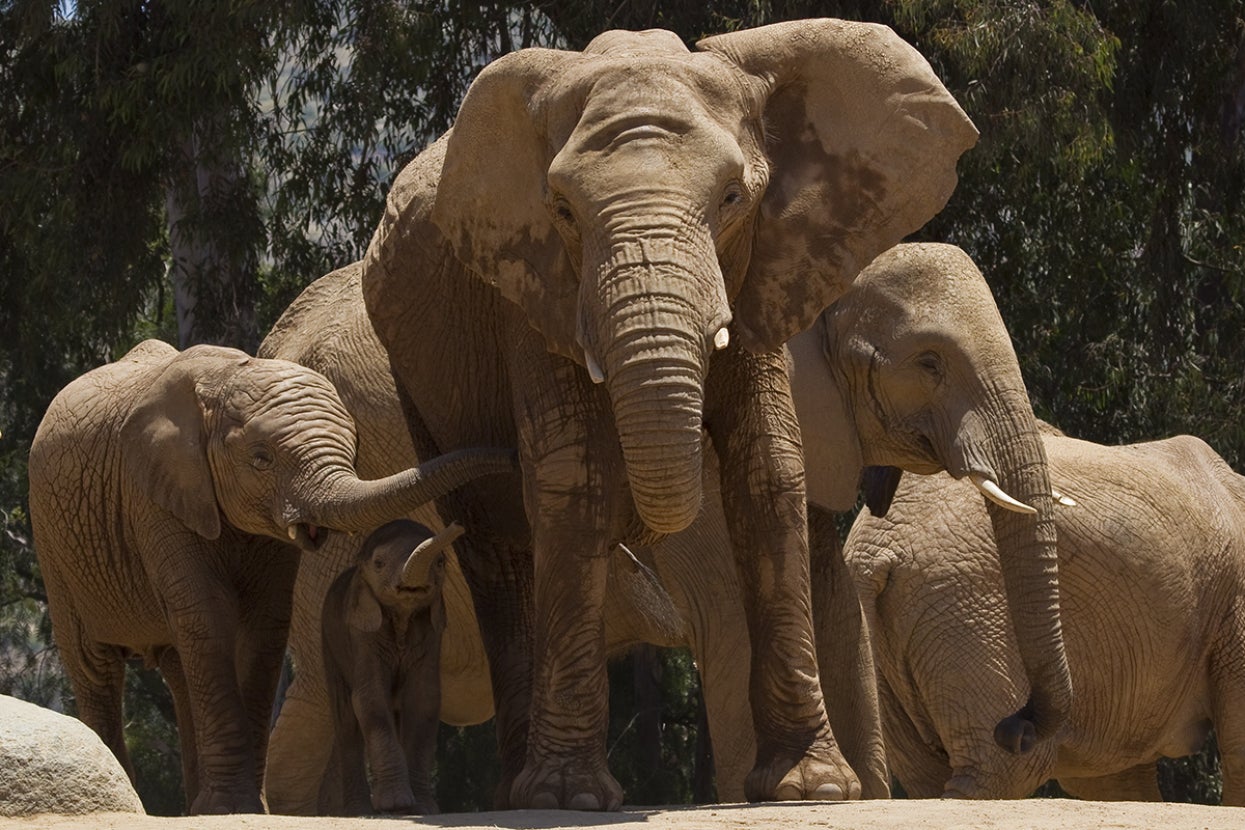
Elephants form alert circles by making a ring around the younger members of the herd.
It’s not always browse and mud baths. Elephant herds are matriarchal, and females may challenge each other. They may engage in what appears to us as more aggressive-looking behaviors like standing tall, flaring their ears, trumpeting, or even charging and sparring. Remember that these behaviors are challenges, and actions that may look violent are not necessarily hurting the elephants. They are much larger and stronger than we are!
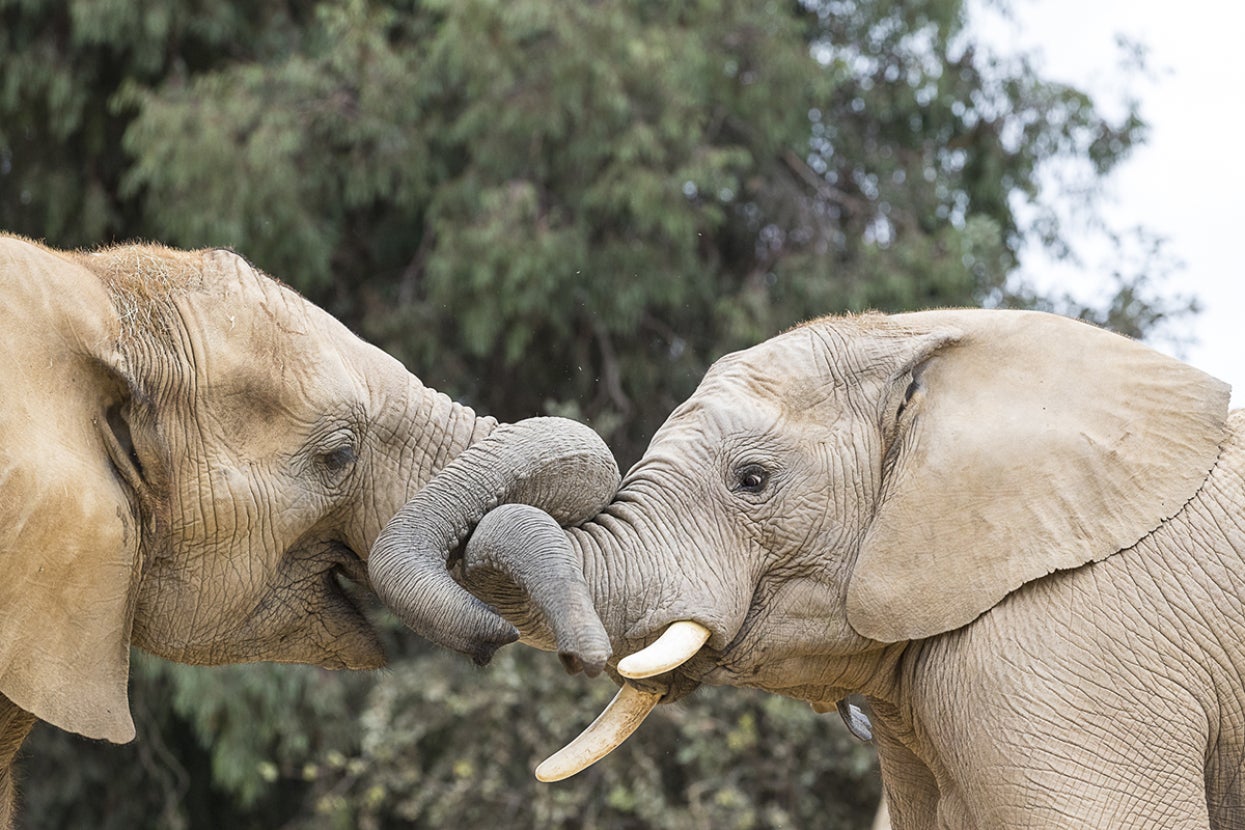
Elephants say hello by touching each other’s faces or intertwining trunks.
EYES ON ELEPHANTS: Elephants say hello by touching each other’s faces or intertwining trunks. This “trunkshake” communicates reassurance and affection.
Be sure to keep your eyes and ears open when you discover elephants thriving at the San Diego Zoo and San Diego Zoo Safari Park. Learn more about the work San Diego Zoo Wildlife Alliance does to protect elephants and their native savanna habitats through our Savanna Conservation Hub.