



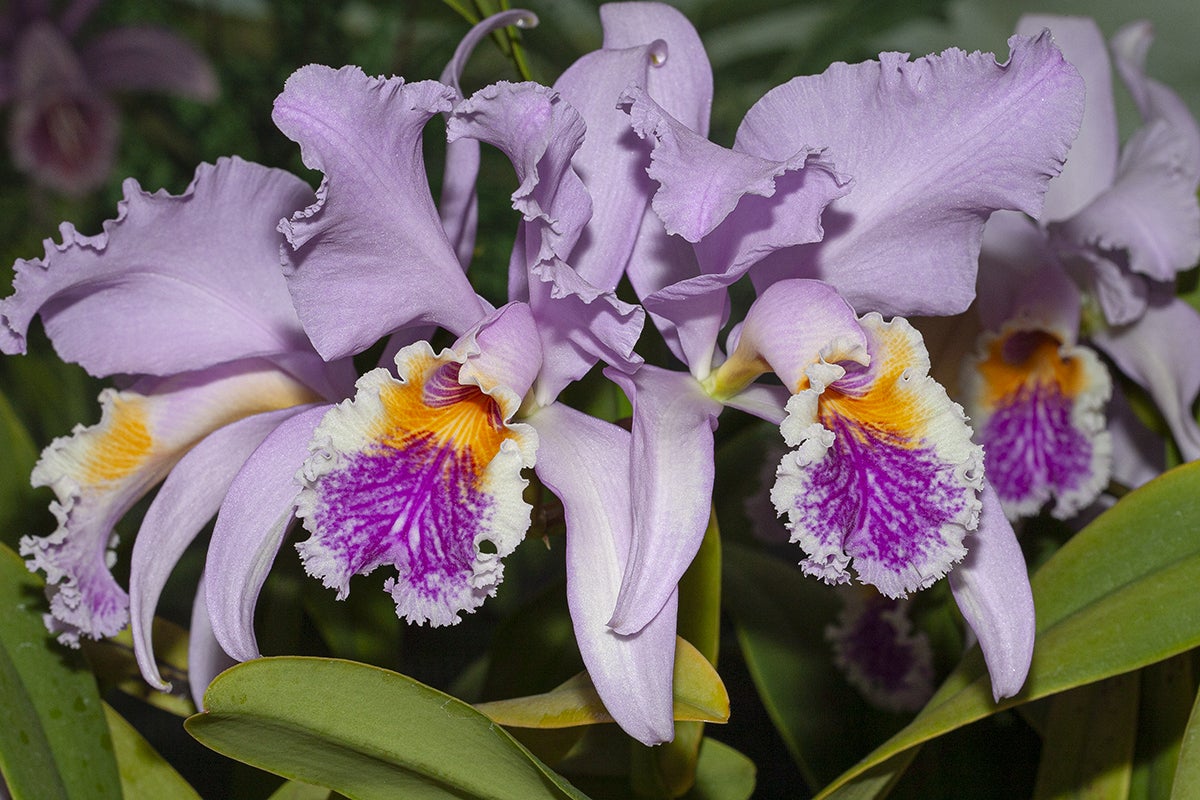

Orchids are a study in contrast. Their colors range from fuchsia and burnt orange to pure white and jet black. The seemingly simple three-petal structures are so evocative that they’ve been named shining ladies’ tresses and checkered rattlesnake. Some tower as tall as 10 feet high, while their seeds are as tiny as specks of dust.
These flowering plants are dynamic and complex, striking in both their appearance and in their importance to global ecosystems. While you may only think of them as the pretty petals in a florist shop, there’s so much more to these fabulous flora—and so much we can all do to help them flourish into the future.
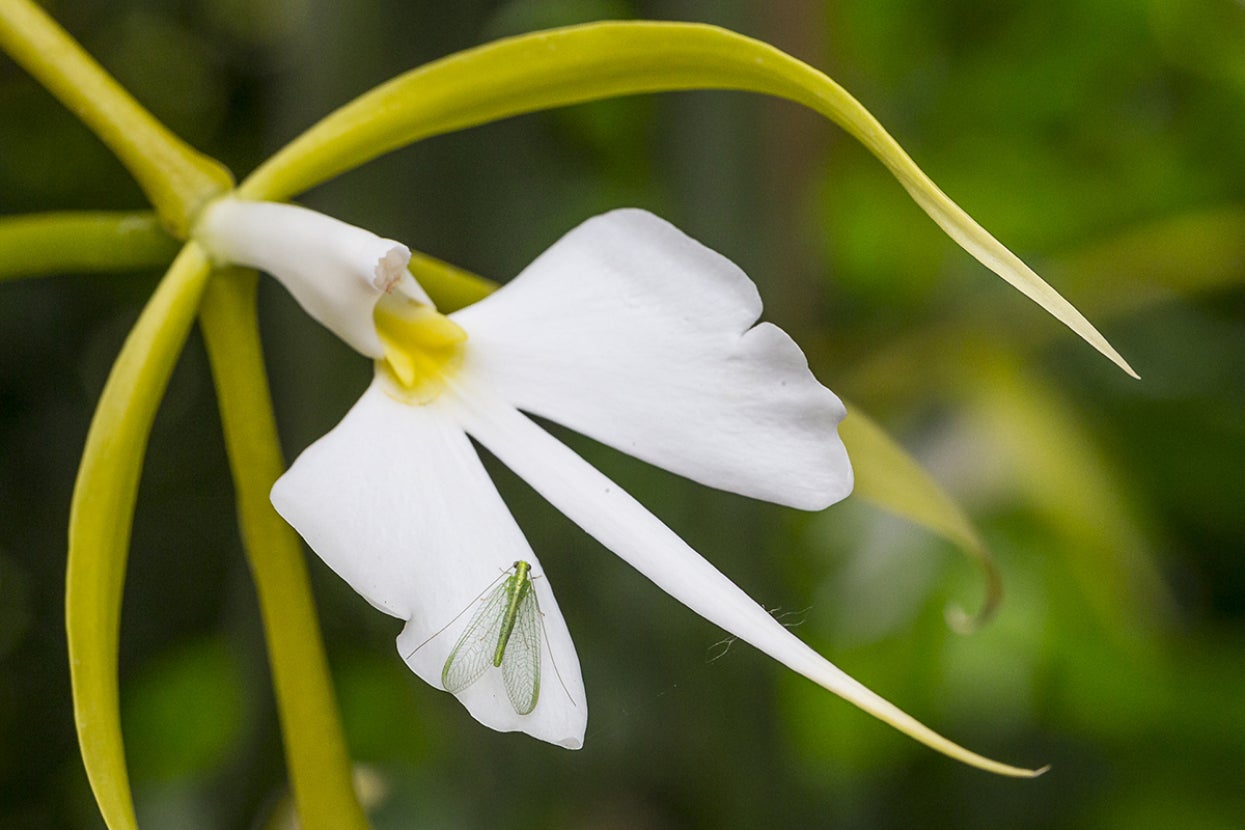
Insects of all kinds can act as pollinators as they visit orchids and other flowering plants.
Orchid A-B-C’s
From home gardens to tropical rainforests and even tundras, orchids are remarkably adaptable to a wide variety of climates. In fact, they thrive on every continent except Antarctica. The orchid family is also the second largest family of flowering plants on Earth, behind only daisies. There are an astounding 28,000 species distributed around the world, and even more hybrids.
Though some of these orchids grow in soil, most are epiphytic, meaning they live on the surface of other plants like trees. In this way, orchids rely on their surrounding habitats—and their habitats rely on them too. Orchids are specially adapted to attract pollinators. Each bloom’s showy shape, color, and scent create an intoxicating combination that draws the attention of specific species, ranging from bees and wasps, to butterflies and moths, and even birds and bats.
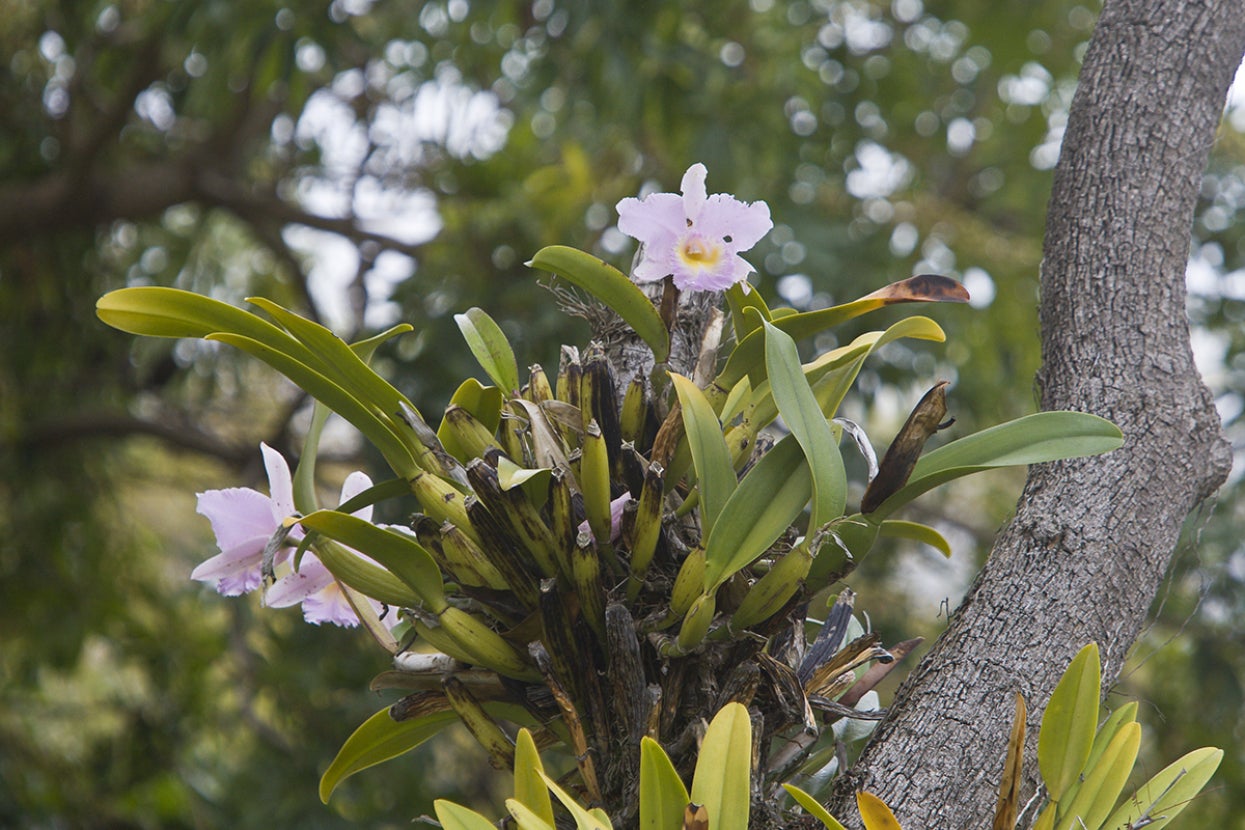
Many trees support orchids, and the flowers in turn can keep moisture in the tree’s canopy and cycle vital nutrients.
These symbiotic relationships contribute to the delicate balance of their ecosystems, so when orchids are threatened, the systems around them are threatened as well. For 200 years, “orchid hunters” and other explorers have sought out these beautiful blossoms, reducing their numbers around the world to dangerous levels. Habitat loss and changing environments have exacerbated the problem. Today more than 800 species are listed as vulnerable or endangered, with 200 critically endangered and some already extinct.
Fortunately, our teams are committed to reversing this trend and protecting orchids and the webs of life they’re part of.
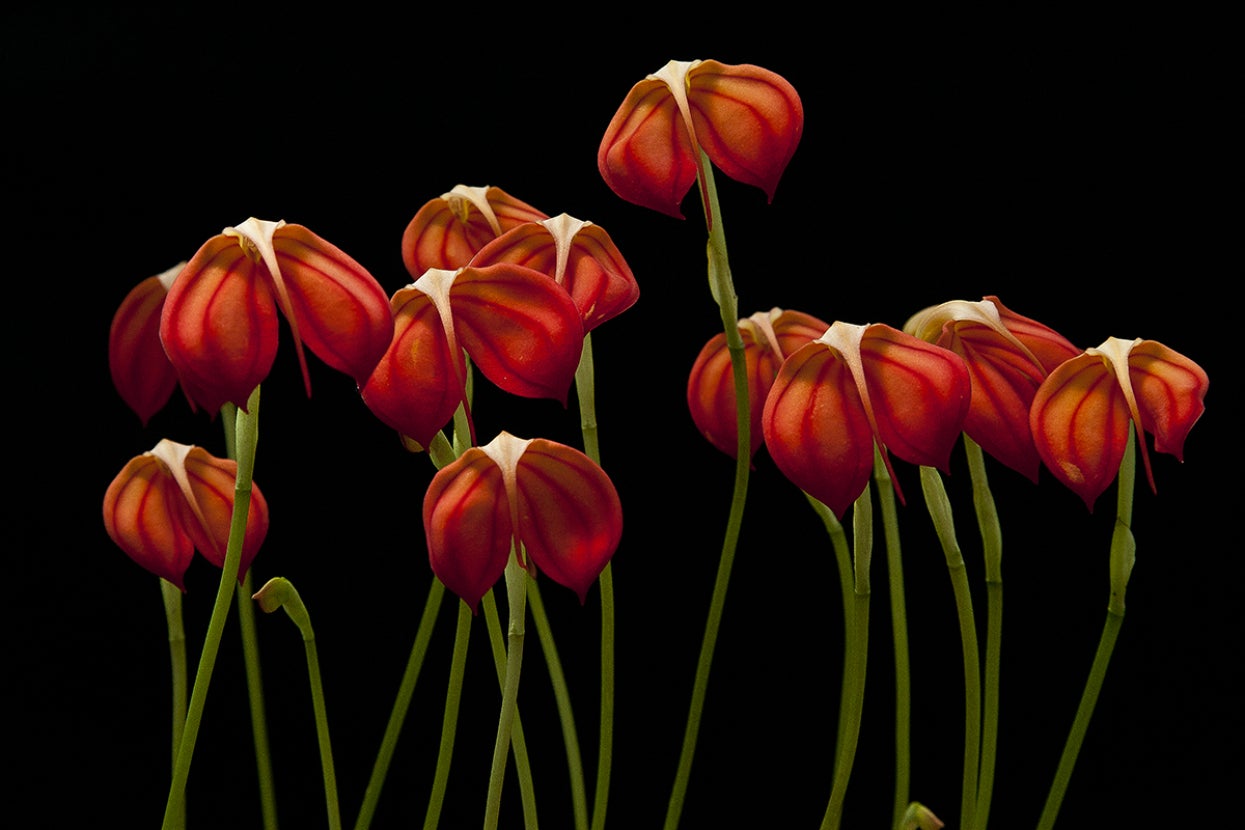
The brightly colored Masdevallia ignea is endangered in native habitats, as are many other orchid species.
Passion and Partnership
We recently celebrated the 50th anniversary of our Orchid Program, an initiative that drives our work to protect and care for the flowers in all their forms. We began caring for orchids at the San Diego Zoo in the mid-1970s, and we built our first orchid greenhouse a decade later. Today we’re honored to care for one of the largest populations of orchids in North America.
With this honor comes responsibility, which we embrace with the help of our own ecosystem of global partners. We collaborate with many other institutions and gardens around the world, including the Huntington in Los Angeles, the Smithsonian in Washington DC, and even the Wilhelma in Stuttgart, Germany. And as an accredited facility with the Association of Zoos & Aquariums, we share knowledge and expertise with many other experts in our field.
Another crucial collaboration is with the U.S. Department of Agriculture. Both the San Diego Zoo and the San Diego Zoo Safari Park are official Plant Rescue Centers, caring for individuals recovered from poachers and other harmful situations. Since 1988, we’re taken in more than 2,000 orchids intercepted by authorities, ensuring they can continue to thrive in a safe, attentive environment.

Palau consists of more than 300 islands, so working with knowledgeable local partners helps us protect orchids across them all.
Conservation from Coast to Coast
Our work here in San Diego is intertwined with efforts elsewhere in the world. We collaborate on orchid care through several of our global Conservation Hubs, from the Southwest to Vietnam. And through our Pacific Islands Conservation Hub, we continue to foster our longtime partnership with Palau, joining together to safeguard the country’s rich natural heritage.
Dotted across the island nation’s lush forests are nearly 100 native orchid species, including more than 30 that exist nowhere else in the world. Protecting them, therefore, is a vital component of protecting Palau’s ecosystems and culture.
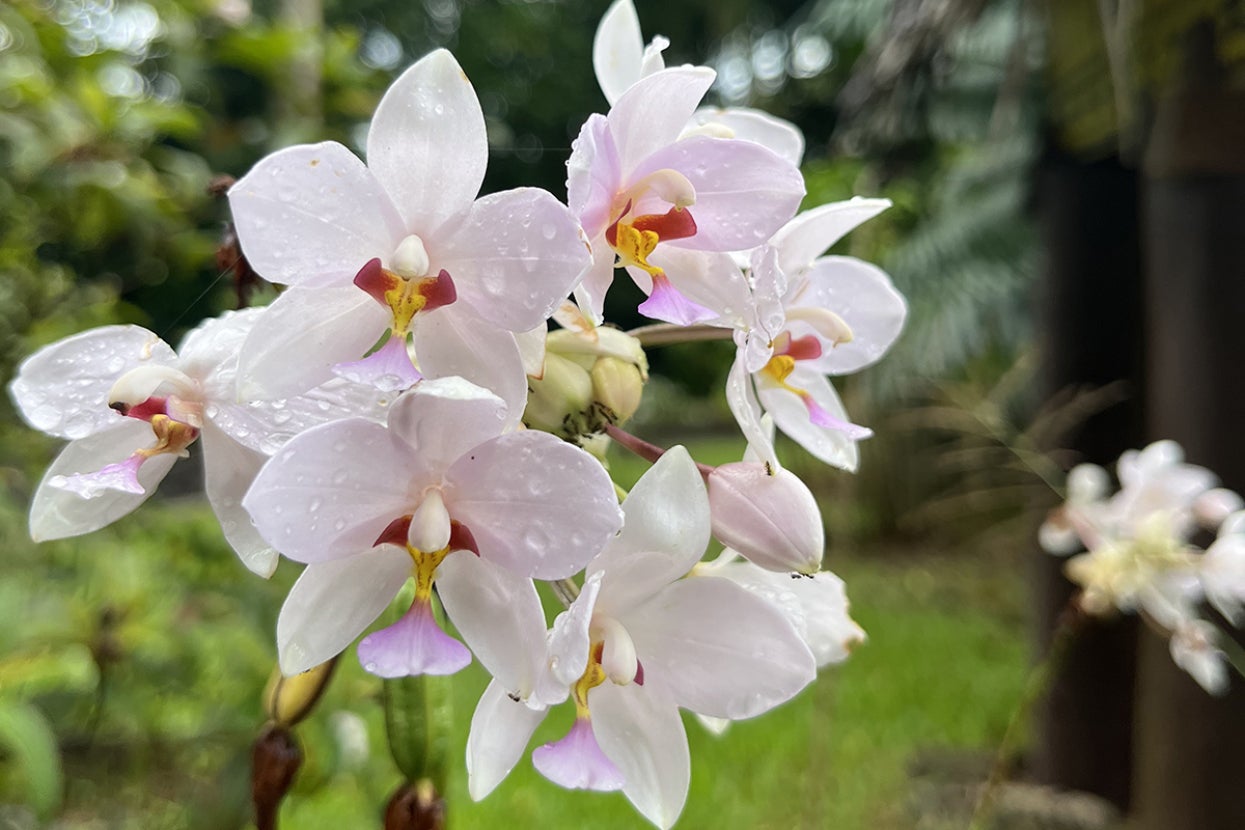
Many species native to Palau, like the Philippine ground orchid, thrive in wet habitats such as swamps and streams.
Working with our partners, we collect orchid seeds in Palau and transport them to the Zoo for propagation. This process allows us to safely grow and nurture new plants in a carefully controlled environment. We also employ micropropagation, where we cultivate thousands of plants from tiny tissue samples. These efforts serve two critical purposes: producing orchids to reintroduce into native Palauan habitats, and maintaining vital assurance populations here in San Diego.
We’re also committed to supporting community-led conservation in Palau. Our team provides trainings to local partners on seed collection and propagation techniques, building their capacity to lead these initiatives. By imparting this knowledge, we help empower communities to become stewards of the wildlife they know best.
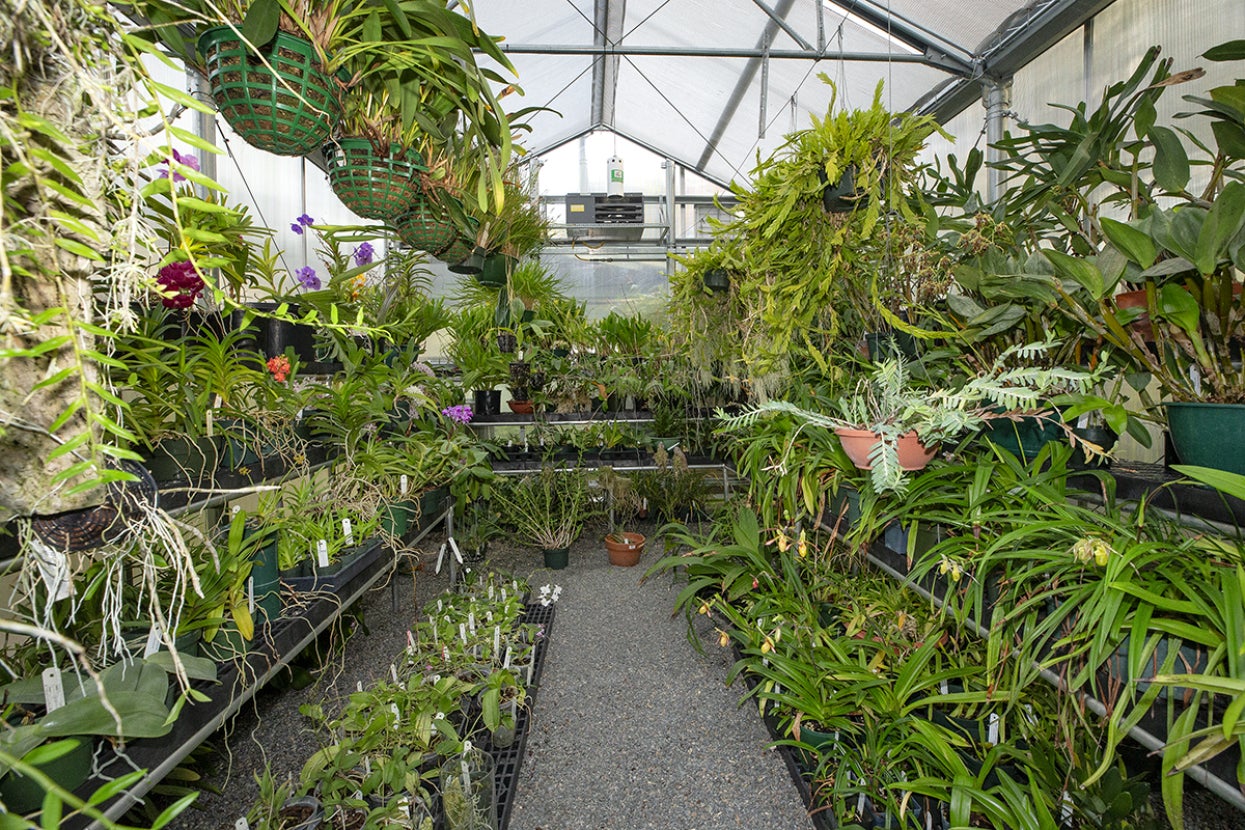
At the Zoo’s Orchid House, we care for over 900 orchid taxa of all shapes and sizes.
How You Can Help
Protecting orchids requires all of us, and it's easy for you to get involved. The next time you purchase an orchid for your home or for a loved one, ask the retailer if it was grown sustainably. (The same goes for vanilla beans and vanilla extract, which are derived from vanilla orchids.) You will likely find orchids already sprouted, as orchid seeds are very delicate and can take years to grow, so be careful when purchasing products advertised as orchid seeds, especially online.
Even learning more can make a difference, and the Zoo has you covered there too. During Orchid Odyssey at the Zoo, we open the doors to our resplendent Orchid House, where you can witness these wonders up-close. Our staff and volunteers are happy to show you around and share fun facts with you about the remarkable range of flowers we care for. The Orchid House is only open during Plant Days, every third Friday of the month, so it’s a rare opportunity to see these vital conservation efforts in action.
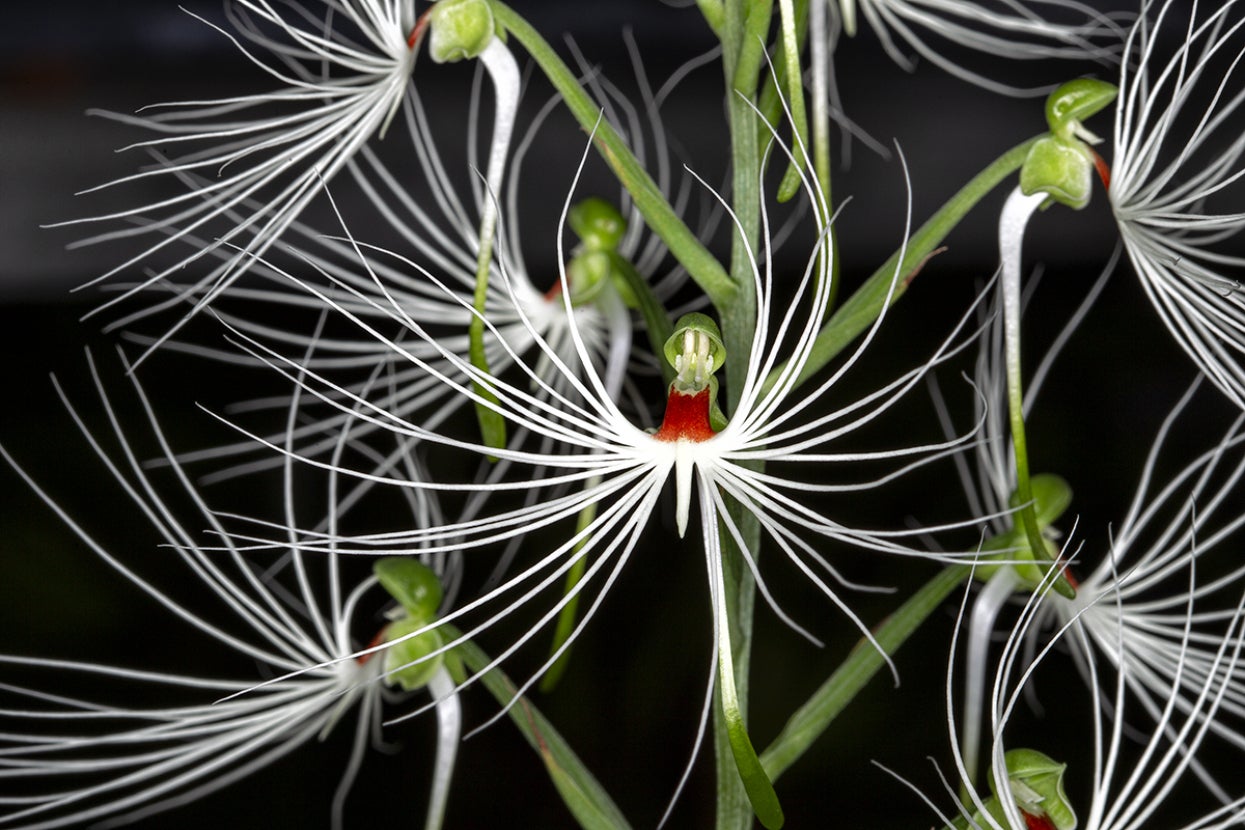
While flowers like the Medusa orchid are fragile, we can all help keep orchid species strong.
Planting the Seeds of Hope
For flowers that are so beautiful to behold, there’s much more than meets the eye with orchids. Entire ecosystems rely on them to stay healthy, and while many are endangered, there’s much we can do together to change their fate. By supporting San Diego Zoo Wildlife Alliance, you’re supporting orchids everywhere and the communities that protect them. With your help, we’re rooting for a future as bright and vibrant as the orchids themselves.
Palau islands photo credit: Coleccionando Arenas/iStock/Getty Images Plus.