




In September 2020, the Bobcat Fire erupted in Los Angeles County and would burn more than 100,000 acres of critical habitat before being extinguished some three weeks later. The raging flames and the decimation of their native range meant severe peril for native wildlife. With the collaboration of several agencies, the U.S. Geological Survey (USGS) removed and relocated several species, including endangered mountain yellow-legged frogs, to the Los Angeles Zoo and the University of California, Los Angeles.
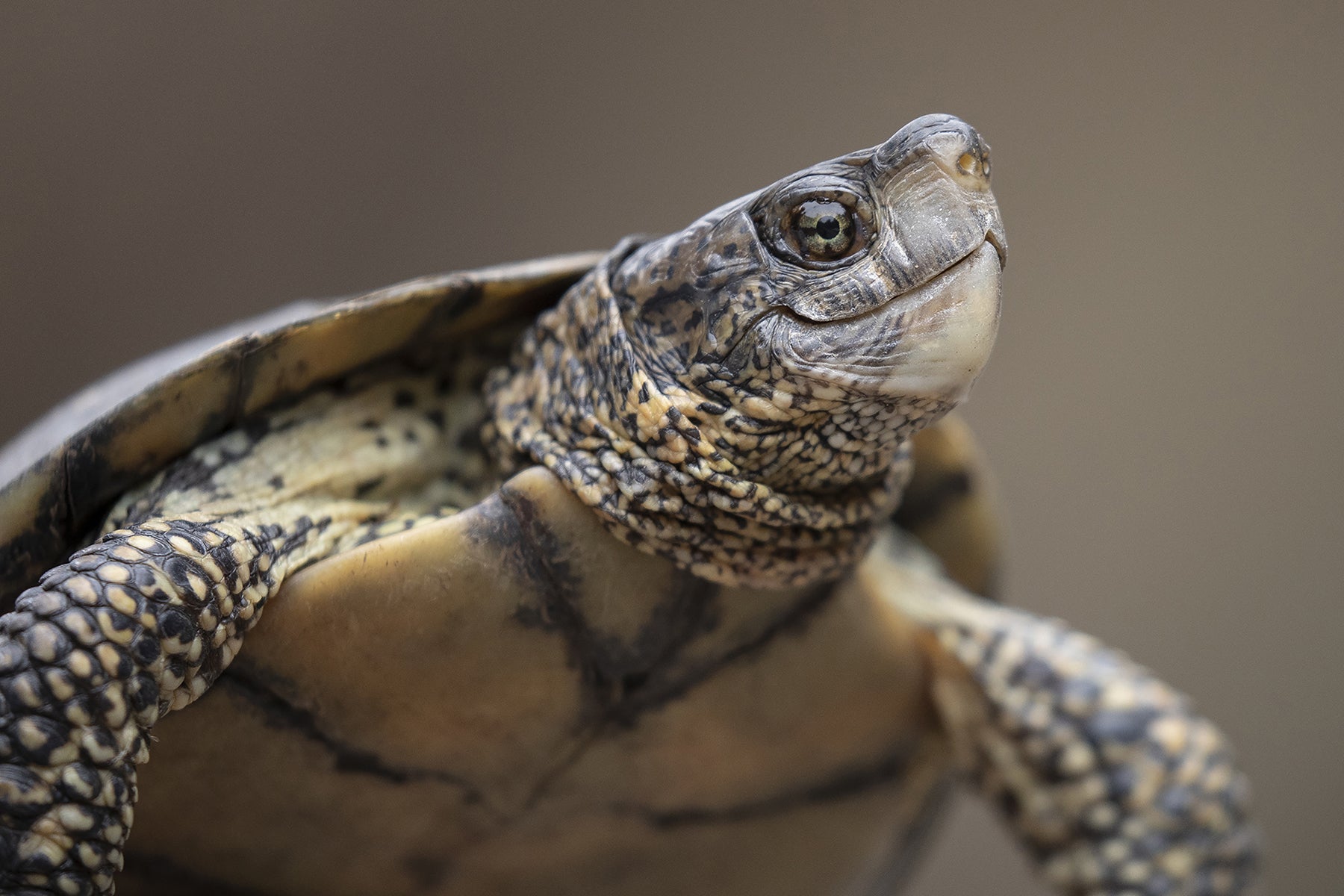
For another rescue, USGS teamed with the California Department of Fish and Wildlife, the U.S. Forest Service, Endemic Environmental Services Inc., and San Diego Zoo Wildlife Alliance to save 11 western pond turtles, some of which were part of a 1990s study, making those individuals 35 to 40 years old. These turtles (four males, six females, and one juvenile of unknown sex) were taken to the San Diego Zoo, where they were housed in a large, open habitat and cared for by Wildlife Care and Veterinary Care teams until their native habitat recovered enough for their return. It would take four years for the turtles’ range to rise from the ashes.
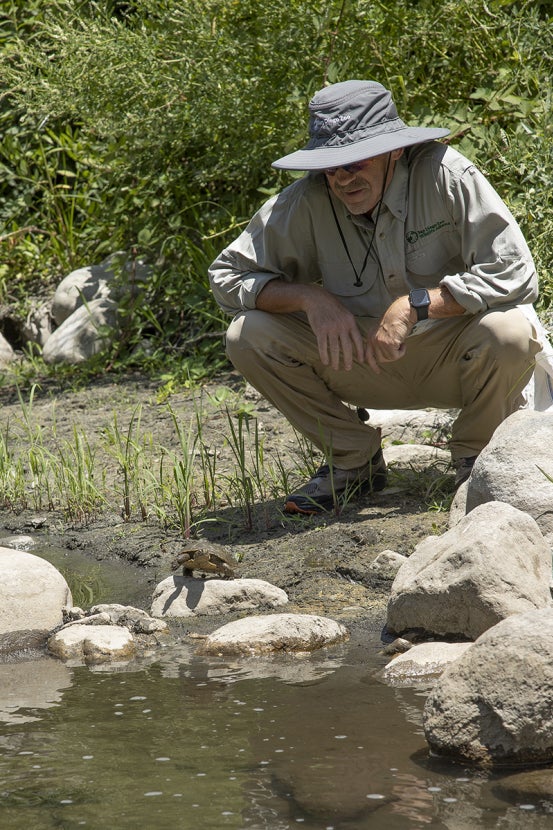
The author and his team reintroduced the rescued turtles back into their native ecosystem.
A Fresh Start—and a New Chapter
In 2024, the western pond turtles’ habitat in the San Gabriel watershed was deemed sufficiently restored, and plans were arranged for their big return home. They received full veterinary exams and workups, and the 11 turtles were released back to their habitat in early August 2024—but not before leaving their mark on (or at) the San Diego Zoo.
During their time inhabiting the Elephant Odyssey pond turtle habitat, a hatchling was found in late January 2023. This turtle was raised in a habitat alone until release. Just days before their scheduled release on July 31, 2024, one female laid a clutch of four eggs. These eggs were set up in an incubator in an isolated building with no other reptiles, to ensure there was no cross contamination of pathogens or disease. One of those eggs hatched on December 1, 2024, and was also housed in a protected habitat to monitor growth and health while keeping it safe from predators. Still another hatchling was found in the Elephant Odyssey pond turtle habitat later in December 2024. More hatchlings were found, and they were raised together until their planned release.
In spring 2026, 15 pond turtles were ready to be reintroduced into their native habitats. The turtles had grown strong enough to thrive on their own, and we collaborated with our partners to determine the best time and place to reintroduce them. Now flourishing in the San Gabriel River, they're helping their species' population grow and showing us that a brighter future is always possible when we work together.
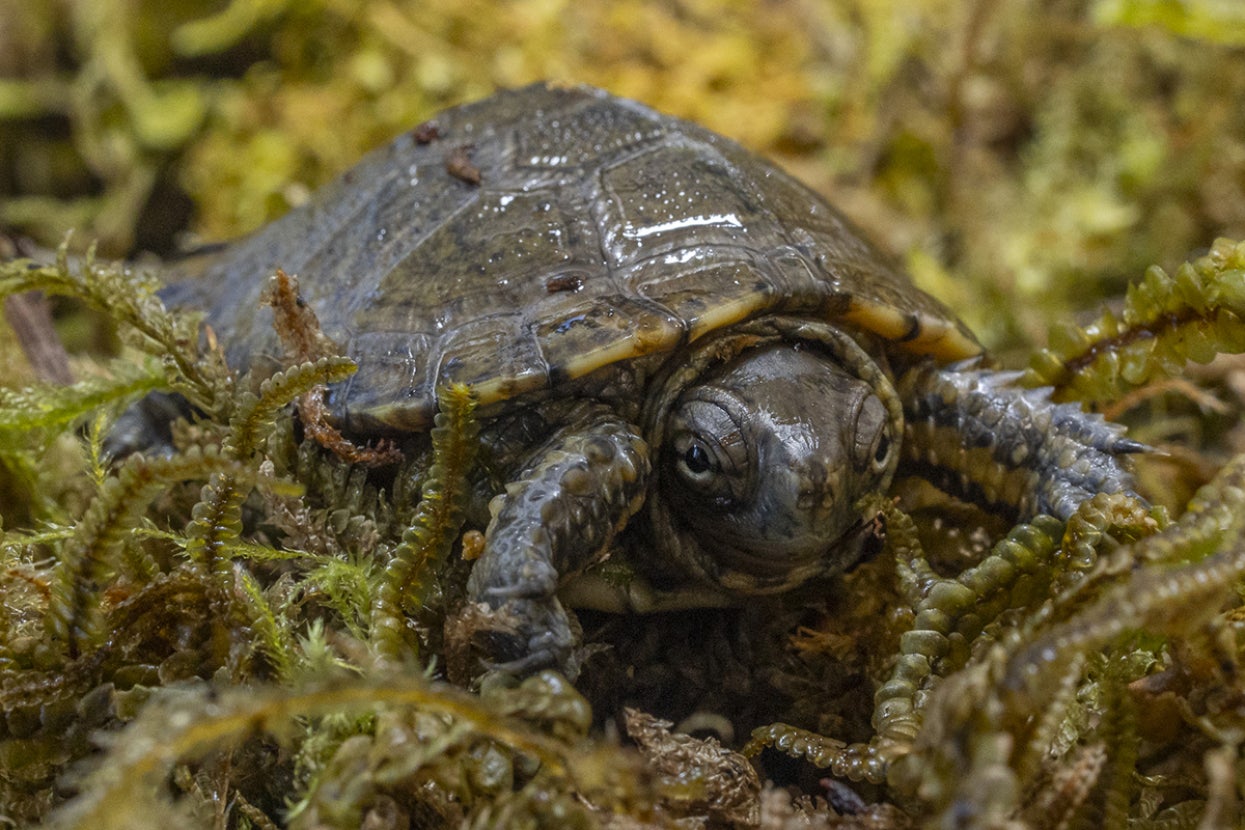
While recovering at the San Diego Zoo, the rescued turtles welcomed hatchlings.
Ready for a Challenge
Given the obstacles they face, it’s lucky pond turtles are hardy little reptiles. The southwestern pond turtle Actinemys pallida and the northwestern pond turtle Actinemys marmorata are the only native aquatic turtle species in California. They are very resilient and have evolved to withstand droughts, survive in small pools of standing water, and live through drastic seasonal differences. Found in marshes, grasslands, woodlands with irrigation ditches, creeks, streams, and rivers, the San Gabriel population faces some serious challenges. Their numbers have been in decline due to the introduction of non-native species like bullfrogs that eat small turtles, and another turtle species, the red-eared slider, that can out-compete the pond turtles.
The California Department of Fish and Wildlife lists them as a Species of Special Concern, and the Endangered Species Act lists them as Proposed Threatened. Historically, western pond turtles have dealt with other issues, such as early-20th-century wetland drainage projects that depleted, removed, and altered many rivers and lakes. And in the 1930s, they were harvested for food. Another recent serious concern for these turtles is turtle shell disease, a fungus Emydomyces testavorans. Populations of pond turtles on the West Coast have been testing positive for this disease, which is specific to turtles and is very deadly. Universities and zoos are working to learn more about it, and ways to control it and treat it.
Through cooperative rescue and reintroduction projects, as well as habitat and disease studies, we hope to help set pond turtles up for success for many generations to come. San Diego Zoo Wildlife Alliance veterinary team and Herpetology and Ichthyology wildlife care teams would like to thank our partners, including the USGS, the California Department of Fish and Wildlife, Endemic Environmental Services Inc., and the U.S. Forest Service.
Discover how your support is making these rescues possible through our Southwest Conservation Hub.