




At San Diego Zoo Wildlife Alliance, it has long been our core belief that conservation is about people. It is the plain truth that we, as people, contribute to many of the most complex challenges facing wildlife today. However, we are also integral to each and every conservation solution, as we work to protect and restore habitat, reduce pressures on wildlife populations, influence policy and governance, drive changes in our own behavior and in the behavior of those around us, and inspire future generations of conservation stewards. It is therefore a central strategy of ours to partner with community stakeholders at all levels to bring about positive change for both wildlife and people.
Teachers’ Aid
When we look across human communities worldwide, there is arguably one stakeholder group that is most important for driving the changes that will safeguard our collective future: Teachers. We recognize the profound and unique impact that teachers have on the world as they help to shape not only individual lives, but also entire communities and broader society. Teachers act as important community anchors and their essential work sets the foundation for creating positive change as they help to build knowledge and skills, reduce inequalities, support wellbeing and stability, and promote global citizenship.
This outsized importance is precisely why we set out 20 years ago to design and implement a unique experiential learning program just for teachers. With the debut of our Teacher Workshops in Conservation Science, we envisioned a transformative experience that would provide teachers, and by extension their students, with engaging laboratory and field-based activities focused on the innovative science behind species conservation so they could help foster a more conservation-literate and active public.
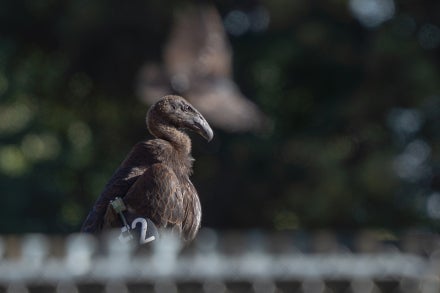
In the summer of 2006, we invited 12 high school science teachers from across Southern California to experience a week in the life of a conservation biologist at our research headquarters, the Arnold and Mabel Beckman Center for Conservation Research, adjacent to the Safari Park in beautiful San Pasqual Valley. This pilot offering gave teachers a glimpse into the overwhelming time, energy, and monetary commitment involved with recovering even a single species, as they examined the complex conservation history and recovery of the California condor.
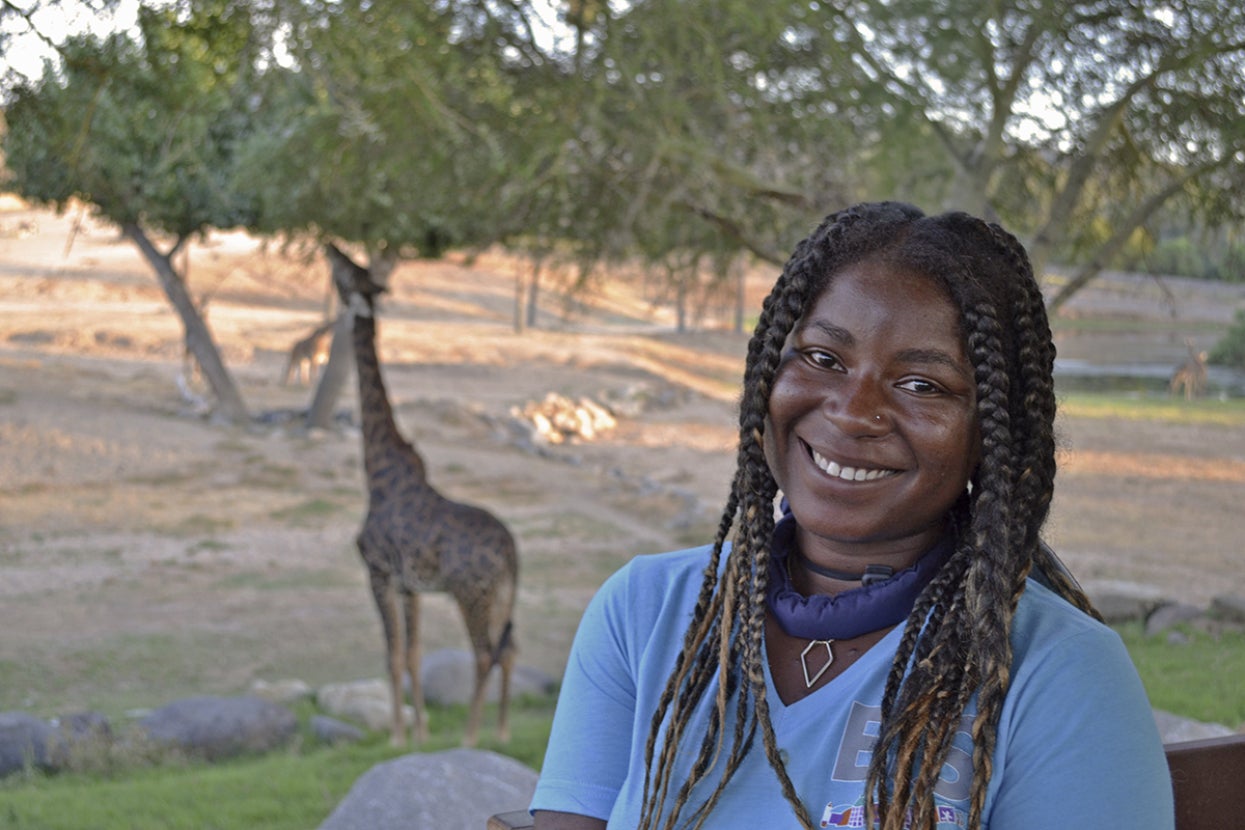
Science educator Amirah Barleigh gets up close with African flora and fauna at the Safari Park.
Lesson Plan
Two decades later, our Teacher Workshop program has grown into a nationally recognized, fully accredited, and amazingly popular professional development offering that has engaged more than 2,100 educators from all 50 states and 30 countries across the globe. Participating teachers spend three days and two nights at the Beckman Center and Safari Park, engaging with conservation scientists, collaborating with peers, exploring specialized laboratory and field techniques, and investigating animal behavior through the process of inquiry. It is our aim to provide a highly collaborative environment where teachers work together on linking relevant and replicable conservation activities back to textbook concepts in their classrooms, thereby offering students more concrete connections to science and wildlife conservation.
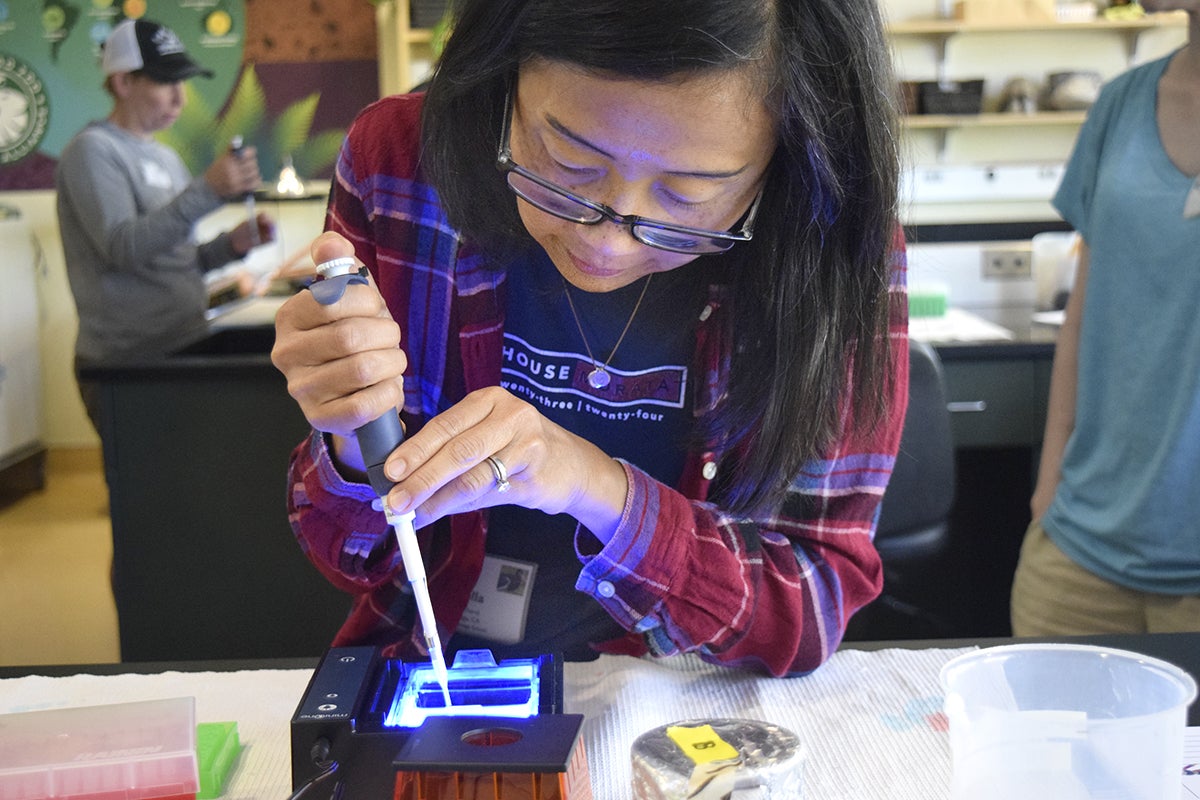
Through our hands-on curricular labs, our teacher partners have the opportunity to engage with tools and techniques that showcase the multidisciplinary nature of conservation. For example, they use micropipettes to examine sexually monomorphic species through gel electrophoresis, explore the role of biodiversity banking in species conservation, and conduct mock hormone assays to assess the reproductive status of animals in our care in order to enhance reproductive success and improve health outcomes. They explore the causes and implications of climate sustainability in the context of polar bears and their disappearing Arctic habitat, discovering how our scientists and wildlife care specialists use operant conditioning and positive reinforcement to learn about the energetic requirements and hearing ranges of bears at the Zoo as a model to better understand human impacts on bears in their native range. They learn about the reintroduction and monitoring of threatened species and use radio telemetry and spatial software to identify potential reintroduction sites as they track model frogs on our research campus. In our Eddy Family Outdoor Learning Lab, they explore the unique importance of native species as they practice plant monitoring techniques, analyze human impacts on local ecosystems, and discover diverse approaches to habitat conservation.
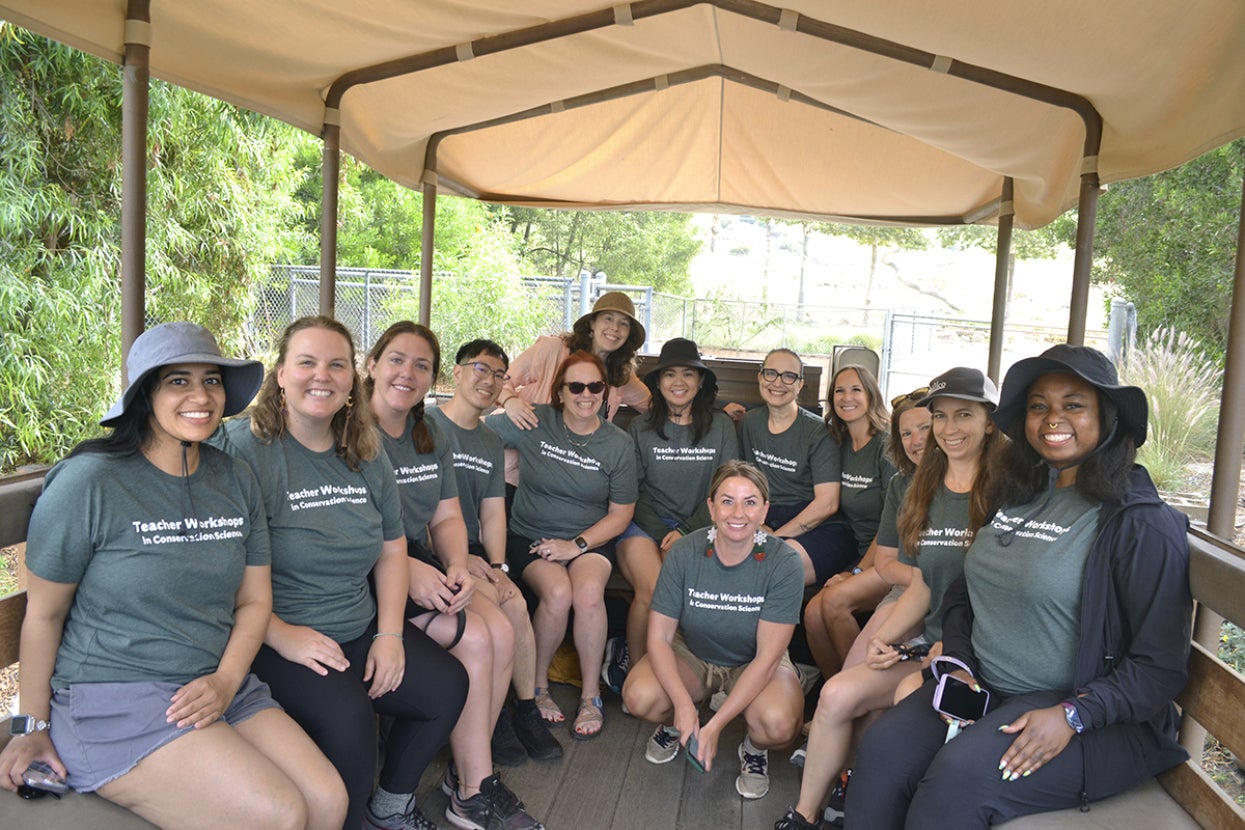
Educators from China, Canada, California, North Carolina, and Washington State get out to explore the savanna habitats at the Safari Park.
Back to School
Beyond science content and activities, the workshops offer important opportunities for teachers to network and share best practices, co-develop new ways to incorporate conservation learnings into diverse educational and community settings across the world, and motivate and inspire each other as they head back to their classrooms.
By the end of the workshop, teachers report that they are more knowledgeable about conservation topics and more confident in introducing conservation themes and inquiry-based lessons in their classrooms.
But it’s what happens after the workshops that proves so critical for creating sustained positive outcomes for wildlife, communities, and the landscapes we all share. When our teacher partners return home to their campuses, they gain access to free, mobile conservation science kits that enable them to replicate even the most sophisticated workshop activities back in their classrooms, and over 85% of them report an increase in student engagement due to workshop resources. Not only do we see teachers more effectively engaging their students with scientific practices, but we also see them lean more heavily into their role as influential environmental stewards in their own communities. Consistently across years, nearly 100% of participating teachers say they’re likely to change their own behavior and habits as a result of their workshop experience. They also become advocates for driving conservation action as consistently more than 90% say they’re likely to engage their students in taking community-level action because of their workshop experience. Thanks to their reinvigorated passion for conservation and nature, our workshop alumni have shared stories of supporting their students in a wide array of environmental efforts including recycling, composting, cleaning up local beaches, planting native and pollinator-friendly gardens, establishing environmental clubs, contributing to community science platforms, reducing energy use, and even working with campus facilities teams to transition entire school cafeterias away from single-use plates and cups.
It is this unique amplifier effect that makes teachers such powerful allies in the fight against extinction. Like tossing a stone into a pond, the remarkable influence of these community anchors ripples outward, far beyond individual classrooms, and for many years into the future. We’re incredibly proud that two decades
of partnership with teachers through our Teacher Workshops in Conservation Science has an impact potential of more than 2.7 million students worldwide. At the end of the day, connecting teachers, and their students, to their own critical role in wildlife conservation moves us closer to our vision of a world where all life thrives.