



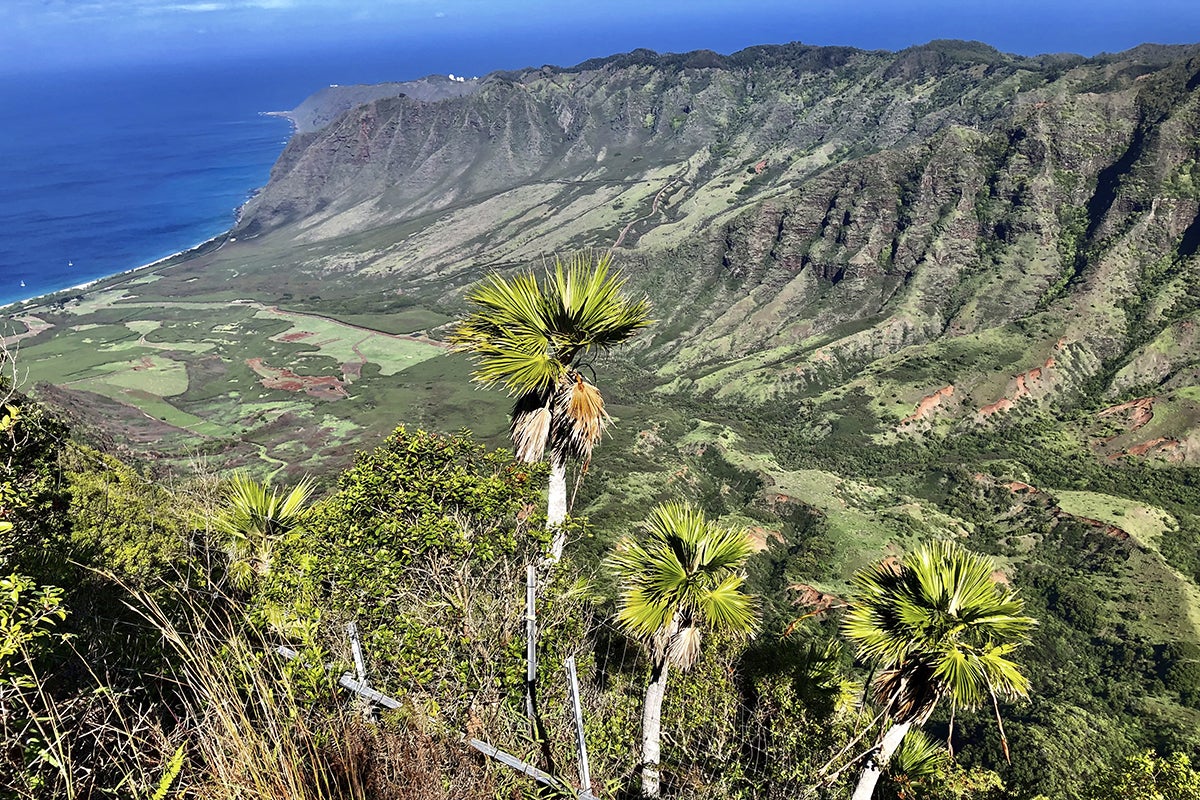

The Hawaiian Islands are often described as paradise—a place of beautiful beaches, perfect weather, breathtaking volcanoes, and rich cultural traditions. They are also recognized as one of the world’s most biodiverse hotspots. Isolated in the middle of the Pacific Ocean, they are home to some of the planet’s most unique and endemic flora and fauna. However, Hawai‘i also faces one of the highest extinction rates in the world due to habitat loss, invasive species, and climate unsustainability. Despite accounting for less than 1% of the landmass of the United States, the islands are home to roughly 44% of the nation’s threatened and endangered species. Native Hawaiian plants—particularly those with extremely small populations—are in critical need of protection. Among the islands’ most iconic native plants are the loulu palms, a group of fan palms belonging to the genus Pritchardia.
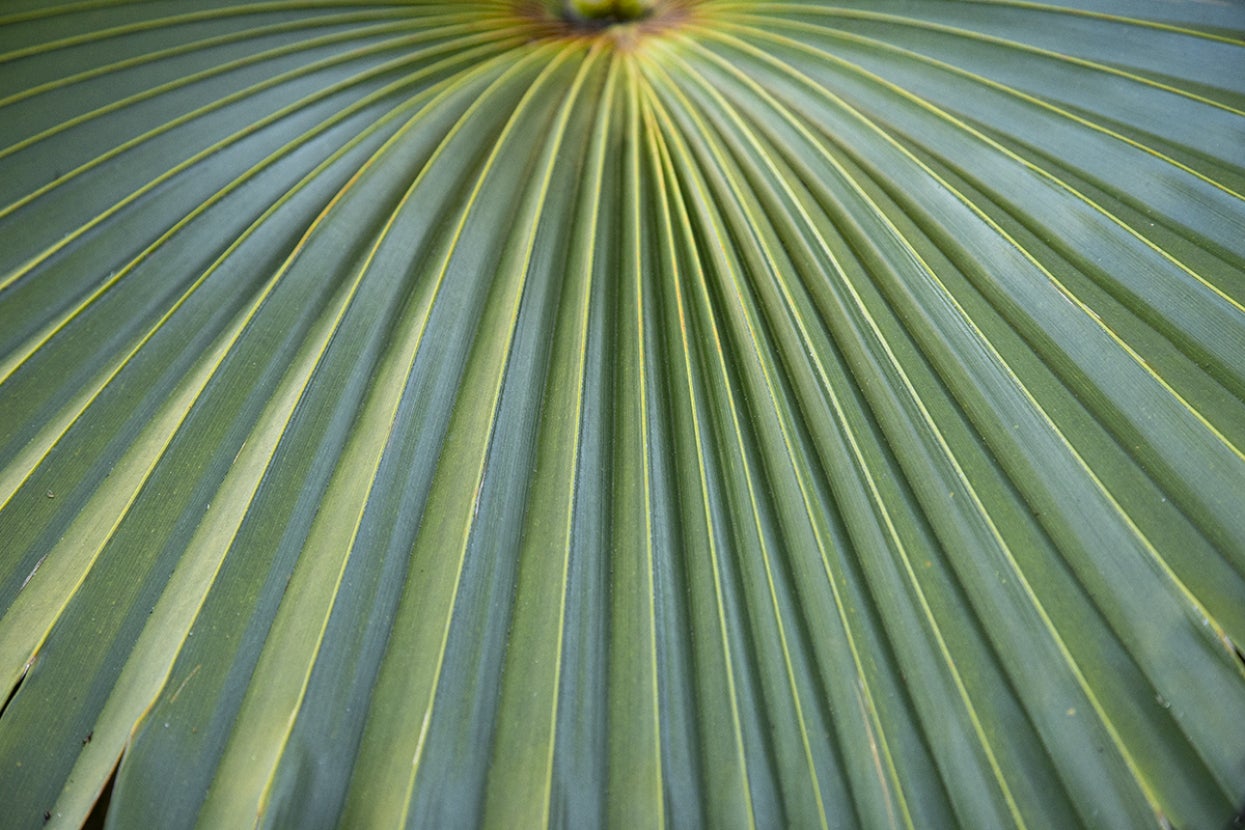
An Oahu native, the loulu palm Pritchardia kahukuensis is a solitary palm that rises above the Hawaiian landscape, reaching heights of up to 60 feet, and its fronds can span up to 6 feet in width.
The Sway of the Loulu
As the only palm trees native to the Hawaiian Islands, loulu palms hold significant ecological, cultural, and historical importance. The genus Pritchardia currently represents 27 accepted species, 3 of which are not found on the Hawaiian Islands but distributed throughout islands in the South Pacific. The remaining 24 species are spread throughout the 8 main islands of Hawai‘i. It is believed that Pritchardia first arrived in Hawai‘i millions of years ago via what has been called “The Three W’s”: water (floating seeds carried across the ocean currents and washing ashore), wings (seeds dispersed by birds), and the wind—though most loulu fruits and seeds are too heavy to be effectively wind-dispersed. Once established, Hawai‘i’s geographic isolation and diverse microclimates drove speciation, giving rise to the many distinct species found across the islands and even within individual valleys.
Once abundant across coastal and upland forests, loulu palms have faced numerous threats, including habitat destruction, seed predation by invasive rats, competition from non-native plants, and damage from feral ungulates such as pigs and goats. Much of Hawai‘i’s diverse forests were cleared for ranching, agriculture, and urban development. As a result, these combined pressures have not only erased many of the lowland and coastal habitats that once supported abundant loulu palms, but have also caused most of these species to become critically endangered.
The most recent emerging threat to loulu palms is the coconut rhinoceros beetle (CRB), an invasive pest that bores into the crown of palms, often killing them. First detected on O‘ahu in 2013, the CRB has devastated large numbers of coconut palms, agricultural crops, and culturally significant plants. A primary concern across the South Pacific, the beetle has now begun to spread to native loulu populations on several Hawaiian Islands. To address this threat, the San Diego Zoo’s Horticulture team has been given the opportunity to collaborate with the State of Hawai‘i to help protect these endemic palm species.
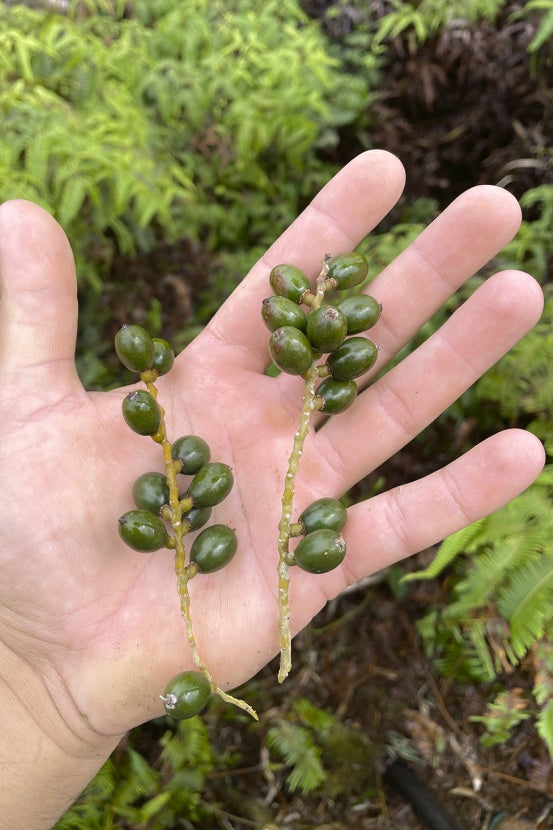
The small, edible fruit of the loulu palm were historically gathered by climbing or notching the trunks of the trees.
Hope Through Collaboration
At San Diego Zoo Wildlife Alliance, we are dedicated to protecting plants and wildlife worldwide. By generating, sharing, and applying scientific knowledge vital to the conservation of animals, plants, and habitats, we contribute to the global fight against extinction. Our collaborative work in Hawai‘i has often highlighted the ‘alalā and palila birds, but we have also partnered with plant conservation programs to amplify our collective impact. Over the years, we have had the privilege of working with institutions such as Waimea Botanical Garden, Honolulu Botanical Gardens, and the National Tropical Botanical Garden (NTBG).
In recent years, our partnerships have expanded to include the Department of Forestry and Wildlife (DOFAW), the Plant Extinction Prevention Program (PEPP), the O‘ahu Army Natural Resources Program (OANRP), and the University of Hawai‘i’s Lyon Arboretum. Together, these partnerships collectively support the recovery of all 24 recognized Pritchardia species across the Hawaiian Islands. The conservation of Hawai‘i’s rare plants rely on coordinated efforts among these partners. DOFAW, part of the Department of Land and Natural Resources (DLNR), leads the state’s management of native ecosystems, endangered species, and public lands. Its Rare Plant Program protects wild populations through seed banking, greenhouse propagation, outplanting, and population monitoring.
DOFAW also supports PEPP, an emergency initiative focused on more than 260 critically endangered Hawaiian plant taxa, often requiring challenging fieldwork such as accessing remote cliffside populations, collecting seeds and cuttings, and fencing small habitats to exclude invasive animals. The OANRP complements these efforts by propagating and outplanting rare species, restoring habitat, managing invasive species, and maintaining seed banks and nurseries. Lyon Arboretum’s Hawaiian Rare Plant Program (HRPP), affiliated with the University of Hawai‘i at Mānoa, strengthens conservation through its specialized micropropagation lab. The lab uses tissue culture to grow plants from embryos, buds, or cuttings under sterile conditions—a critical strategy for species with very few individuals or whose seeds are nonviable or difficult to germinate naturally.
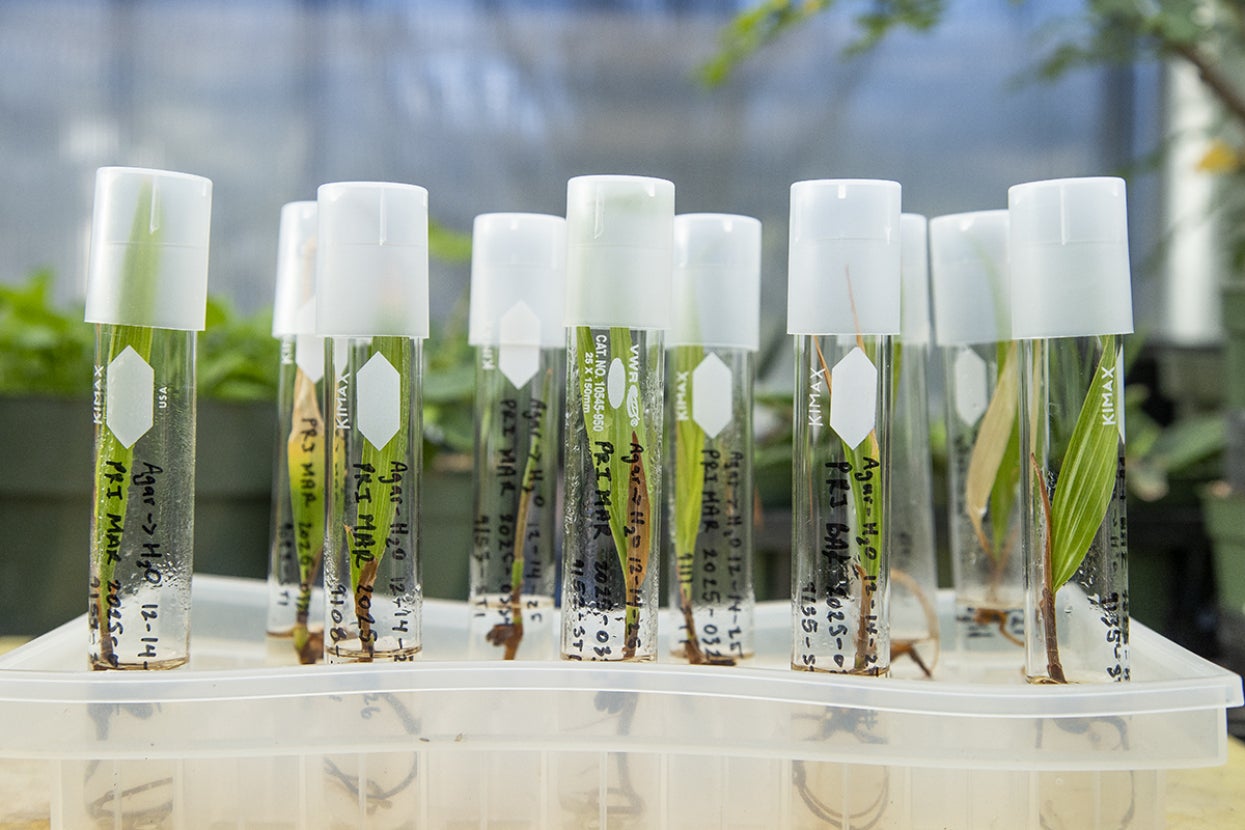
Palms are exception species, meaning they cannot be stored in traditional seed banks. Tissue culture offers a way to propagate immature seed and ease of transport between Hawaii and the San Diego Zoo.
Rooting for the Future
One of the tissue-culture techniques used at Lyon Arboretum’s micropropagation lab is aseptic embryo extraction, which is often applied to immature palm fruits. Field teams from DOFAW, PEPP, and OANRP head into the field, often hiking through difficult terrain, to collect fruit from loulu palms. If only immature fruit is available, the teams test for embryo viability and collect some to bring to Lyon Arboretum’s lab. Under sterile conditions, embryos are removed from the fruit and placed in tubes containing nutrient-rich agar media. They then develop in a controlled environment with optimal nutrients, humidity, temperature, and lighting. Once embryos grow roots and fronds, they are either shipped to the San Diego Zoo or picked up during horticulturist work trips to Hawai‘i. Once at the Zoo, the horticulture team determines which embryos need subculturing to encourage root development, which can undergo deflasking to harden off, and which are ready to transition to soil-less media in our propagation greenhouse.
Since 2022, we have committed to receive over 160 palm seedlings that, once mature, will be planted on Zoo grounds. Our facilities and mild coastal climate allow us to complement these efforts by cultivating and maintaining propagated plants both in the lab and in the landscape. These palms will be planted in groves, giving guests the opportunity to observe these beautiful specimens as they grow to maturity. Importantly, these conservation groves will function as an ex-situ resource for our Hawaiian partners. The pollen, fruits, seeds, and seedlings harvested from these trees will be used to further research, preserve genetic populations, and produce biomaterial to help our partners in Hawai‘i. Ultimately, the goal is for these species to produce fruit that can be sent to our partners in Hawai‘i for reintroduction into the native habitats from which their parent seeds were originally collected. Guided by this mission and vision, we remain steadfast, recognizing that the accelerating rate of species extinction demands our unwavering commitment. Through these collective efforts, we strive to create a world where all life can thrive.