



San Diego Zoo Wildlife Alliance's membership publications, ZOONOOZ and the San Diego Zoo Wildlife Alliance Journal, are marking a century of spreading the world about our wildlife and conservation efforts. Bears have been a part of our history since the early days (the first issue of ZOONOOZ is pictured below).

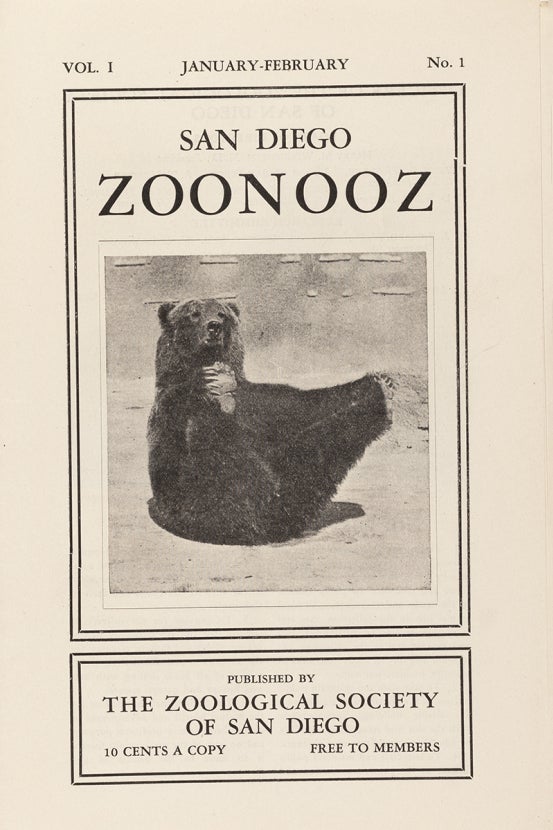
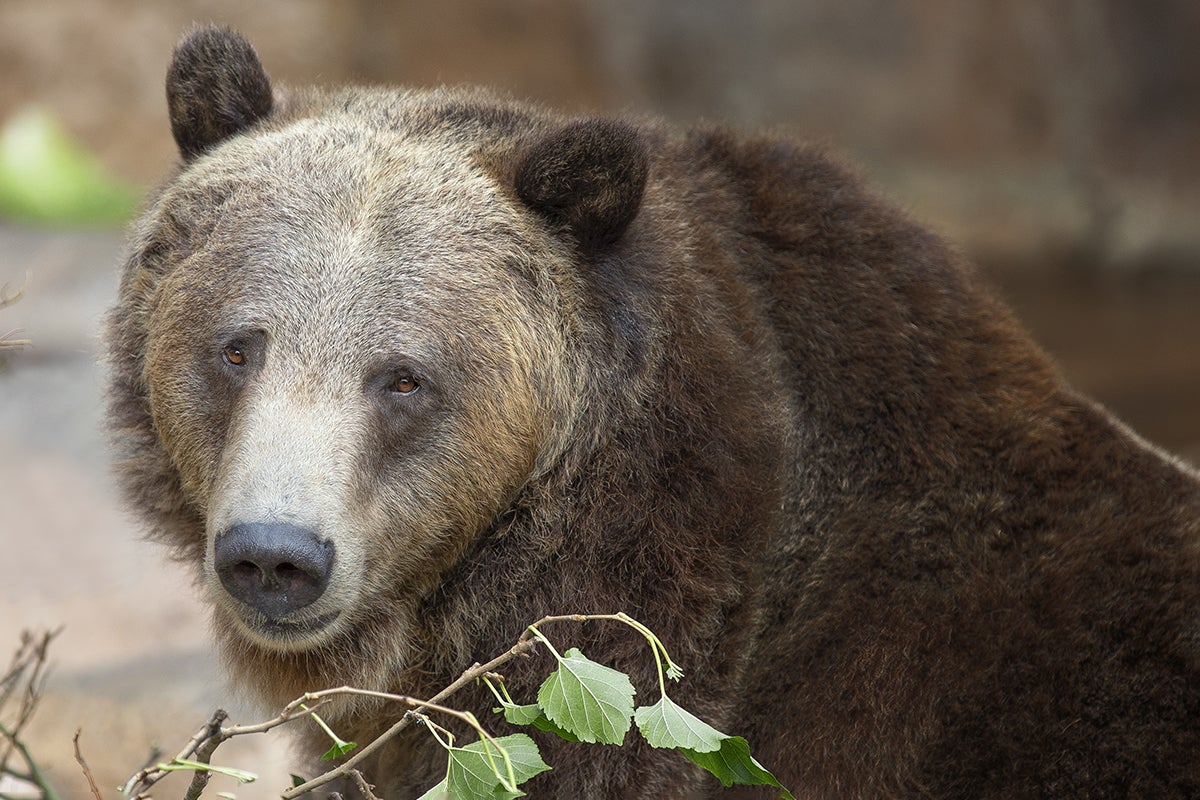
In the early 1920s, the idea of a zoo in San Diego was big news—so big that the San Diego Sun newspaper saw fit to dedicate a regular column to reporting the progress of the fledgling San Diego Zoo. The column, named ZOONOOZ by writer W.B. France, shared items about new species coming to the zoo, the addition of new habitats, and the growing excitement of citizens who were becoming very invested in “their” zoo. ZOONOOZ was catchy—it encapsulated what the content would be—news about the zoo—and the word was a whimsical palindrome, reading the same way backwards, forwards, and upside down. By 1926, the Zoological Society of San Diego (now San Diego Zoo Wildlife Alliance) was ready to print its own publication, and W.B. was kind enough to gift the organization the use of the name. The first issue of ZOONOOZ (pictured above) published by the Society in January 1926 consisted of 8 pages and its cover featured the image of a beautiful brown bear that had come to the San Diego Zoo in 1917. The bear arrived with the name Caesar—even though she was actually female.
Over the next nine decades, the Zoo would grow to become a world leader in wildlife conservation and expand to include the San Diego Zoo Safari Park, the Beckman Center for Conservation Research, and eight Conservation Hubs on six continents. In order to more fully represent our efforts toward a world where all life thrives, ZOONOOZ became the San Diego Zoo Wildlife Alliance Journal in 2021.
This month we celebrate 100 years of sharing stories about our wildlife conservation work with Alliance members, our guests, and subscribers. We wouldn’t be here if it weren’t for San Diego Zoo pioneers like Dr. Harry Wegeforth and, in regard to our publication, W.B. France. In honor of our beginnings, this month's issue of the San Diego Zoo Wildlife Alliance Journal carries the ZOONOOZ masthead, as well as a photo of a San Diego Zoo bear. The magazine's pages offer the chance to revisit the astonishing changes that have taken place over the years, and below, we've touched on just a few. But one thing hasn’t changed. The Alliance is still dedicated to a better tomorrow for wildlife, and all of us.
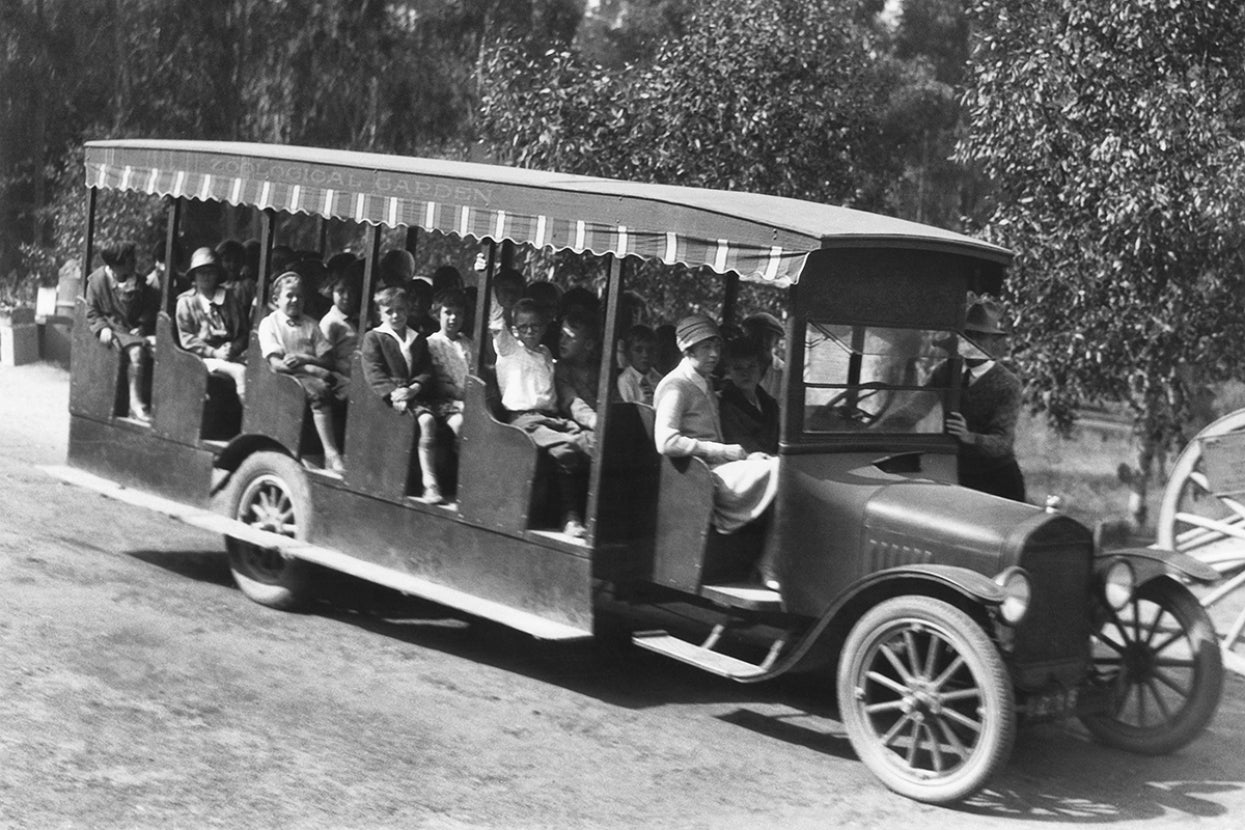
In 1926, Model-T Ford buses began being used for children to visit the Zoo, as well as for paid tours.
Conservation Education Gets Rolling
Details about San Diego Zoo development filled the early pages of ZOONOOZ magazine, including the efforts of Zoological Society of San Diego Board Member Dr. Joseph H. Thompson. In mid-1926, for example, he convinced a donor to provide enough money to purchase two Model-T Ford buses that could ferry entire classes of schoolchildren to and from the Zoo. When school wasn’t in session, the buses were used for paid tours around the Zoo, which generated extra income for the organization.
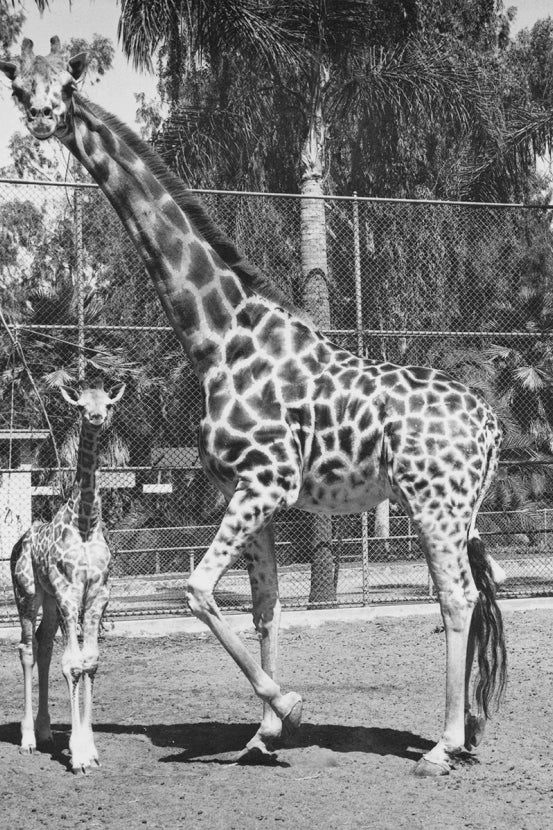
New Arrivals: Patches, right, was one of the first giraffes at the San Diego Zoo.
A Tall Order
Some of the most popular ZOONOOZ and San Diego Zoo Wildlife Alliance Journal stories are those that cover new wildlife at the San Diego Zoo or San Diego Zoo Safari Park. In 1938, giraffes Lofty and Patches came to the Zoo from Africa, and ZOONOOZ, along with national media outlets, followed their journey. Over the years, the pair welcomed several calves, starting with a male named Raffy in 1942.
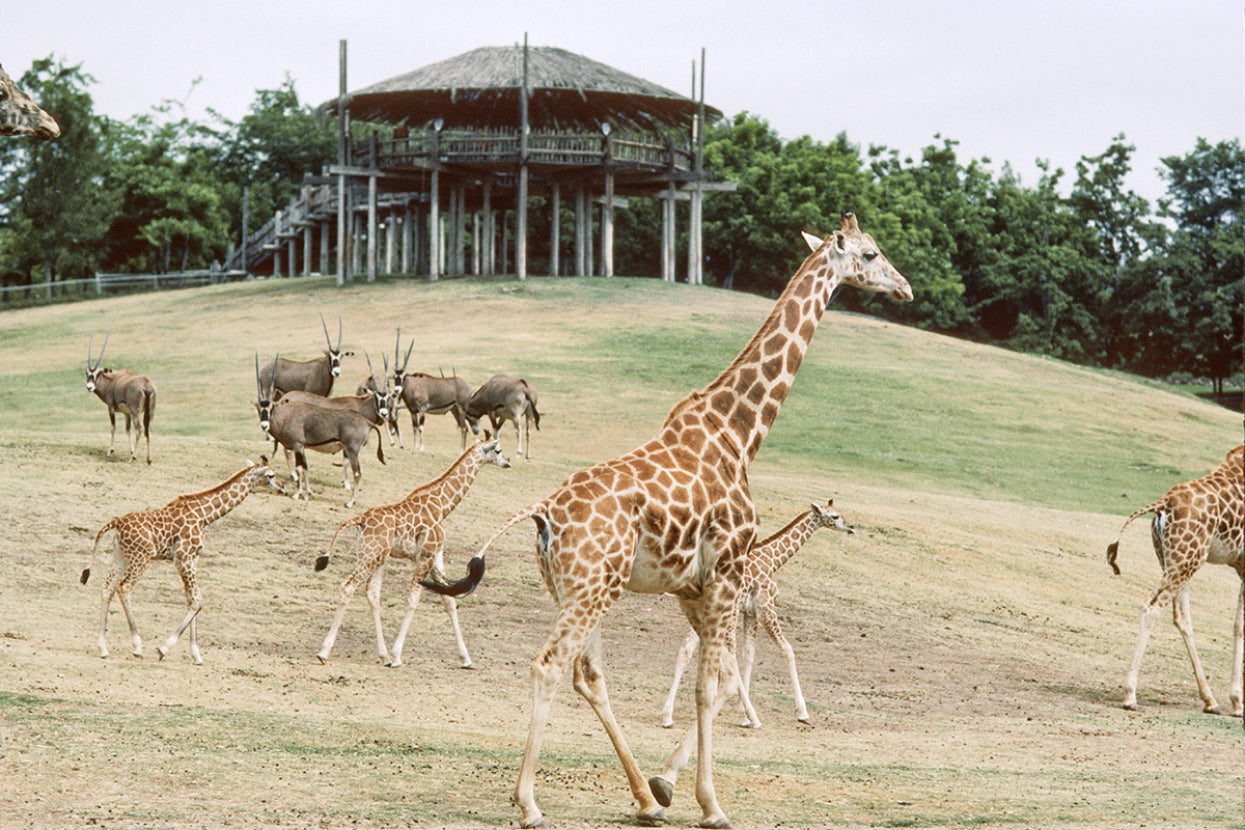
Field (Habitats) of Dreams: The Safari Park’s expansive, multi-species habitats closely replicate wildlife’s native habitats.
Outstanding in the Field
The mid-1970s brought the Landscape Immersion Movement to American zoos, the main concept of which was to extend the landscape experience of wildlife’s habitat into the realm of the guest viewing area. This extension of the landscape is paired with naturalistic landscape designs intended to reflect the species’ native habitat. The San Diego Zoo Safari Park (then the Wild Animal Park) was ahead of its time, featuring expansive, multi-species habitats at its opening in 1972.
Many Milestones
For 100 years —minus brief interruptions during the Great Depression and World War II—San Diego Zoo Wildlife Alliance has published a wildlife conservation magazine. Those early issues of ZOONOOZ focused on not only building community support for a local zoo, but cultivating an interest in wildlife and its conservation. Readers were introduced to new species, new habitats, and innovations in wildlife care, science, and technology. The San Diego Zoo Wildlife Alliance Journal showcases our dedication to ensuring a world where all life thrives. Here area few of the highlights that have appeared on our pages over the years.
1924 The first ZOONOOZ column appears in the San Diego Sun, written by W.B. France.
1930 Belle Benchley takes over as editor of ZOONOOZ.
1942 The first number drawn by Selective Services for World War II belongs to a young Zoo employee, Howard Lee, who would serve with the Army. The publicity given Lee’s leaving his job is carried all over the world. During the war, ZOONOOZ contains a "Zoo Honor Roll" of Zoo staff members overseas.
1966 The January 1966 issue’s cover is the first in color.
1999 The December 1999 issue includes an insider’s look at the first 54 days in the life of Hua Mei, whose birth was the result of the first successful artificial insemination of a giant panda outside of China. She would become the first giant panda cub to survive and thrive in the United States.
2021 In March 2021, San Diego Zoo Global becomes San Diego Zoo Wildlife Alliance and the member publication is renamed the San Diego Zoo Wildlife Alliance Journal.