



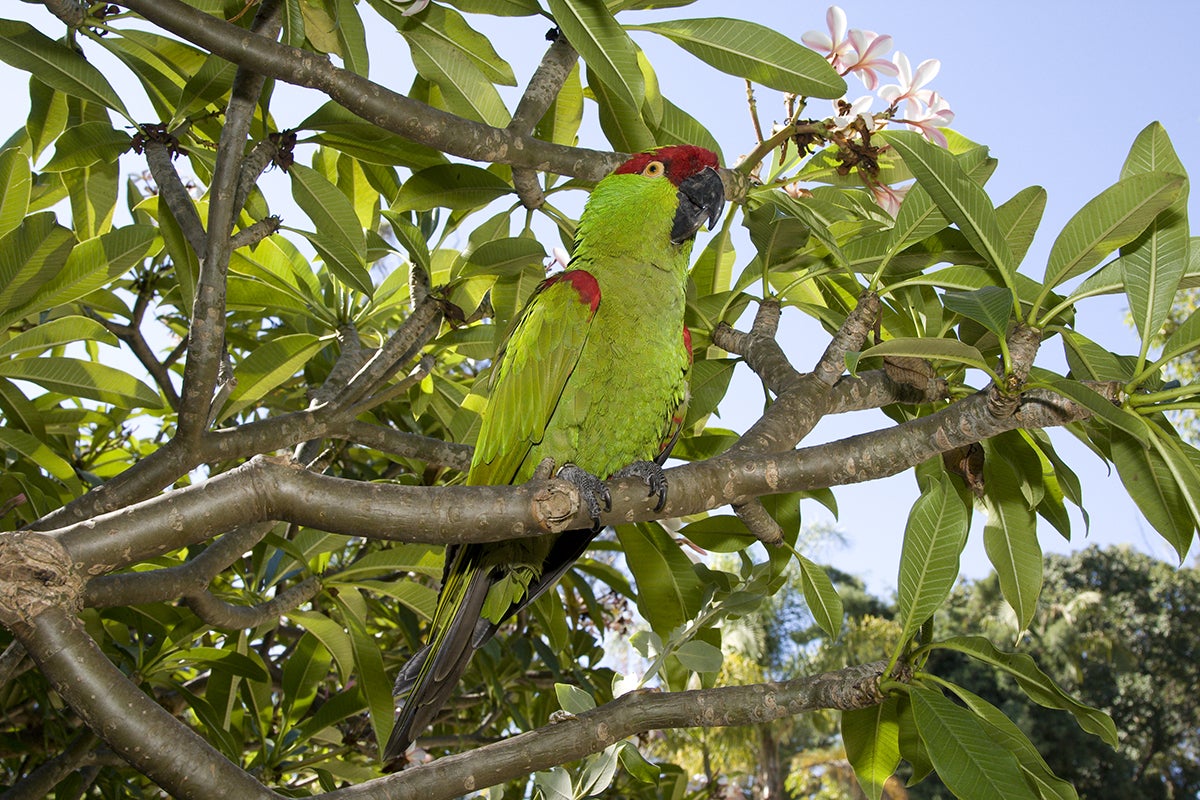

Bright green and bright eyed, with a boisterous call like laughter, the thick-billed parrot is the only remaining parrot species native to North America. Once found flying across northern Mexico and the southwestern United States, their range is now limited to the high-altitude pine forests of the Sierra Madre Occidental mountain range in northwest Mexico. Recent surveys in these forests suggest fewer than 2,500 individuals remain, and they are classified as endangered by the International Union for Conservation of Nature and the governments of both the United States and Mexico. Habitat loss and the effects of climate change threaten these unique birds, but with focused conservation efforts, there is hope for thick-billed parrot recovery.
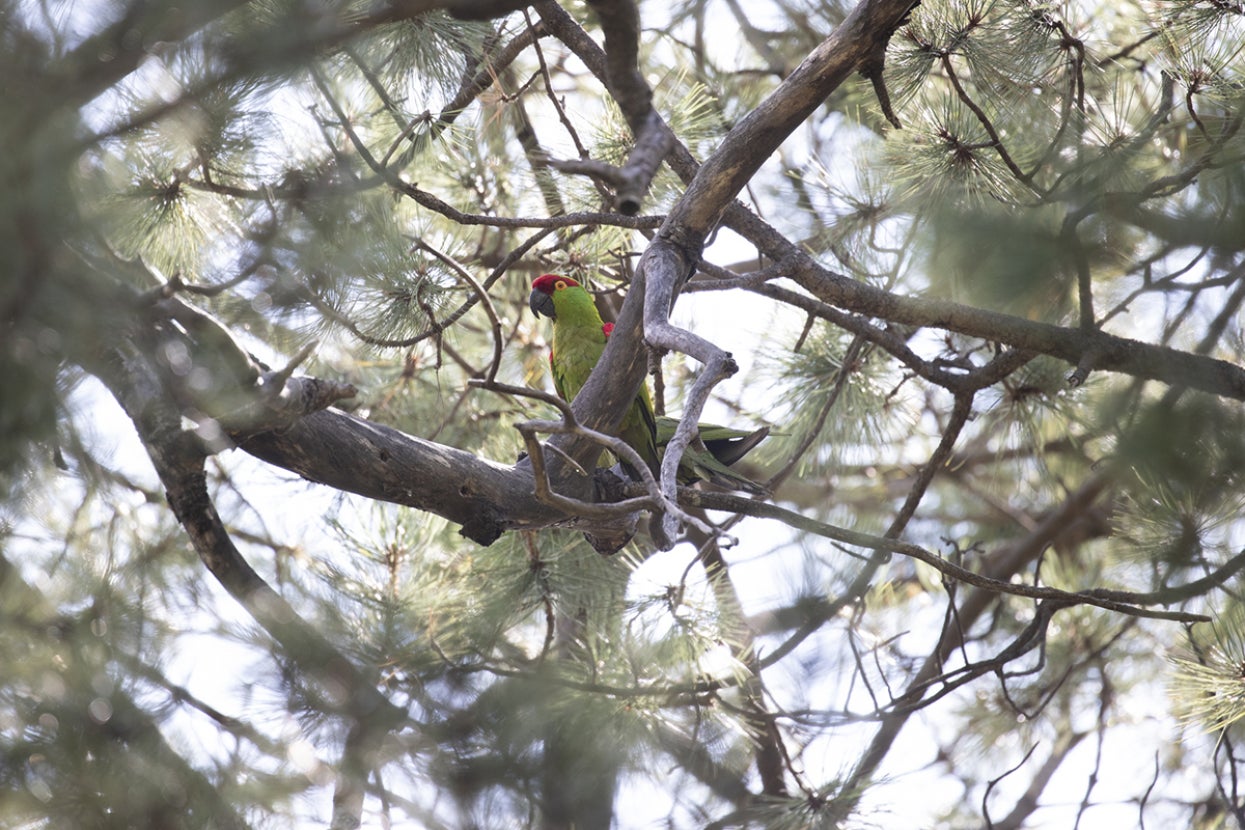
Vibrant green and dark red plumage helps thick-billed parrots camouflage in their native forests.
Collaborating to protect the thick-billed parrot
In 2024, San Diego Zoo Wildlife Alliance partnered to form the Saving Animals from Extinction (SAFE) thick billed parrot program. Hosted by the Association of Zoos and Aquariums (AZA), SAFE programs bring together the expertise and resources of accredited zoos and aquariums to protect endangered species through strategic conservation, collaboration, and public engagement.
The thick-billed parrot SAFE program builds on decades of teamwork between the San Diego Zoo Wildlife Alliance, AZA institutions, the Arizona Game and Fish Department, and Mexican conservation organizations like Organización Vida Silvestre (OVIS). Together, we have worked tirelessly to understand and restore thick-billed parrot populations.
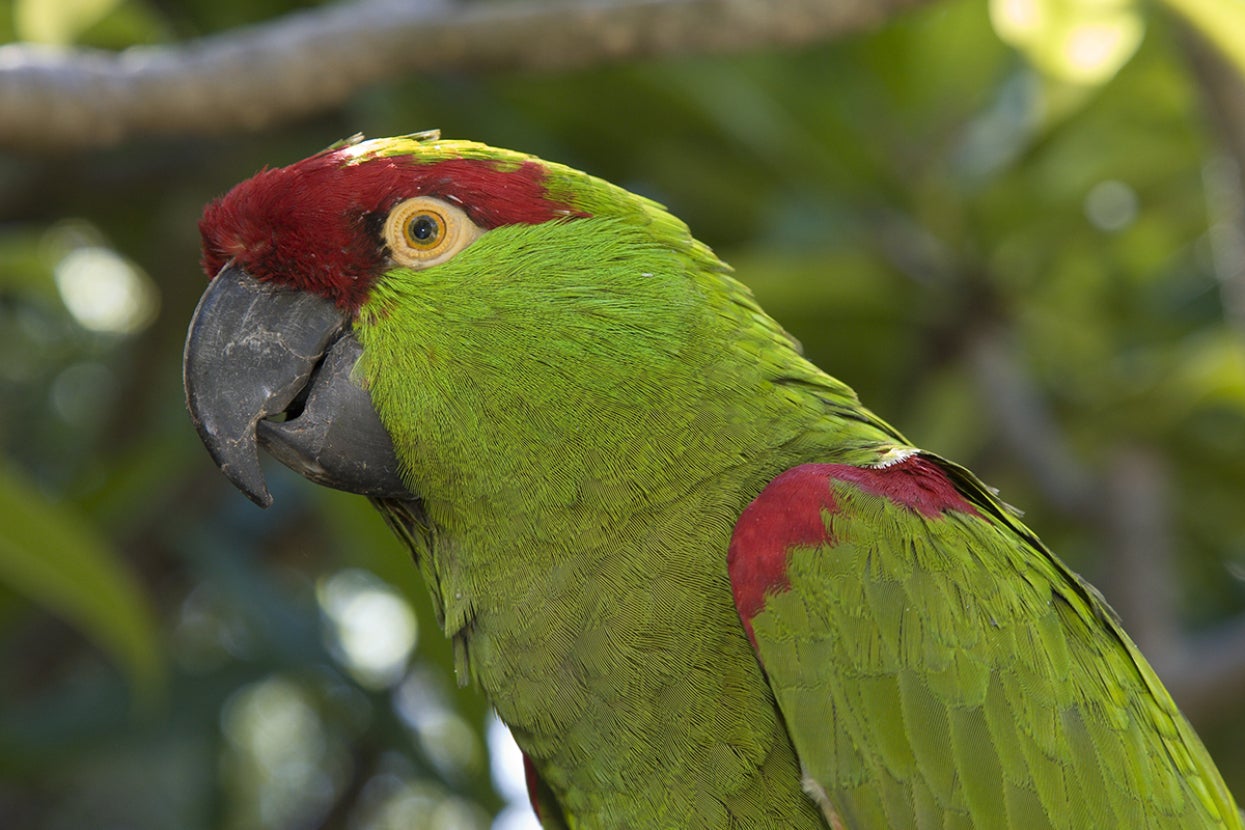
A sharp, powerful beak lets thick-billed parrots crack pine cones to reach their primary food: pine seeds.
OVIS is a leader in conducting population surveys, managing critical habitats, and working with local communities to promote sustainable practices. Meanwhile, AZA member organizations, including San Diego Zoo Wildlife Alliance, provide scientific expertise, veterinary care, and assurance populations that act as a safety net for the species. These binational efforts reflect the power of cross-border collaboration in protecting and sustaining an endangered species.
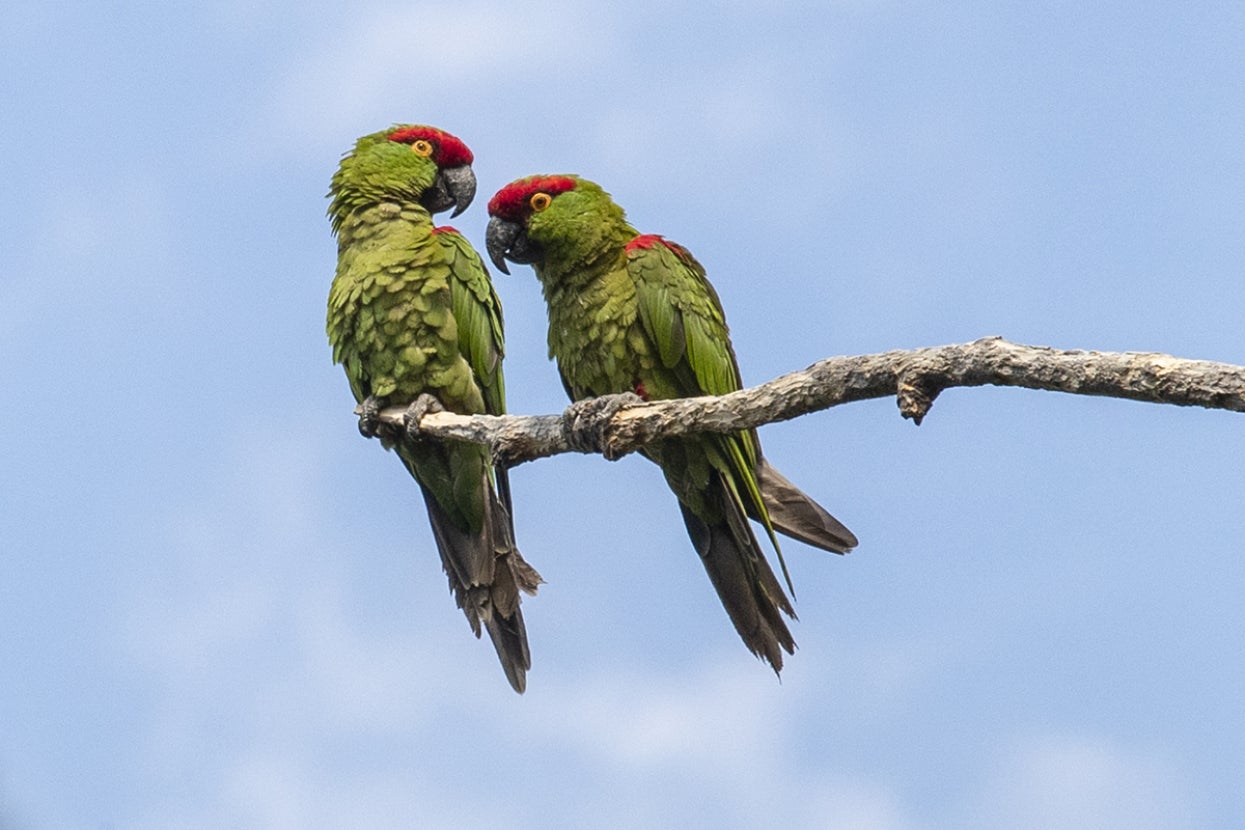
Thick-billed parrots are monogamous: they mate for life, meaning some have paired up for more than 30 years.
Milestones in conservation
Since the 1980s, we have achieved remarkable thick-billed parrot conservation advances:
Monitoring parrots and protecting their habitats: Using both direct observations and GPS transmitters mounted on tiny, bird-sized backpacks, we track parrots to identify key habitats. These data support advocacy for protection of forest habitats, including the old-growth trees that are essential for seasonal nesting and overwintering.
Establishing assurance populations: Ten AZA institutions, including the San Diego Zoo Safari Park, care for genetically diverse flocks of thick-billed parrots. These assurance populations are a safeguard against extinction and could one day help reintroduce the species to its native forests.
Expanding research and veterinary care: Our experts in ecology, reproductive biology, and veterinary medicine contribute to the health and survival of parrots both in our care and in the Sierra Madres.
Engaging communities: Through partnerships with OVIS and Mexican communities, we promote sustainable forest management, human-wildlife coexistence, and inclusive conservation education, ensuring that people and parrots can thrive together.
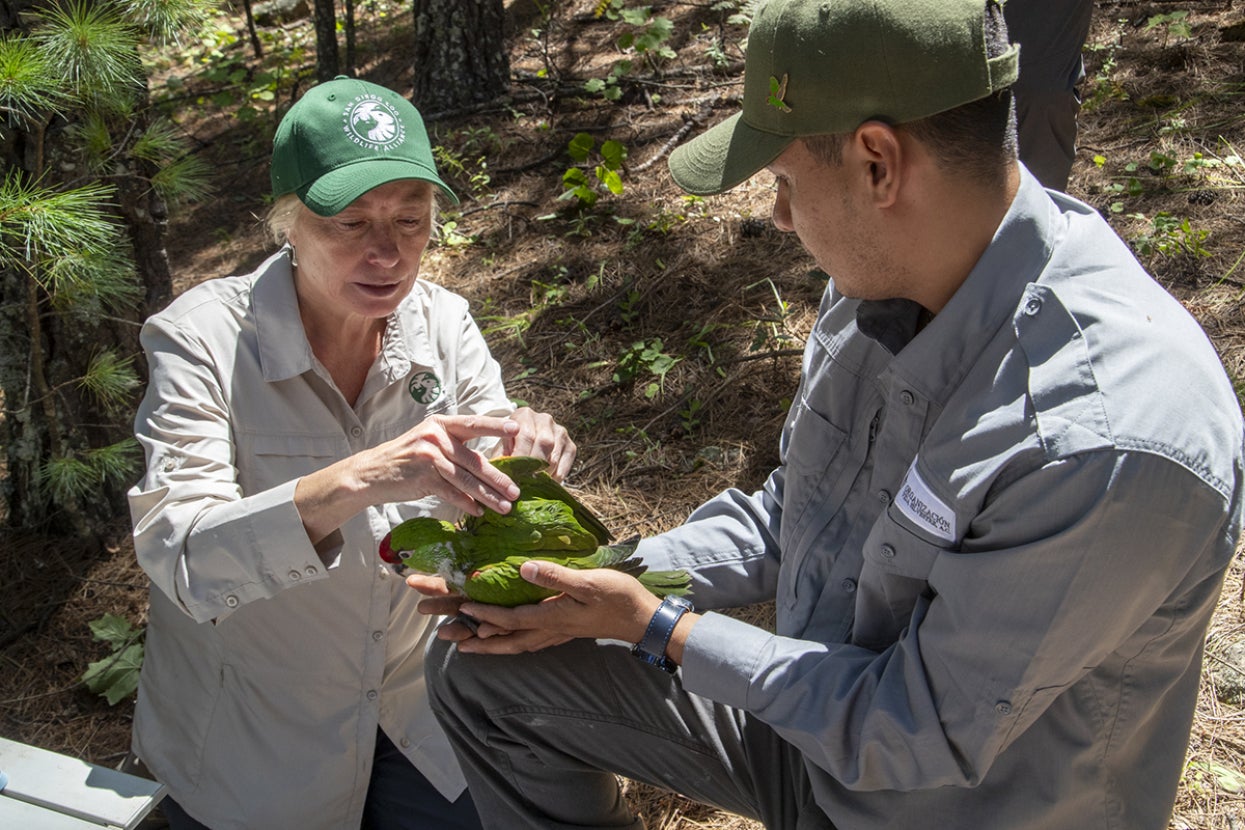
Veterinary medical check-ups in the field help us ensure thick-billed parrot health.
A Hopeful Future
The SAFE program builds on these successes by expanding partnerships, funding, and innovative solutions. One exciting initiative focuses on improving reproductive success by deploying custom-designed wooden nest boxes in the Sierra Madre forests. These boxes are tailored to the parrots’ nesting needs and are being refined to deter predators like bobcats and raccoons, keeping breeding pairs safe. We are currently building 50 new nest boxes, and with support from allies like you, we hope to build 70 more.
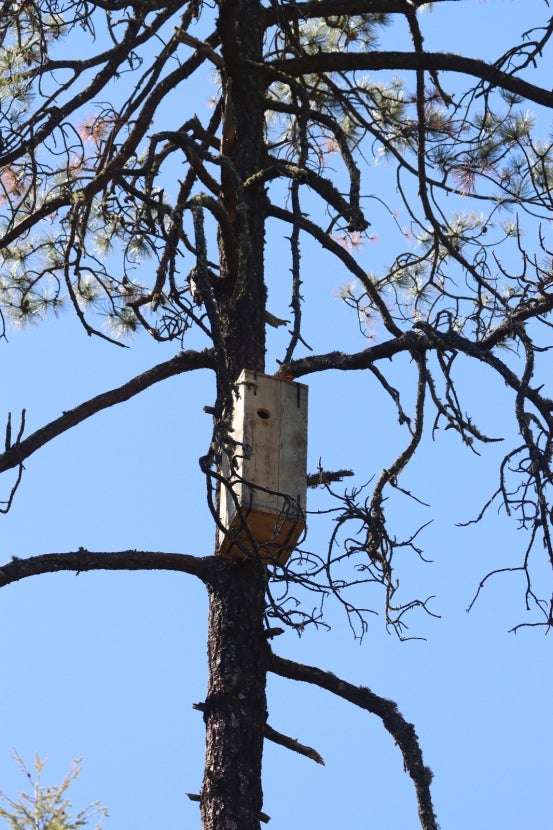
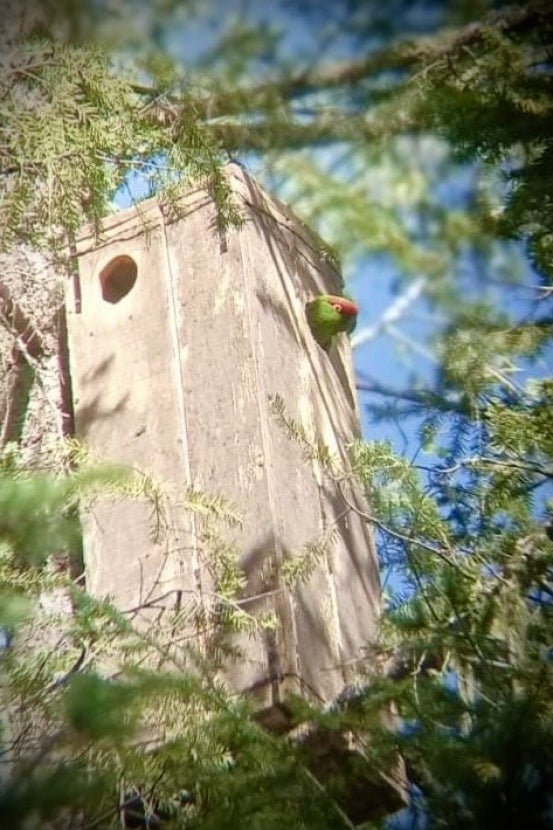
Wooden nest boxes are installed by hand and placed high up in the trees. Breeding pairs use these boxes to raise their chicks safely away from predators.
Everyone can play a role in thick-billed parrot conservation. By spreading awareness about these charismatic birds, celebrating events like World Parrot Day (May 31), and sharing their story, you can inspire others to be part of these species-saving efforts. Together, we can protect nests, foster community stewardship, and build on decades of partnerships to help these birds thrive.
With your help, we aim to downlist the thick-billed parrot from endangered to threatened, ensuring that North America’s last native parrot continues to brighten our forests for generations to come. Click here to support thick-billed parrot recovery.
Create your own unique connection with thick-billed parrots along Condor Trail at the San Diego Zoo Safari Park.
A version of this story was originally published in the Association of Zoos and Aquariums’ Connect magazine.