



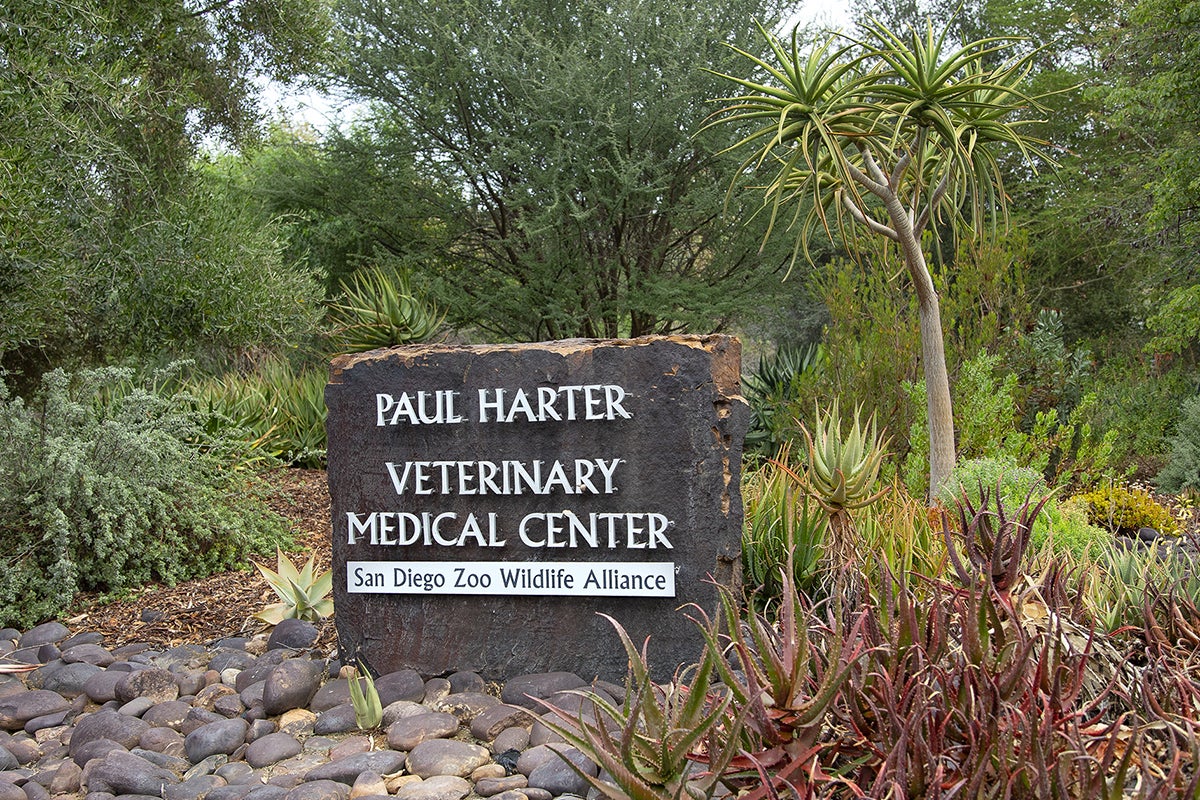

Imagine a hospital where a patient is admitted through a specially designed hallway with cushioned and non-slip flooring, moved into an anesthesia induction room with a large movable wall to support anesthesia initiation, and gently placed on a carbon fiber table using an overhead hoist capable of moving a 1-ton animal.
Once on the procedure table, the patient is intubated so the veterinary team can take over breathing for them and attached to anesthetic monitoring equipment that rivals human hospitals. Within minutes the patient has a complete physical exam, blood is collected for analysis, and a computed tomography (CT) and ultrasound study are performed. The bloodwork is analyzed in-house along with the CT scan and ultrasound, and first round of treatments is initiated.
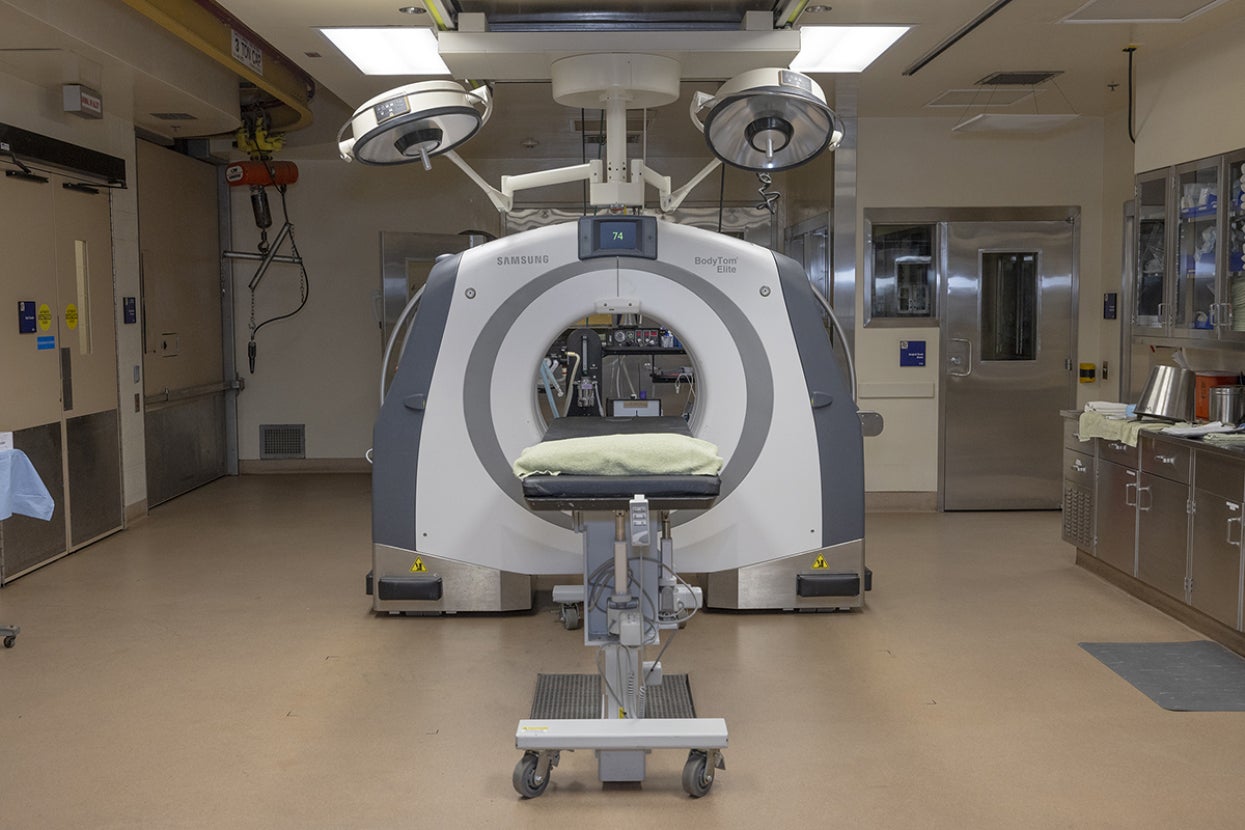
The state-of-the-art Paul Harter Veterinary Medical Center is equipped to treat patients of all sizes—and species.
A team of veterinarians, registered veterinary technicians, hospital wildlife care specialists, and wildlife care team members discuss the diagnosis and treatment options, and then an intervention plan is developed that focuses on health and welfare. A number of expert consultations are a phone call away if consultation is required for advanced care. The treatment plan for the patient includes setting up an intravenous catheter for fluid and medication support, which is placed while under anesthesia. The patient is then sent to recover in a room with temperature and lighting control, non-slip flooring, padded walls, and a novel system that avoids entanglement of the fluid line so IV fluids can be continuously delivered while standing, walking, or resting. The patient is monitored on a camera in an effort to facilitate a gradual and seamless anesthesia recovery, intravenous treatments are delivered through a port such that the patient is unimpacted by the medication administration and presence of caretakers.
As the patient responds positively to treatment, a housing transition is made to a space with indoor and outdoor options for fresh air and sunlight. As the patient’s condition further improves, a housing transition is made to acclimate to return to habitat. Initially the individual is supported with heat during the cool nights and water misters during the day as the temperatures rise. Once the patient is fully recovered and re-acclimated to environmental temperatures, an exit weight is obtained using an in-floor scale and the patient is smoothly guided into a trailer using specially designed padded walls that slowly encourage trailer loading for transport. This is not a health care dream; it’s a common experience for veterinary patients at the Harter Veterinary Medical Center (HVMC) at the San Diego Zoo Safari Park.
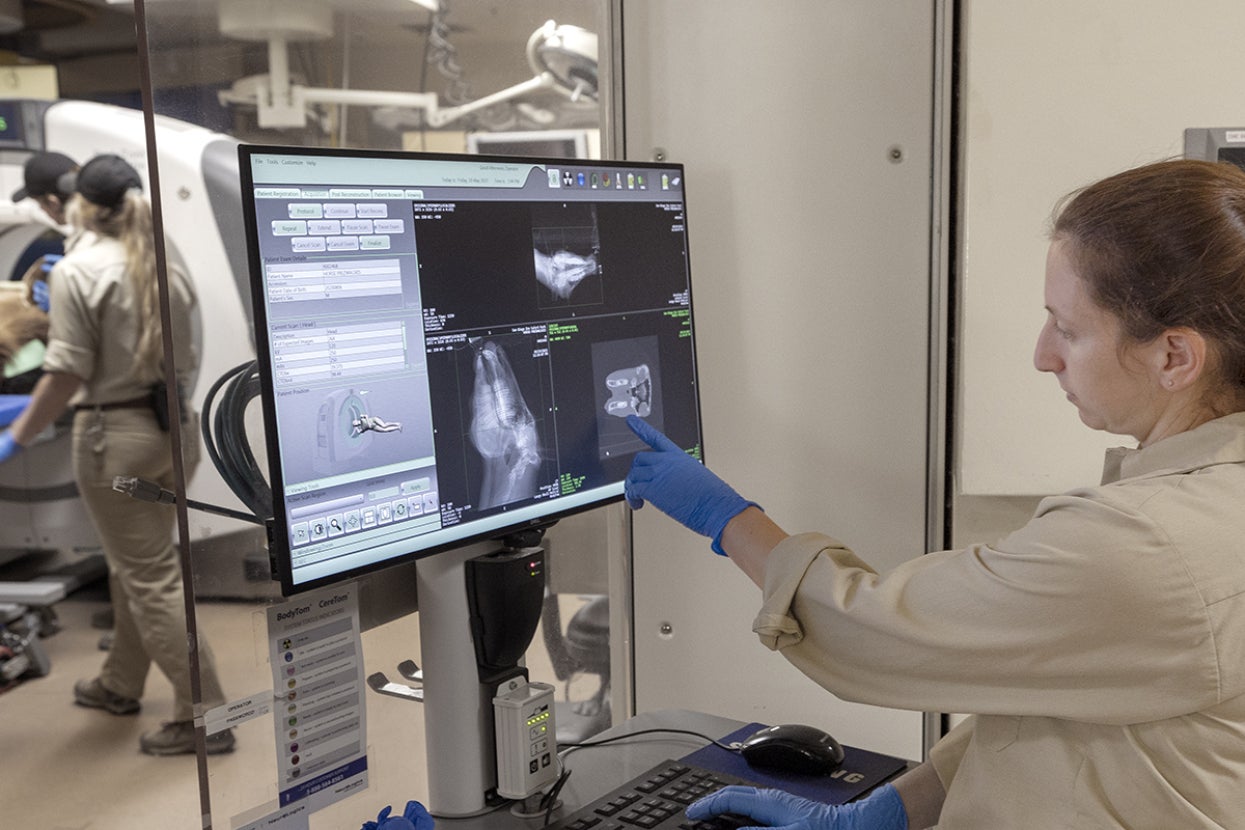
Having the proper diagnostic tools is key to providing top-notch care for such a wide array of species. The Center has treated more than 50,000 patients.
A Quarter Century of Care
Since its beginning, the HVMC has served over 50,000 animals with 14,000 individuals hospitalized for care. The HVMC is the hub of zoological medicine innovation and the core of the veterinary service department at the San Diego Zoo Safari Park. The Center provides for the health care needs of wildlife within the Safari Park and is part of the conservation program in our Southwest Hub.
The vision for the hospital was initiated in the mid-1980s and the HVMC opened in 2001 when the first patients were welcomed. The facility serves as the base for the three ambulatory veterinary trucks and has the capacity to provide care to species as small as a Pacific pocket mouse up to a neonate giraffe or rhinoceros and everything in between. Every aspect of the hospital was intentionally designed to maximize safety, health, and welfare.
The flooring where hoofed animals are cared for is made from running track-like material to provide cushioning for delicate hooves; a non-slip surface, and easy cleaning. The doors in these areas have specially designed handles that are flush with the walls so nothing can injure the patients when they are moved throughout the hospital. All the bird housing has the capacity to provide indoor and outdoor access for sunlight and fresh air, and most medical equipment is stored in portable carts to provide easy access to supplies in one of the six rooms used for medical or surgical care.
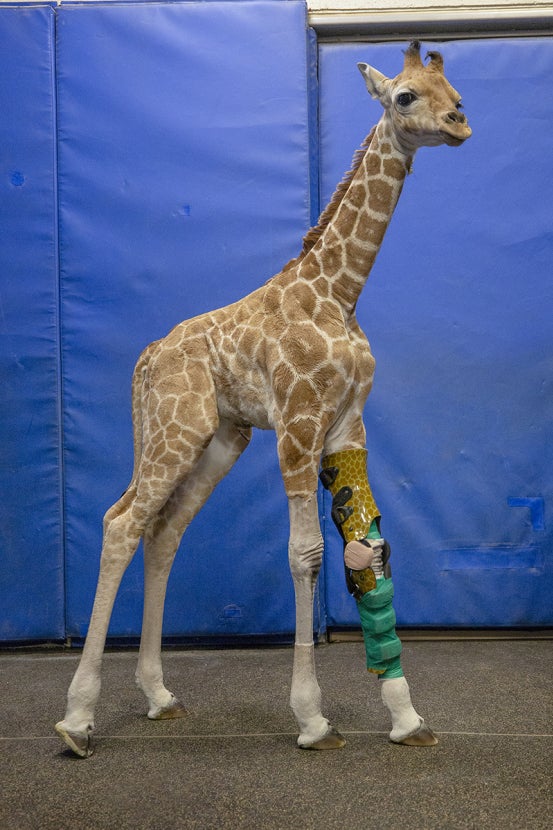
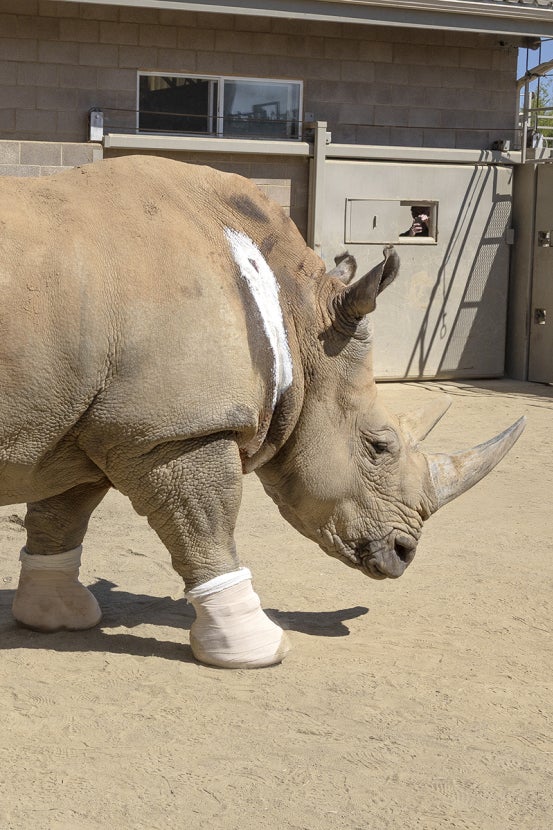
In collaboration with a human prosthetic and orthotics company, the Harter Veterinary Medical Center was able to provide a giraffe calf (top) and a rhinoceros (above) with much-needed braces and walking boots, respectively, that they needed following treatment.
An Eye to the Future
The innovations at the HVMC do not stop at facility design, and have continued beyond the opening of the hospital in 2001. Over eight years ago we advanced our diagnostic imaging capabilities by becoming an early adopter of computed tomography in zoological medicine. Since embracing this technology, we have performed over 1,500 computed tomography studies at the Safari Park. Including this technology in our practice has allowed us to build a large patient imaging database; greatly increases our diagnostic specificity and sensitivity, and improves the care we can provide to wildlife for which we are responsible. Additionally, within the past 10 years we have transitioned a large portion of our surgical procedures to laparoscopic approaches—using a small camera and specially designed instruments to evaluate and perform abdominal surgery on wildlife as small as dik-dik antelope to as large as Javan banteng. This allows us to diagnose and perform surgery on individuals using incisions smaller than the diameter of a nickel. Laparoscopic surgery not only promotes quicker healing and return to normal activity for our patients, it has also allowed us to perform procedures that would have been very technically challenging if not impossible in many species. Collaboration with internal or external work groups is at the core of accelerating innovation at the HVMC. Recently the veterinary team worked in partnership with a human prosthetic and orthotics company to custom design and fabricate a brace to prevent over-extension of the forelimbs of a giraffe; and a shoe for a southern white rhinoceros to wear during wound healing following extensive damage to the bottom of both forelimbs.
The future of innovation at the HVMC at the Safari Park continues to burn bright with a motivated team and organization that uses their experience, curiosity, and creativity to develop in-house solutions to complex medical problems and collaborates with professionals across human and veterinary medical platforms to translate and implement cutting-edge equipment and techniques into zoological medicine. If the past 25 years is any reflection of the next 25 years, innovation will continue to be a cornerstone of care at the Harter Veterinary Medical Center.