



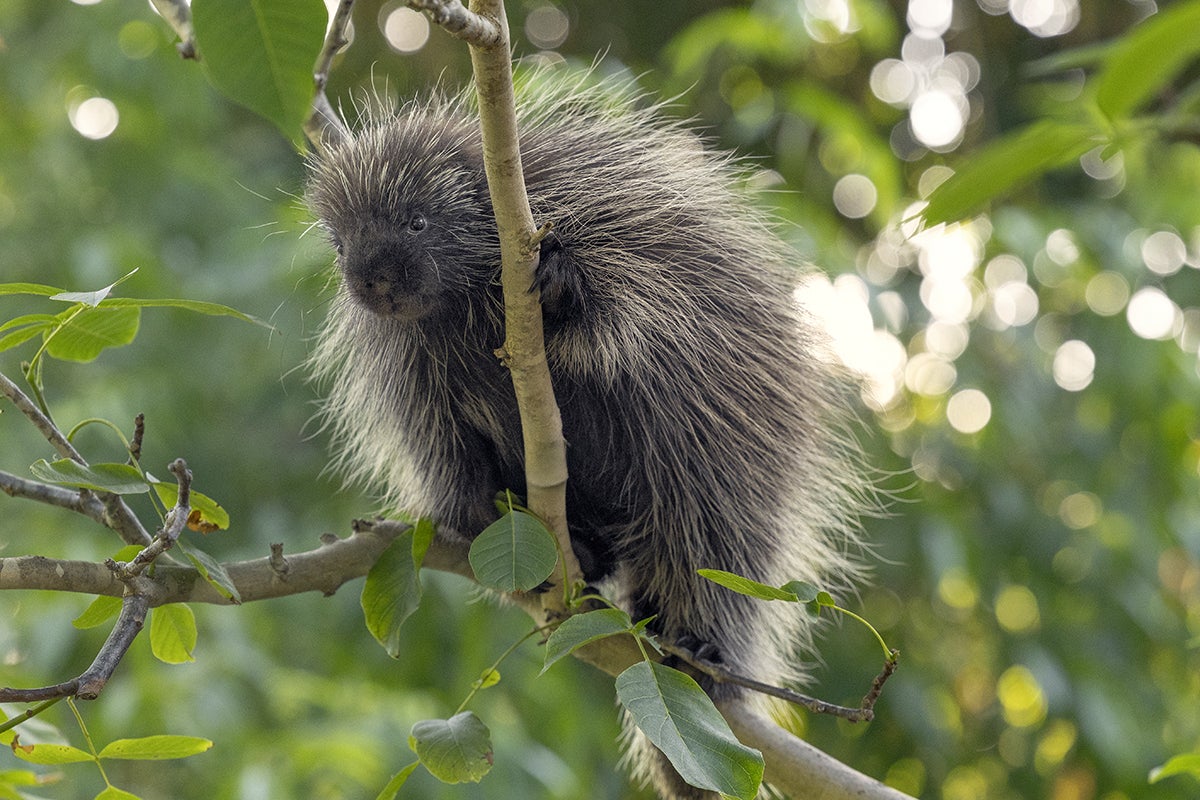
Necessity is the mother of invention, and in April 2024 at the San Diego Zoo’s veterinary hospital, invention helped a pregnant porcupine become a mother via a necessary—and groundbreaking—procedure.
Following a relatively uneventful 7-month gestation, Maizey, a 13-year-old North American porcupine, went into labor. In her maternity den in her habitat, Maizey paced, stretched, and rolled on her side in an attempt to bring her offspring into the world herself. Because the first-time mother’s age deemed her pregnancy “geriatric,” Maizey’s care team had been monitoring her closely, and when she began experiencing symptoms of dystocia (a slow or obstructed birth), they sprang into action. What happened next—a porcupine birth by cesarean section—would not only save Maizey and her baby; it would earn a spot in veterinary history for Dr. Garrett Fraess, DVM, Dipl ACZM, several Zoo care teams, and even Maizey herself.
Baby Monitor
While the complication with Maizey’s delivery was cause for concern, Dr. Garrett explains that significant preplanning greatly improved the chances for a positive outcome. “The [Wildlife] Basecamp team did such an incredible job of monitoring Maizey,” he says. “They knew the exact day she bred, so they could calculate when she should give birth. She learned to participate in behavioral pregnancy checks to track the size and vitality of the fetus.” He added that having what he calls a “decision tree” as part of Maizey’s birth management plan was important. “Knowing ahead of time that if this happens, we respond by doing this. If something else happens—it has its own action lined up. There’s security in that,” Dr. Garrett says.
When Maizey went into labor and the progress stalled, her care team was ready—and able to lend a hand. Because of the incredibly trusting relationship that her wildlife care specialists have built with Maizey, Dr. Garrett was able to gently palpate her abdomen, feeling the bbaby’s position. He could tell that the baby was stuck, and that it wasn’t likely the little one could be manually guided. An x-ray confirmed the sticky situation: Maizey’s pelvic canal was not able to dilate sufficiently and the porcupette was too big to maneuver through the birth canal. And as with most births, Dr. Garrett notes, the longer the process takes, the greater the chance of distress to both mother and offspring. As the minutes ticked by, it became apparent to Maizey’s care team that if her baby was coming out, it was going to be via cesarean section—a procedure that, to our knowledge, had never successfully been performed on a porcupine.
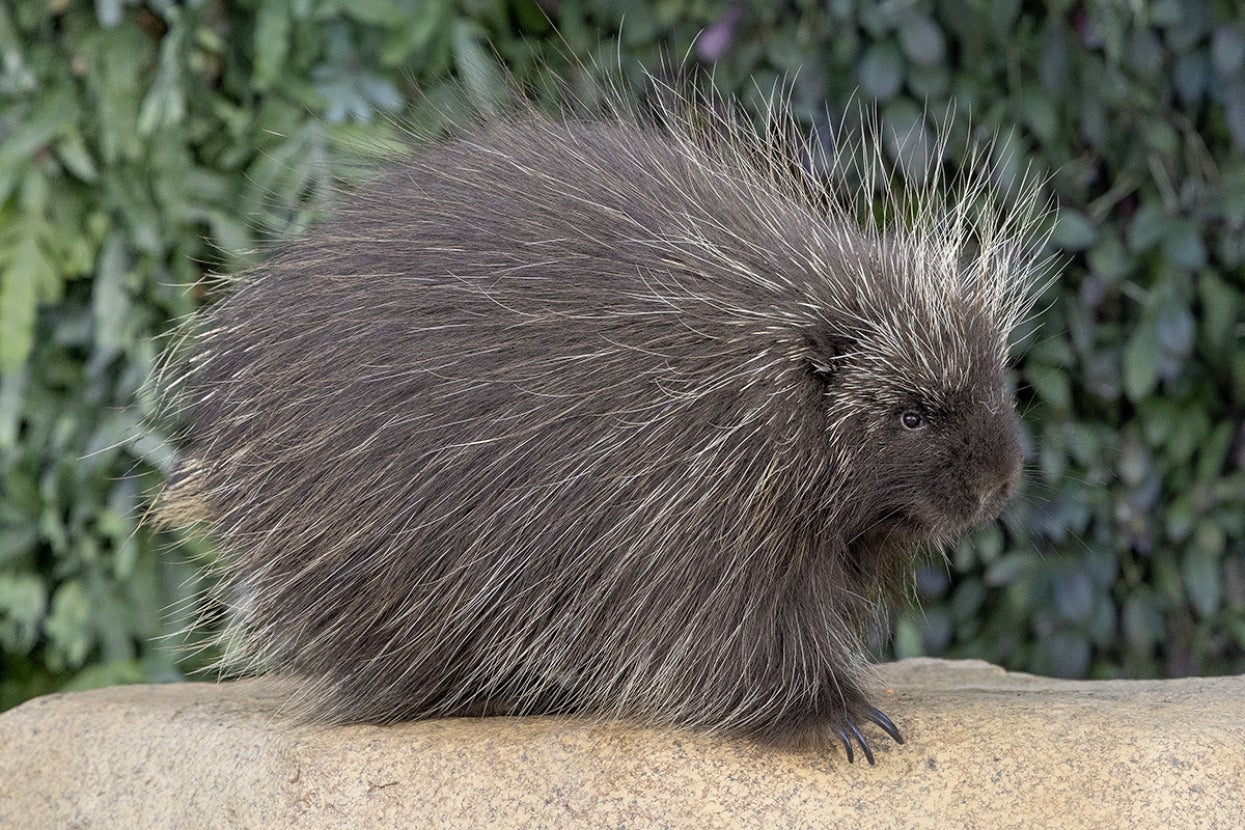
Maizey the North American porcupine.
Operation Porcupette
While Maizey’s story marks a medical success, the unprecedented C-section was anything but ordinary. As they prepared for the procedure, Maizey’s veterinary team knew they would face a bevy of challenges. From safely anesthetizing a mother and baby to careful surgical technique to prevent damage to Maizey’s delicate internal organs in a species prone to internal inflammation, each surgical moment required planning, patience, and precision.
As Maizey was anesthetized and surgery got underway, there were a lot of experts in her corner: Along with Dr. Garrett acting as the primary veterinarian, the porcupine’s delivery involved three other assisting veterinarians, four veterinary technicians, three hospital wildlife care team members, and two neonatal wildlife care specialists.
An early challenge involved the lack of specific published protocols and procedures in zoo animals. “There isn’t a porcupine surgery manual,” Dr Garrett explains. “We start with our general medical training, take comparative medical knowledge of somewhat similar species (like guinea pigs), and pull from knowledge of many other animals including even human medicine, and mix it all together to create a tailored plan for a unique patient.”
During the two-hour surgery, the porcupette was removed, placed in an incubator, and taken to the Zoo hospital’s ICU for care. Once the baby was out, Dr. Garrett noticed that his work was not yet done. In utero, porcupettes have soft hairs that harden into quills within a day after birth. But in Maizey’s case, because she had been in various stages of labor for 72 hours, some of the porcupette’s quills had begun to harden and embed themselves internally. This required meticulous removal by our veterinary team, who took their time examining Maizey for any stray quills. In the end, they found that three quills had fully perforated her uterine wall and extracted them from the abdominal cavity one by one. After the operation’s finishing sutures, Maizey and baby went to recovery and received around-the-clock monitoring to ensure there were no further complications. Happily, she was on the mend and soon on her way back to her habitat.
Unbeknown to Dr Garrett in that surgery suite, this procedure had never been successfully performed on a porcupine resulting in a live mother and baby. When asked about it after the fact, he stated “I am glad they told me it had never been done successfully AFTER both animals had successfully recovered."
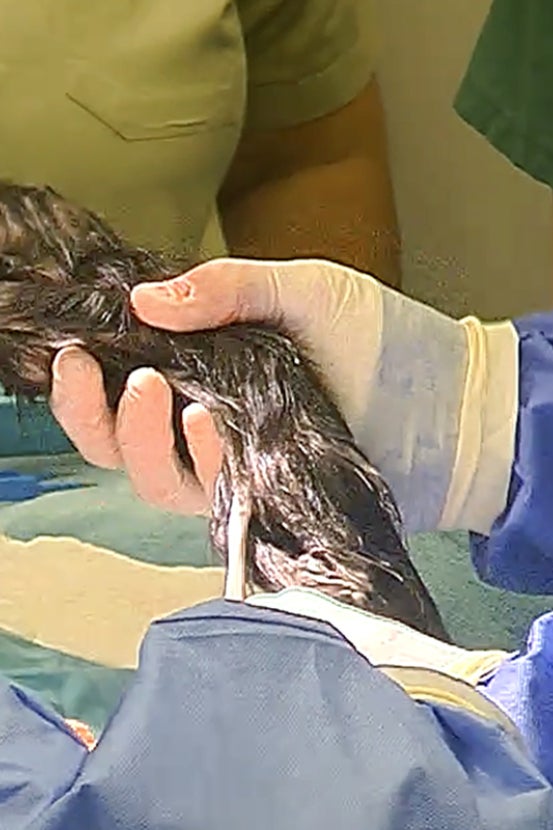
In order to save both Maizey and her male porcupette, Dr. Garrett Fraess, DVM, Dipl ACZM, performed a groundbreaking C-section.
A Bright Future
Maizey’s offspring, a male named Dakota, blossomed into a spunky and playful porcupette who spends his time exploring his habitat and learning new porcupine skills, including perfecting his twirly spins accentuated by fully flared quills. While the youngster plays, he is also practicing an innate mechanism for defending against predators. When he was old enough, Dakota joined the other wildlife ambassadors at the Zoo's Wegeforth Bowl amphitheater, where he participates in the daily Wildlife Wonders wildlife conservation presentation.
Maizey had a complete recovery from her surgery and is back to her normal self, living in her habitat in the Zoo’s Denny Sanford Wildlife Explorers Basecamp. Her easygoing nature makes her an excellent wildlife ambassador, having educated guests about her species for many years.
The C-section’s successful outcome was celebrated not only by Maizey’s care team, but the Alliance as a whole. The collaboration involved was a critical key that Dr. Garrett considers invaluable. “I am always amazed at what our teams are able to do,” Dr. Garrett says. “So many people are willing to sacrifice and invest their time and effort for wildlife. While it’s easy to celebrate the team members who took part in the operation and recovery, it’s important not to forget other team members who filled in to cover their other tasks, making sure all wildlife received the best possible care.
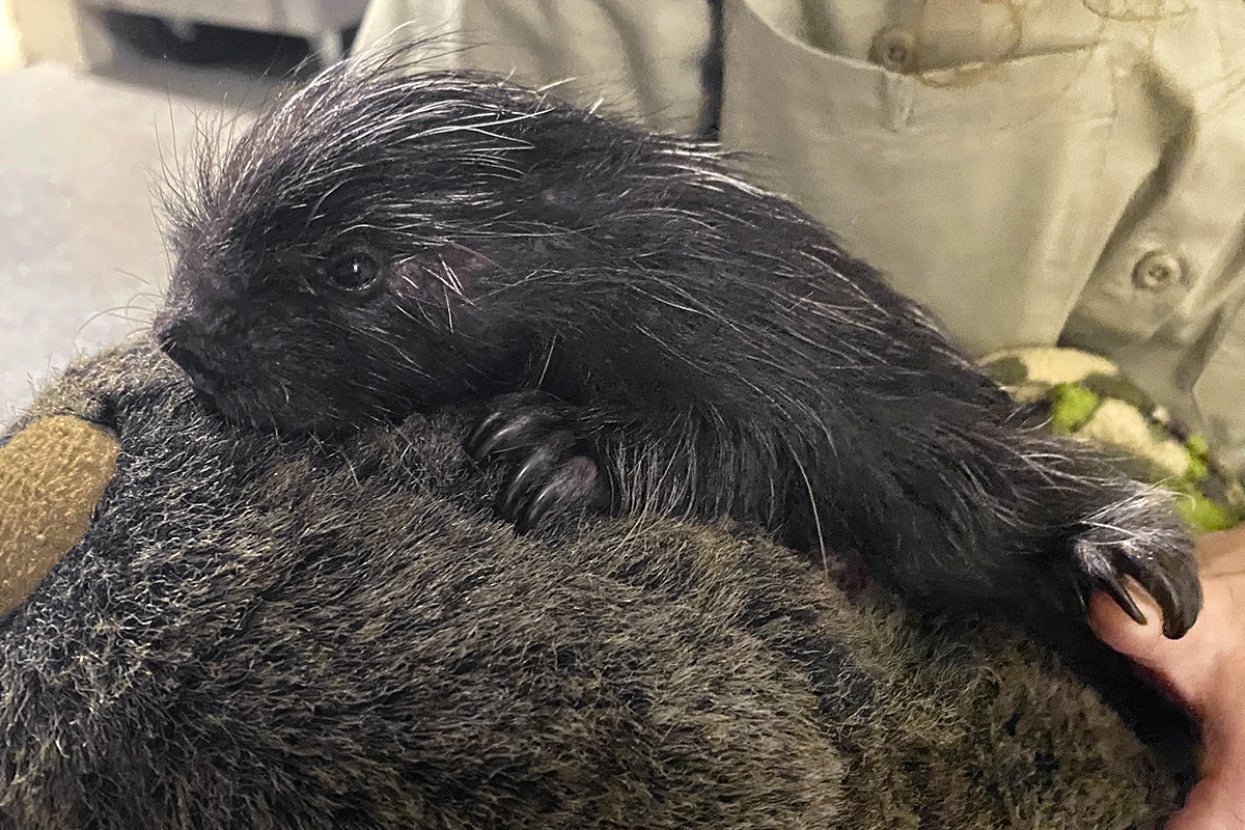
Maizey's offspring, a male porcupette named Dakota, joined the other wildlife ambassadors at the Zoo's Wegeforth Bowl amphitheater, where he participates in the daily Wildlife Wonders wildlife conservation presentation.
Ben Nevitt, DVM, Dipl ACZM, director of veterinary services at the San Diego Zoo, oversees the veterinary team and says everyone impresses him on a daily basis. “The veterinarians, technicians, and wildlife care specialists are all flexible and great problem solvers,” he says, adding that cases like Maizey’s allow the Alliance to help wildlife beyond its two campuses. “After word of the procedure spread, other zoological facilities were asking for information about the surgery and what to look for so they can be ready should it happen at their zoo.”
Dedication and teamwork are behind everything the Alliance does, and our wildlife care and veterinary teams exemplify this. “Every species deserves the highest-quality care,” Dr. Garrett notes.“The medicine for each may look a little different, but the goal is still the same: a gold standard for every species.”