



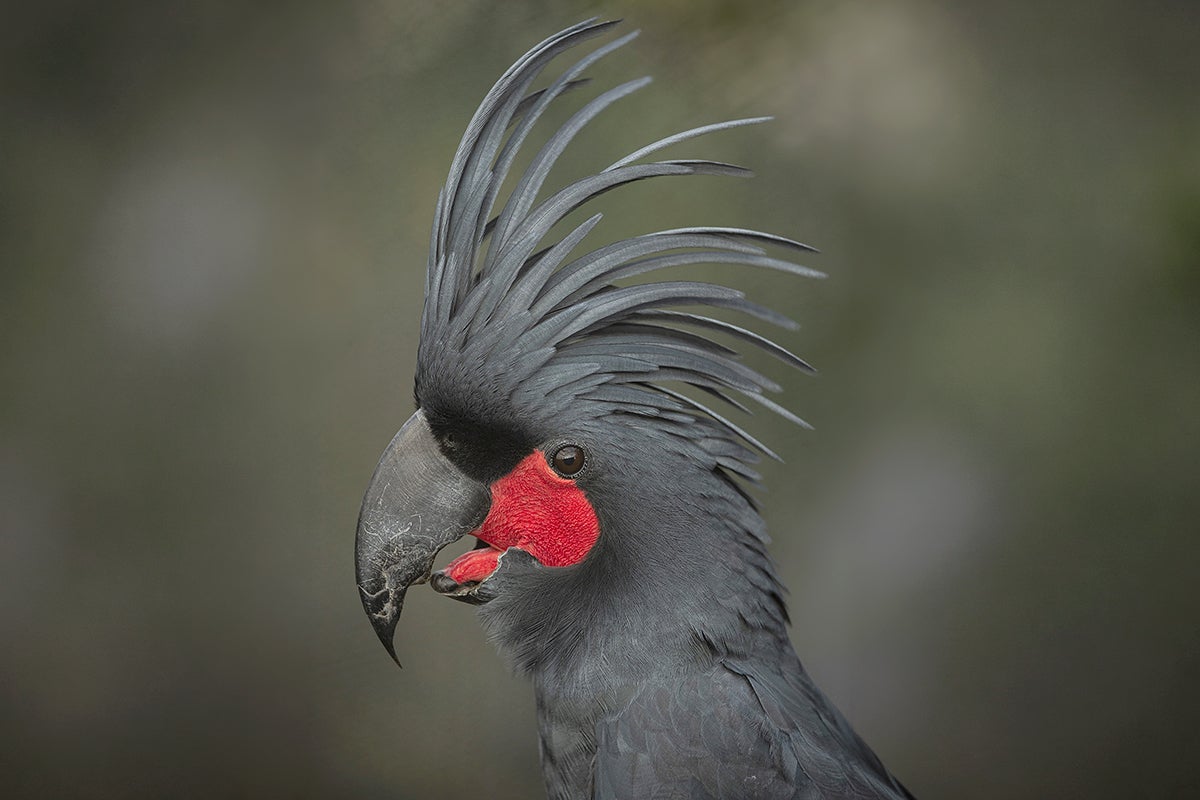
A burst of blue-black feathers perches high in a tree. A bright eye looks down, curious and alert. This is the San Diego Zoo’s newest palm cockatoo, a chick just over a year old. She looks like her parents, watching from a neighboring habitat, as well as another pair, miles away at the San Diego Zoo Safari Park. She doesn’t know it, but she’s a very special chick—the first palm cockatoo to be successfully raised by foster parents. Her story marks the beginning of an innovative new era for palm cockatoo conservation.
A Tale of Two Eggs
San Diego Zoo Wildlife Alliance is one of only 15 Association of Zoos and Aquariums (AZA)-accredited organizations that care for palm cockatoos. This species is classified as near threatened by the International Union for Conservation of Nature, with populations in decline. They are native to the island of New Guinea, as well as the northern tip of Queensland, Australia, where it is estimate fewer than 2,000 remain. The Alliance welcomed its first palm cockatoos to the Safari Park in 1980, followed by the Zoo in 1982. While the birds thrived, formed bonded pairs, and mated, the first successful chick wasn’t hatched until 2008.
This first chick, a male, was hand-raised at the Zoo’s Avian Propagation Center (APC). When he reached maturity, he bonded with a female. They lived together in the Zoo’s Australian Outback, but didn’t lay an egg. When they moved to their current habitat in the Australasia area of Aviary Trail, off Treetops Way, they quickly settled in and started laying eggs. Unfortunately, none of them hatched.
Another palm cockatoo pair lived at the Bird Conservation Center, a behind-the-scenes area at the Safari Park. This pair produced many fertile eggs, but they still hadn’t hatched a chick. When they laid another fertile egg, wildlife care experts decided to bring it into human care, give the pair a dummy egg, and return the real egg once it started hatching so the parents could raise their chick. But toward the end of the incubation period, both parents stopped sitting on the dummy egg. Not wanting to lose the fertile egg, which was due to hatch soon, Andrew Stehly, curator of birds at the Safari Park, reached out to the APC to see if they could hand-raise the chick.
With this, an opportunity presented itself. The pair at the Zoo had just started sitting on an infertile egg. Like the egg’s biological parents, these two tended to stop sitting on eggs before they were ready to hatch. But what if they skipped sitting, and went right to hatching?
Christy Simeone, wildlife care supervisor at the APC, and Quinton Pyle, wildlife care supervisor for birds at the Zoo, decided this was the perfect time to try something that had never been done before. Working together, the Alliance decided to give the pair the chance to be foster parents.
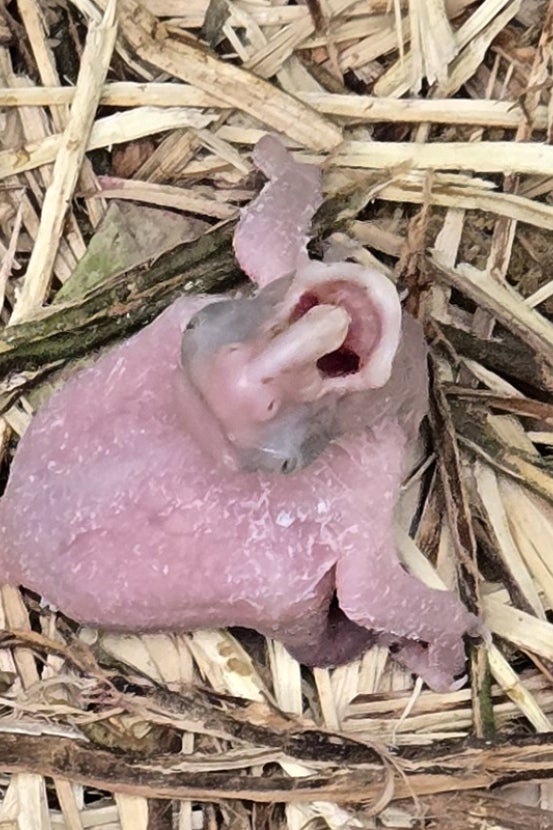
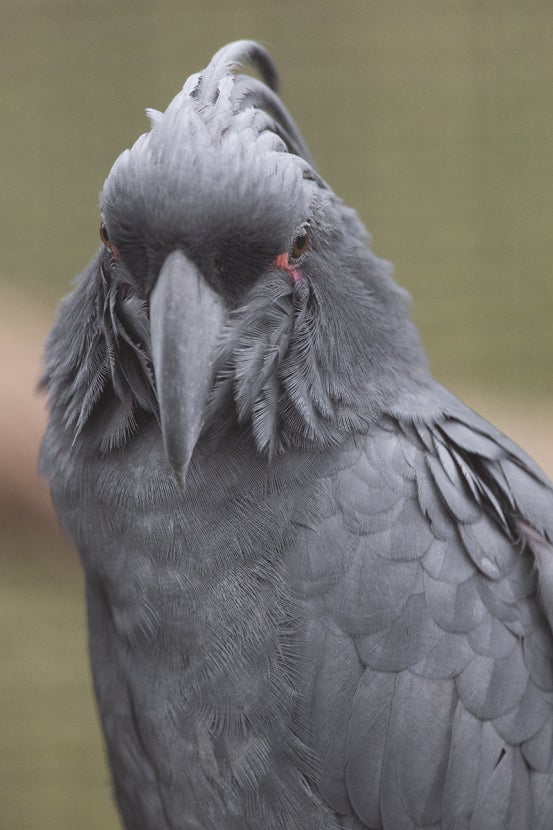
This chick (left, 7 days old and right, approximately 9 months old) could be the first of many palm cockatoos to be successfully raised by foster parents.
Walking on Eggshells
Neither the Zoo nor the Safari Park have had the opportunity to allow a pair of palm cockatoos to parent-rear a chick. Teams weren’t sure what to expect, but they were in agreement that no matter what happened, they would not intervene.
The palm cockatoos at the Zoo were given the fertile egg, and they faithfully sat on it. It ended up hatching in four days, with a healthy little female chick. To everyone’s astonishment, the foster parents knew exactly what to do. But it wasn’t at all what they were expecting.
Alycia Ficano, senior wildlife care specialist for birds at the Zoo, recalled watching the foster parents and comparing what they were doing to what care specialists would be doing at the APC. “There would be times we’re like, is this normal? And we just trusted the process.”
“We had a lot of moments,” agreed Quinton. “It can be hard for our care staff to not be helicopter parents.”
To avoid distracting the busy new parents, care teams cleaned the habitat as little as possible and mostly made sure they were fed—a lot. Palm cockatoos regurgitate to feed young chicks, and mom and dad had a variety of foods so they could choose whatever they wanted. The care specialists carefully noted what the birds were eating and collaborated with the Nutrition and Veterinary teams before making changes to their expertly curated diets.
Some of the things the pair chose to eat with their chick were not what they typically had in their day-to-day diet. “It was interesting to see how, as the chick grew and progressed, they would eat different things,” said Jama Kasowicz, senior wildlife care specialist for birds at the Zoo. “We just flowed along the diet with what they were consuming.” The APC often feeds chicks steamed yam, so care specialists offered this to mom and dad, thinking they would want to feed it to their chick as well. They didn’t go near it. But they did want shelled pine nuts and, later, far more greens than usual.
“It was very nerve-wracking,” said Alycia. “The whole time you’re like, oh, we made it this far. We made it this far.” But the chick did more than make it. She grew very quickly and hit all of her developmental milestones. And it wasn’t just the chick who thrived. The team was especially surprised by how much the male took to being a dad. Alycia remembered that when the chick first hatched, the father’s typically impertinent behavior changed, and he seemed almost excited. “He was singing a lot,” she said. “He calmed down, and he was really good. It was a very big surprise.”
“We were just amazed,” added Jama. “It’s just been great. Everything with this has gone as positively wonderful as it could."
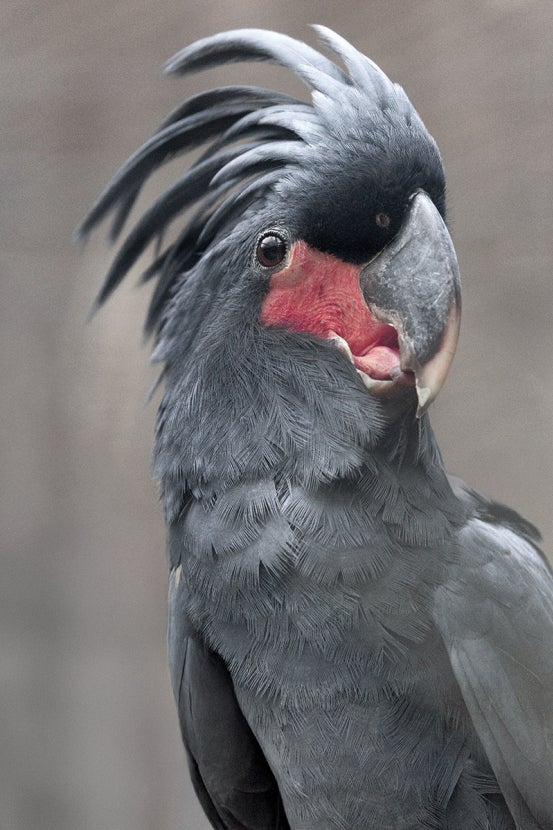
Palm cockatoos breed very slowly, making every chick essential in supporting this threatened species.
Birds of a Feather
With their little chick out of the nest, this mother and father became the first known palm cockatoo foster parents. Their accomplishment creates unprecedented opportunities for supporting global populations of this threatened species.
Chicks raised by parents learn appropriate palm cockatoo social cues, so even if this mom and dad never hatch a biological chick, they can raise birds that are more likely to be nurturing parents themselves. “We can take eggs from other pairs across the country that are not successful in hatching out their chick, but they lay fertile eggs,” said Quinton. “We can put it underneath this pair of birds that is successful in parent-rearing, which opens up a whole new level of ability to have these well-socialized, parent-reared chicks.” And having proven foster parents at the Zoo could lead to fewer chicks being raised at the APC, allowing care specialists to focus on birds that need more intensive care.
It also opens avenues for collaboration across other accredited conservation organizations. Both Quinton and Jessica Theule, senior wildlife care specialist at the APC, are prominent members of AZA advisory programs for parrots and palm cockatoos. They now have firsthand knowledge about the palm cockatoo fostering process and can be a resource for others, helping increase the number of palm cockatoos that are natural parents. Having chicks from more parents promotes genetic diversity and supports healthy populations of palm cockatoos worldwide.
“The coolest thing about the bird department is there are so many things that have not been done, and species that haven’t been figured out yet,” said Quinton. “Working with birds, you can be the one that figures that out . . . We may be the only one that has been successful with fostering this species in the world.” But thanks to innovative collaboration across San Diego Zoo Wildlife Alliance—and the efforts of two dedicated foster parents—this may not be true for much longer.
Discover palm cockatoos and countless other incredible birds when you visit Aviary Trail in the Lost Forest area of the San Diego Zoo!