




At first glance, vultures are easy to misunderstand. Popular culture frequently associates them with death or greed, overshadowing their ecological contributions. They are among the most essential and underappreciated species on Earth. Vultures occupy a unique ecological niche as scavengers, meaning they feed almost entirely on dead animals. This role is far more important than it may initially appear. By rapidly consuming carcasses, vultures prevent the spread of harmful bacteria and diseases that could otherwise threaten wildlife, livestock, and even human communities.
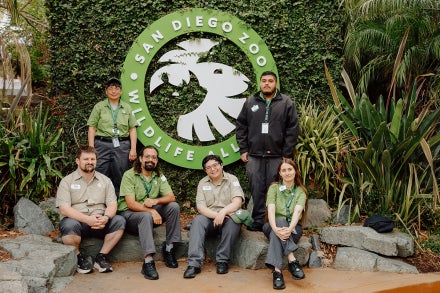
At the San Diego Zoo Safari Park, these amazing birds offer visitors a chance to rethink their misconceptions and the wildlife care specialists at the Safari Park have a passion for these often maligned birds. We are always excited to share a deeper story about these birds, one of ecological balance, cultural significance, and resilience.
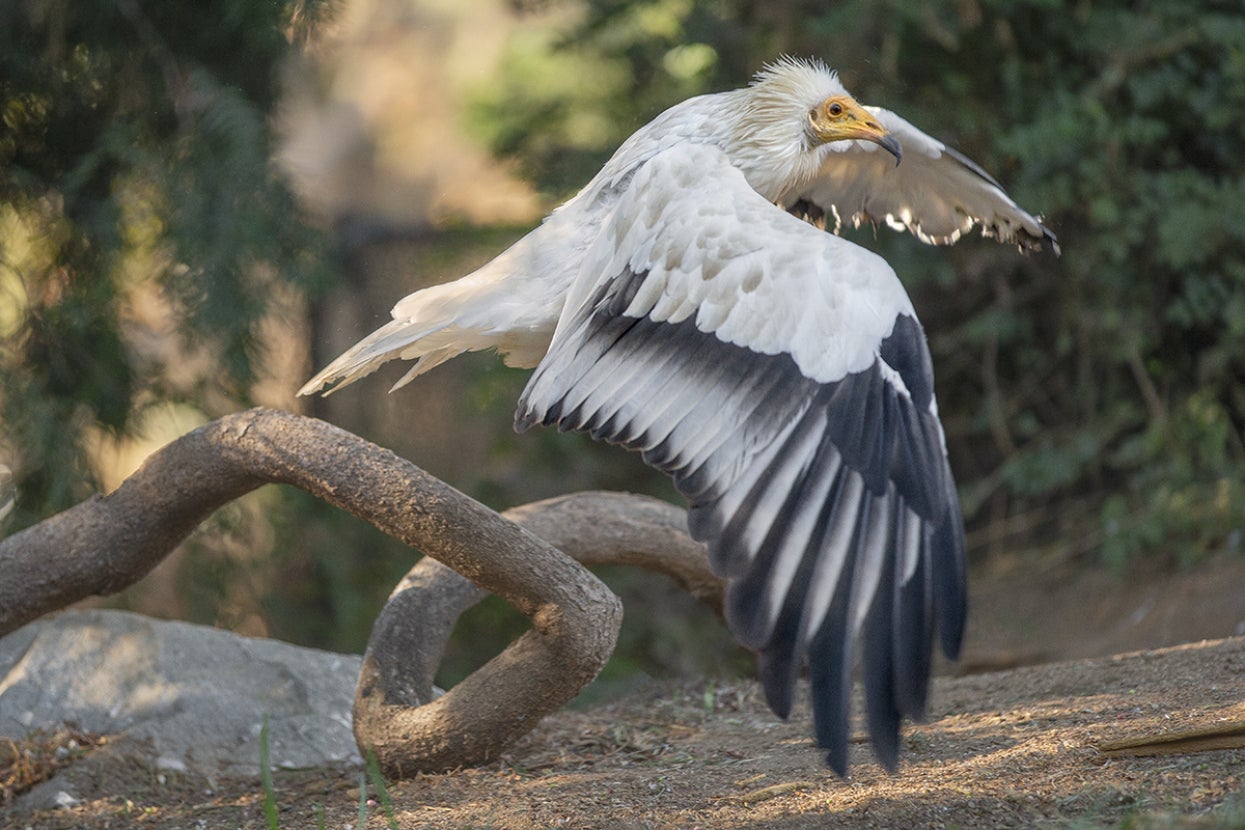
The Egyptian vulture was a symbol of power and motherhood in ancient Egypt, celebrated via hieroglyphics and royal imagery.
Flying Wonders
The Safari Park has a long history with vultures, caring for 10 of the 23 species. Currently, there are eight vulture species guests can see at the Safari Park—some of the rarest and most unique ones in the world—from one of the smallest and most unique species of vulture, the Egyptian vulture, to the largest and critically endangered California condor. Though they differ in size, both species exemplify the invaluable services vultures provide.
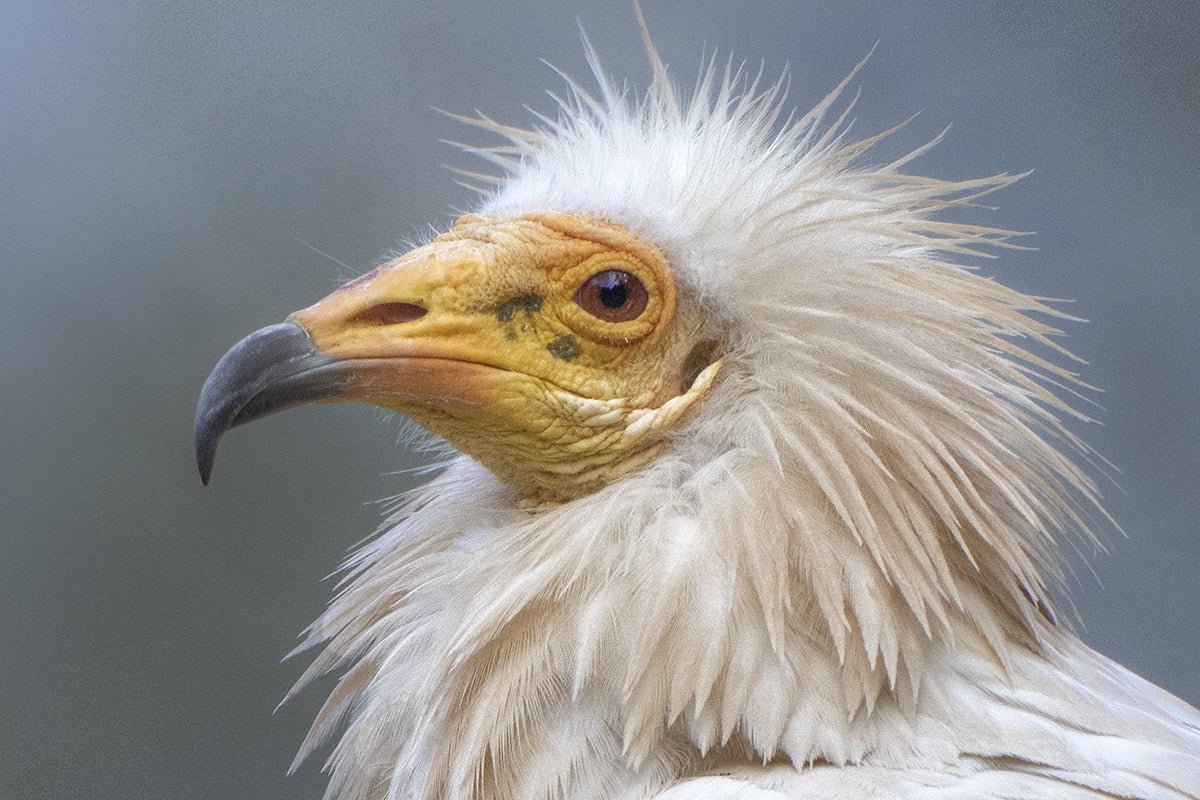
The Egyptian vulture is one of the most distinctive vultures in the world. Smaller than many of its relatives, it is known for its bright yellow face and striking black-and-white wings. It is also one of the few bird species observed using tools. They can be seen dropping stones to crack open eggs, including ostrich eggs. Unlike many vultures that rely solely on large carcasses, Egyptian vultures are highly adaptable feeders. They consume a wide range of materials, including carrion, insects, and even animal dung. This flexibility allows them to thrive in diverse environments across Africa, Europe, and Asia, though their populations have declined significantly due to human impact such as poisoning and habitat loss. Their presence in managed care settings like the Safari Park helps raise awareness about these threats while highlighting their ecological importance.
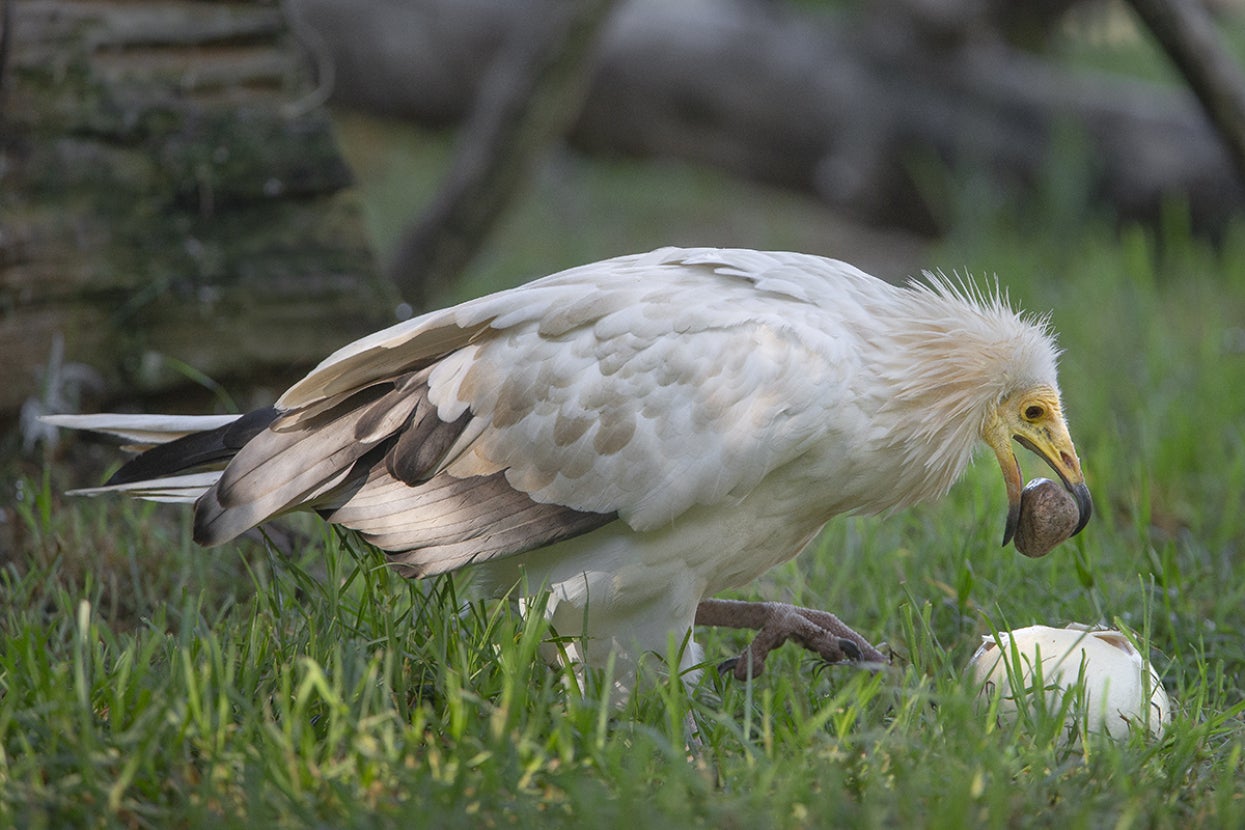
Egyptian vultures are one of the few bird species observed using tools.
Even as a smaller species, the Egyptian vulture plays a meaningful role in nutrient cycling and waste removal, demonstrating that every scavenger, regardless of size, contributes to ecosystem health. The Safari Park is currently the only zoo in the Western Hemisphere to welcome chicks. Some offspring produced at the Safari Park have been relocated to Africa to boost their recovery efforts and several of our youngsters can be seen on habitat in African Woods.
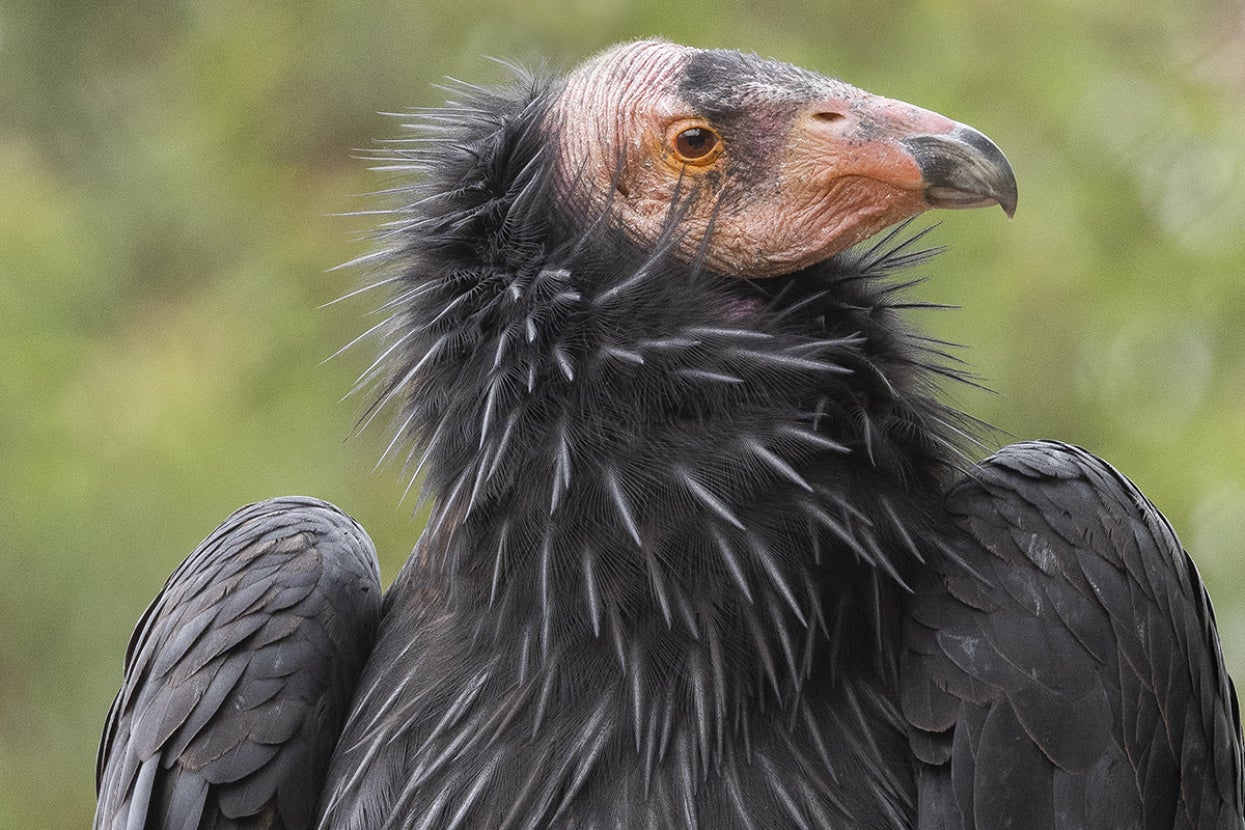
The California condor is one of conservation’s most powerful success stories.
In contrast, the California condor is the largest flying land bird in North America, with a wingspan that can reach 10 feet. Once widespread across the western United States, the species faced near extinction in the 1980s due to habitat loss, lead poisoning, and human activity. Today, the California condor is one of conservation’s most powerful success stories. Through a collaborative effort with the Los Angeles Zoo, Oregon Zoo, The Peregrine Fund’s World Center for Birds of Prey, and reintroduction programs with U.S. Fish and Wildlife Service, populations are slowly rebounding. Like all vultures, condors are essential scavengers. Their size allows them to consume large carcasses, accelerating decomposition and limiting opportunities for disease to spread. Beyond their ecological role, condors have also become symbols of hope. Proof that dedicated conservation efforts can bring a species back from the brink. The Safari Park is home to upward of 35 California condors at any given time. This includes nine reproducing pairs and an ever-changing number of offspring preparing for their eventual introduction to their native range. There are also several condors visible to visitors at our Condor Ridge habitat. All having been significant contributors to the recovery of their species.
A Symbol in the Sky
While many cultures around the world often cast vultures in a negative light, many Indigenous cultures view them quite differently. Across North and South America, vultures, including condors, hold deep spiritual and symbolic meaning. For many of the Indigenous People in the Southwest, the California condor, often referred to as thunderbirds, are more than a bird; they are sacred beings. Believed to bring thunder with the beating of their powerful wings, they are associated with the sky, the sun, and the connection between the physical and spiritual worlds. In some traditions, condors are linked to renewal and transformation. These concepts closely align with their ecological role as recyclers of life. By consuming what has died, they help sustain what continues to live, embodying a cycle that is both natural and spiritual. Similarly, Egyptian vultures have been regarded as purifiers. Ancient Egyptian society revered vultures as symbols of protection and motherhood, incorporating them into hieroglyphics and royal imagery. Although these birds are divided by continents, this echoes Indigenous understandings of vultures as vital, even sacred, participants in the web of life.
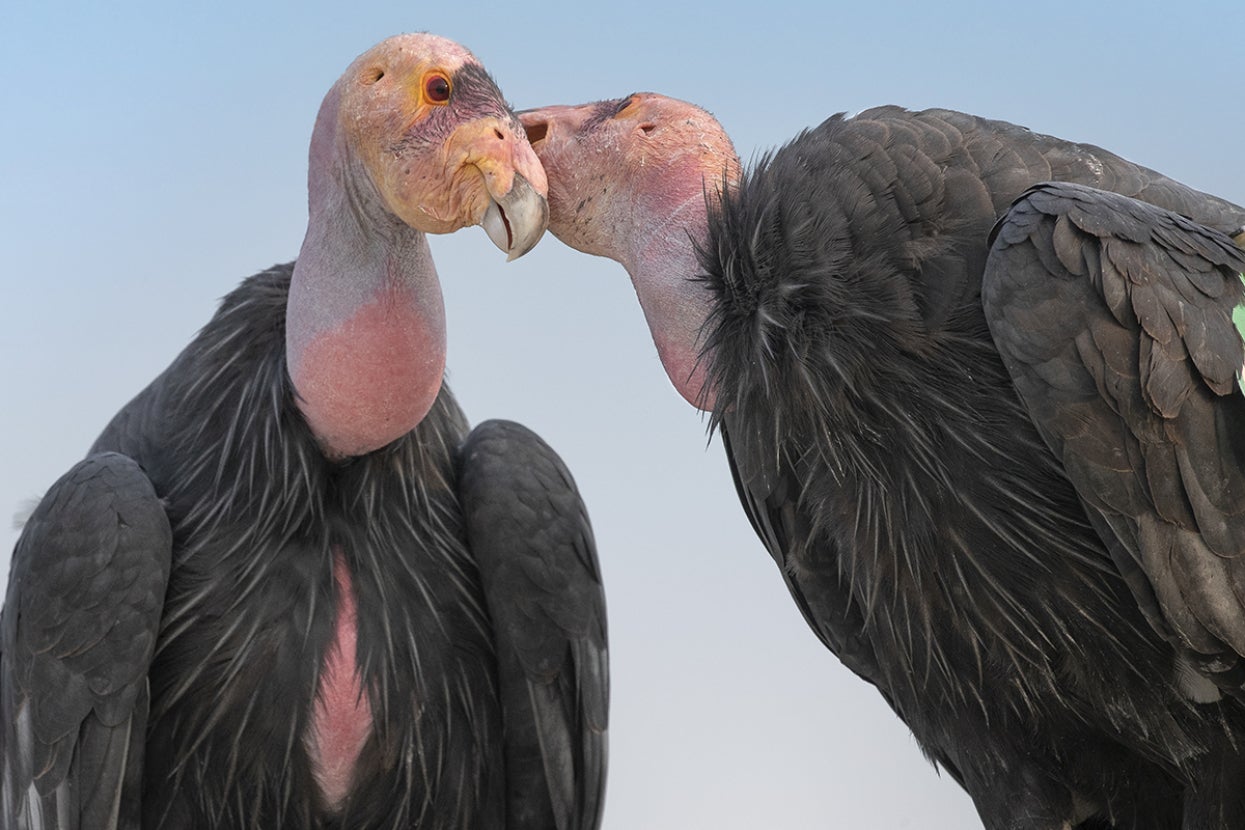
California condors are known for their enormous black wings, extraordinary eyesight, and an inquisitive and engaging intelligence.
The San Diego Zoo Safari Park will be celebrating Indigenous Peoples’ Day on October 12. It’s a great opportunity for us to honor not only Indigenous histories and traditions, but also how those traditions emphasize respect for all living beings, including those often misunderstood.
Seeing a California condor or an Egyptian vulture interact with its environment can be a powerful experience. It reminds us that beauty in nature is not limited to the traditionally charismatic species of our zoo but it exists in all our wildlife, big and small.
The stories of the Egyptian vulture and California condor are a reminder that the health of our ecosystems depends on species that often go unnoticed or undervalued. Protecting vultures means protecting our world. Vultures rarely harm living animals and instead provide a service that benefits entire ecosystems. Their digestive systems are uniquely adapted for this task. Highly acidic stomachs allow them to safely process pathogens such as anthrax and botulism, effectively sterilizing the remains they consume. This makes vultures not only recyclers of nutrients but also critical protectors of public health. In ecosystems where vulture populations decline, carcasses persist longer, often increasing the risk of disease in surrounding communities.
As we celebrate Indigenous Peoples’ Day, their story becomes even more meaningful. Indigenous traditions remind us that every species has a role and a purpose, even those we may not immediately understand. Celebrating this perspective, we not only honor cultural heritage but also strengthen our commitment to protecting the natural world.