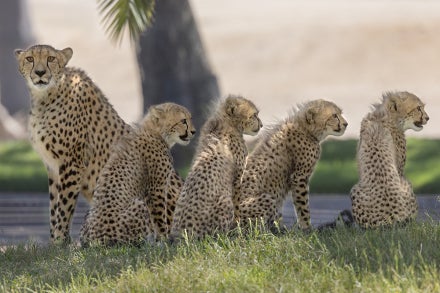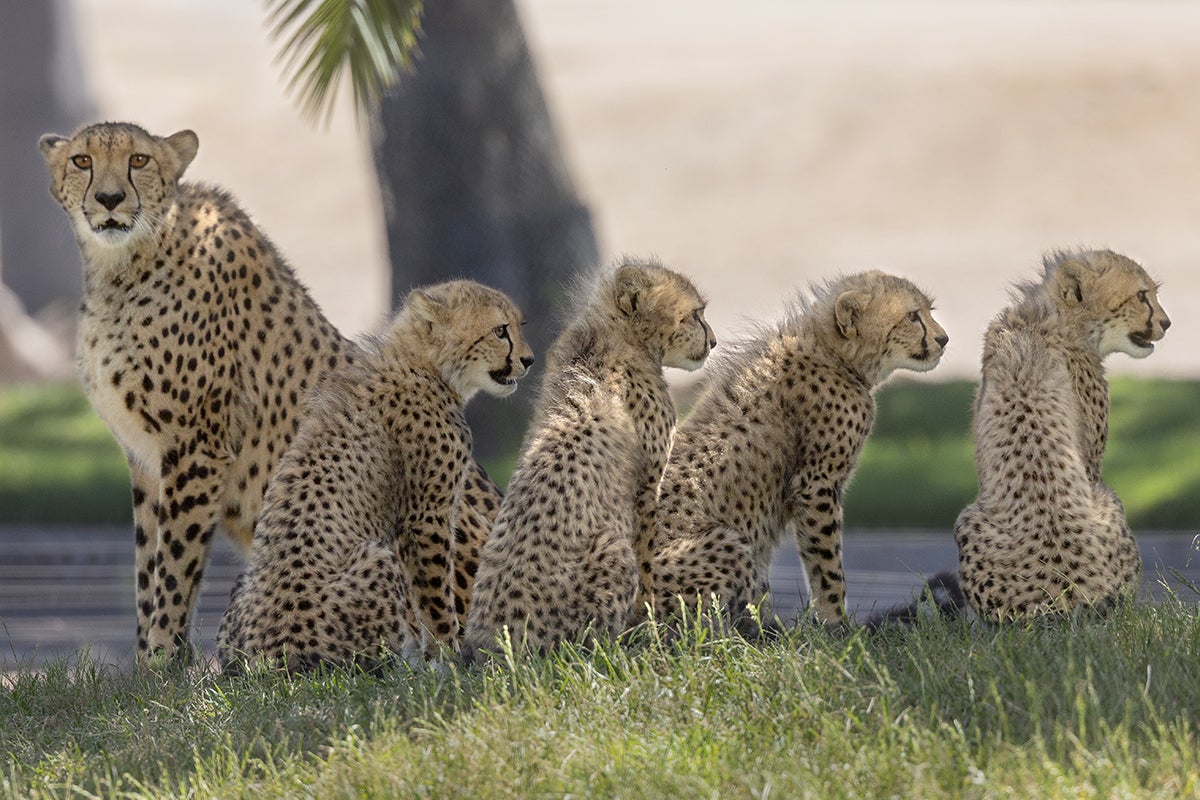
A rambunctious cloud of spots flurries around five-year-old cheetah Kelechi. She trills, and the commotion around her calms—but only for a moment. As a first-time mom, she’s got her paws full with not one, but four male cubs. These are the first cheetahs born at the San Diego Zoo Safari Park since 2020, and they’re a crucial addition to the vulnerable global population of their species.
Kelechi welcomed her cubs in the middle of the night on January 24, 2026. They spent about six weeks bonding in their den until the cubs slowly began exploring their grassy surroundings and eating solid foods. Following mom’s lead, they quickly felt comfortable exploring their new world. The four boys quickly took to running, playing, climbing, and learning from Kelechi.
The brothers will eventually branch out, but they won’t be alone. Since they’re males from the same litter, the cubs will remain a “coalition”—which is what a group of male cheetahs is called. This is a unique, natural trait of this primarily solitary species. Just as they would in native habitats, they’ll hunt, sleep, eat, and find female partners together for as long as it’s best for them.
It’s All in the Name
Translated from the African languages Swahili, Oshiwambo, and Dholuo, the cubs’ names are as special as they are. Through a social media contest with over 45,000 votes, wildlife allies like you helped name Nyasi, which means “grass” or “plains.” Owadgi means “brother,” and Ohani honors the name of their grandmother. Nkala’s name is drawn from local folklore and means strength and power. Nyasi puts on a tough façade. He’s always ready to protect his brothers but often stays close to mom and avoids risks. On the other paw, Owadgi is often the most adventurous and loves climbing trees, though he still calls for mom when he gets into sticky situations.
Ohani is the bravest and fastest learner of the coalition, usually inspiring his brothers to help him investigate new experiences. Last but not least is the cub whose personality is most similar to Kelechi’s. Nkala has an observant nature and always takes a moment to understand what’s happening around him before he responds. And reflecting his name’s meaning, Nkala shows his quiet strength through perseverance.
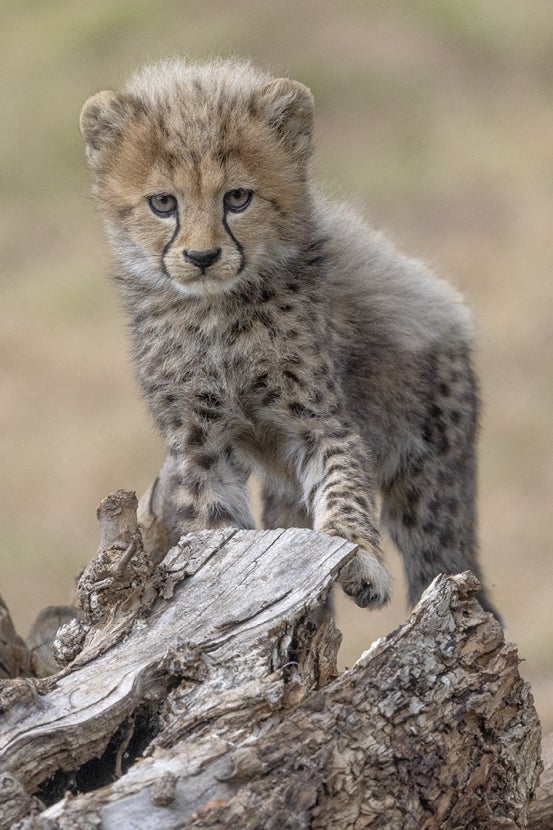
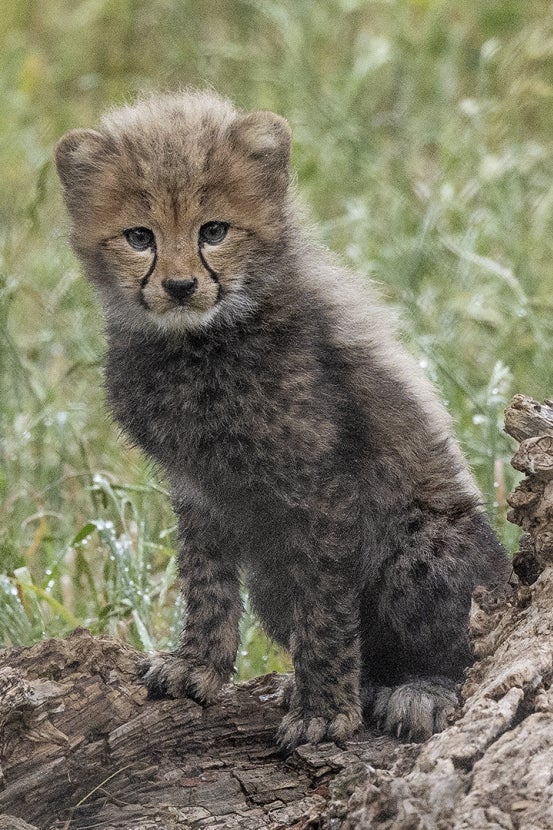
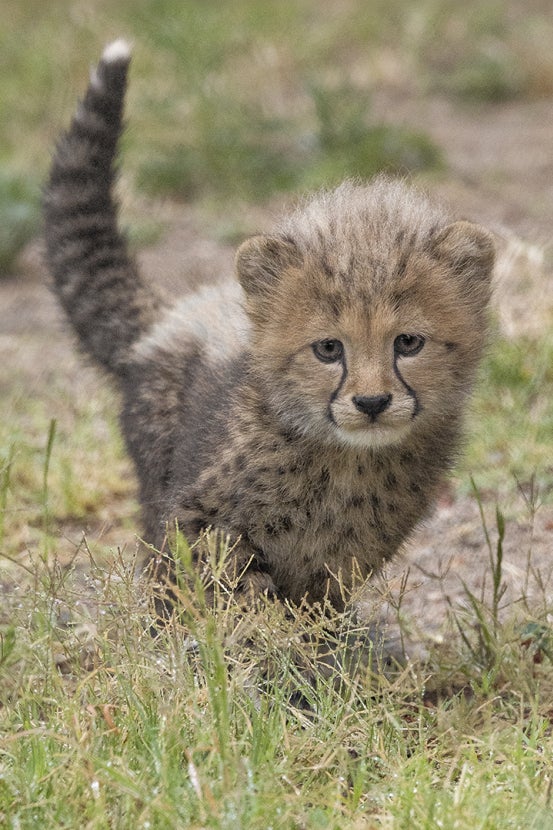
Above: Nyasi and Owadgi. Below: Ohani, and Nkala. For Kelechi's four cubs, each day brings new adventure, growing confidence, and the further development of their distinct personalities.
See the Difference?
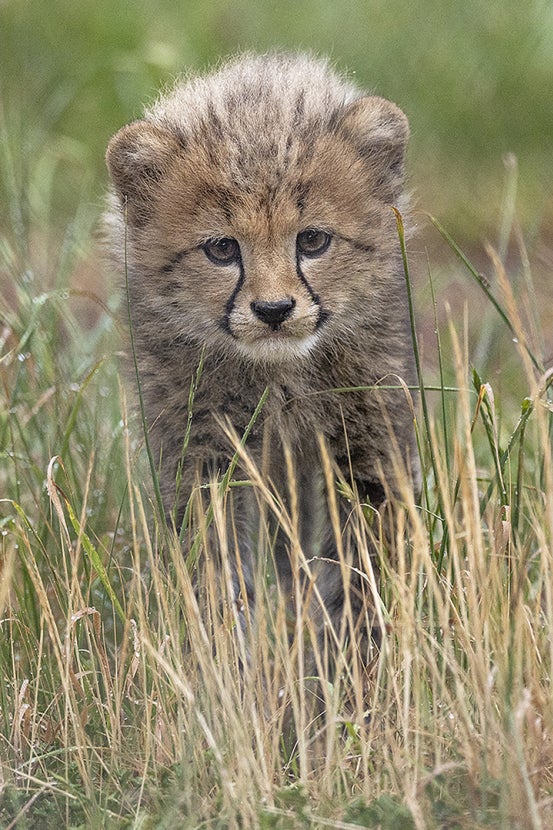
Cheetahs go through a few stages of color variation before they reach adulthood. They’re born with all their spots, making their fur look darker than adult cheetahs. As they age, their spots have a chance to disperse across their body, and their coats tend to lighten up. However, some cheetahs keep their darker fur throughout their lives. Another telltale sign of aging: they develop a wispy silver mantle from their head to their tail that almost looks like a mohawk. Female cheetahs usually grow out of their mantle, while male cheetahs maintain it during adulthood, though it becomes less prominent. Mantles are specific to each cheetah, and some have no mantle at all.
For Nyasi, Owadgi, Ohani, and Nkala, their spots are as distinct as their personalities. Sometimes it’s hard to distinguish between them when they’re running and playing, but when they stop for a moment, it becomes a lot easier to tell them apart. Nyasi and Ohani are blonder than the other boys. Plus, out of the four of them, Nyasi has the largest head. Ohani’s feet are notably white and he has the smallest head. Continuing on the gradient scale, Nkala has darker fur than Nyasi and Ohani. Owadgi has the darkest fur, and his eyes have an unmistakable “cat-eye” shape to them.
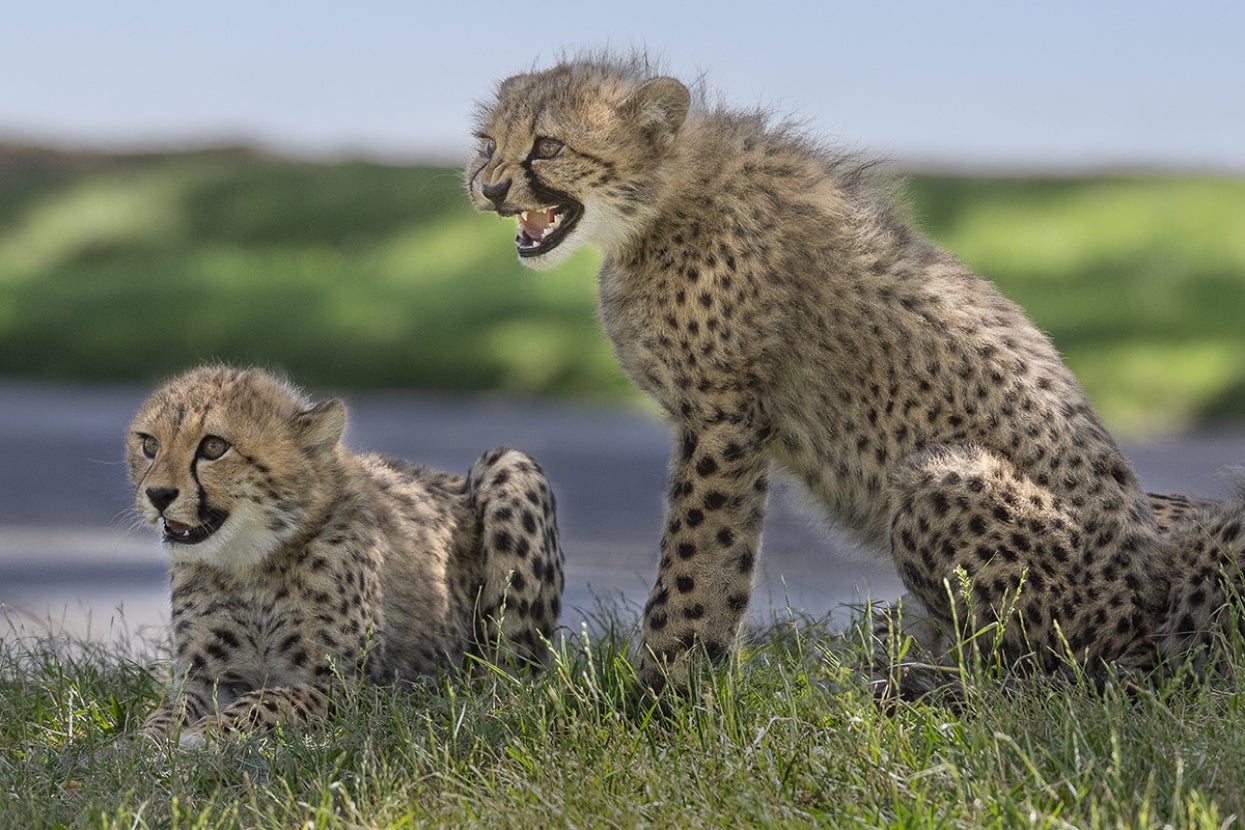
With approximately 7,000 cheetahs remaining in native ranges, every cub born—like Nyasi, Owadgi, Ohani, and Nkala— represents renewed hope for the future of the species.
Spots of Hope
These little ones aren’t just adorable, they’re also vital to the future of their vulnerable species. Cheetahs were once widespread throughout Africa and into Asia. As a keystone species, sustainable cheetah populations are critical to the health of the overall ecosystem. Cheetahs face mounting threats from challenges such as human-wildlife coexistence, changes in climate, and habitat loss and fragmentation. Today their populations are scattered, with approximately 7,000 cheetahs remaining in native habitats. At first, this may seem like a stable number. But unfortunately, their population has decreased by over 93% throughout the last century.
Fortunately, there is hope for these iconic cats. With partners across the Association of Zoos and Aquariums (AZA), San Diego Zoo Wildlife Alliance participates in the Species Survival Plan (SSP) Program for cheetahs. The SSP Program’s goal is to support healthy, genetically diverse cheetah populations in North America and across native ecosystems. Additionally, AZA-accredited institutions within the SSP Program are able to support global conservation initiatives, participate in collaborative research projects, and share information to learn more about the species as a whole.
The heart of our cheetah conservation efforts are at the Safari Park’s Carnivore Conservation Center. Through the work of the dedicated team in this behind-the-scenes area, we’re able to support sustainable cheetah populations. There have been nearly 200 cubs born at the Safari Park since the beginning of the cheetah conservation program in 1972, making a crucial difference for their species’ genetic diversity and global population. In addition to successful conservation efforts at the Safari Park, we’re also working to save and protect the native ecosystems on which cheetah rely through our Savanna Conservation Hub.
One Spot at a Time
As the first cheetah cubs born at the Safari Park in over five years, these four youngsters are cause for celebration. There is still much to be done to help cheetahs survive and thrive for generations to come, yet it’s important to remember the difference each conservation milestone makes for vulnerable and endangered wildlife worldwide. Nyasi, Owadgi, Ohani, and Nkala represent the bond of brotherhood, what it means to stay by each other’s side, and generational hope for the future of their species. On your next visit to the Safari Park, connect with the cubs at African Outpost or on a behind-the-scenes tour to experience the power of incredible conservation moments like this for yourself.