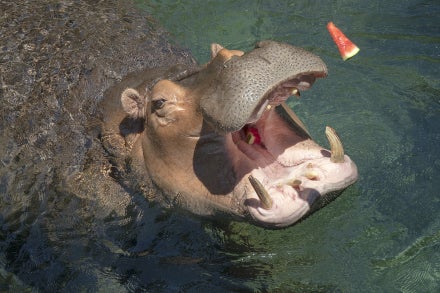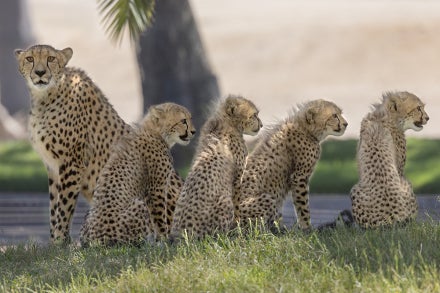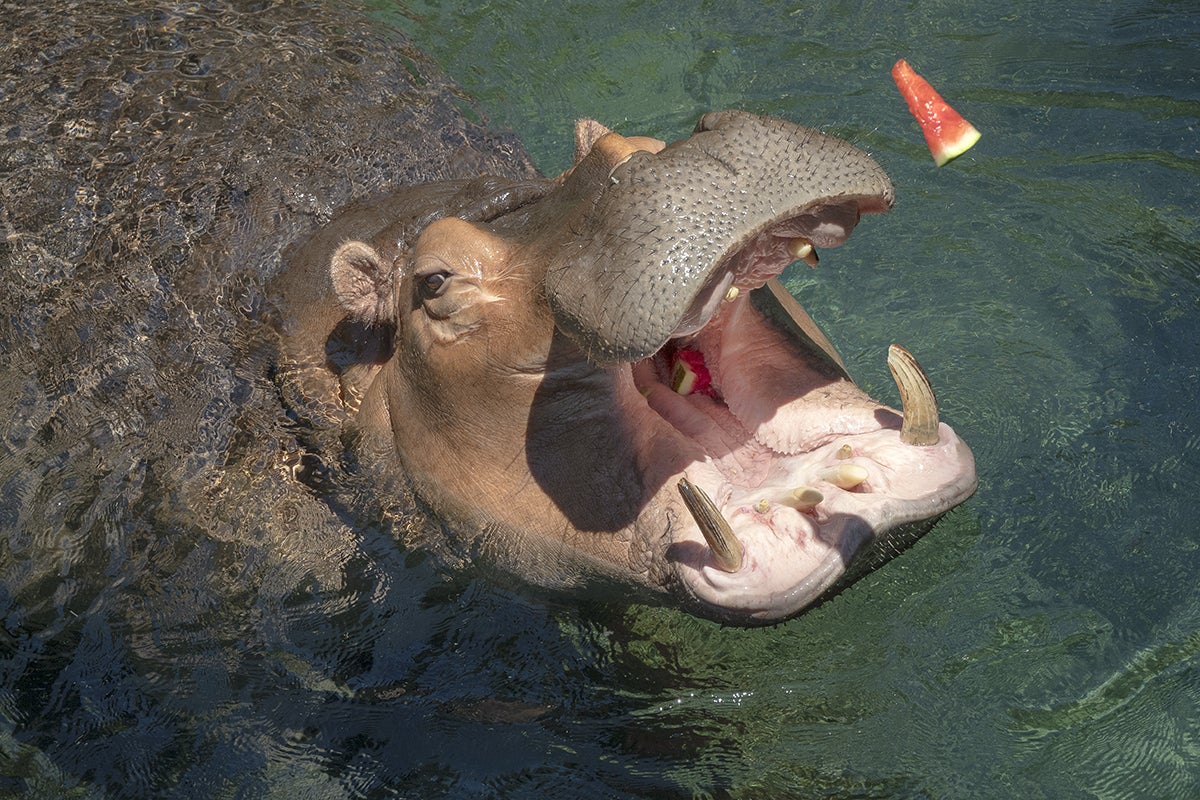
Good nutrition keeps our wildlife healthy. Our goal as a nutrition team is to provide safe, appropriate diets for every species in our care—from leafcutter ants and hornbills to elephants and everything in between. Nutritionists play a key role in wildlife health, reproduction, welfare, and longevity for both individuals and populations throughout their lives. As a nutritionist, my work always starts with questions like how do we help this individual animal gain weight, or what does a species need to thrive? Working with biologists, supply chain experts, wildlife care staff, veterinarians, pathologists, laboratories, and the animals themselves, wildlife nutritionists assemble all the pieces into a holistic diet plan.
For example, a wildlife care specialist might ask, “Our gerenuk is losing weight. Can you adjust the diet?” While this may sound simple, creating or changing a diet involves much more than just adding more food. Before making recommendations, I need to understand the individual animal and the goals of the care team. I can get this information by heading out to meet the animal and the Wildlife Care team responsible for their care. I begin by gathering detailed information, much like taking a medical history, but specific to nutrition. What does he or she currently eat? What is its habitat like? Who does it live with? Have there been environmental changes, recent moves, or new challenges for staff? Is the animal healthy, taking medication, or showing behavioral changes?
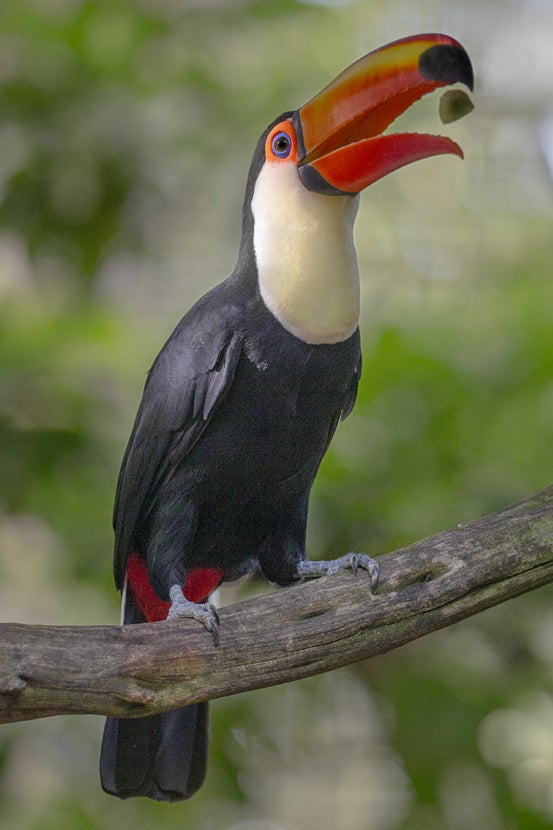
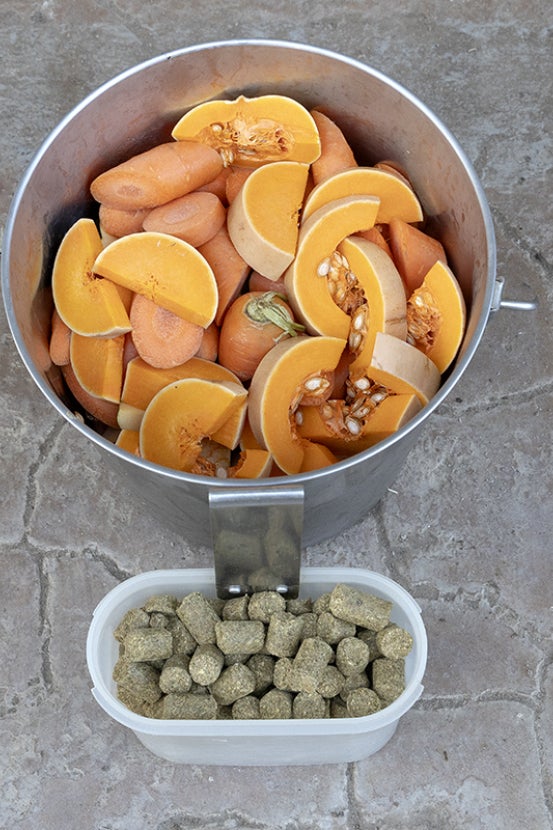
Balancing act: Wildlife nutrition is both a science and an art. All the suitable components are gathered to create a diet that is both nutritious and palatable. Nutritionists must also factor in special needs such as advanced age-related dental concerns or mineral interactions in the body.
Similar to how a doctor evaluates a patient, I observe how an animal chews and selects food, its body condition, and the quality of its skin, fur, feathers, hooves, or horns. I also examine the habitat for changes, such as new plant growth. Combining the information I receive from the Wildlife Care teams and my own observations with scientific research and my educational experience helps give me a complete picture of what the animal needs to thrive.
Once I gather all the information, I head to my desk to start building out a diet sheet. The diet sheet acts like a prescription, detailing what foods to provide, how much to feed, and how often. This diet sheet is then sent to the Nutrition Warehouse team, which prepares the diets, and the wildlife care specialists, who feed the wildlife.
Creating diets is only one facet of the Nutrition team’s work. We also sample our food to make sure our animals are actually getting the nutrients we expect; we assess the plants growing in habitats to make sure our animals are safe; we work with veterinarians to review diagnostics and create clinical diets for animals with special health concerns; and we support our Conservation Hubs through nutritional insights to meet their goals. Regardless of what we are working on, we are always trying to answer the question of what the best dietary choices for this individual are right now.
Species with highly specialized diets pose their own challenges. Both red and giant pandas consume a diet that is 99% bamboo. This means nutritional content is critical. The plants have a natural nutrient cycling process (shoots, leaf, culm), which will change the nutrient composition of the bamboo throughout the year. Nutrients provided by the soil and water where the plant is grown will also impact the nutrient composition available to the pandas.
Dietary needs aren’t always species-based—sometimes we must develop a plan for aging wildlife with dental concerns, as well as those with sensitivity to minerals such as iron. Every meal is a delicate balance. So the next time you see an animal eating, consider the many questions a nutritionist asks to ensure that animal receives the best possible care.