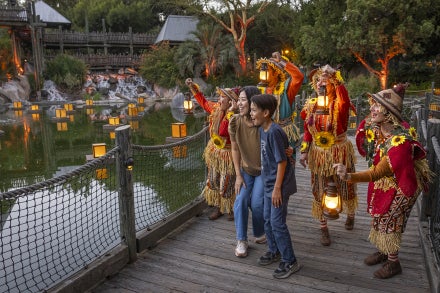




Thousands of glass beads brighten the interior of Mkutano House at the San Diego Zoo Safari Park’s Denny Sanford Elephant Valley. They are tucked into the ropes of a walkway, nestled in the cracked bark of a tree, and embedded in the shiny wood of a bar countertop. Individually, these small spheres are not noticeable, but after being meticulously threaded together, their unified colors burst through the space like fireworks.
These beads represent the partnership between San Diego Zoo Wildlife Alliance and BeadWORKS Kenya, one of many locally led conservation efforts supported by the Alliance through our Savanna Conservation Hub. This initiative gives women in northern Kenya the opportunity to uplift their families, communities, and regional conservation programs using traditional beading techniques passed down through generations.
Challenges facing our world today—like inequality, financial instability, and threatened ecosystems and species—may seem as separate as scattered beads. But many hands can string them together.
Crafting Change
It is impossible to put a fence around the savanna, a vast and varied ecosystem teeming with some of the largest and most migratory wildlife on Earth. And it’s not just the wildlife who are on the move; many Indigenous communities are seminomadic pastoralists, meaning they travel alongside their livestock rather than caring for them in one place. This has been a stable way of life for thousands of years, but changes in climate and expanding human development have strained resources shared between livestock and native wildlife. Competition to graze on the grasslands has led to human-wildlife coexistence challenges, and changes in climate have disrupted a once-reliable livestock-based economy, forcing some families to switch to environmentally unsustainable methods of generating income. With both people and wildlife losing access to necessary resources, there was a clear need for transformation.
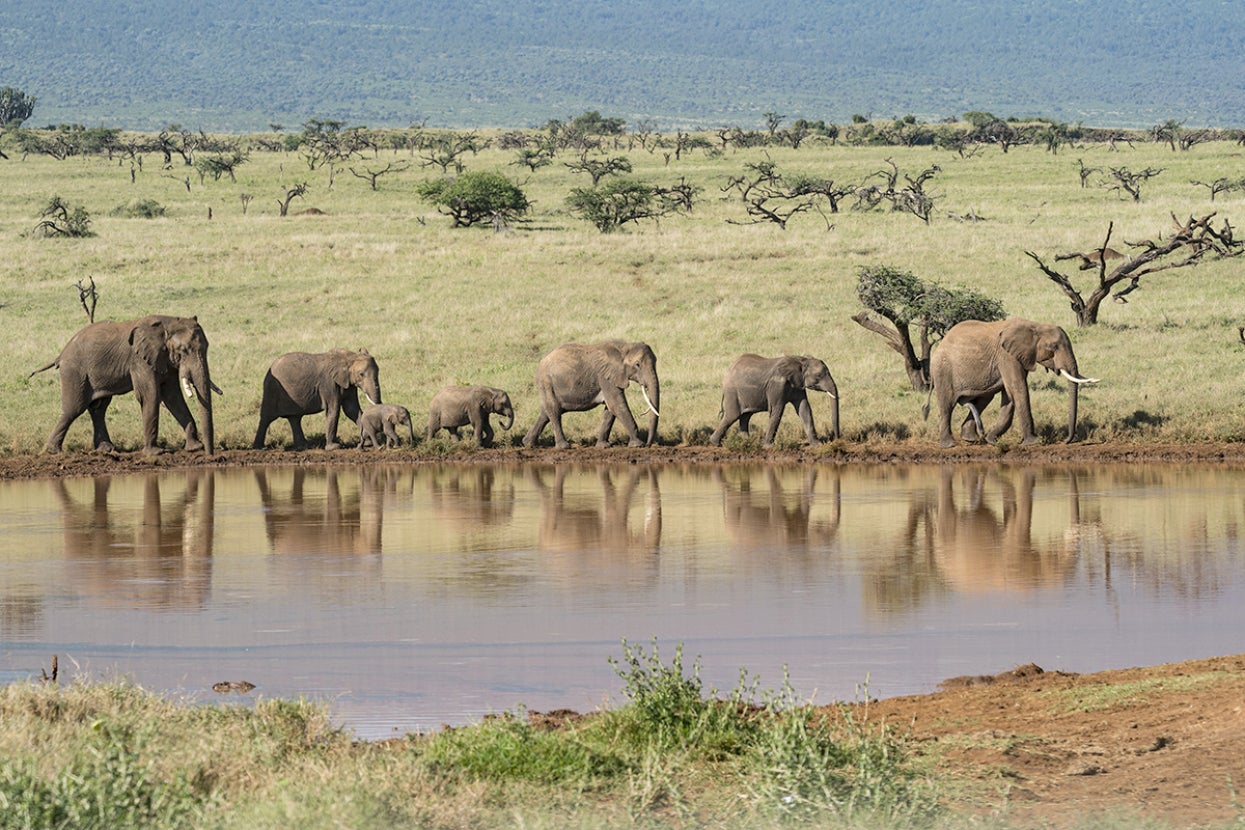
Northern Rangelands Trust helps build up community conservancies so both people and wildlife on the savanna can thrive.
This was the inspiration behind what would become Northern Rangelands Trust (NRT). After Kenya’s rhino population fell from 20,000 to 500 in just 20 years, conservationists understood the need to not only create protected spaces for endangered savanna wildlife, but also engage people with their local ecosystems through sustainable economic development. They recognized that families with reliable sources of income were far less likely to rely on things with environmental impacts—including unsustainable farming, overpopulating land with livestock, or industries like logging and charcoal production—and would also be able to dedicate more to wildlife conservation.
The resulting model was so successful that in 2004, NRT was established as a central resource to help build up these “community conservancies.” In 2014, NRT established NRT Trading (now MashinaniWORKS), a subsidiary focused on assisting communities on their journey to financial stability by helping people cultivate marketable skills. Today, NRT has grown from 9 community conservancies in northern Kenya to 45 throughout Kenya and Uganda, all self-governed by Indigenous communities and committed to protecting more than 15 million acres of habitat, where over a dozen endangered species are thriving.
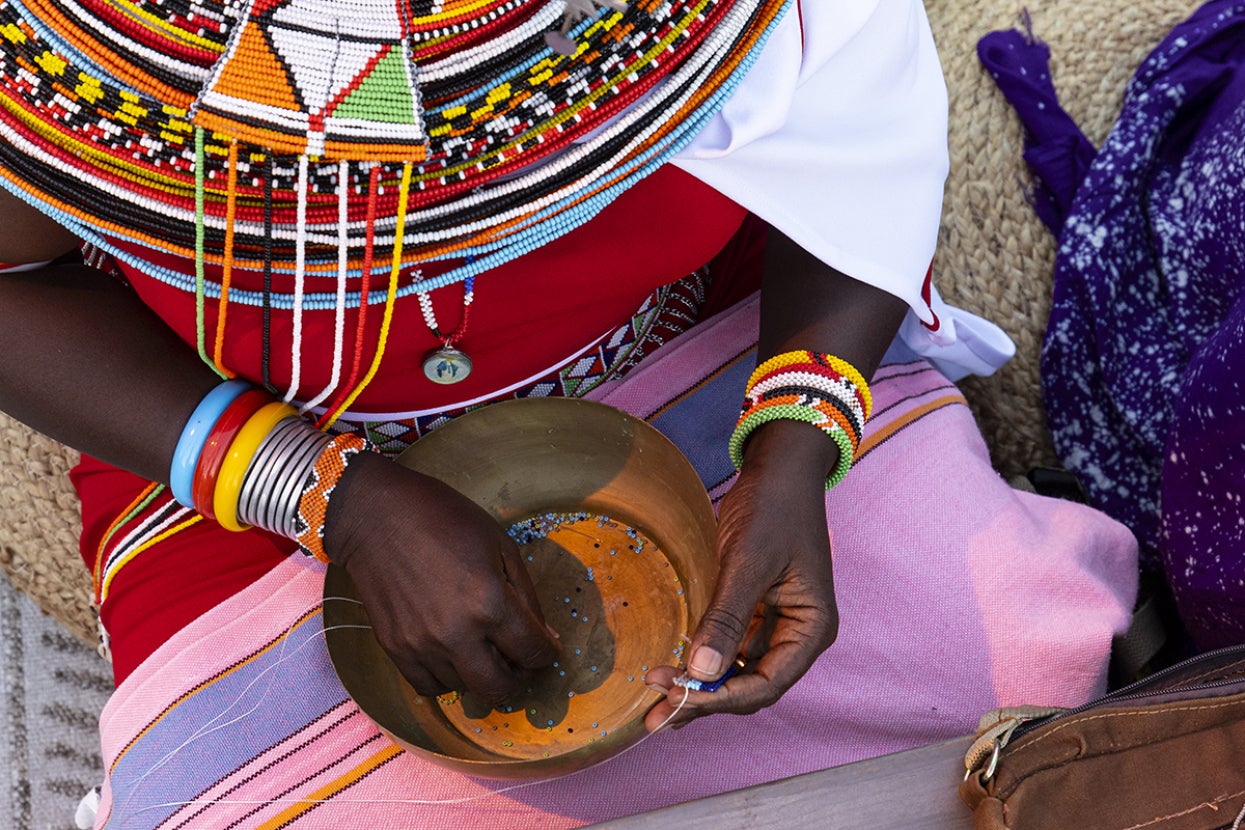
The gorgeous glass beads are made in the Czech Republic and sourced through a Kenyan supplier.
The Business of Beading
One of the programs through MashinaniWORKS, BeadWORKS Kenya, was formed as a way for women in northern Kenya to maintain their seminomadic, pastoralist lifestyles and traditional beading skills while earning reliable incomes to care for their families and communities.
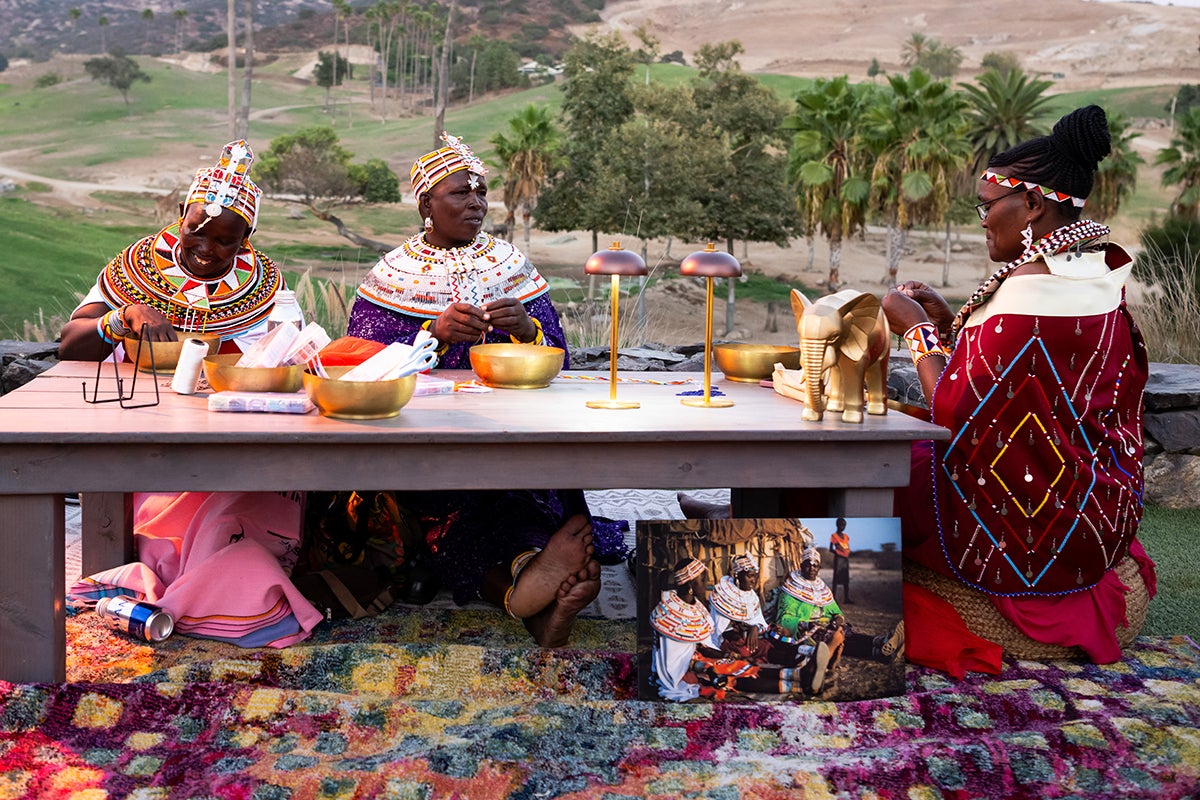
BeadWORKS strives to maintain the authenticity of their products while also balancing the needs of running a business. The main office centralizes the business side by processing customer orders and distributing them equitably, along with raw materials. Groups of 5–10 artisans receive their orders and materials through their Star Beader, a leader they choose. The Star Beader liaises with the main office, trains the beaders, and performs quality checks on finished items. Once materials are in hand, the expert artisans create beautiful, hand-beaded jewelry, ornaments, and other goods using time-honored techniques taught from generation to generation. The Star Beader collects and approves the finished products and sends them back to the main office. Payment for completed work is issued weekly.
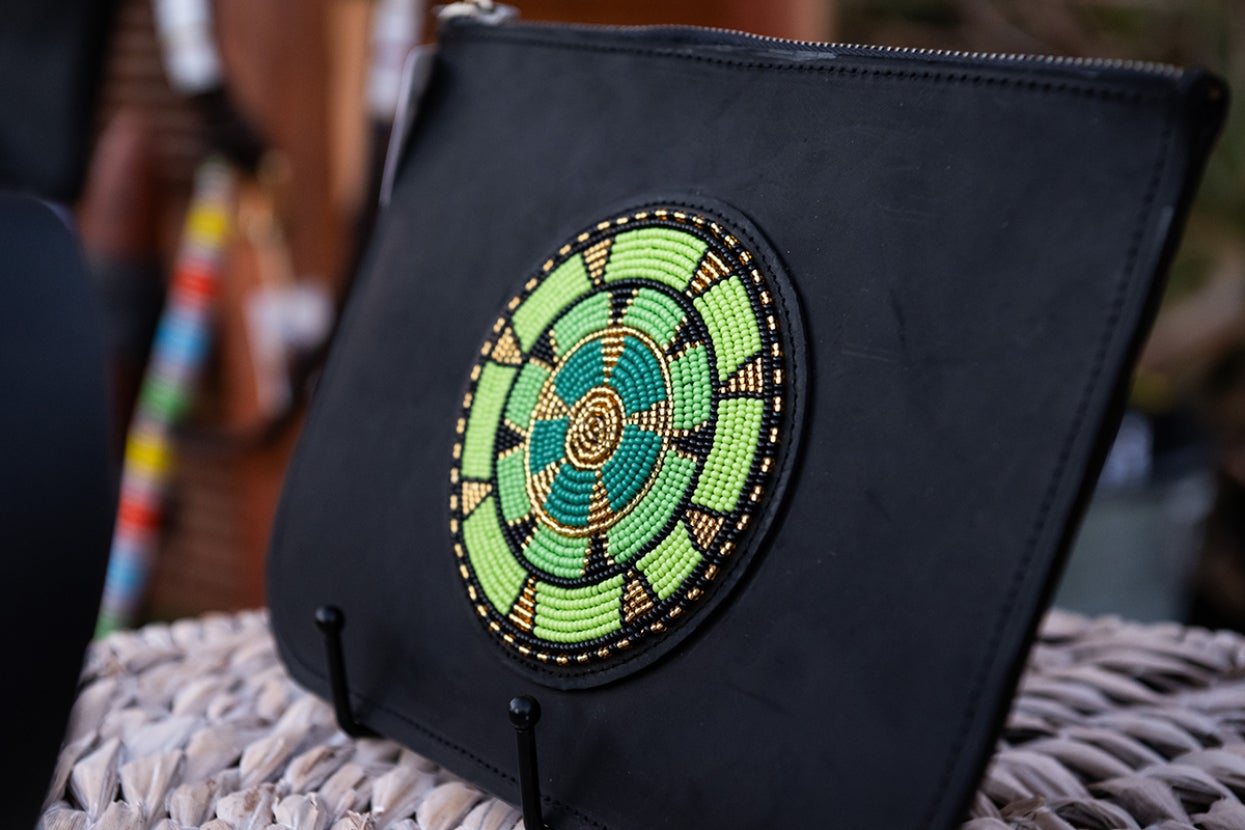
After completing extensive market research, BeadWORKS artisans expanded into leather goods like laptop cases.
Over the past several years, more effort has gone into the business of beading, with BeadWORKS participants studying sales trends and asking retail partners about their bestsellers so they can focus on the most profitable items. Star Beaders also teach the group additional skills so they can create more creative and marketable designs and products. After completing extensive research into what was most viable internationally, BeadWORKS expanded into leather goods. Many of these pieces were not things that would usually be made or worn by Indigenous women, so they worked together to learn how to bead on leather and adjusted the styles to be more marketable while still utilizing long-established craftsmanship and techniques. For example, bangle bracelets can be made with traditional Samburu colorways, or the patterns can be modified to look more contemporary.
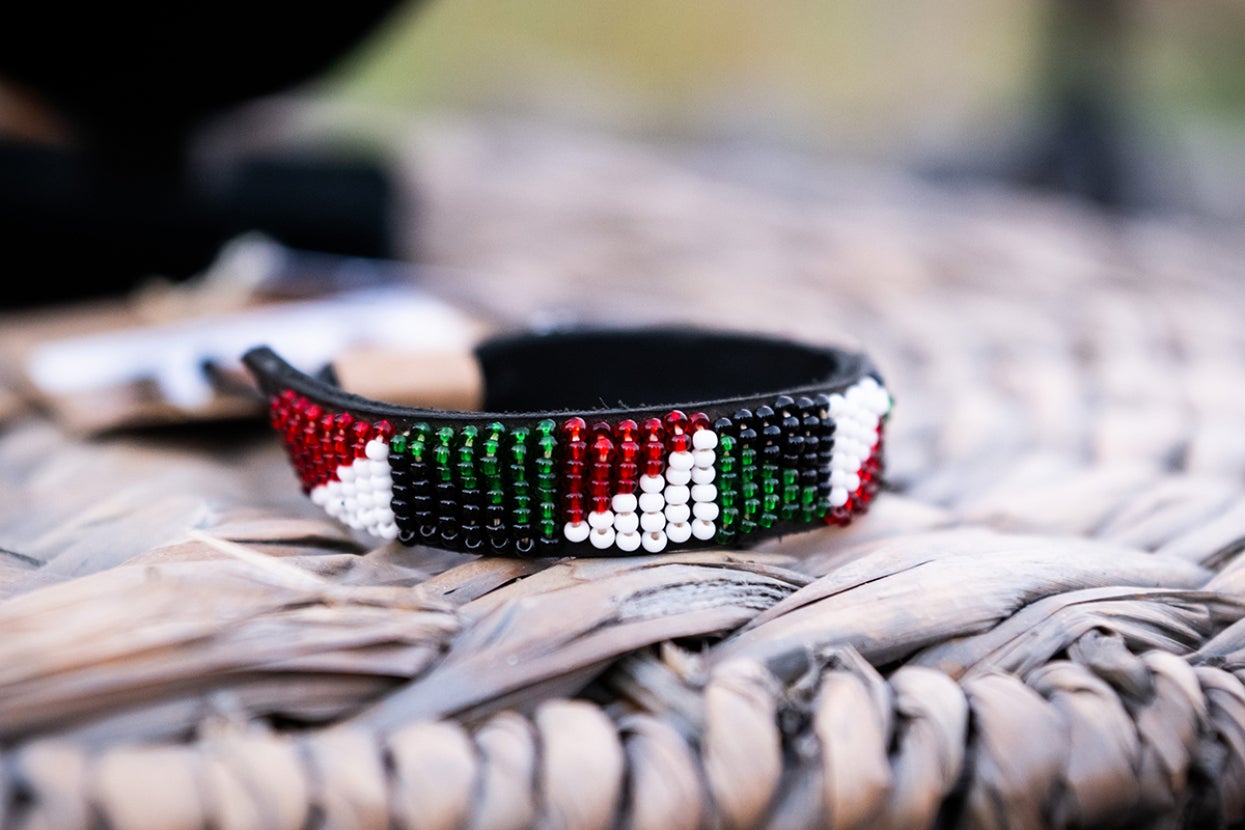
A master beader can craft a stunning bangle in just 3–4 hours. It takes a less experienced beader 1–2 days.
Zoological and other conservation organizations were some of the earliest buyers of BeadWORKS goods. San Diego Zoo Wildlife Alliance has carried belts, ornaments, keychains, jewelry, and other pieces at both the San Diego Zoo and San Diego Zoo Safari Park for many years. Most recently, San Diego Zoo Wildlife Alliance was able to amplify the stunning work of these master artisans throughout Mkutano House at the Safari Park. Décor at this immersive restaurant overlooking Elephant Valley features custom hand-beaded light fixture shades over the Ona Lounge bar; 8 talking sticks adorning the walls of the main restaurant; and 40 necklaces hanging over the centralized wooden staircase, each measuring up to 2 feet in diameter. The light shades, in colors chosen by the Safari Park team, took about 1 week to create, with more elaborate pieces taking artisans 3–4 weeks to complete. The necklaces were specially commissioned pieces that emulate traditional necklaces worn by Samburu women and have not been created for any other partner.
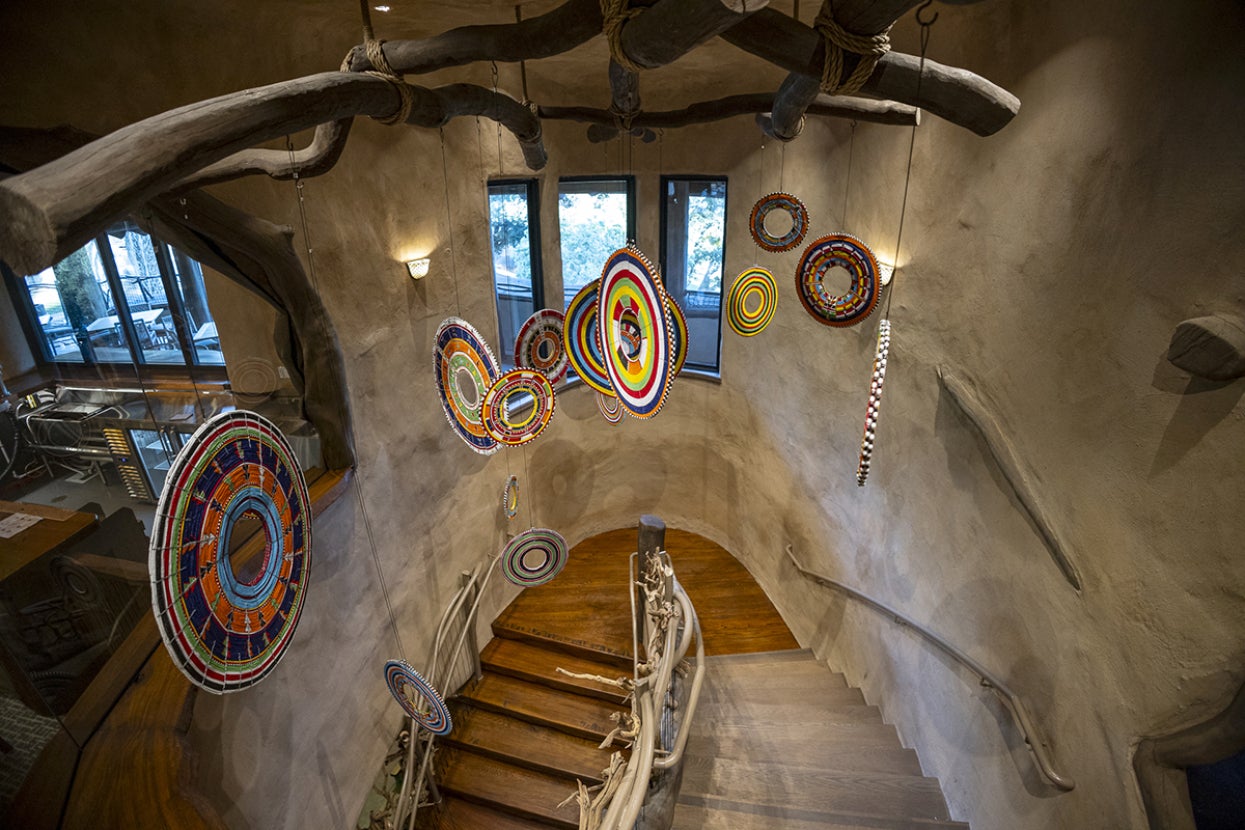
BeadWORKS artisans crafted 20 double-sided necklaces as part of an elaborate chandelier for Mkutano House.
Beyond the Beads
As the appreciation for their work spread, BeadWORKS was able to connect with additional communities and employ more artisans. It is now a network of over 1,200 women from 9 different Indigenous communities in northern Kenya. What these artisans receive through BeadWORKS is more than a steady income for them and their families; they also have opportunities for additional education and training in craftsmanship, entrepreneurship, and leadership, while finding camaraderie in a society that is not focused on women.
NRT hosted its first Women’s Leadership Summit in 2021, and it is now an annual event. In May 2025, more than 70 women from all 45 community conservancies came together to share their experiences and exchange ideas. At these summits, leaders can discuss different business and conservation models, health and medical concerns that specifically impact women, and the environmental projects they are doing in their communities, like rangeland and mangrove restoration. Since the first summit, their leadership roles within the conservancies have greatly increased, with 168 community members now serving on boards and 3 in managerial roles.
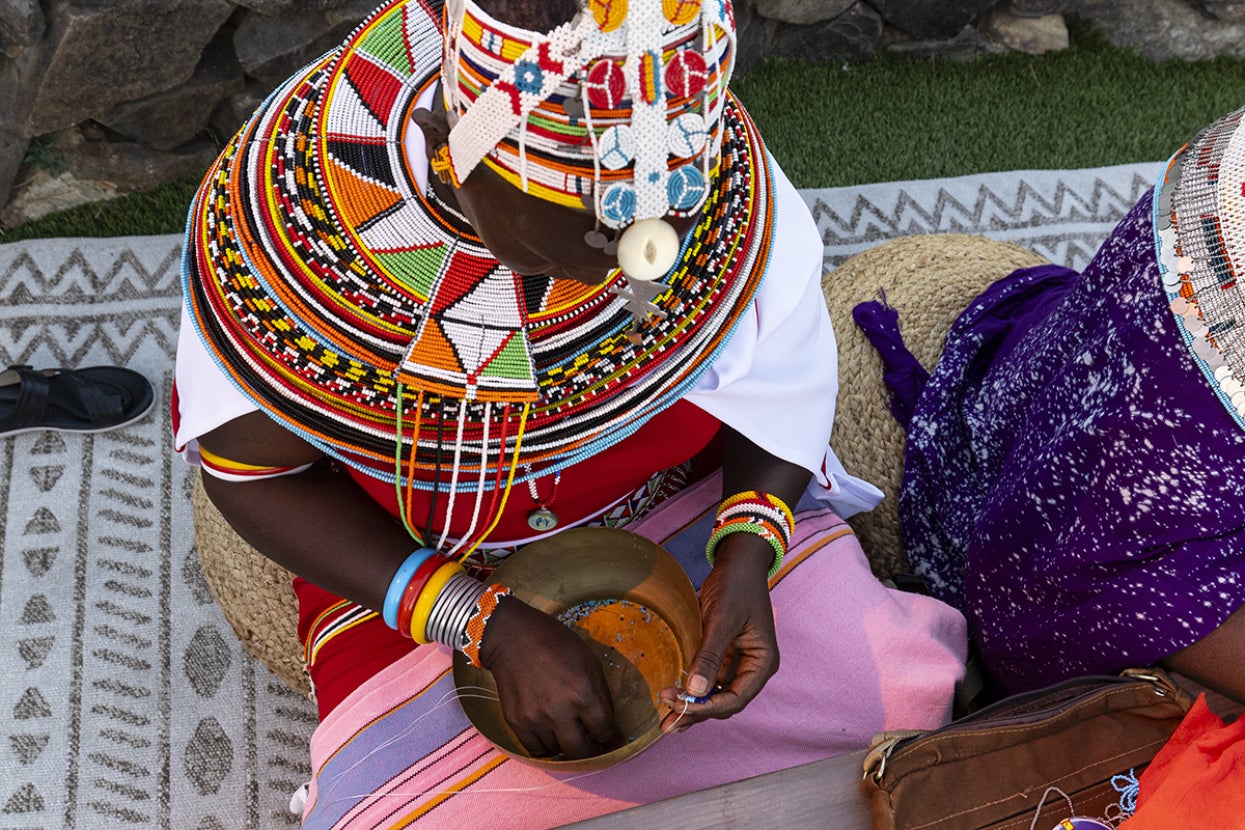
The tradition of beading is passed down from generation to generation.
Women in these complex and intricate societies generally do not work outside of the home. Earning additional income through BeadWORKS opens up opportunities for the household to reallocate money for other uses. Having additional investment opportunities promotes economic stability for families and invites collaborative conversations about household decisions. A majority of BeadWORKS artisans have limited formal education, and having a sustainable income allows them to set aside money to send their children to school and on to college.
Funds earned through BeadWORKS also empower artisans to transform their communities. In addition to paying individuals for the work they complete, BeadWORKS contributes 5% of its annual revenue directly to the community conservancies. The money helps pay for infrastructure, like clean drinking water, and increased access to healthcare and education. As of December 2022, money earned from BeadWORKS projects supplied 2,500 people with regular medical care and allowed 3,500 more children to attend school rather than herding livestock to help provide for their families.
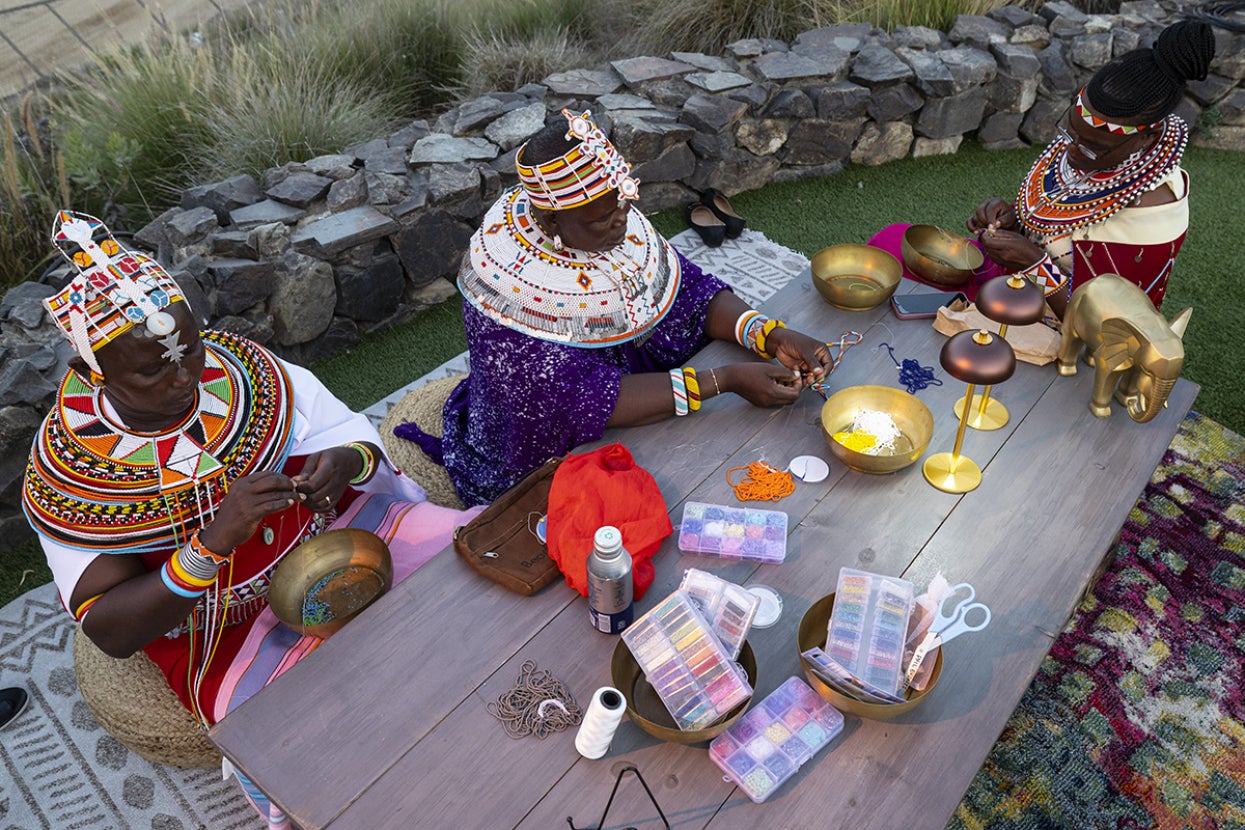
The Alliance had the honor of hosting BeadWORKS artisans at the San Diego Zoo and Safari Park in October 2024.
Beading a Better World
Step by step, bead by bead, people can come together to make significant changes for themselves, each other, their environment, and the wildlife they share their lives with. Finding sustainable solutions requires collaboration, dedication, and hope for the future. And what these women create together for the world is more beautiful than any work of art.
San Diego Zoo Wildlife Alliance collaborates with global partners like BeadWORKS to protect savanna ecosystems by developing and implementing innovative strategies that support local communities and protect wildlife in native habitats. Learn more about our work through our Savanna Conservation Hub when you visit Elephant Valley on your next trip to the San Diego Zoo Safari Park. And be sure to explore the many unique shops throughout the Zoo and Safari Park and bring home your own beaded masterpiece—your purchases support wildlife and wildlife allies worldwide!