



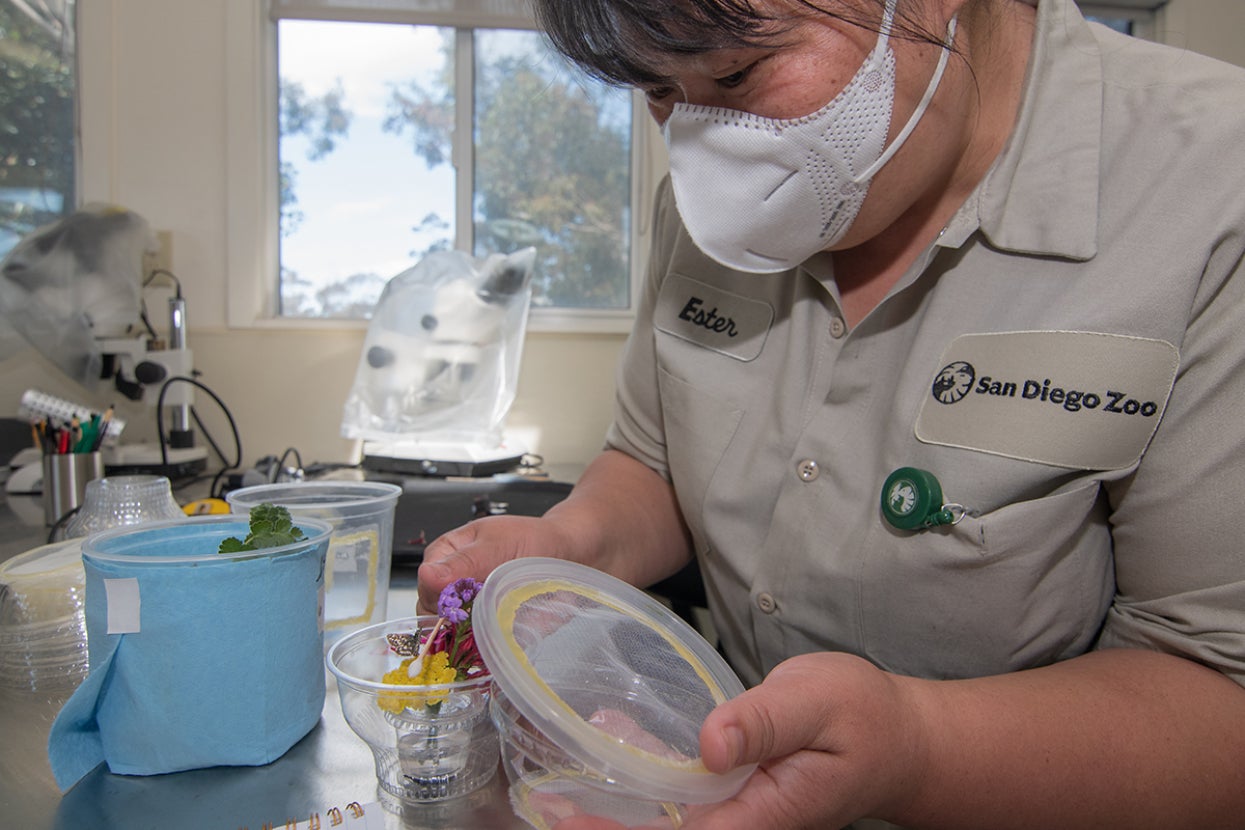
A simple building sits on the edge of the San Diego Zoo. The bustling crowds of excited guests hurrying by on pathways or eagerly looking out from their seats on a guided bus tour don’t take a second glance at its unpretentious exterior. They wouldn’t know the walls of the Butterfly Conservation Lab have witnessed the birth of thousands of tiny triumphs in the fight to save a vital ecosystem . . . well, actually, they hatched.
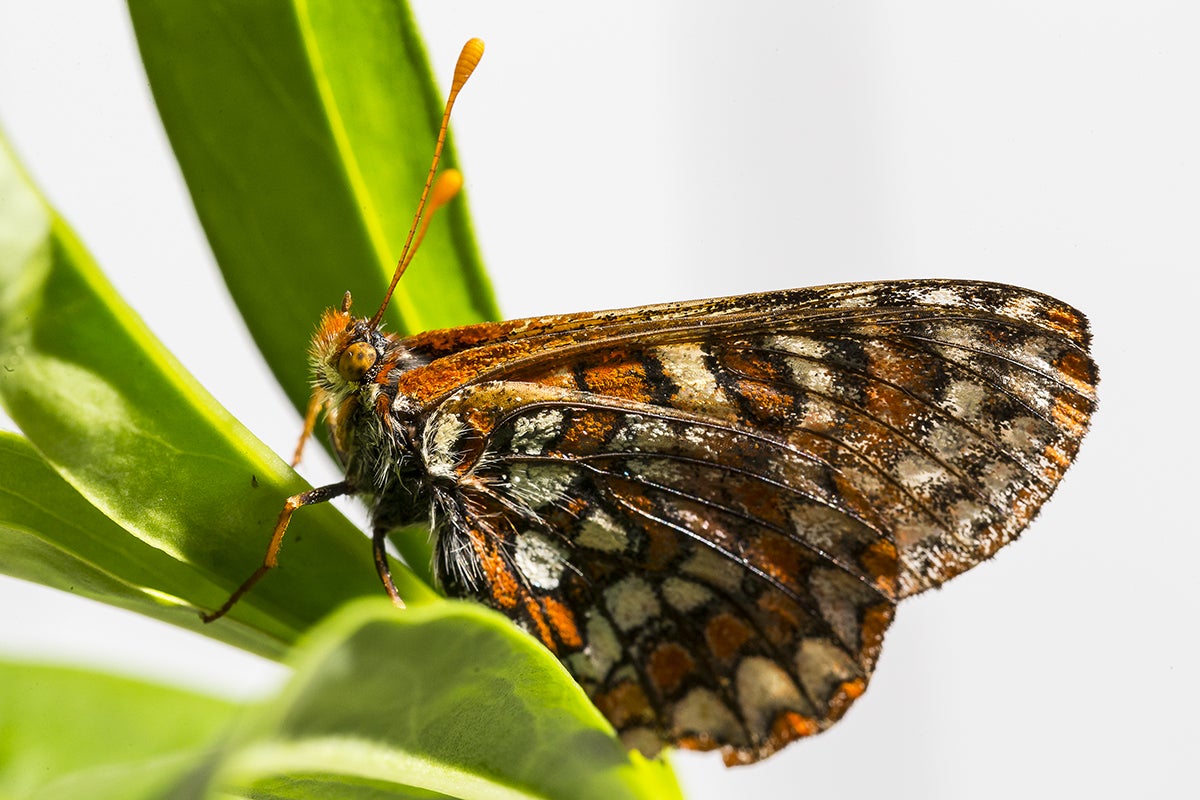
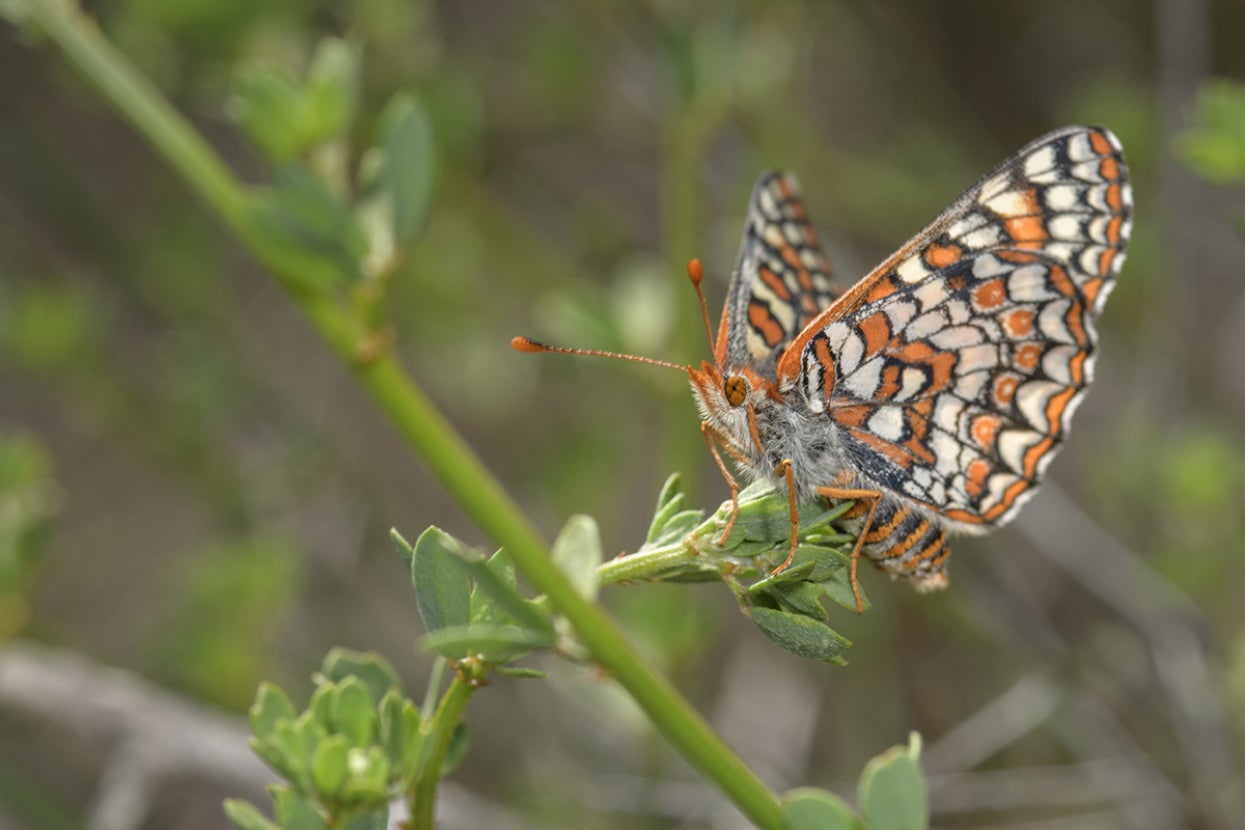
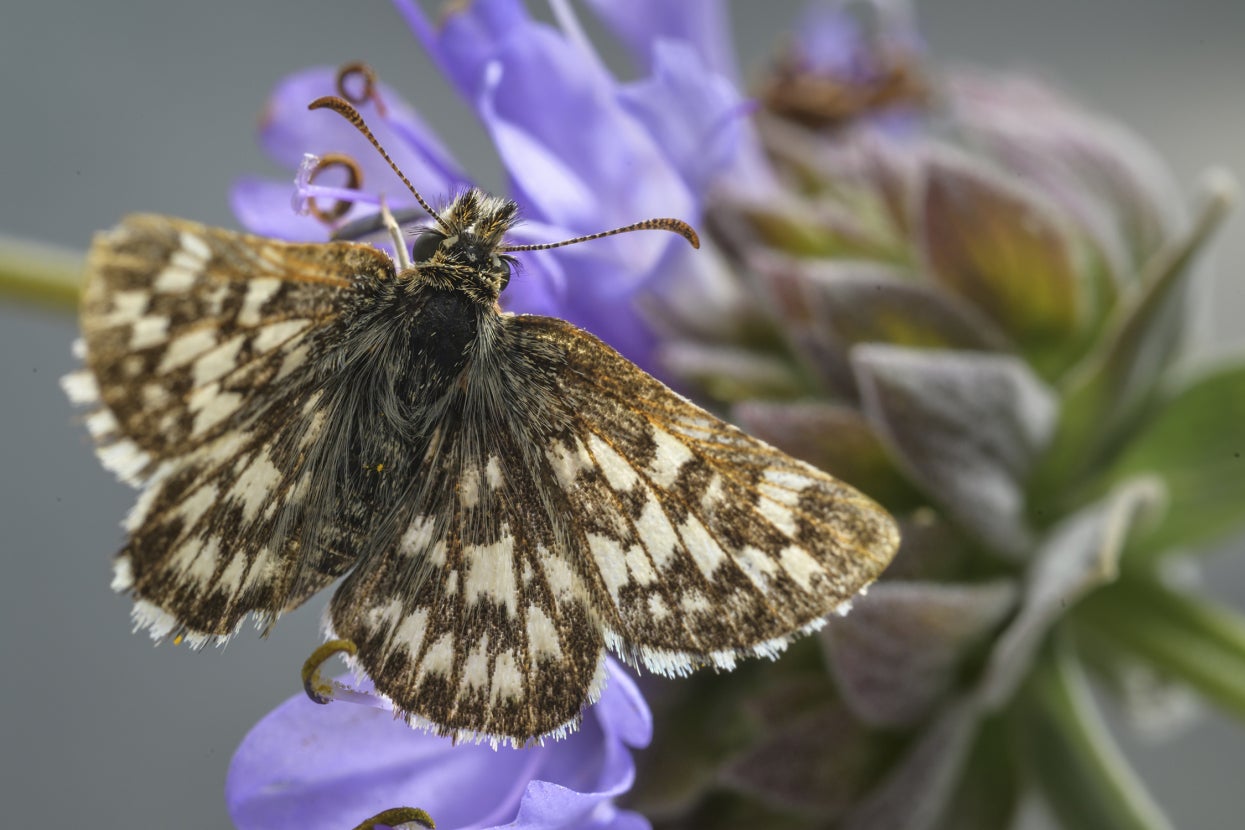
The Quino checkerspot butterfly was one of the first insects listed under the Endangered Species Act. | Photo credit: © Michael Ready
Quino-where to Be Found
The quaint, colorful Quino checkerspot butterfly was once one of the most common butterflies in Southern California, but after decades of unsustainable human development and increasing wildfire activity, they lost more than 75% of their historical range. In the United States, they are now found in only a few spots in Riverside and San Diego Counties, both of which face ever-increasing levels of human activity. Their numbers were so depleted that years could go by without someone seeing one. They were federally classified as endangered in 1997—one of the first insects listed under the Endangered Species Act.
The recovery plan to save this vibrant pollinator included hand-raising larvae in order to increase native populations in the San Diego National Wildlife Refuge. This safe haven for Southwestern species was established in 1996 by the U.S. Fish and Wildlife Service (USFWS) and protects nearly 12,500 acres east of downtown San Diego, California.
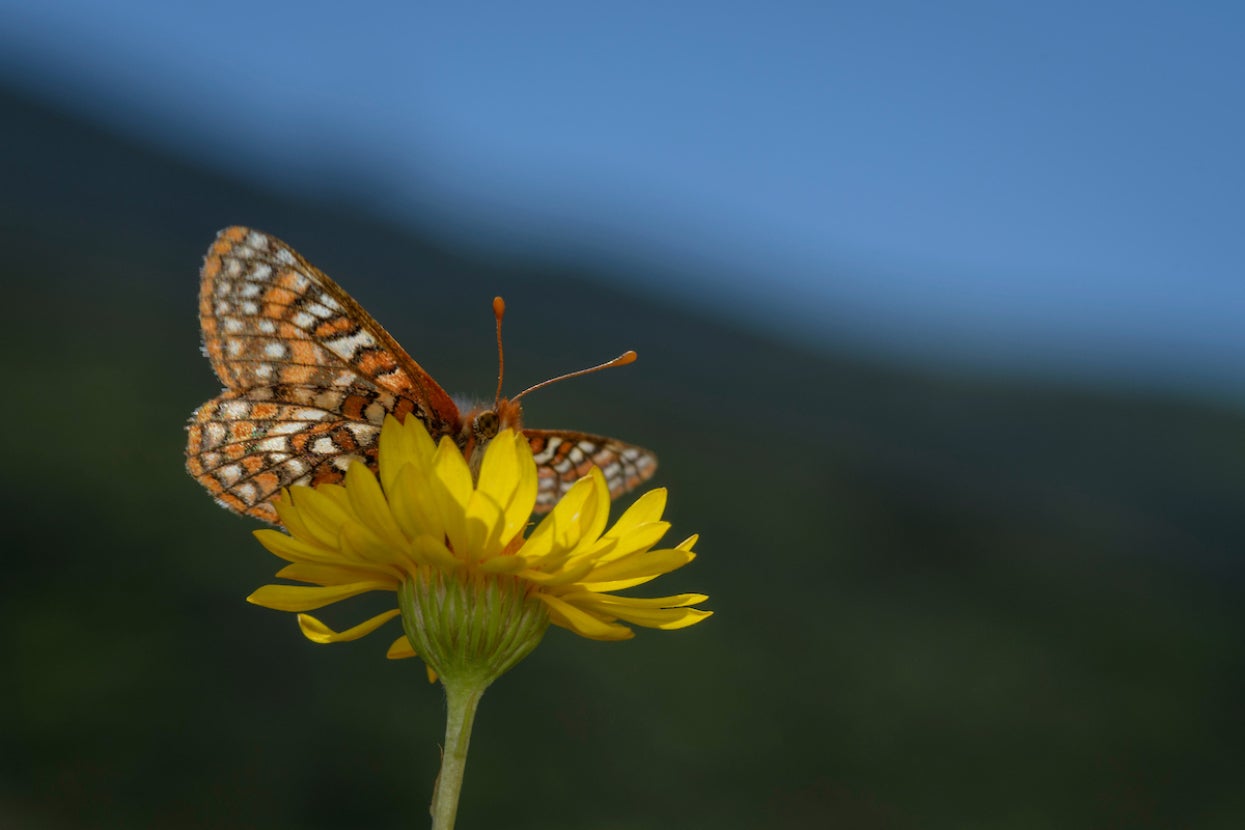
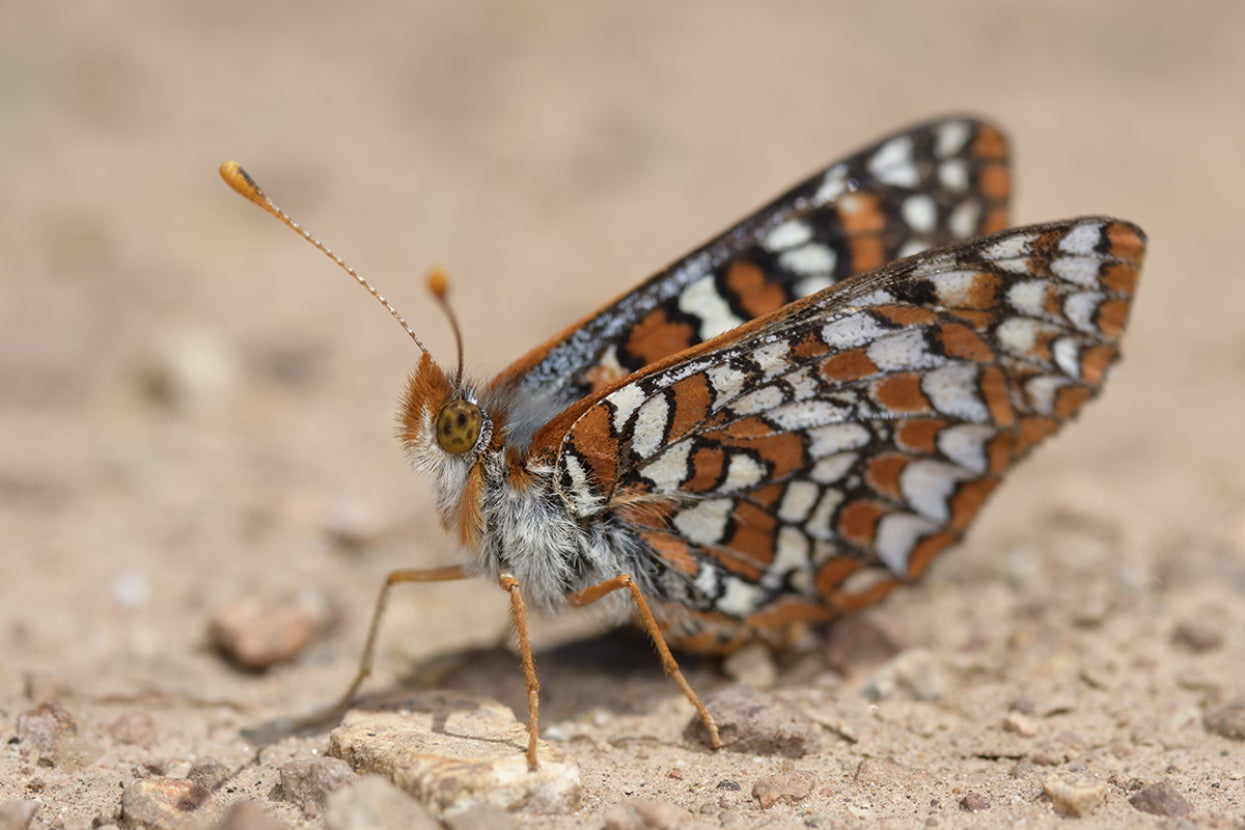
The Quino checkerspot butterfly has a wingspan of 1.5 inches (3.8 cm). | Photo credit: © Michael Ready
While very small numbers of Quino checkerspots have been raised by people before, hand-raised larvae had never been successfully released back into native habitats. The wildlife care experts on San Diego Zoo Wildlife Alliance’s Entomology team began partnering with the USFWS in 2012, when they started caring for a non-releasable group of endangered Quino checkerspot butterflies with the goal of finding the best way to support them. The team knew they had to increase Quino checkerspot numbers without disturbing the shrinking populations already established in their historical range.
In 2014, funding from USFWS was used to build a 400-square-foot structure to house the Butterfly Conservation Lab in a behind-the-scenes area at the San Diego Zoo. The team now had the knowledge they needed to hand-raise Quino checkerspots and a dedicated space to do it.
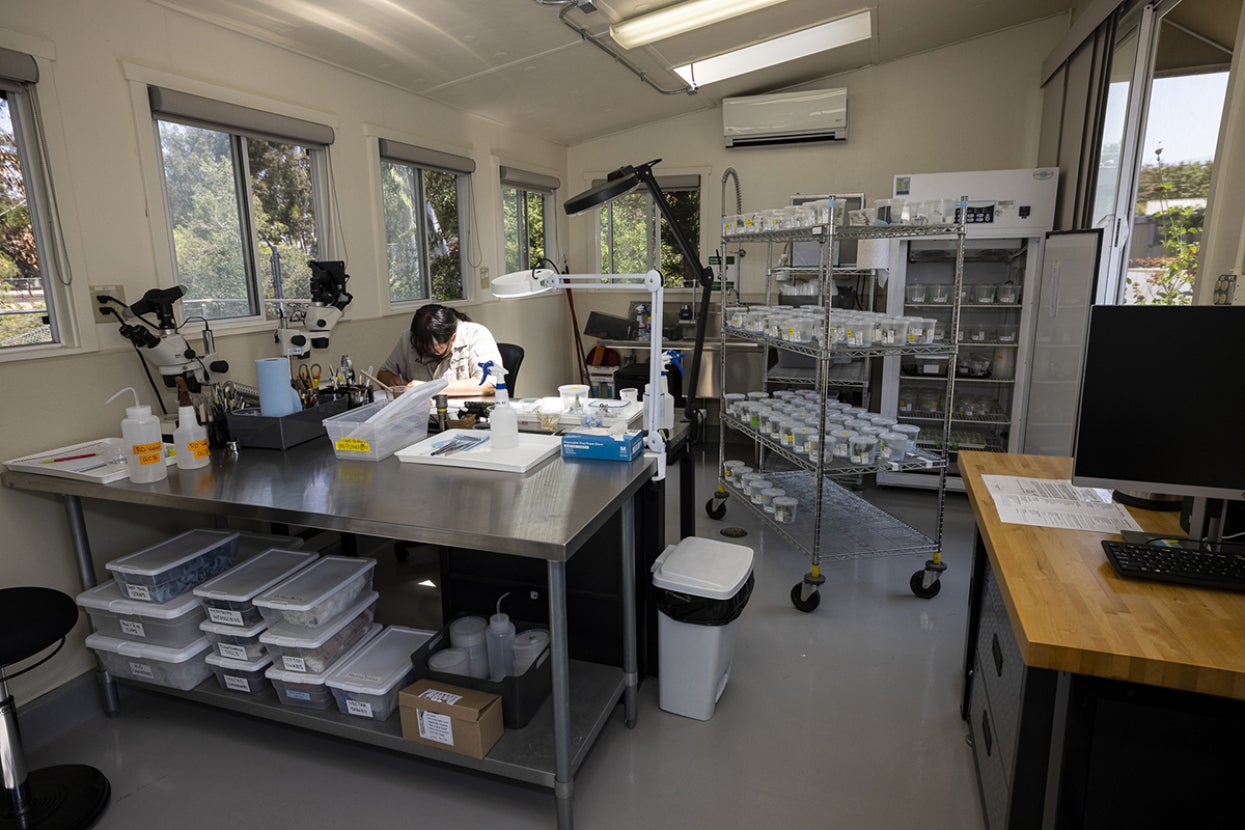
Thousands of endangered butterflies have been hand-raised at the Butterfly Conservation Lab.
Checking on Checkerspots
Beginning in 2016, members of the Entomology team went out in the spring to carefully gather female Quino checkerspots from native populations. The butterflies were brought back to the Butterfly Conservation Lab’s safe habitats to enjoy a special nutrition-packed liquid, which helped them lay more eggs. They would lay large clusters of up to several hundred eggs before being returned to where they had been found. Care specialists meticulously collected the tiny eggs and placed them in protective cups, where they would hatch into larvae the size of a quinoa seed about two weeks later.
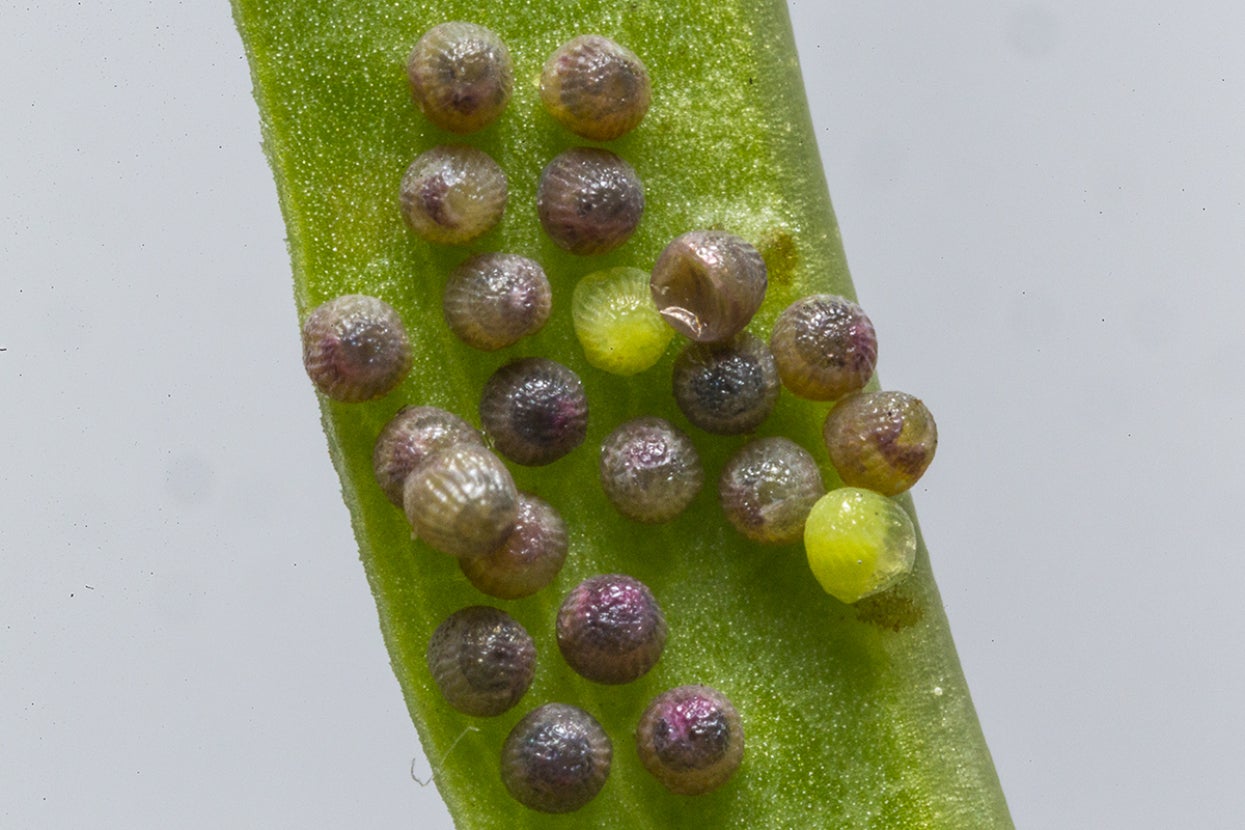
Quino checkerspot eggs hatch into larvae the size of a quinoa seed.
Once the larvae molted at least once, they were moved into another habitat to continue growing. The larvae clustered together inside very fine webs and constantly ate their favorite food, California dotseed plantain. As with any baby, lots of eating meant lots of pooping, but the miniscule larvae didn’t wear diapers; their waste was delicately removed from the habitat by hand. This painstaking phase lasted about two weeks, but their care didn’t end there; the intensive attention continued for about another month as the larvae ate and grew. As the seasons moved from spring to summer and the weather warmed, the larvae—now about the length of a grain of rice—were just about ready to leave the Butterfly Conservation Lab.
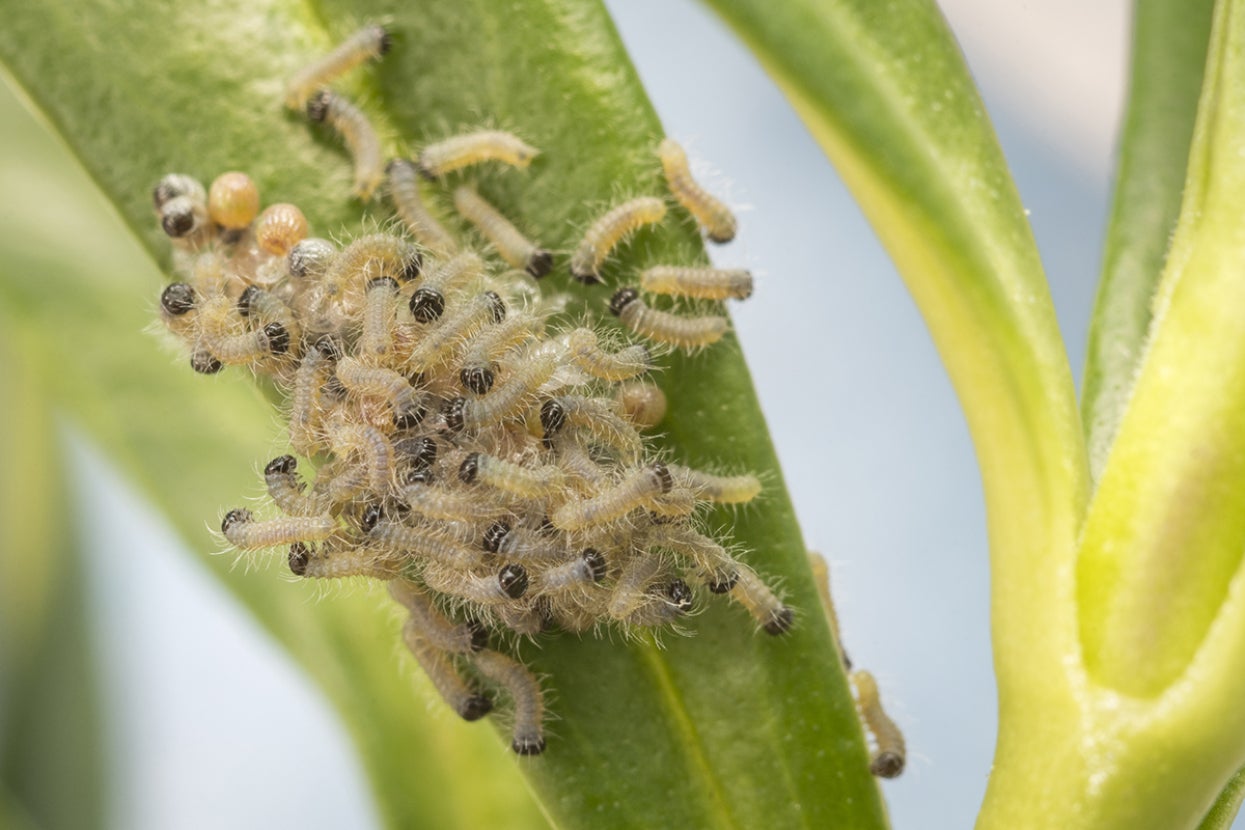
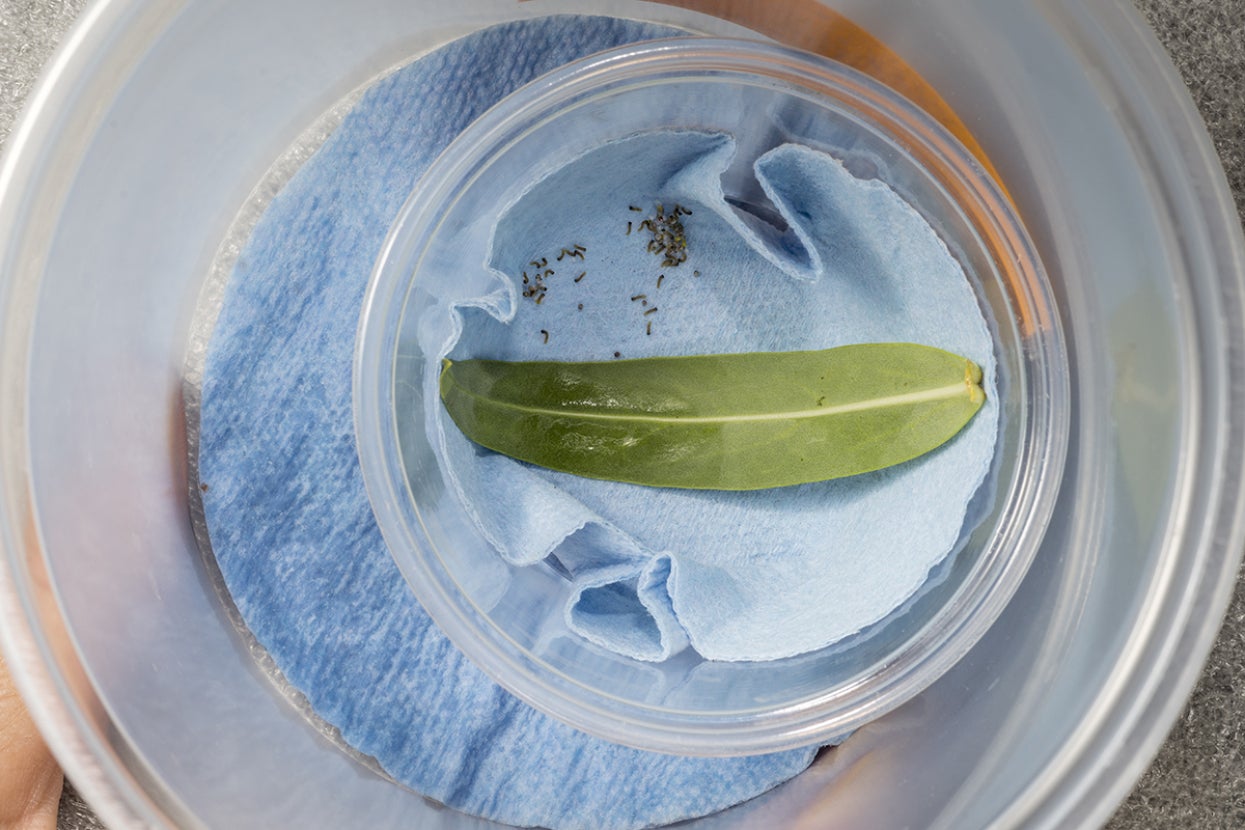
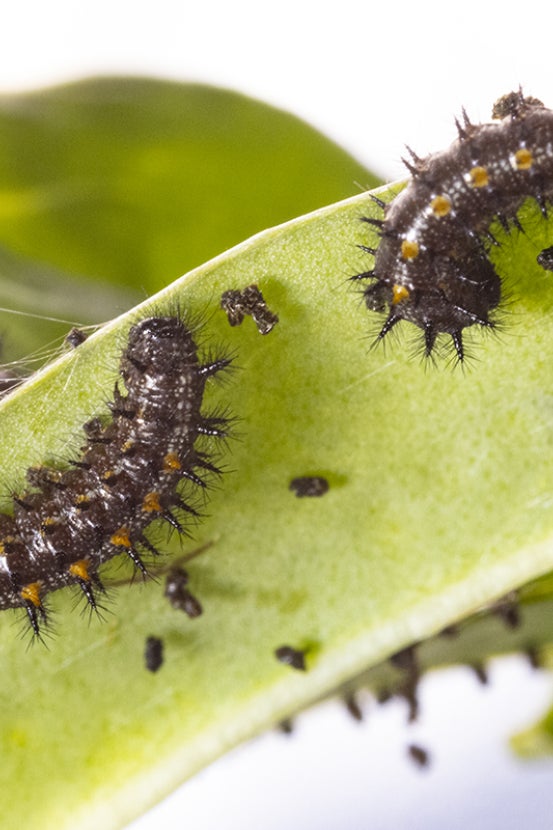
Quino checkerspot larvae will stay at the Butterfly Conservation Lab to eat and grow until they are about the length of a grain of rice. | Photo credit (top left, bottom left): © Michael Ready
Entering Dia-Pods
Even within the most secluded dotseed plantain cluster, a little larva’s life is much more at risk than inside the absolute safety of the Butterfly Conservation Lab. To support their transition, the Entomology team worked with partners to develop an innovative technique for releasing the larvae into their historical range that kept them safe from predators while still allowing them to respond naturally to changes in their environment.
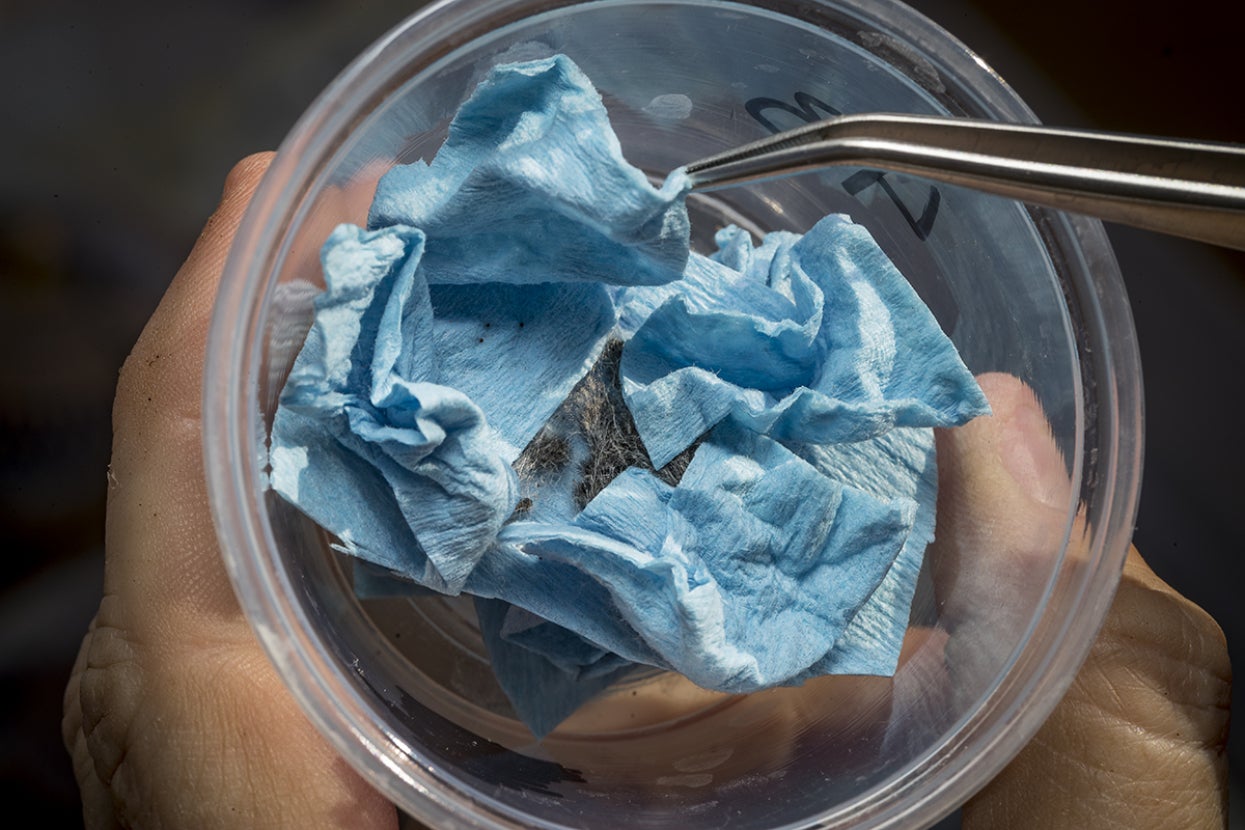
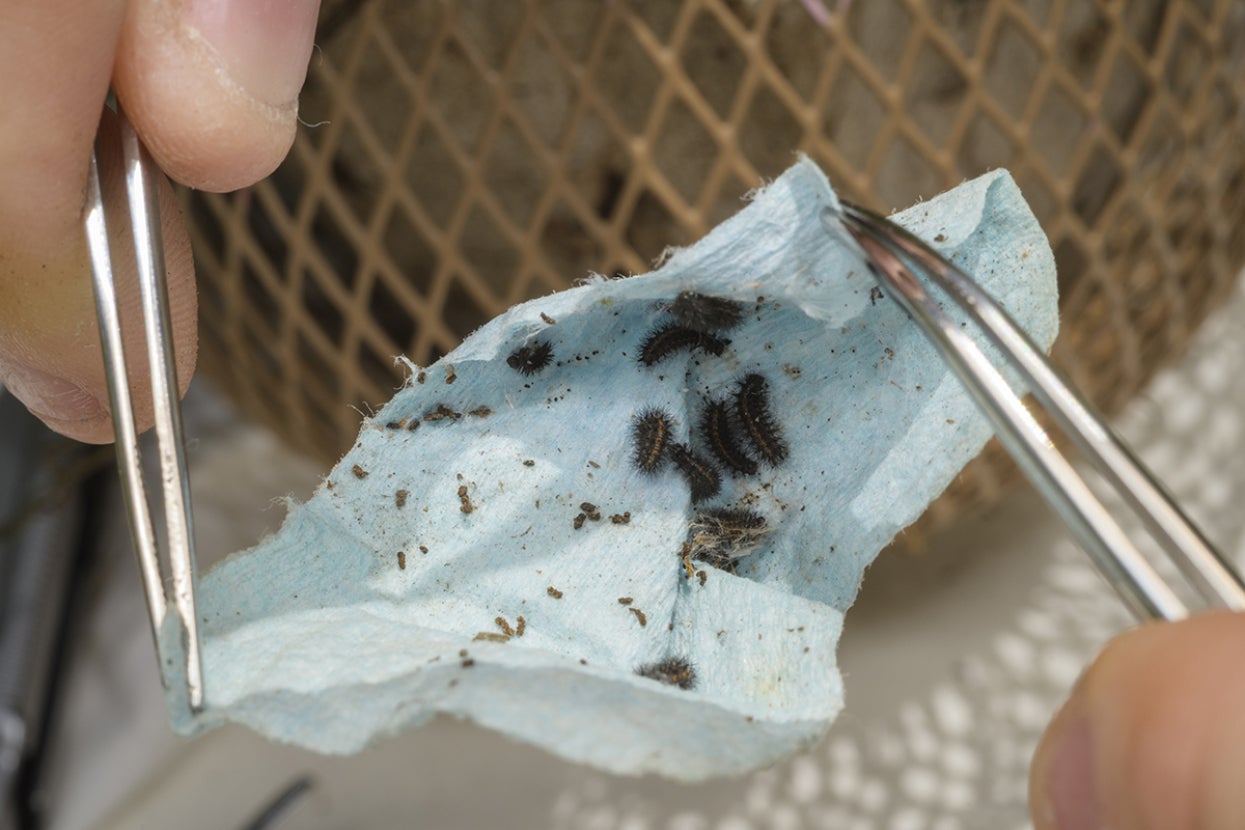
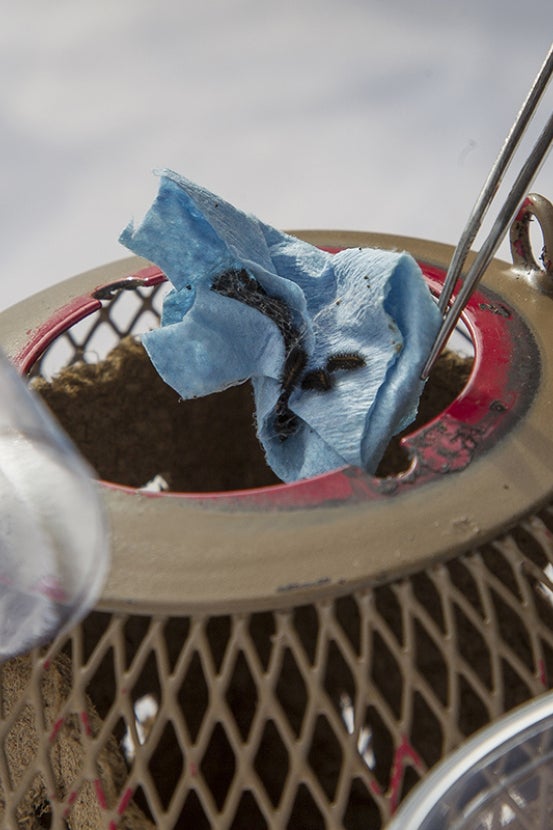
When they are ready to be released into native habitats, Quino checkerspot larvae web up in crumpled paper that is placed inside release pods. | Photo credit (bottom left): © Michael Ready
When the larvae at the Butterfly Conservation Lab had eaten enough food, they prepared for the next stage of their life cycle by webbing up inside crumpled bits of paper. The paper crumples went inside special “release pods”: finch seed feeders painted to blend into native habitats. The spheres are constructed with lattice-style metal mesh sheets in a way that is secure and protected from predators, but also open to the elements. The release pods were tied to bushes in an area with plenty of dotseed plantain. The open design of the pods allowed the larvae to feel every gentle breeze, ray of sunlight, and change in humidity, which is essential for Quino checkerspots because of an adaptation called diapause.
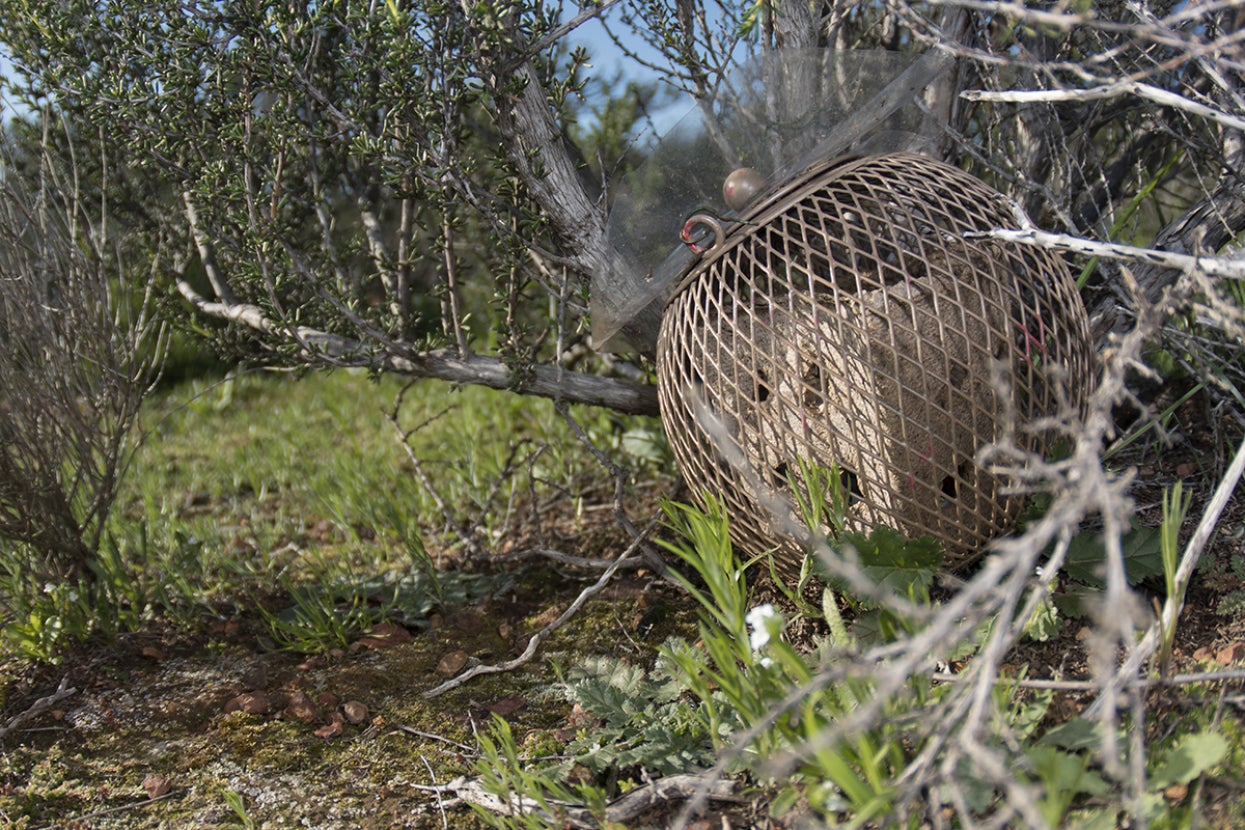
Release pods are tied to bushes in areas with plenty of California dotseed plantain, a favorite food of Quino checkerspots. | Photo credit: © Michael Ready
Diapause allows the larvae to enter a state of rest that lowers their metabolic rate and makes them less sensitive to temperature changes. For Quinos, this happens in the summer as hot, dry weather ends the growing season for dotseed plantain, meaning they won’t have enough resources to complete their transformation. When they sense cues like the cool winter rains are on the way, typically in November or December, some of the larvae venture out of the release pods to find more to eat. Eventually they will molt, become a pupa (chrysalis), and, about 10 days later, emerge as a beautiful butterfly in their native habitat. Depending on rain levels and other environmental conditions, the larvae can come in and out of diapause several times before they have eaten and grown enough to become an adult butterfly.
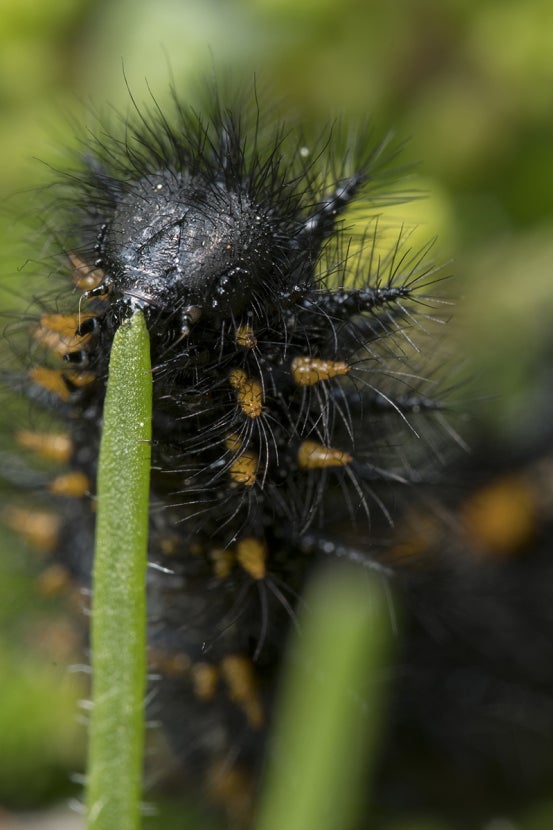
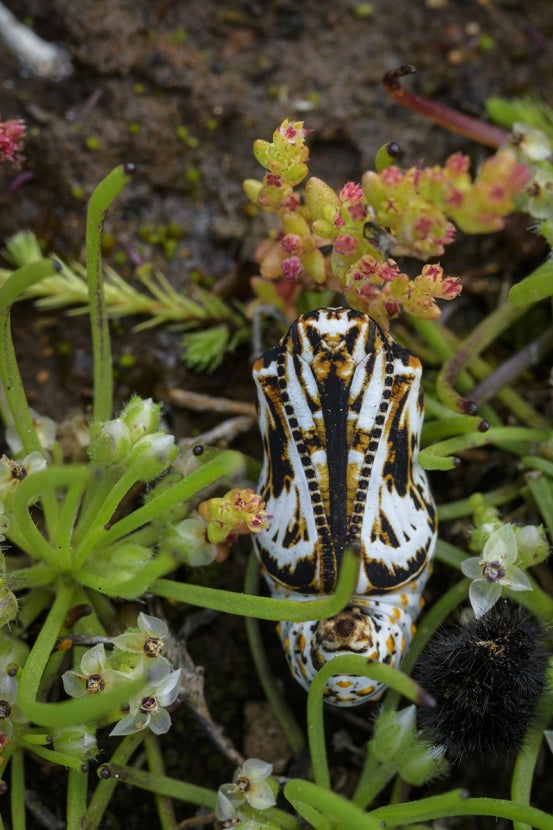
Quino checkerspot larvae (left) can come in and out of diapause several times before they become a pupa (chrysalis). | Photo credit: © Michael Ready
It was suspected Quino checkerspots could stay in diapause for longer than one season, but it hadn’t been confirmed until San Diego Zoo Wildlife Alliance’s Entomology team started utilizing these pods. Because they continued to monitor the pods after they were placed in native habitats, they could check them after the Quino checkerspot’s “flight season” ended, see how many larvae remained in diapause inside, and track how many seasons they stayed. During an especially rainy year in 2020, they also confirmed the larvae could complete their growth into adult butterflies without entering diapause if they experienced a longer, wetter spring. These discoveries were just two of many that were made possible by this innovative introduction technique and the dedicated follow-through of the team.
The team at the Butterfly Conservation Lab successfully hand-raised and released almost 16,000 Quino checkerspots into their native habitats in 7 years. | Photo credit: © Michael Ready
Not Just Winging It
The release of 742 larvae in the San Diego National Wildlife Refuge in December 2016 marked the first time hand-raised Quino checkerspots were successfully released into their historical range. It was also the first time this butterfly had flown in the region for many, many years.
In January 2017, another 771 larvae were released. Between 2017–2022, an additional 14,000 larvae were introduced across five diverse areas. It was an incredible accomplishment exemplifying the impact of collaboration, ingenuity, and partnership. But the team was just getting started. After successfully raising and releasing almost 16,000 Quino checkerspots, they turned their attention to another imperiled species: the Laguna Mountains skipper.
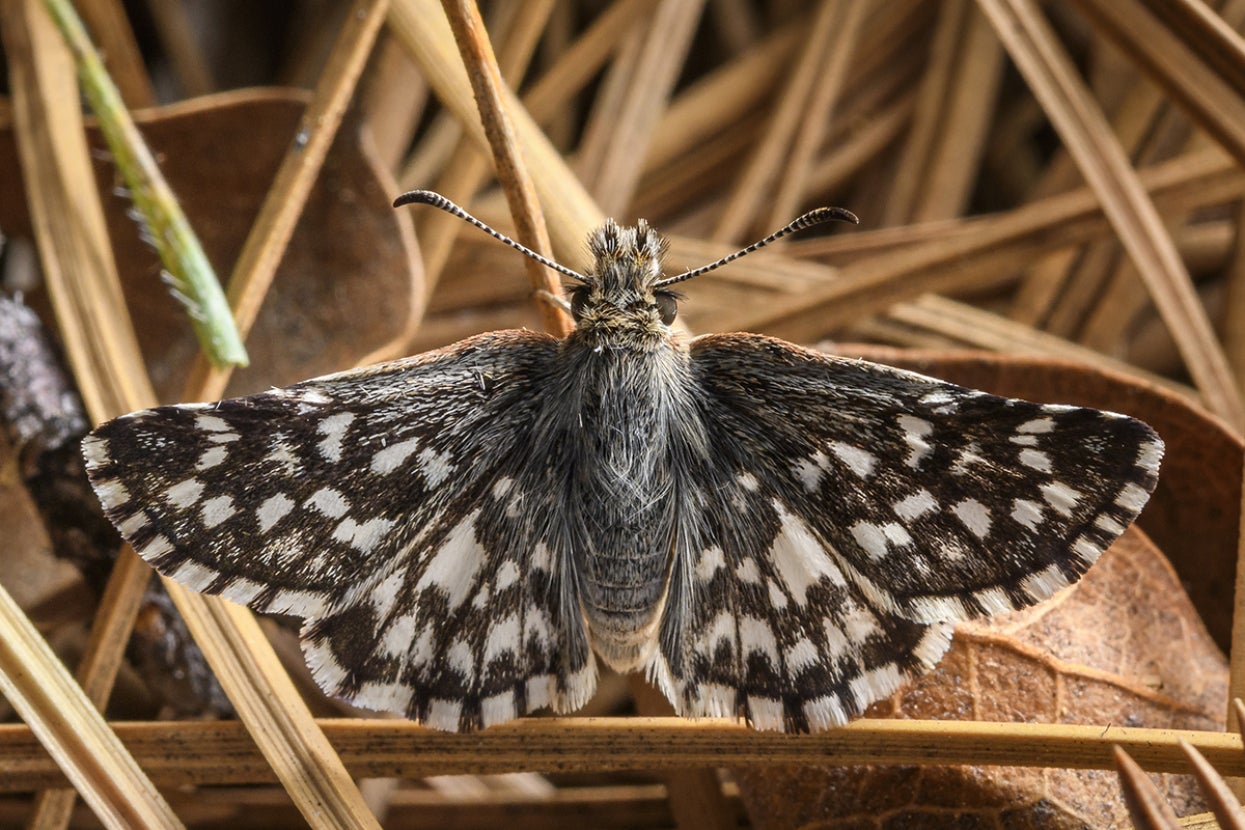
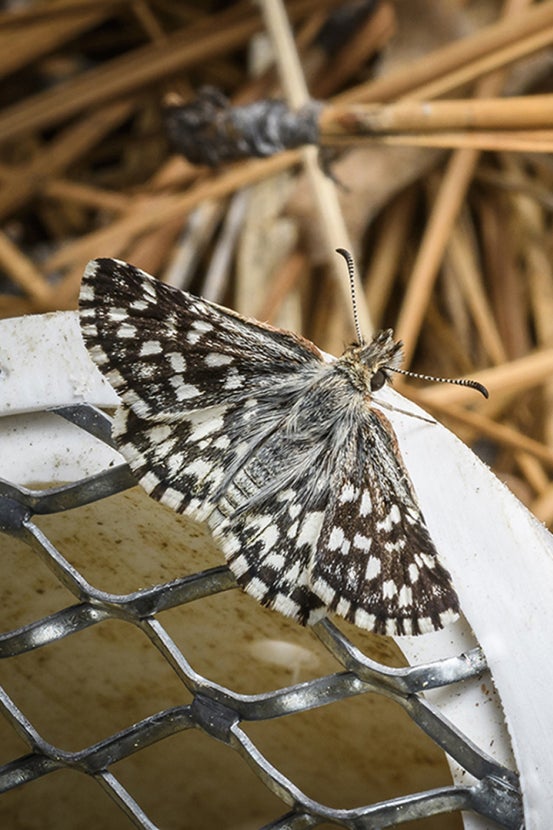
The Laguna Mountains skipper is an endangered butterfly with a wingspan of about 1 inch (2.5 cm) across. | Photo credit: © Michael Ready
The Laguna Mountains skipper is even smaller than the Quino checkerspot and has brown-and-white checkered wings. Like the Quino checkerspot, the species was once abundant across San Diego County; the Laguna Mountains skipper was especially common in the Laguna Mountains, about an hour’s drive east of the San Diego Zoo. But also like the Quino checkerspot, their populations were declining in their native range. After they disappeared from the Laguna Mountains, their habitat decreased to just four locations on Palomar Mountain, and they joined the Quino checkerspot in being listed as endangered under the Endangered Species Act in 1997. Unlike Quinos, however, Laguna Mountains skippers lay their eggs singly and produce only dozens (not hundreds) over their lifetimes, so the risk of their numbers decreasing even further was significant.
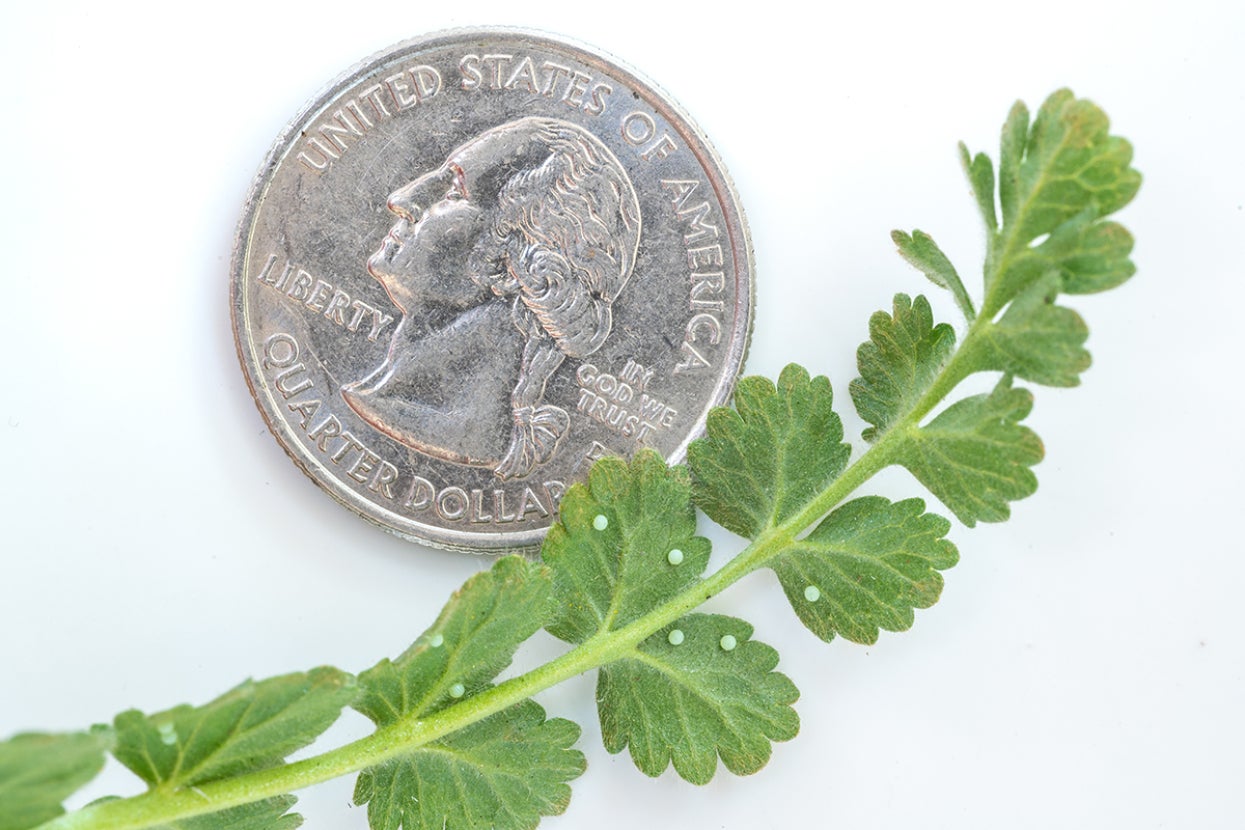
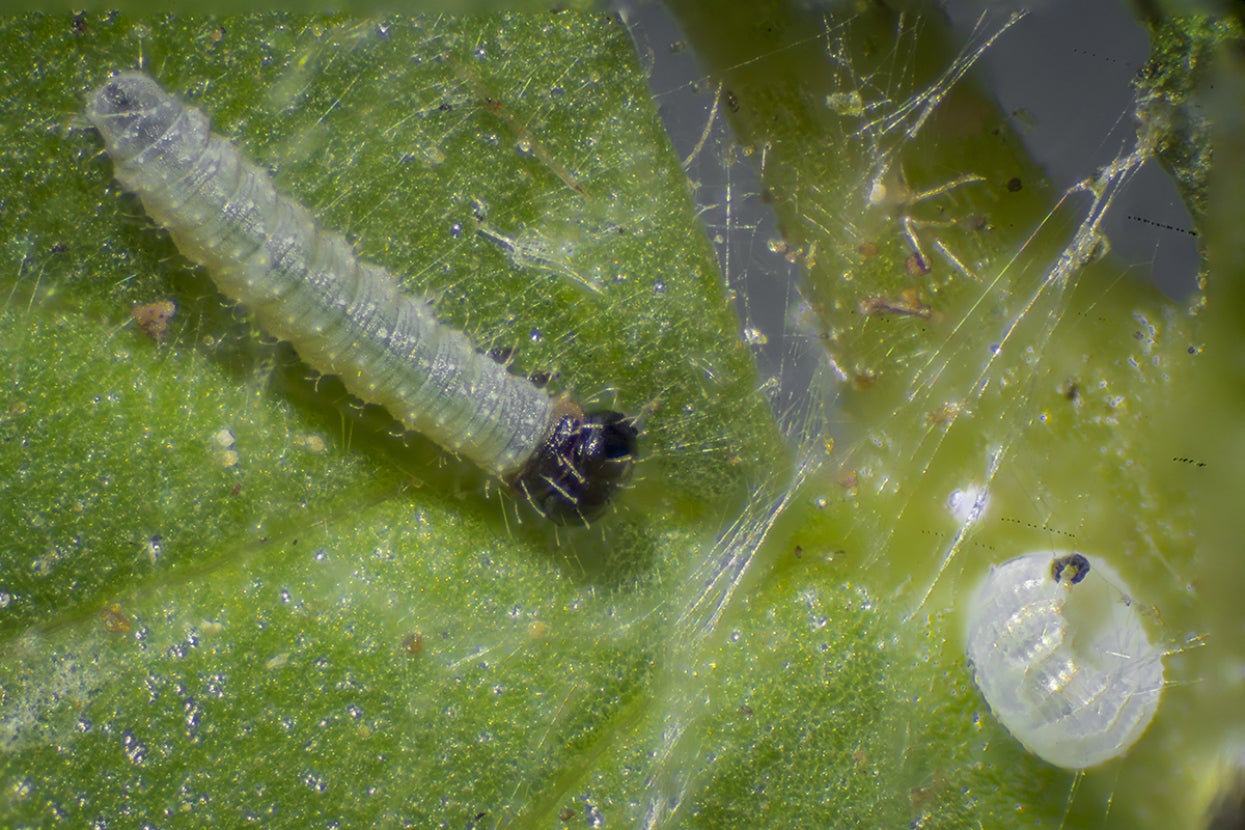
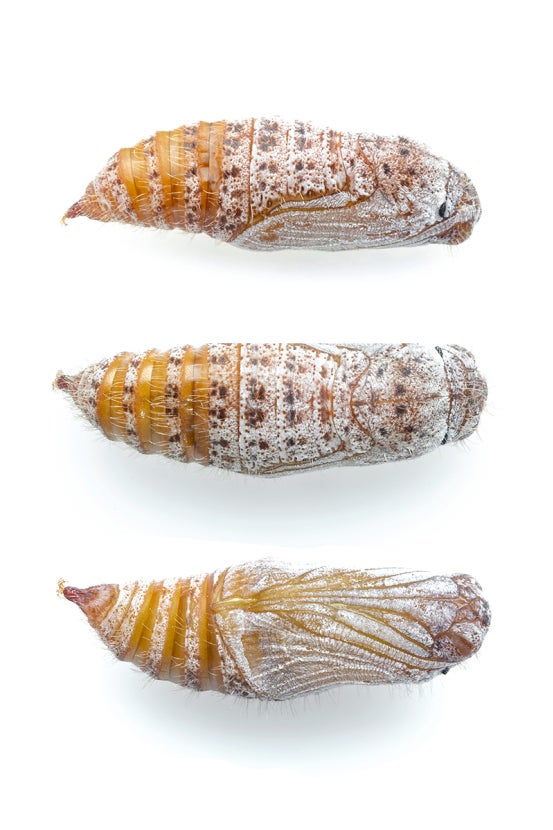
Laguna Mountains skippers lay tiny, single eggs (top left) that hatch into larvae (bottom left). Larvae eat and grow until they become a pupa (chrysalis). | Photo credit: © Michael Ready
The butterfly hadn’t been seen in the Laguna Mountains since 1999, so the team had to find females within a limited population on Palomar Mountain. The skippers were given the same five-star treatment as the Quinos, resulting in over 400 lime green eggs in a few weeks. After the larvae hatched, they feasted on their favorite plant, Cleveland’s horkelia, and entered diapause as pupae. The pupae were released at a site in the Laguna Mountain Recreation Area in 2021, and when they emerged, butterflies flew in their namesake range for the first time in almost a quarter century.
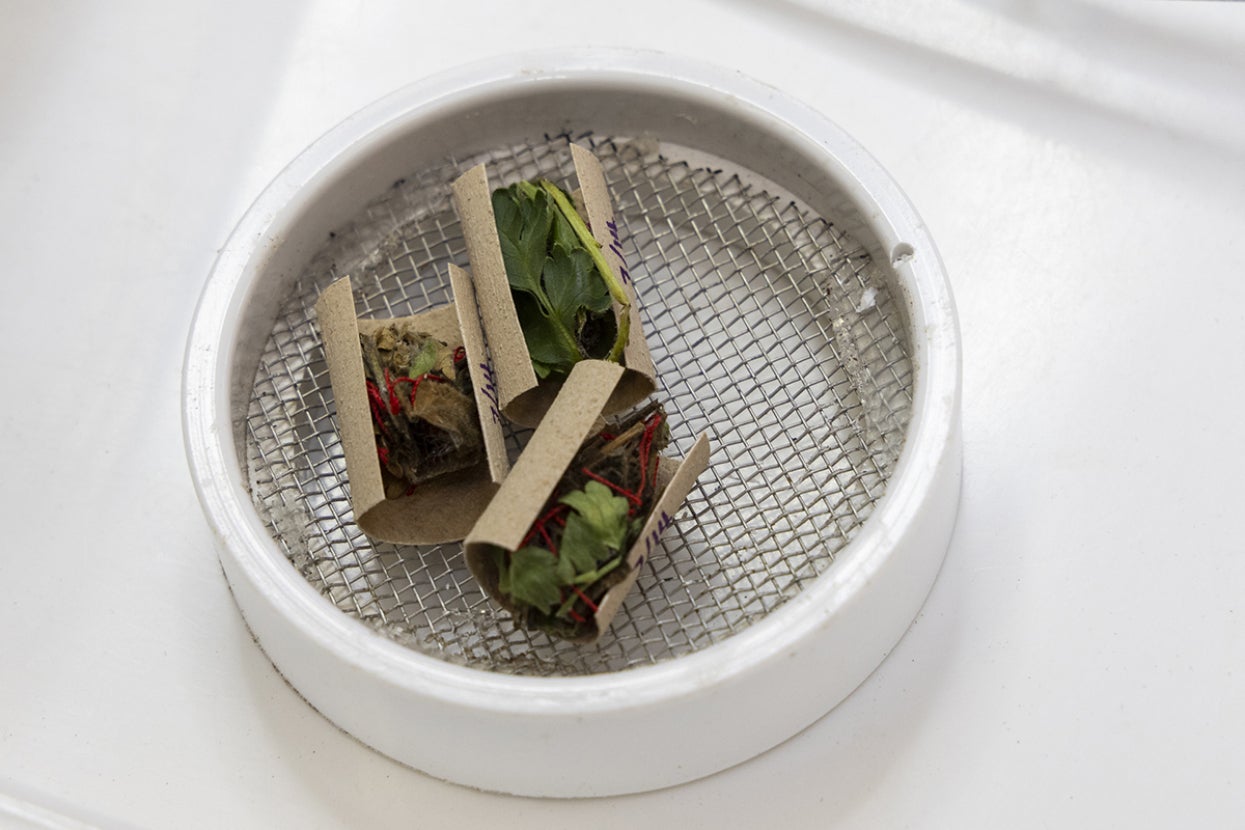
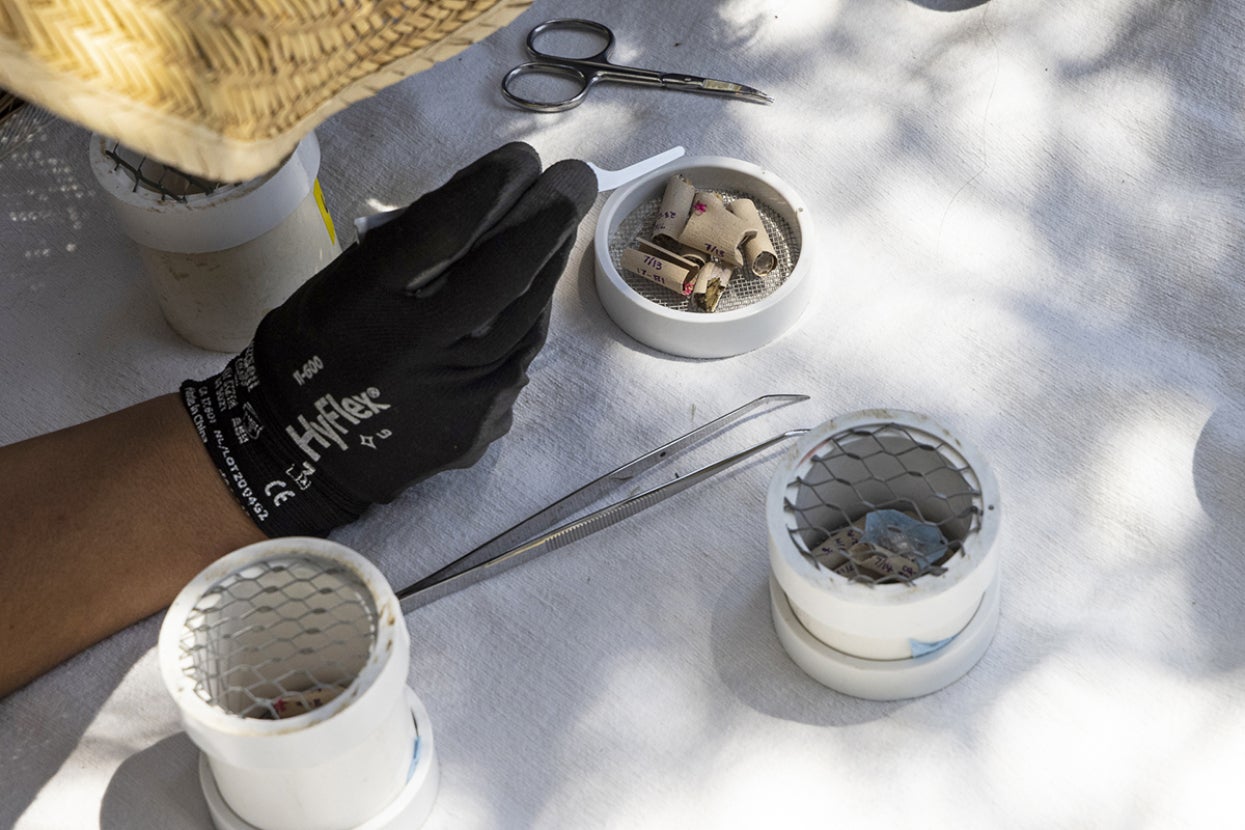
Laguna Mountains skipper pupae are placed in protective sleeves (top left) that go inside release capsules (bottom left). The capsules protect the pupae until the butterflies are ready to emerge in their native habitats. | Photo credit (right): © Michael Ready
The work continued in 2023 and 2024, and after releasing 423 larvae between the Laguna Mountain Recreation Area and Palomar Mountain in May 2026, the team had cared for and introduced almost 1,400 Laguna Mountains skipper larvae into native habitats. As with the Quino checkerspots, the team at the Butterfly Conservation Lab is the only one to have ever hand-raised and released Laguna Mountains skippers, supporting vital populations of these incredibly rare butterflies.
The team from the Butterfly Conservation Lab successfully released almost 1,400 Laguna Mountains skippers into their native range. | Photo credit: © Michael Ready
Butterflies in the Sky
In 2027, the Butterfly Conservation Lab will once again be filled with California dotseed plantain as it prepares to welcome another group of Quino checkerspot butterflies. In January 2025, the Border 2 fire swept through 6,600 acres of the Otay Mountain Wilderness, located southeast of the city of San Diego along the U.S.-Mexico border. The fire destroyed most of an area with one of the largest Quino checkerspot butterfly populations within the San Diego National Wildlife Refuge. In an effort to reinvigorate this ecosystem, San Diego Zoo Wildlife Alliance was awarded a grant to help restore the site and locate a new population of Quino checkerspots to act as founders for another hand-raising program. With the help of the Butterfly Conservation Lab, Quino checkerspots will once again soar along the Southwest border region.
Two endangered butterflies are seeing their native populations increase thanks to the dedication of the Entomology team at the Butterfly Conservation Lab. | Photo credit: © Michael Ready
Over the course of a decade, the Entomology team at San Diego Zoo Wildlife Alliance’s Butterfly Conservation Lab went from caring for a few Quino checkerspot butterflies to developing new release and monitoring methods that made it possible to strengthen native populations of not one, but two endangered species. In time, neither the Quino checkerspot nor the Laguna Mountains skipper may need to be listed under the Endangered Species Act. Until that day, they will continue to be supported, from tiny egg to first flight, by the passionate care team at the Butterfly Conservation Lab.
These butterflies are just a few of the species San Diego Zoo Wildlife Alliance is working to protect through our Southwest Conservation Hub. Learn more about butterflies and other insects at Spineless Marvels at the San Diego Zoo, or check out native plants and pollinators at the California Nativescapes Garden at the San Diego Zoo Safari Park.