




In the September/October 2023 issue of the San Diego Zoo Wildlife Alliance Journal, we celebrated a new initiative called Native Biodiversity Corps. Below is the original article, followed by an exciting update from Lindsey Korito, a research coordinator on the Community Engagement team who has been supporting the program since its founding.
The Native Biodiversity Corps
“Driving conservation action through science education and community collaborations” is the tagline we often use to describe the work of the San Diego Zoo Wildlife Alliance Community Engagement team. From working alongside teachers to incorporate conservation science content into classrooms to co-generating and co-testing solutions in support of human-wildlife coexistence, our work focuses on the “people side” of each conservation equation. One program that most perfectly embodies this pithy tagline is also our newest: the Native Biodiversity Corps.
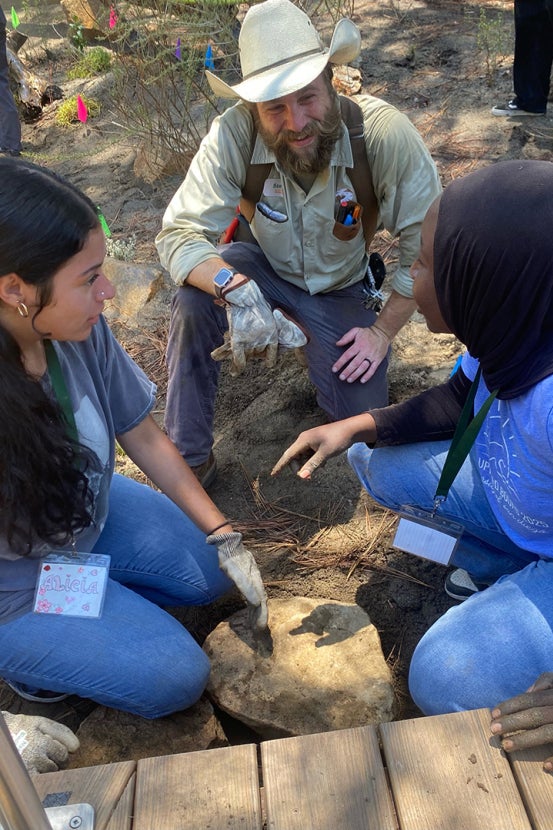
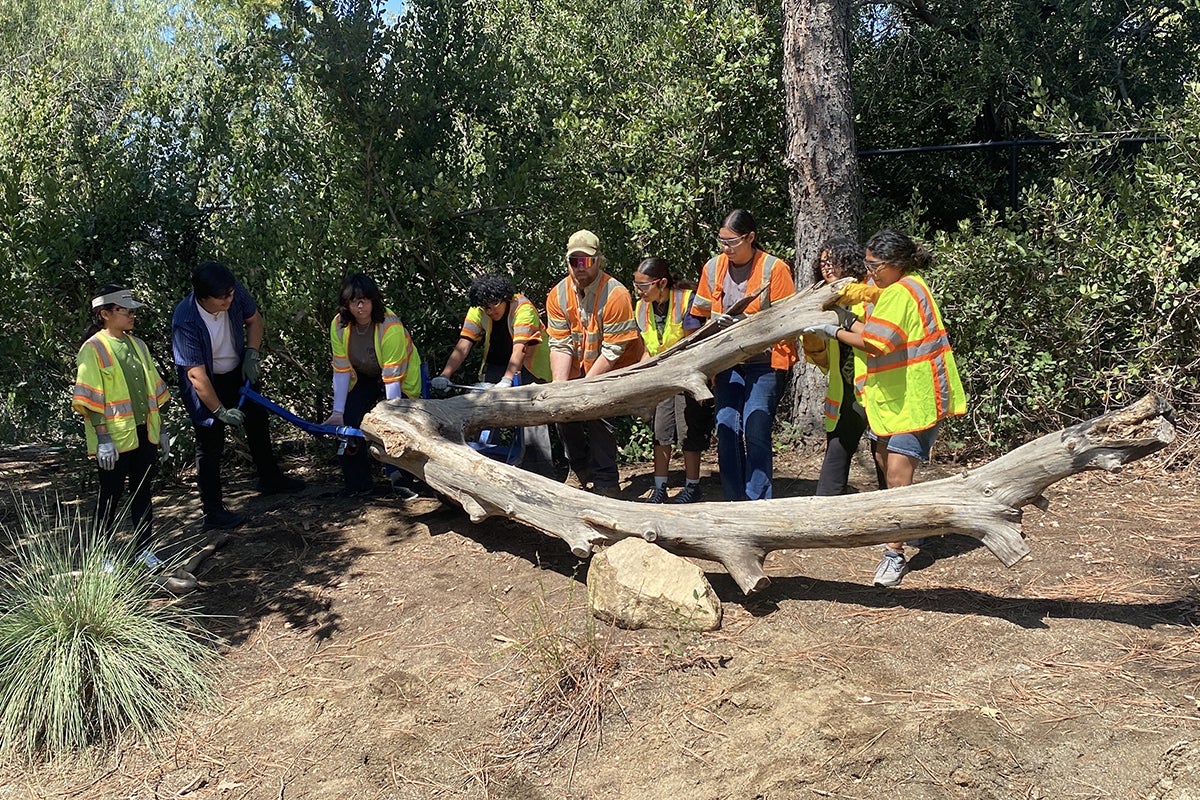
During the multi-month program, NBC participants work alongside San Diego Zoo Wildlife Alliance team members to create native wildlife gardens on their school campuses.
At the Core of the Corps
The Native Biodiversity Corps (NBC) brings together inner-city high school students from diverse cultural, ethnic, and lived-experience perspectives for immersive social learning experiences designed to enhance their inquiry and critical thinking skills. During this multi-month training program, NBC members work alongside San Diego Zoo Wildlife Alliance team member mentors and other experts to design, implement, maintain, and monitor native wildlife gardens on their school campuses. These gardens represent resilient “living laboratories” that not only attract and support local wildlife, but also promote regional pride and provide places for renewal, discovery, and cross-curricular learning for students, teachers, and community members.
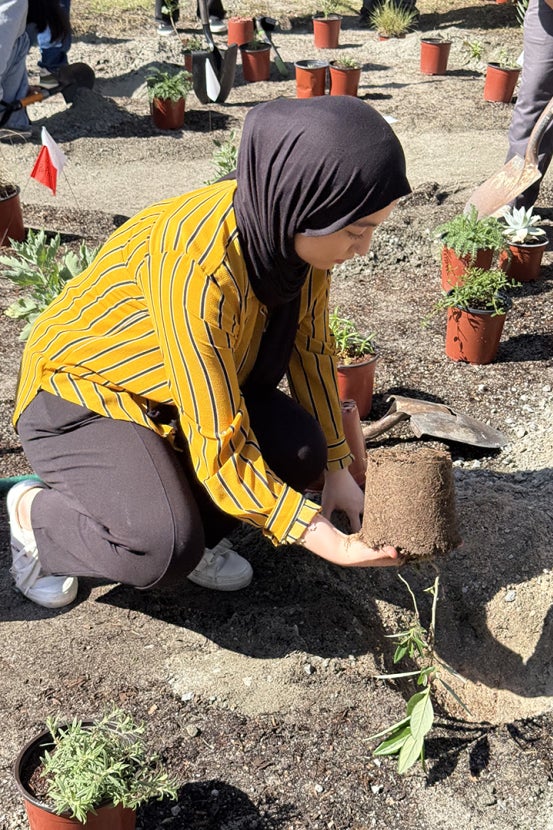
NBC members learn how people impact the health of local ecosystems.
The main goal of the program is to provide NBC members with opportunities to discover and learn about native wildlife species, increase their interest in careers related to species recovery and restoration, and enhance their appreciation of their unique natural heritage and how people impact the health and composition of our local ecosystems. To achieve this, NBC members spend 10–20 hours per month on their school campuses surveying for appropriate sites, developing specific garden plans, putting approved garden designs into action, debuting new wildlife gardens for faculty and classmates, and co-developing plans for short-term and long-term garden maintenance and sustainability.
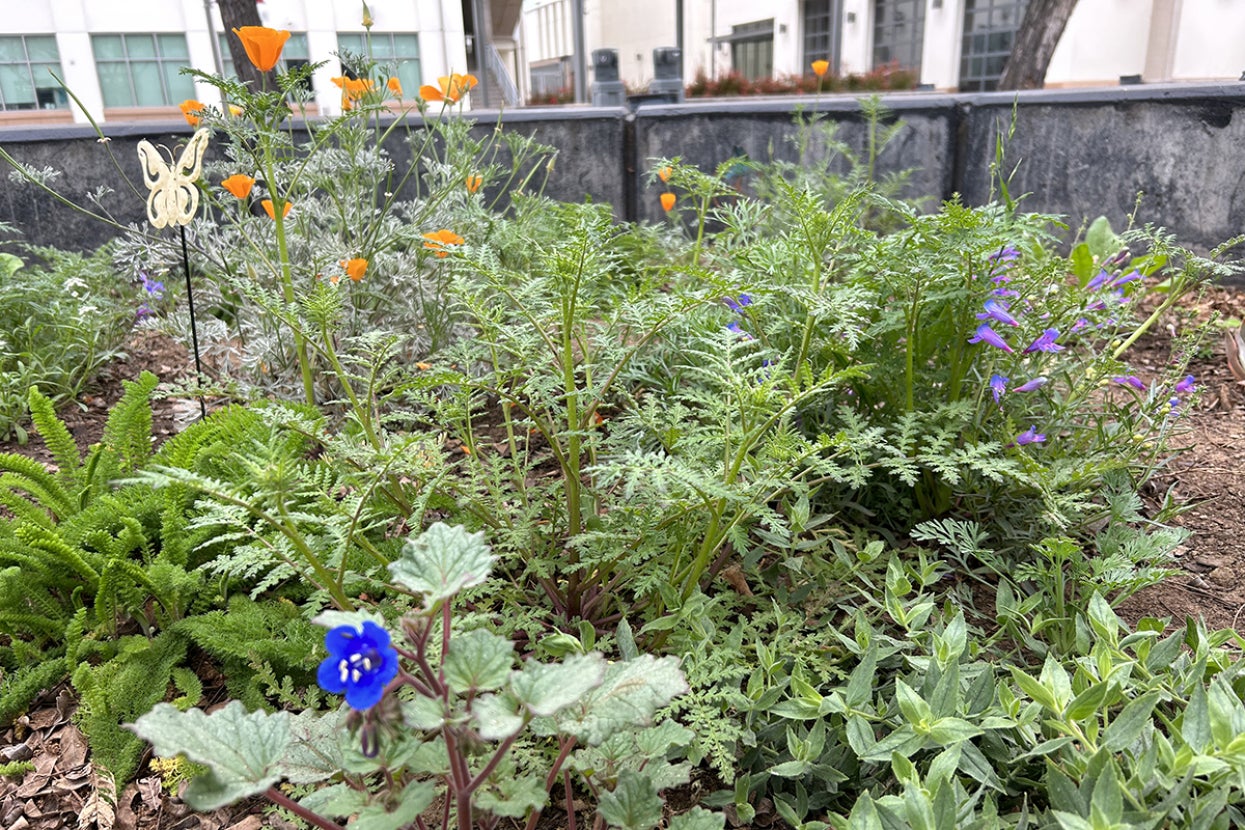
At Hoover High School, a tree planter became a colorful pollinator paradise featuring native plants like California poppy, narrowleaf milkweed, showy penstemon, and California buckwheat.
The students also participate in several nature-based learning experiences at local wildlife conservation sites. During these visits, they build knowledge of and passion for native plants and animals of the region; explore the intricacies of ecosystem dynamics; and examine the many physical, ecological, and anthropogenic elements of effective native landscape design. These visits also allow students to critically evaluate how human-driven change in our environment relates to changes in fire regimes, water usage, and ultimately loss of local biodiversity in Southern California and beyond. This kind of immersive, nature-based learning is especially important now, as species are declining at unprecedented rates right here in San Diego, which is part of the California Floristic Province, a world-renowned biodiversity hotspot.
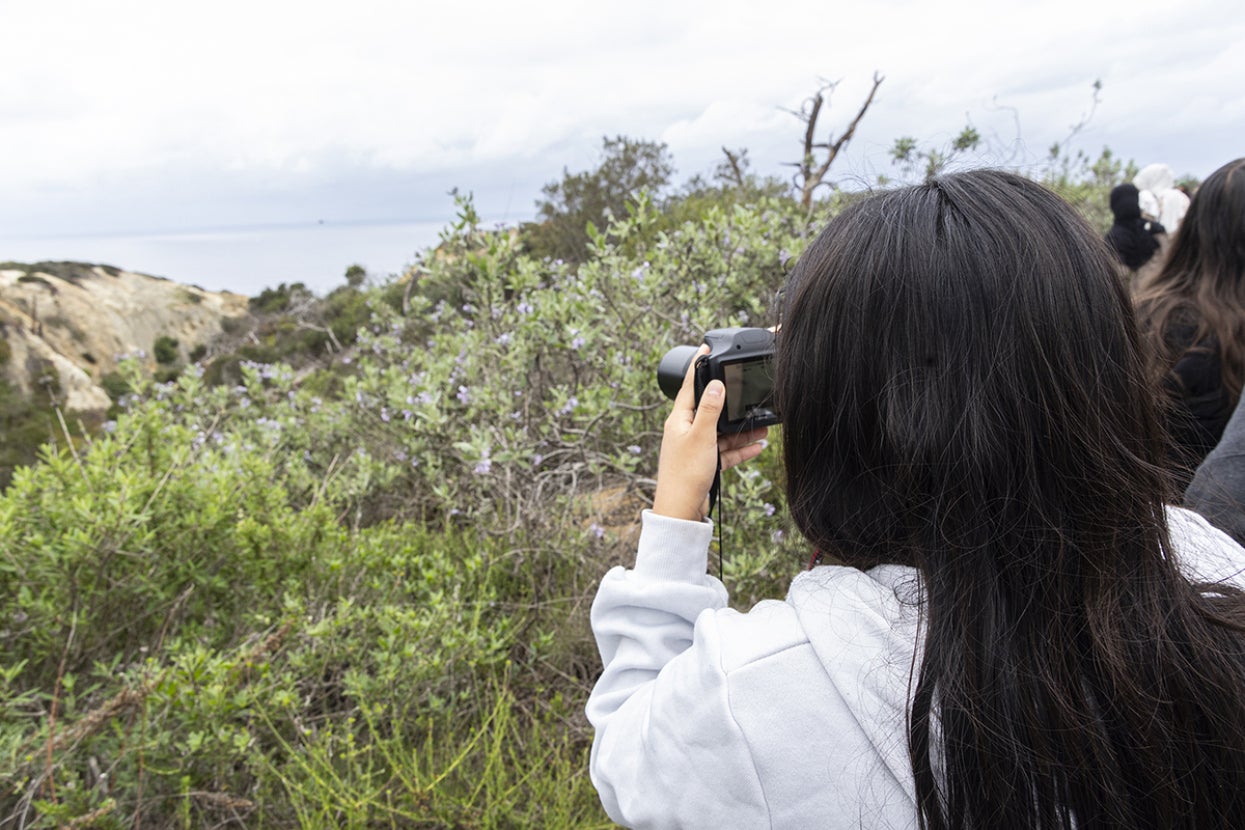
Participants also visit local conservation sites to discover local wildlife and ecosystems and learn about the impact of humans on the environment.
When the program debuted in spring 2022 thanks to funding from Level Up SD, more than 300 urban high school students registered in less than 72 hours, validating the need for this kind of hands-on, skill-building mentorship program. Roughly 100 students were accepted into the program and spent a portion of their summer exploring local conservation sites—including the San Diego Zoo and San Diego Zoo Safari Park, San Diego Natural History Museum, Living Coast Discovery Center, and San Elijo Lagoon Ecological Reserve—before applying their new skills and knowledge to the design and construction of native wildlife gardens on the campuses of Crawford, Hoover, and Lincoln high schools.
This incredible new program has helped us build connections with key community partners across our region. While NBC members primarily work alongside our Conservation Science and Wildlife Health team members, they also engage with local experts from a variety of backgrounds and institutions, including the Escondido Creek Conservancy, the Master Gardener Association of San Diego County, San Diego Botanic Garden, and City Farmers Nursery.
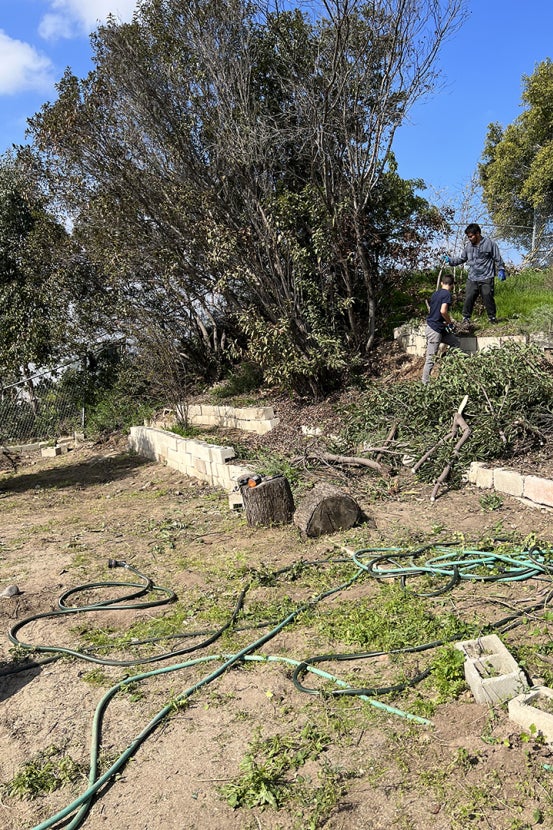
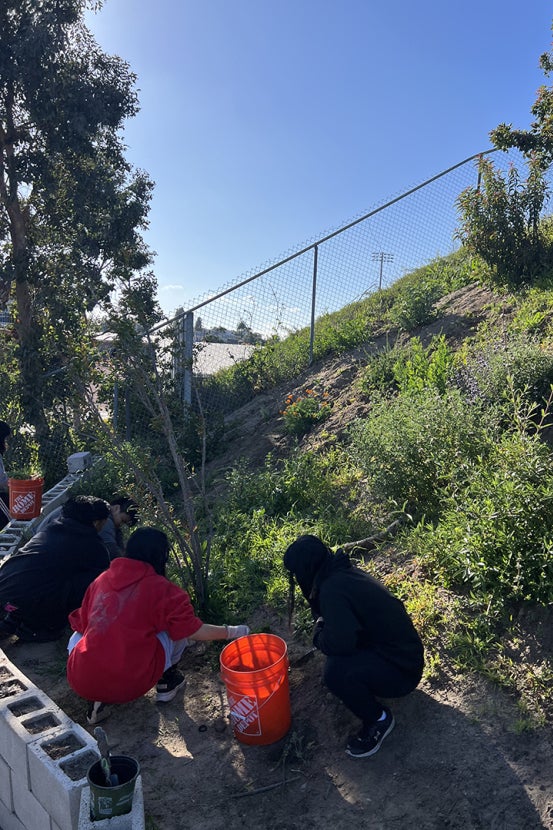
One project transformed an undeveloped hillside at Crawford High School (left) into a green space.
Nurturing Connections
The NBC program has also helped us deepen our connection with another critically important local partner: San Diego Unified School District (SDUSD). SDUSD is one of the largest school districts in the nation, supporting more than 100,000 students on more than 200 K–12 campuses. We have thoroughly enjoyed working alongside SDUSD students, teachers, staff, and administration to make the program as engaging and effective as possible and to promote the incorporation of native landscape design practices on a wider scale. For example, when the program began last year, there were only four native plant species approved for use on SDUSD campuses. Through thoughtful collaboration among students, teachers, and administration from SDUSD, as well as team members from both SDUSD and San Diego Zoo Wildlife Alliance, there are now nearly 30 native plant species approved for use on SDUSD campuses.
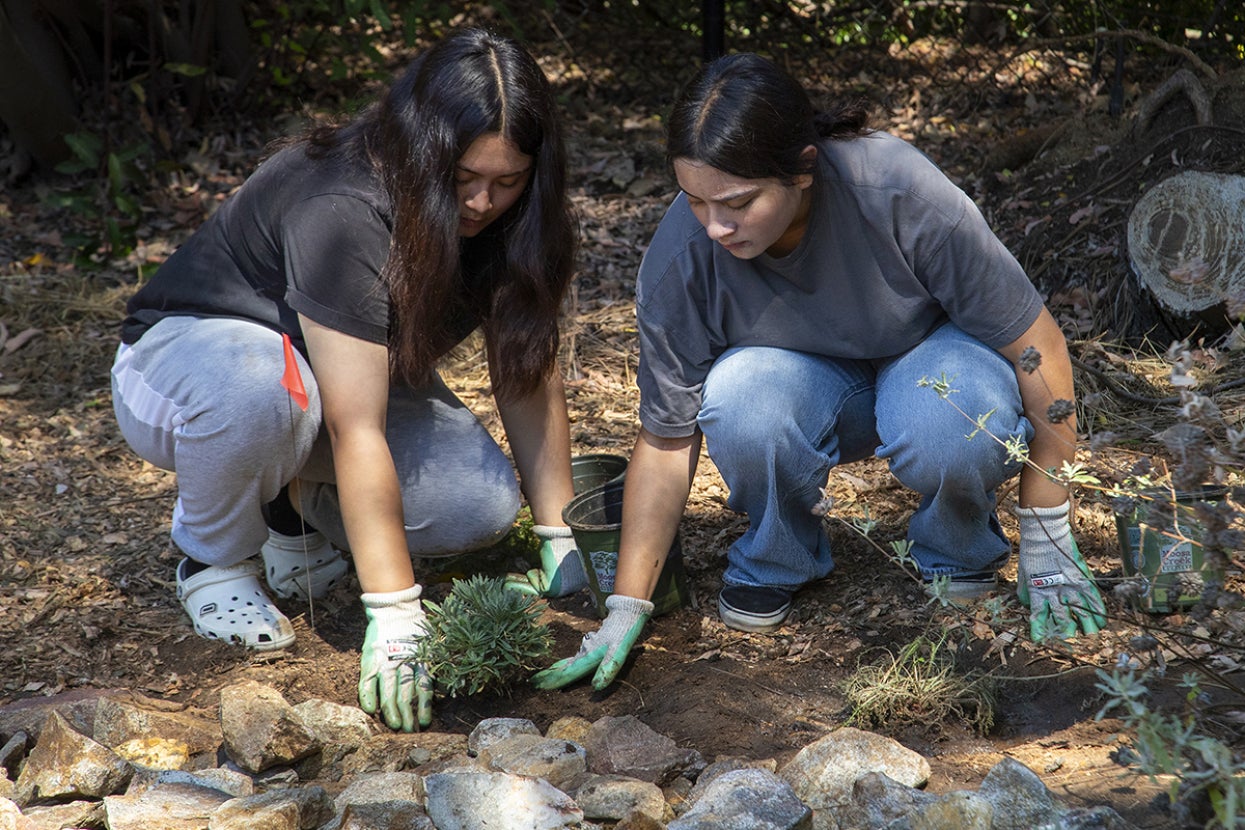
Students learn leadership skills as they guide classmates through the garden planning and implementation process.
The program has also helped foster key relationships within each campus community. NBC members have worked closely with the garden clubs on each campus to enhance preexisting natural spaces by incorporating native species whenever possible, including into food crop gardens. NBC members have also enjoyed myriad opportunities to demonstrate their leadership skills as they guide classmates through the garden implementation and maintenance process and share the results of their work with San Diego Zoo Wildlife Alliance researchers and scientists during an annual Student Summit at the Beckman Center for Conservation Research.
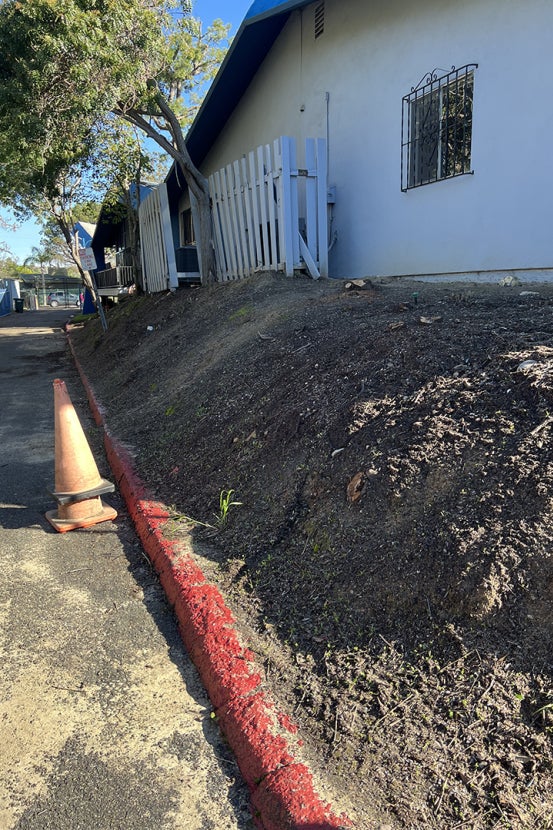
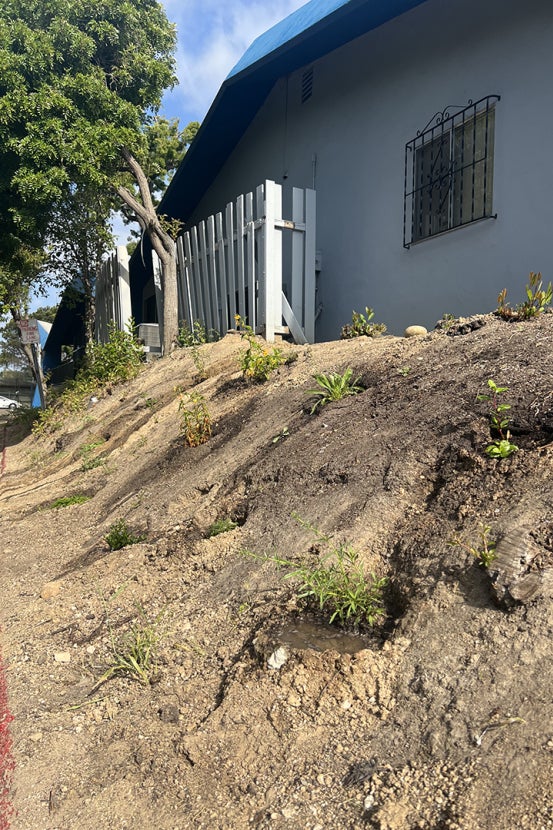
As new plants grow, a once-bare hillside at City Heights Preparatory Charter School (left) will become part of a vital habitat corridor for local pollinators.
Incorporating robust native gardens on multiple campuses across San Diego helps create vital habitat corridors, providing pollinators and other wildlife with access to critical resources in highly urbanized areas. The program gives NBC members an opportunity to plant the seeds for future students to nurture on their school campuses while also building knowledge and appreciation for the many threatened and endangered native species that share our region. This exciting new program demonstrates the exceptional capacity of local students to drive conservation action for the biodiversity in our own backyard. With more than 40 school districts and nearly half a million students across San Diego County, this budding program has endless growth potential.
Four Years Later: Growing Stronger Together
Since NBC launched in 2022, the program has continued to grow, both in the number of students it serves and in the impact these students are making on their high school campuses and in their communities. Nearly 350 students have now participated in NBC, helping create and restore almost 25,000 square feet of habitat through 39 gardens on school grounds and across San Diego County. Since the beginning, students who successfully completed a session and maintained active participation have been eligible to receive a stipend of up to $2,000, providing recognition for the time, effort, and commitment they invest in the program.
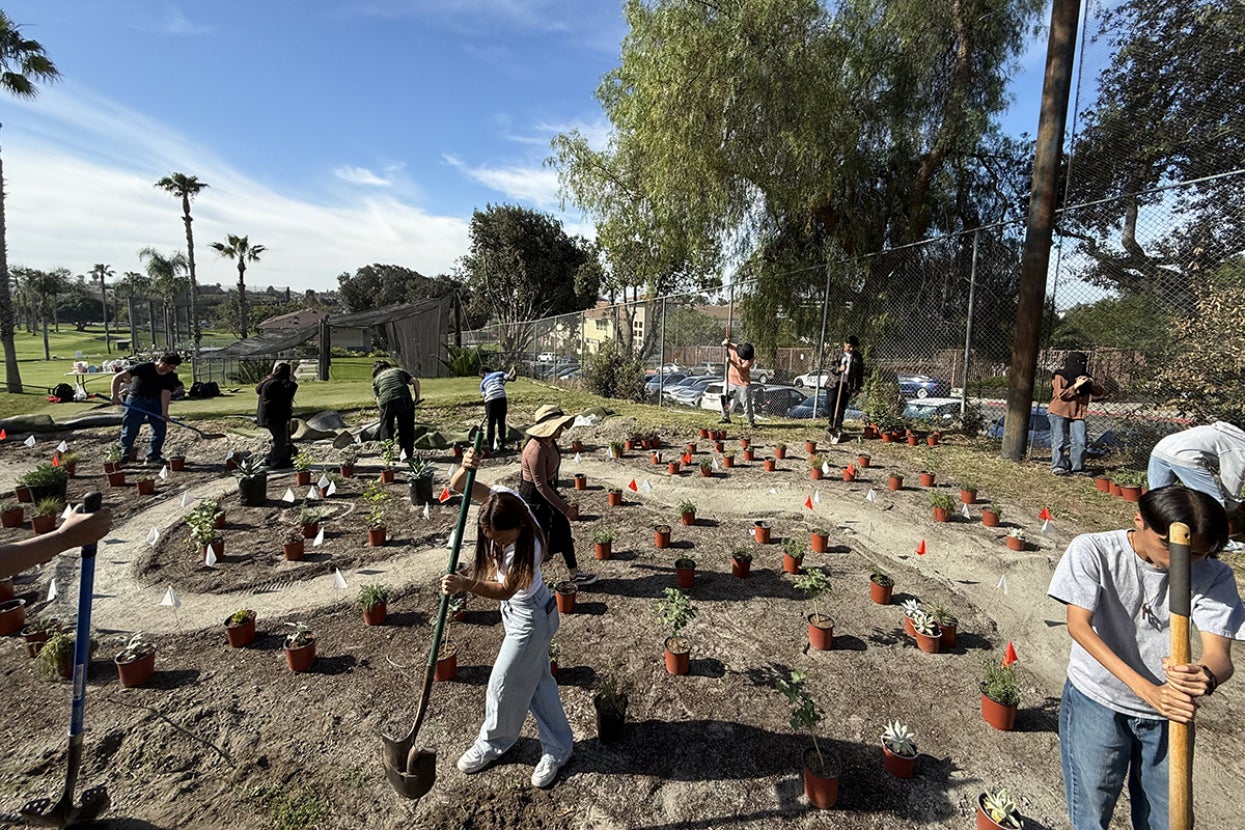
Four years later, NBC participants have taken their skills beyond their schools and into their communities. These students collaborated with Pro Kids, First Tee to transform an unused chipping range at Colina Park Golf Course into a waterwise native garden with 27 different native plant species.
While the program continues to evolve, its core remains the same: encouraging students to connect their personal experiences and perspectives to environmental stewardship while building the knowledge, skills, and confidence needed to become engaged stewards of San Diego's natural heritage. Today, NBC students from Crawford High School, City Heights Preparatory Charter School, and Hoover High School participate in hands-on experiences to connect with nature, work alongside conservation professionals, and see how their own actions can contribute to a healthier environment. “Through this program, I’ve learned the small actions I take in my daily life can be a way of advocating for the environment,” said a student named Tiana, giving examples like buying from eco-friendly companies, choosing reusable items, recycling, and educating herself about the environment.
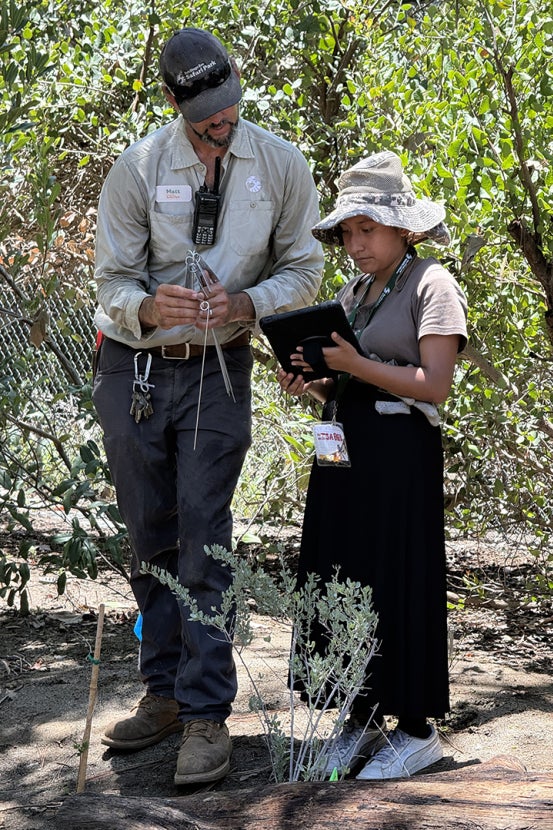
The program has expanded the ways students can explore careers in conservation, including being a horticulturist.
The program has also expanded the ways students can explore what a future in conservation might look like. During the 2026 summer session, students worked alongside the Safari Park Horticulture team to design and install a native wildlife garden at the Beckman Center for Conservation Research. These experiences gave students the opportunity to explore career pathways in horticulture, conservation, wildlife care, environmental education, and other fields. One participant, Isabel, was struck by how happy the San Diego Zoo Wildlife Alliance team members were, and it made her reflect on the importance of loving what you do. “You got to think about what job you’re going to take on because it’s a significant part of your life,” she said, adding that NBC helped her realize she doesn’t want to work inside an office and really wants to be outside and spend time with young people, just like the members of the Safari Park’s Horticulture team who supported the summer cohort. “[NBC] really helped guide me to what I really want in life and the importance of really finding that.”
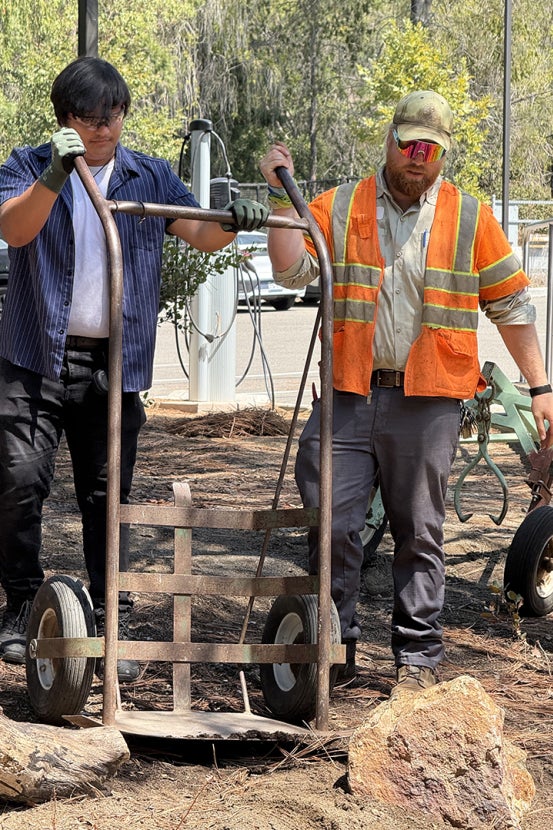
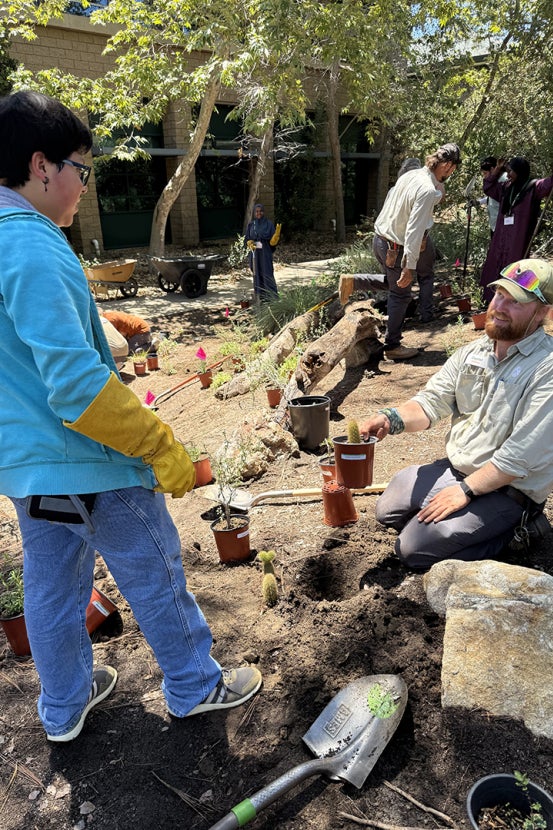
In summer 2026, students worked with the Safari Park’s Horticulture team to design and install a third native wildlife garden at the Beckman Center for Conservation Research.
Many other NBC participants had experiences like Isabel, experiences that became part of a much larger journey. While their paths are diverse, many describe NBC as something that helped them build confidence, discover new interests, and imagine possibilities for their futures that they had not previously considered. “I was never interested in wildlife or plants or nature in general,” said a student named Alicia. She shared that during her first summer in NBC, she felt like every day she learned about another career she had never considered. “I was always focused on healthcare, but now I'm really changing my mind and looking more into . . . anything that's similar to what we're doing [with NBC],” she said. “It made me realize that there’s a lot more out there.”
Students from earlier cohorts are now graduating from high school and beginning the next chapter of their lives. Gabi joined NBC in its inaugural year and continued in the program through this summer, when she left for college to pursue a degree in landscape architecture. “I'm going to remember all the knowledge that I learned at NBC quite literally for the rest of my life because that is what I want to do,” she said.
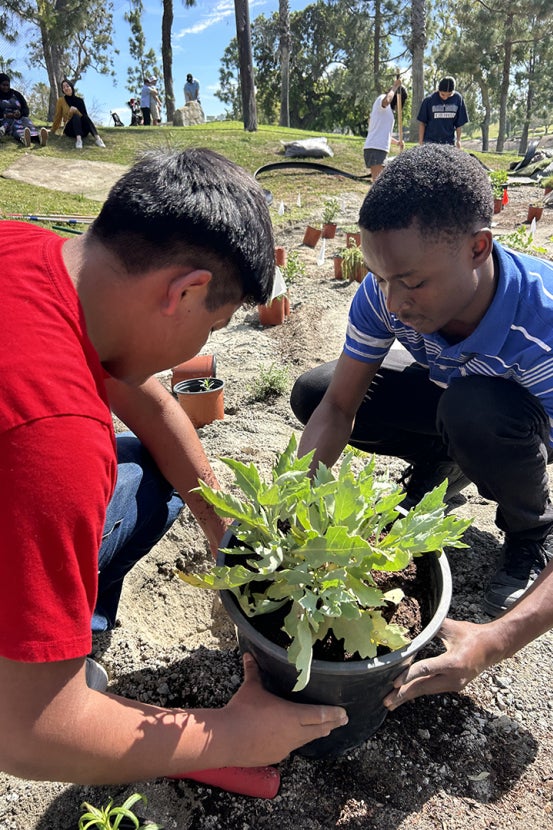
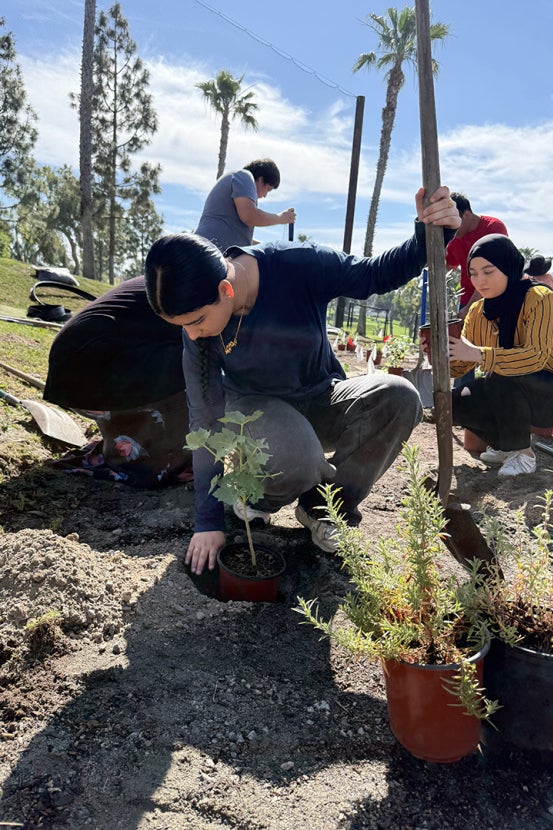
Many participants discovered new interests and are now planning on pursuing conservation-related careers after high school.
For some students, their experience as a committed member of NBC has helped shape their plans after high school, whether through college, employment, or continued exploration of environmental and science-related careers. For others, the most lasting impact may be the connection they developed with their community and the understanding that conservation can begin in a school garden, a neighborhood, or a single decision to care for the place where you live. “NBC has taught me the power of community,” said Gabi. “I have always been a shy, independent person, but being in this program has taught me how to grow and branch out to others, either with me sharing my voice with theirs or them sharing theirs with me.”
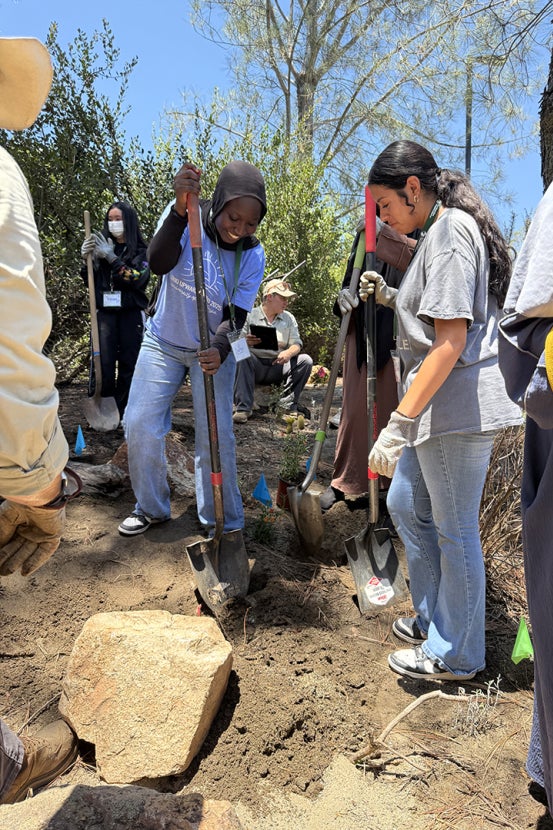
For many NBC members, the most lasting impacts of the program are the connections they make with their communities and each other.
Four years after its debut, NBC continues to demonstrate the power of giving young people the knowledge, skills, mentorship, and opportunities to take action. The gardens students create are designed to benefit wildlife and future generations of students, but the impact of the program extends beyond those physical spaces. Each cohort leaves behind habitat, knowledge, relationships, and new possibilities, planting seeds for both biodiversity and the next generation of conservation leaders.
Learn more about San Diego Zoo Wildlife Alliance’s commitment to plant conservation while enjoying guided or self-guided botanical tours at both the Zoo and Safari Park, or discover ways you can support native ecosystems at home.