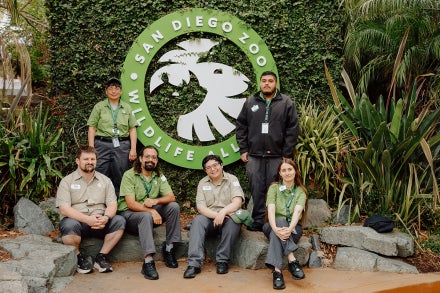





Zoo InternQuest is a seven-week career exploration program for San Diego County high school juniors and seniors. Students have the unique opportunity to meet professionals working for San Diego Zoo Wildlife Alliance, learn about their jobs, and then blog about their experience online. Follow their adventures here on our website!
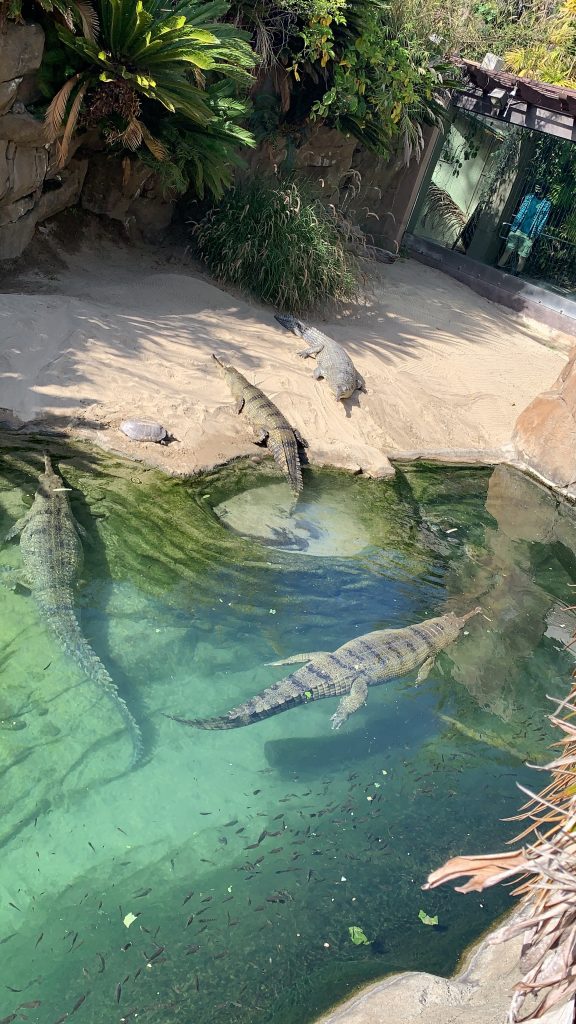
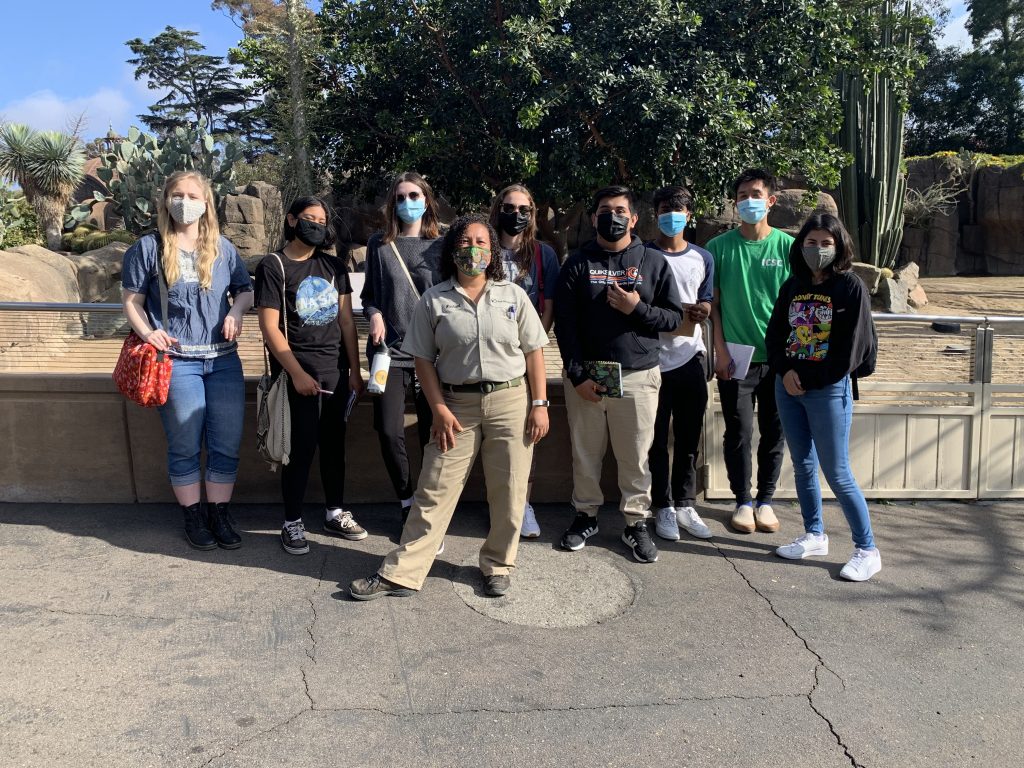
Concluding eight weeks of exciting adventures exploring the many careers at each San Diego Zoo Wildlife Alliance location, the interns had the opportunity to meet Ms. Rachael Walton, a wildlife care specialist focused on reptiles at the San Diego Zoo. Passionate about her career, Ms. Walton took the interns on a tour of Reptile Mesa at the Zoo and explained her role in the department of herpetology and ichthyology. On the walk, the interns got to experience the Zoo as any other guest would, stopping to watch the gharials eat, the snake-necked turtles interact with one another, and a tortoise swimming in her pond.
Growing up, Ms. Walton always had an interest in reptiles. She was raised in San Diego and visited the Zoo throughout her childhood, where she remembers being fascinated with the reptiles she saw. She said that, despite having dogs and cats growing up, reptiles remained her favorite animals because each one is different, and she admired their unique adaptations to their environment. Despite this early interest, she initially planned on becoming a veterinarian and even worked in a vet hospital. After a while though, she decided that the career wasn’t for her. While rethinking, she realized she was passionate about reptiles and wanted to focus solely on them. She graduated from San Diego State University with a degree in biology, and went on to participate in several different internships such as working at the Natural History Museum. She gained experience with reptiles through field work in Texas, where she worked with different species of venomous snakes such as copperheads and cottonmouths. Since then, she was hired by the San Diego Zoo and has been working there for 10 years.
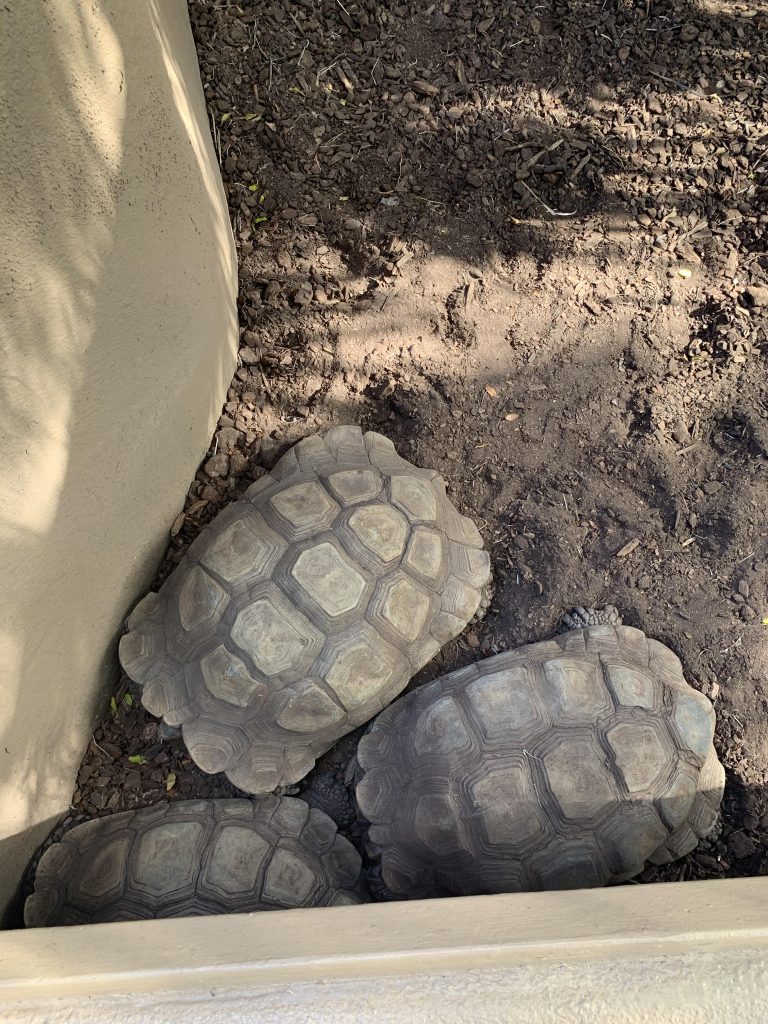
Ms. Walton is a wildlife care specialist who works in the department of herpetology (which includes amphibians and reptiles) and ichthyology (fish) at the San Diego Zoo. Her job consists of many duties, including but not limited to: assisting herpetologists in the field, conservation work, and educating guests about the vital role different species play in the environment. At the Zoo, care specialists are all assigned a specific area or type of reptile they care for. Some reptiles are sensitive to changes in their habitat, so everything in their environment must be taken into consideration. Aspects such as vegetation, humidity, and temperature are all things that can affect how and if the reptiles lay and hatch their eggs. Ms. Walton has years of experience with these needs, and cares for a variety of wildlife. Here at the zoo, she currently works alongside radiated tortoises, snake-necked turtles, and an array of small lizards. In order to have a job like Ms. Walton’s, it is vital to have a passion for the reptiles you’re going to care for (which was apparent as she spoke to the interns).
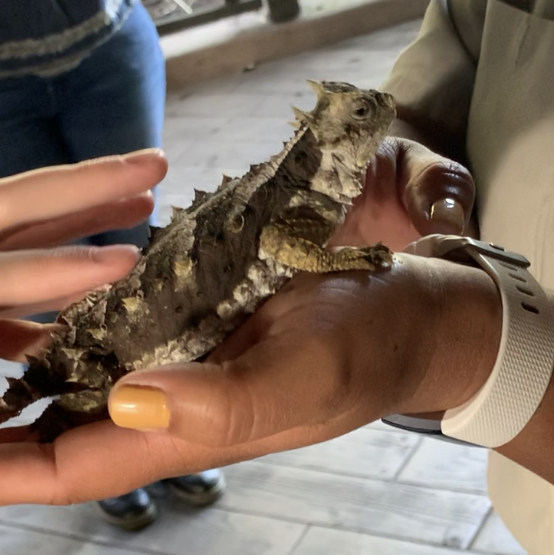
During her years working at the Zoo, Ms. Walton has actively participated in the conservation of a plethora of reptile and amphibian species. With regards to local wildlife, Ms. Walton and her colleagues helped recuperate the dwindling Pacific pond turtle (Actinemys marmorata) population in California through a process known as headstarting. Headstarting, in terms of conservation, is usually done with endangered species in order to give the offspring time to grow big enough to survive in their native environment. Ms. Walton’s direct conservation efforts have also extended into the illegal pet trade, as she helped rehabilitate smuggled radiated tortoises (Astrochelys radiata), which are critically endangered. In said efforts, Ms. Walton hospitalized ill and injured individuals.
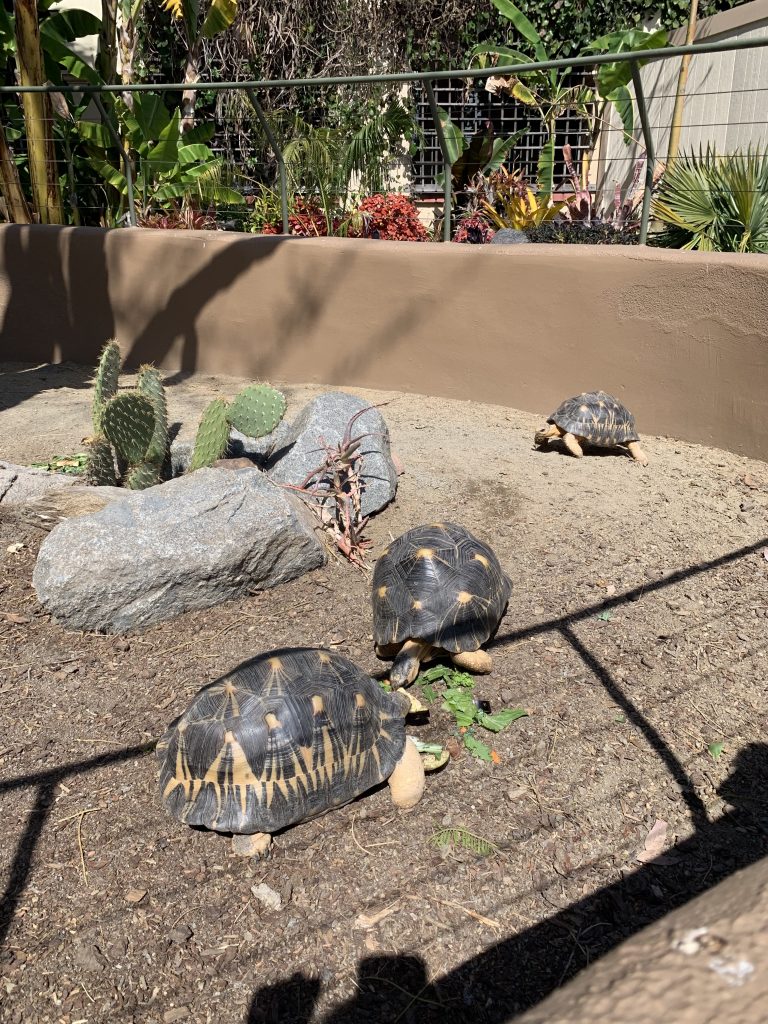
The radiated tortoise is one of six species of tortoise native to the island of Madagascar. They get their name from the yellow markings that seem to radiate from the center of each scute (shell plate or section). This shell coloration combined with unique yellow and black limbs has earned them recognition as one of the most beautiful tortoise species in the world. Like other tortoises, the radiated tortoise also has an incredibly long lifespan, easily living past fifty years old. On average, they have a shell around sixteen inches across and weigh around thirty-five pounds. Native to southern Madagascar, where it has very few natural predators, this species has softer skin than other tortoises because there was no adaptational advantage for them to have tougher skin. Their dry habitat also influences their diet with most of their food being dry matter such as grass. The radiated tortoises do however enjoy the occasional fruit, often from cacti, and even the cacti and succulents themselves. Unfortunately this wonderful species is critically endangered with threats such as the illegal pet trade, habitat loss, and farming contributing to a dwindling population.
Ms. Walton’s passion for reptiles is undeniable. She recalled that she was initially drawn into the world of reptiles because of how different and unique each species is. She feels reptiles get overlooked because of how “simple” they are, but in her eyes, reptiles (and amphibians) are fascinating and complex. She loves working with lizards in particular, and the critically endangered Fiji iguana is one of her favorite species. She also explained that some reptiles are very smell-driven, so she creates opportunities for them based around scent. She fondly recalled the reactions a group of tortoises displayed when given strawberries; the tortoises approached the strawberry enthusiastically and gave it a close inspection before eating it. Always eager to share her vast knowledge about reptiles and amphibians, Ms. Walton definitely holds a special place in her heart for them.
Ms. Walton had a lot of advice to give to those who share her passion for reptiles. She advised that in order to get into such a highly competitive field, you’d need at minimum a bachelor’s degree in a related subject. Although she spoke about the immense importance of education, she also cautioned that your college experience should be more than just education and the classes you take; it should also be about life experiences. As ironic as it sounds, she mentioned that not everything should be learned in school. Life experiences are essential in growing as a person and in pursuing a career like hers. She urged the importance of networking (having connections in the field) and how it was an influential factor in her landing the job she has now. She also spoke about how incredible mentorships and volunteer experiences are and how they allow you to learn, teach, grow, and gain career advice. As she recalled how she almost ended up in the veterinary field, she urged the interns to “try new things to get a feel of what you like.” Her education, networking, and the valuable work and life experiences all combined to allow her to land her dream job.
Guided by Ms. Walton, the interns were reminded once again how committed the San Diego Zoo is to ensuring the wildlife they have the honor of caring for thrive. From headstart programs to conservation efforts abroad, Ms. Walton walked the interns through specific initiatives at the Zoo for the many reptiles and amphibians. On their last day at the Zoo the interns gained a new appreciation for reptiles, thanks to Ms. Walton and her passion for her job.
Week Seven, Spring Session 2021