



Kīpahulu, Maui
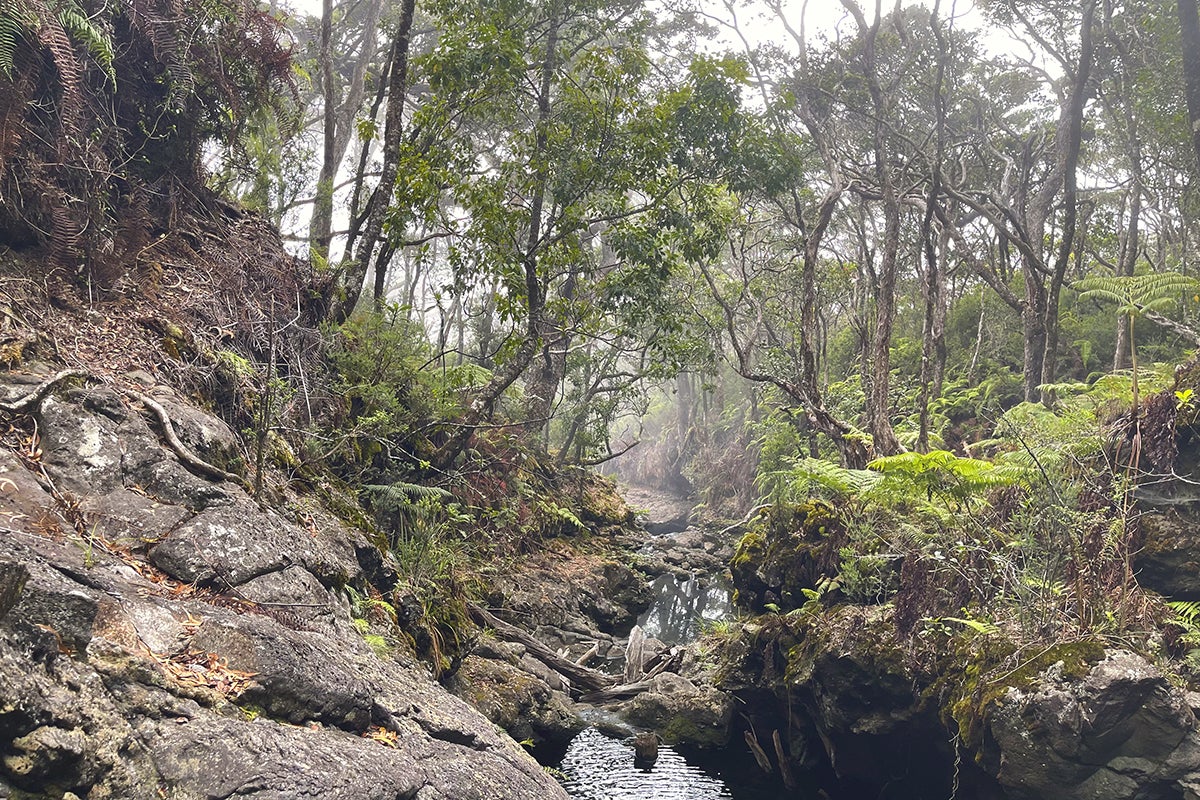
Photo by Keanini Aarona
In late 2024, five young ‘alalā made their way home—returning not just to the forest, but to a legacy deeply rooted in Hawai‘i. The birds were reintroduced into Kīpahulu, a remote and storied landscape on Maui where native plants still thrive and the land holds its breath in quiet reverence. Accessible only by helicopter or a long journey on foot, this ecosystem provides something rare: space for reconnection, healing, and renewal.
While ‘alalā were most recently known to inhabit Hawai‘i Island, fossil records remind us that they could once be found throughout the pae ‘āina (archipelago). Their return to Maui is not an introduction, but a remembering. ‘Alalā are known for their complex relationships: territorial, observant, and resourceful. As youth, they flock together, learning and growing before forming pairs and claiming their home spaces in the forest. To honor this natural rhythm, we reintroduced a cohort of juveniles who had already formed strong bonds in managed care, with the hope they would continue to learn from and uplift one another after release.
That hope was realized quickly. At just two years old, one pair from the five birds successfully laid eggs last season; a powerful sign of resilience and comfort in returning home. As another summer breeding season unfolds, we listen closely for news from our partners in the field, carrying quiet excitement for what may come next.
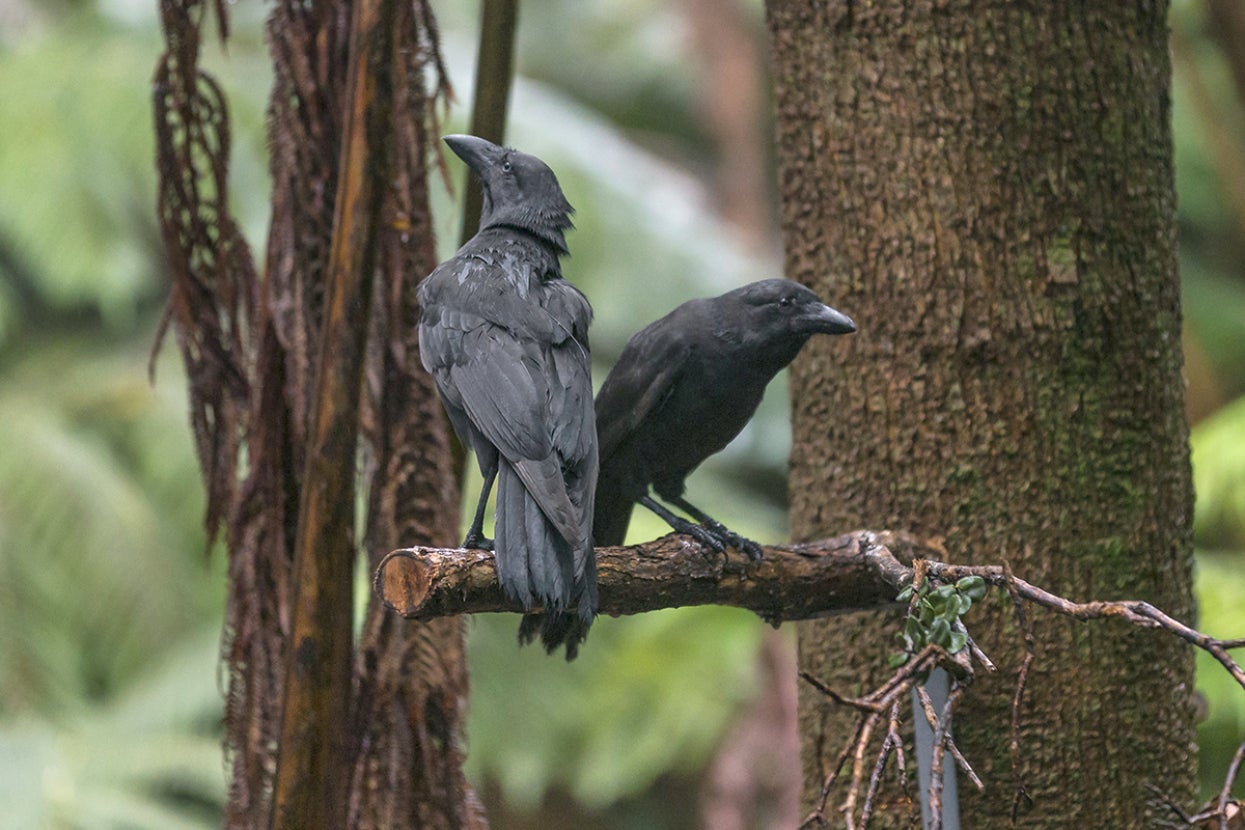
‘Alalā are known for their complex relationships: territorial, observant, and resourceful.
This moment is the result of deep collaboration. Many hands and hearts came together to support this momentous event, including the Maui Bird Conservation Center and our sister facility at Keauhou, alongside the State of Hawai‘i Division of Forestry and Wildlife, U.S. Fish and Wildlife Service, Maui Forest Bird Recovery Project, Haleakalā National Park, and many others from our community. From hatching to release, each ‘alalā was raised with intention, care, and kuleana (responsibility).
Reintroduction preparation went beyond physical readiness. We closely observed their social dynamics such as co-perching, co-foraging, and allofeeding, witnessing playful moments that reflected trust and connection. They learned the pursuit of insects, the shapes of native fruits, and the sounds of the forest. Predator awareness testing, flight conditioning, and the experience of wearing transmitters all helped prepare them for life beyond our care.
In Hawai‘i, culture is identity. Our native birds, plants, and ocean life are our kūpuna; ancestors who guide and sustain us. From mauka (inland) to makai (ocean), all things are connected. The forest cannot thrive without its birds, and we cannot thrive without the forest. Now, these five ‘alalā have spent more time at home than with us. Soon, their lineage will be shaped only by the forest itself. That truth inspires us to continue this work, so that one day, the voices of our kūpuna may once again echo freely through the forest.
"Nona ka ‘ūmi‘i lauwili i ka pāka‘awili"—his is the tie that twisted into one that holds fast.
—MARY KAWENA PUKU