



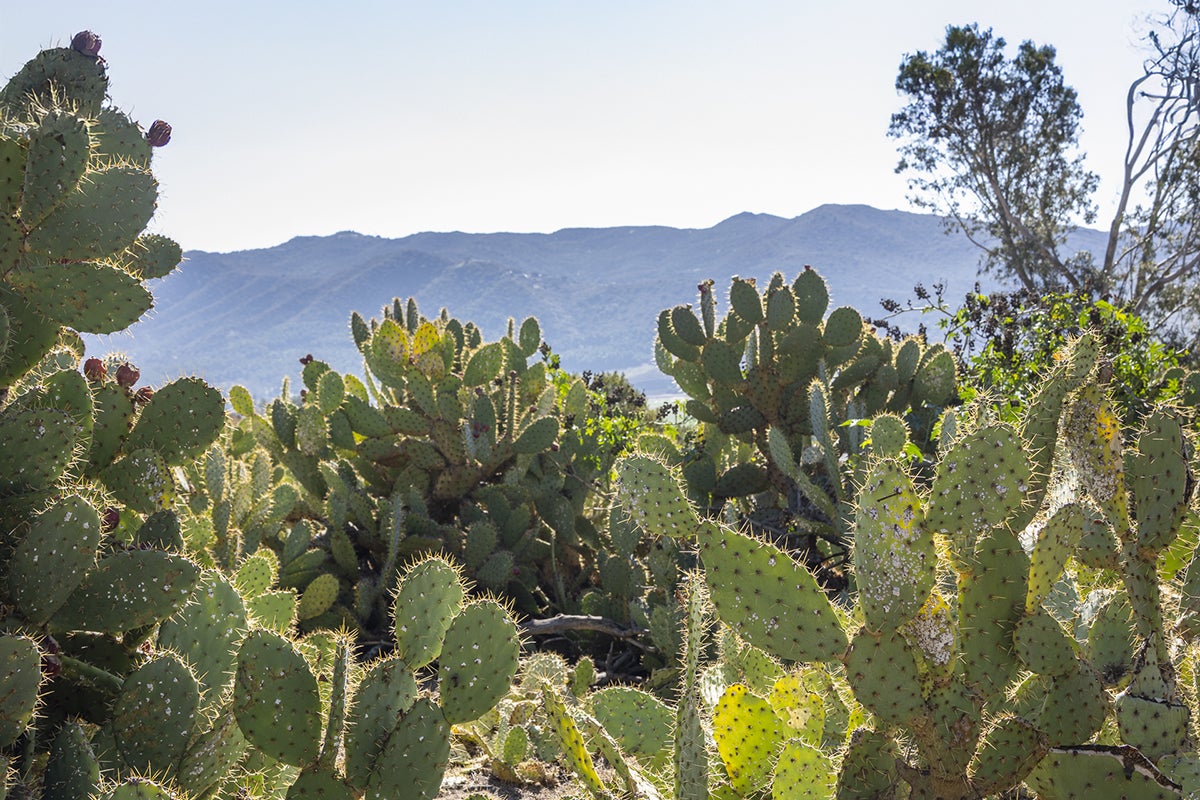
Almost 1,000 acres of the San Diego Zoo Safari Park make up the Biodiversity Reserve, a critical and protected native ecosystem. Within it, expanses of coastal sage scrub, cactus scrub, and oak woodland are home to iconic Southwest species, including coastal cactus wrens, red diamond rattlesnakes, and mountain lions. While they’re crucial to maintaining balance in this delicate ecosystem, many of these species are also threatened or endangered.
It may surprise some people that San Diego County is the most biodiverse county in the contiguous United States. By providing support for more than 300 plant, 179 bird, 24 mammal, 28 reptile, and 4 amphibian species, the Biodiversity Reserve alone has a lot to protect. Even more surprising to some, San Diego Zoo Wildlife Alliance also helps monitor and manage Samataguma Ranch Reserve (also known as Samagatuma Ranch and Descanso Ranchland)’s 700-acres of vital chaparral and oak groves.
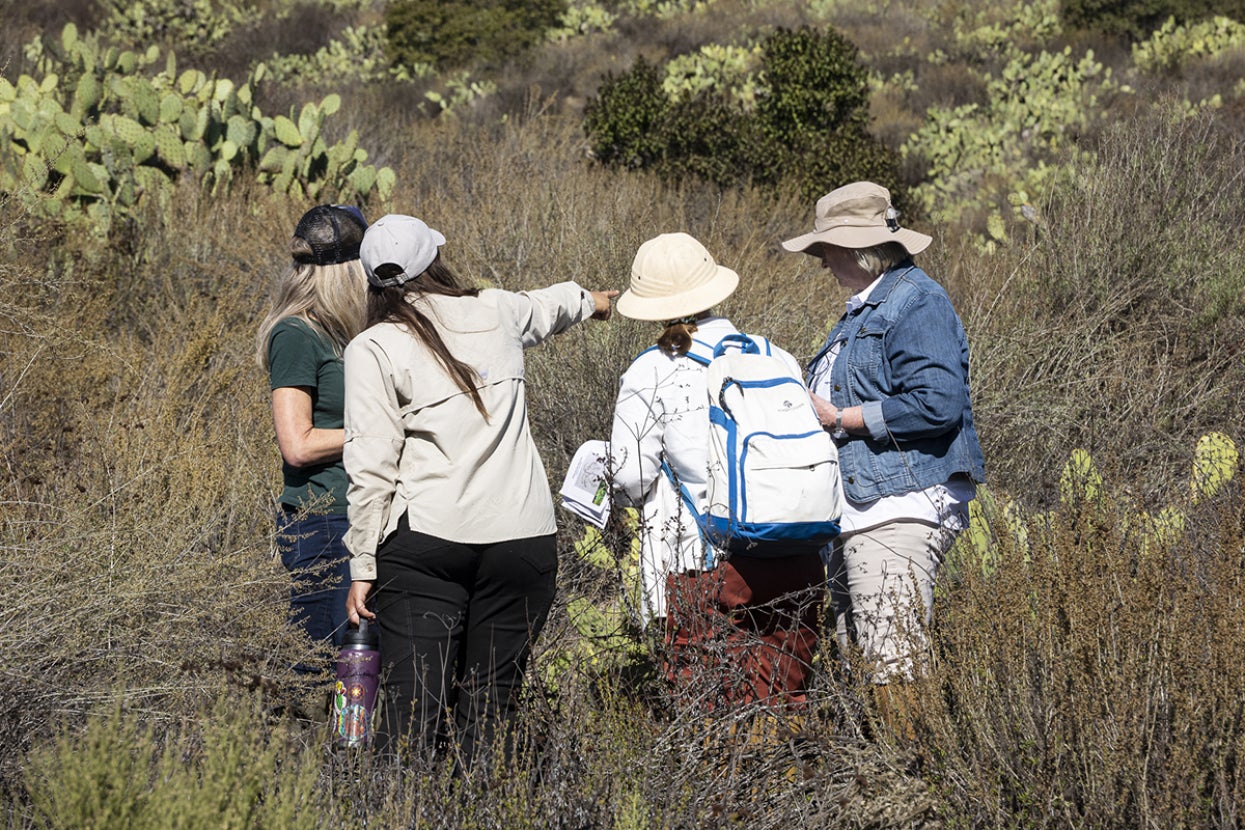
There are more than 300 plant species in the Biodiversity Reserve.
Natural Lands Program
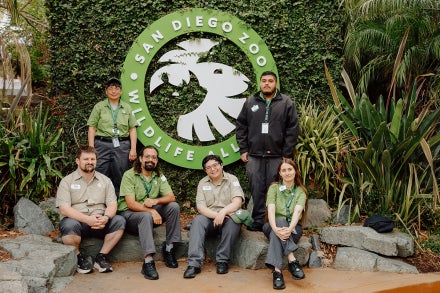
So, who takes care of these expansive spaces? A remarkable team of three people, mostly. San Diego Zoo Wildlife Alliance’s Natural Lands Program are stewards of the land, connectors of communities, and protectors of wildlife. It’s a big job—and to them it’s more than just that. It’s the living history of the landscape we call home, and a way to honor it.
The Natural Lands Program collaborates with the county-wide network called the San Diego Management and Monitoring Program (SDMMP) to implement the Multi-Species Conservation Plan. This group stitches together the fragmented pieces of protected land throughout San Diego County. The team also works with local and state agencies to handle larger issues, in addition to tapping into their huge network of other nonprofit organizations, Indigenous partners, research labs, and volunteers who help on the Reserve.
Because of the Natural Lands Program, we’re able to understand the ecosystem and how it’s impacted by the seasons and events. Charlie de la Rosa, Ph.D., sees that the benefits outweigh how time-consuming it is to monitor and manage a landscape. He shares that, “In the short term, monitoring data gives us a snapshot in time. Over the course of many years, continuous monitoring tells us about long-term trends in response to things like a changing climate, multi-year events like drought, and catastrophic events, including wildfires.”
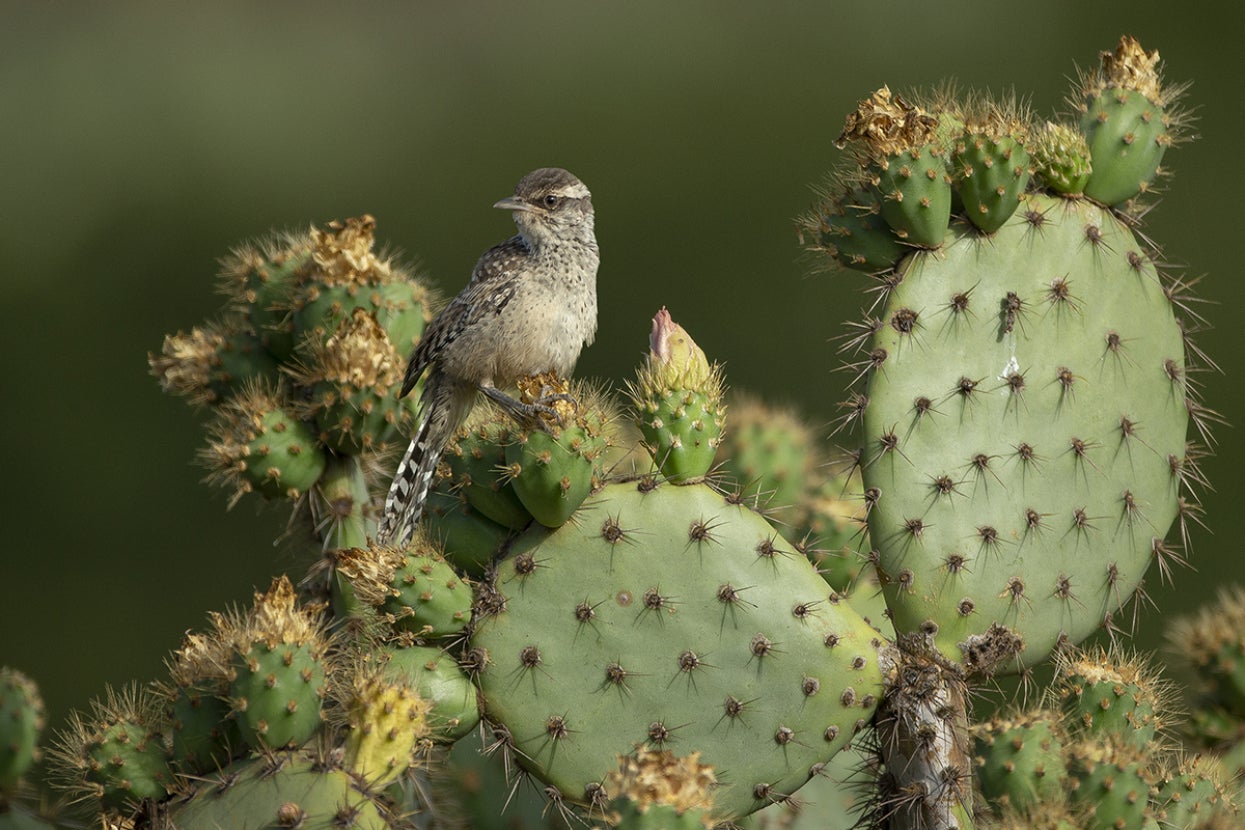
After the 2007 Witch Creek wildfire devastated the area, the Plant Conservation team planted over 10,000 cactuses in hopes to bring back coastal cactus wrens.
In the Sky (and the Cactus)
San Diego has an incredible diversity of bird species. Coastal cactus wrens and California gnatcatchers are two native species found in the Biodiversity Reserve. Cactus wrens only nest in one place. You guessed it—cactus. Following the 2007 Witch Creek wildfire, the area lost a significant amount of its prickly pear cactus patches, which meant the birds had a harder time finding nesting sites. In response, San Diego Zoo Wildlife Alliance’s Plant Conservation team planted over 10,000 cactuses to restore habitat for the wrens.
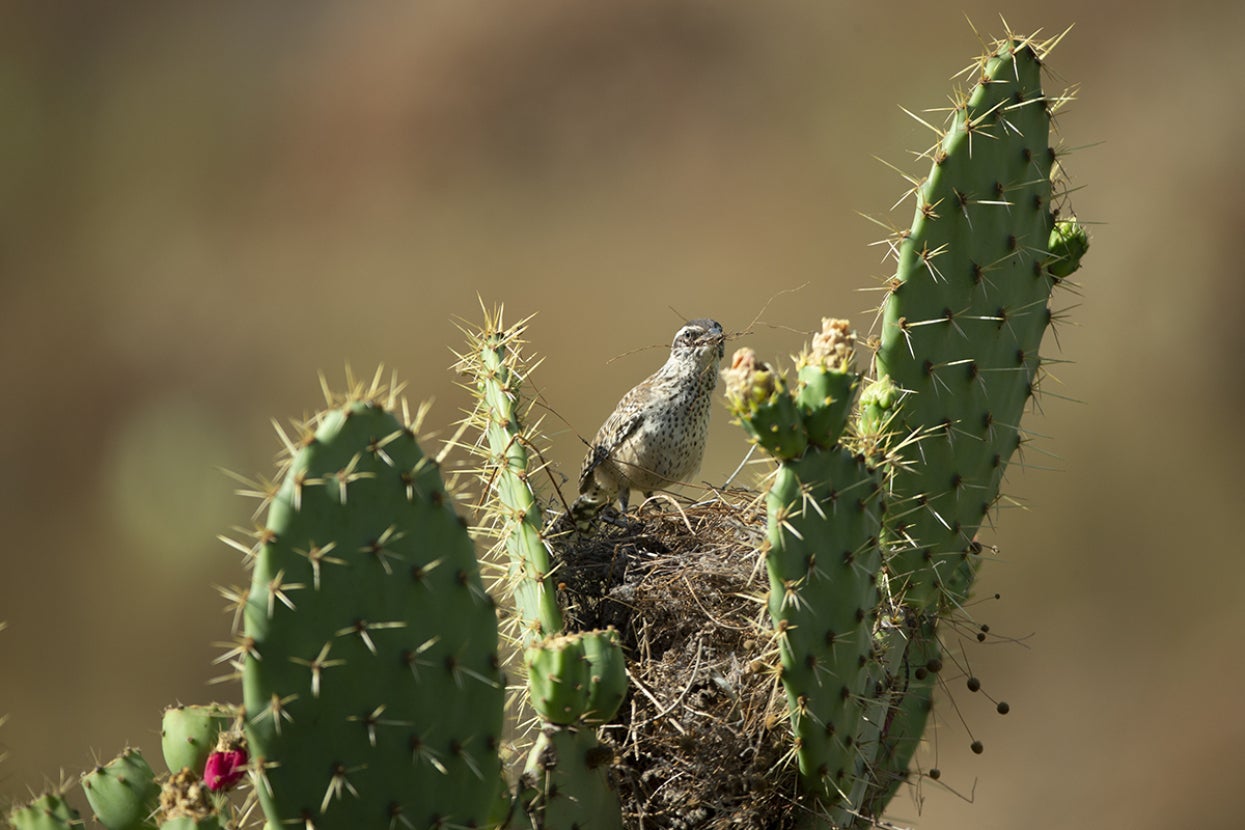
Coastal cactus wrens only make nests in, you guessed it, cactus.
Last year, our team partnered with the SDMMP and the Palomar Audubon Society to gather data to see if planting the cactuses brings back birds, and they’ve found that it does! They also did the third Biodiversity Reserve-wide survey of breeding birds. Volunteers from Palomar Audubon helped gather the data, and while it’s still being processed, it was confirmed that the Biodiversity Reserve is a hotspot for migratory and resident birds.
Technology Crossover
In addition to bird surveys, the Natural Lands Program also keeps an eye on other wildlife in the Reserve. Modern technology comes in handy for this. The team collaborates across the Alliance with the Conservation Technology Lab to gain valuable wildlife insights through trail cameras and acoustic sensors. These state-of-the-art technologies have been outfitted throughout the Biodiversity Reserve to allow the teams to passively monitor species, helping us understand which specific corridors are important to native species.
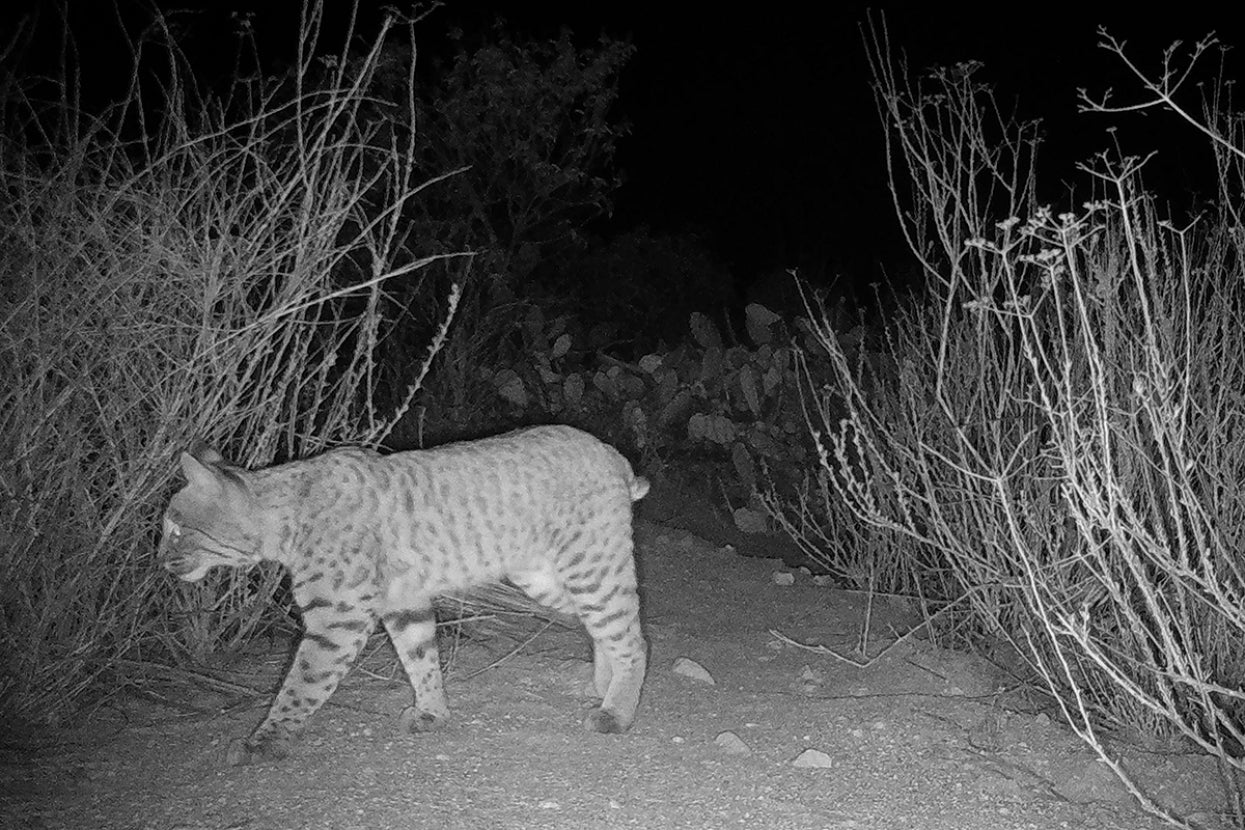
Technology-based monitoring helps with coexistence work at the Biodiversity Reserve.
Technology-based monitoring helps with coexistence work, too. Through custom software created by the Alliance’s Tech Lab, multiple teams across Conservation Science, Wildlife Care, and Security are alerted when there’s wildlife activity on the live cameras. This technology even detects which species has been spotted. This information helps support coexistence between the wildlife at the Safari Park and in surrounding native habitats.
Plight of the Spadefoot
Jeff Lemm is the Natural Lands Program’s resident herpetologist. He’s been conducting surveys of reptiles and amphibians in the field for over 25 years, providing incredible data to the team. In 2026, a milestone moment happened during a routine survey: a two-striped garter snake was spotted for the first time in a quarter of a century.
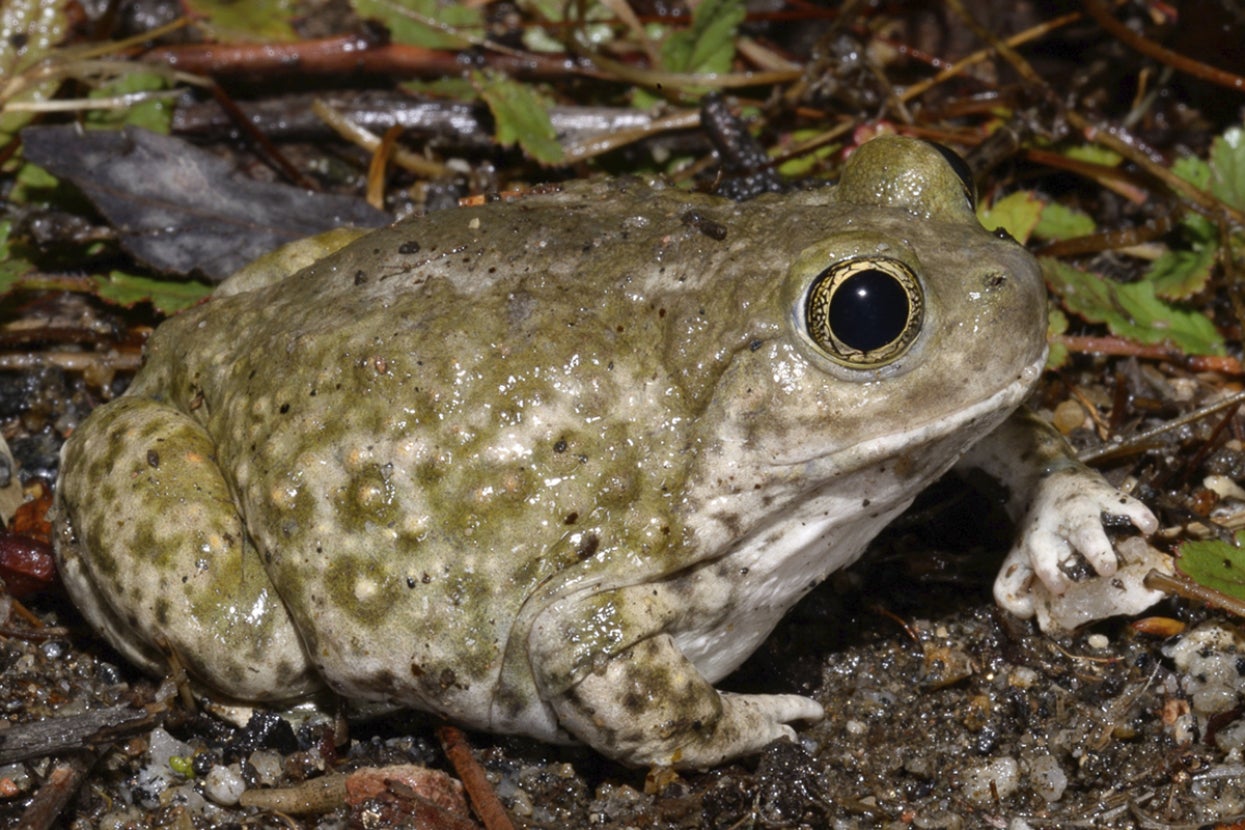
Western spadefoots only emerge during winter rains to mate and lay eggs.
Another one of his observations turned into action and created new resources for a “strange little amphibian.” Western spadefoots, which are more closely related to frogs than toads, spend most of their lives underground. They only emerge during winter rains to mate and lay eggs. Their life cycle is dependent on vernal pools, which are shallow ponds fed by seasonal rains. However, most naturally occurring vernal pools throughout San Diego have been lost due to drought, unsustainable development, and increases in agricultural practices.
At the Safari Park, Jeff noticed that spadefoots were still reproducing in temporary water sources. Rather than in vernal pools, they were in mud puddles formed on dirt service roads. Of course, these “pools” weren’t ideal spots for young tadpoles. So Jeff collaborated with the teams at the Safari Park to repair the service roads and direct water to newly created low spots on the side of the roads and out of harm’s way. Now deemed as “spadefoot conservation ponds,” they’ve been a huge success for spadefoots in the area. Additionally, they established a new resource for other native wildlife and made the service road better. A win-win!
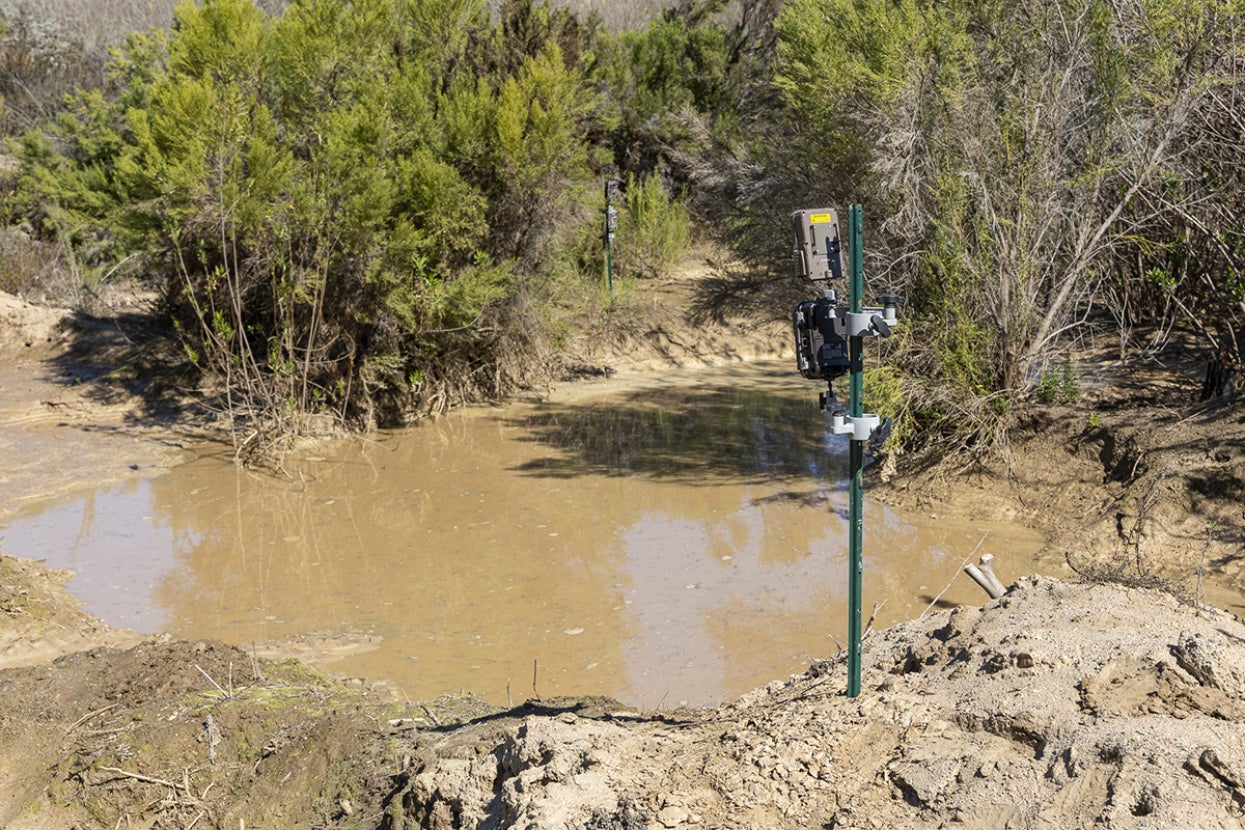
Jeff collaborated across the Alliance to create spadefoot conservation ponds, supporting both spadefoots and local wildlife.
Team Plant
With over 300 plants, there are three main types of vegetation surveys that are conducted in the Biodiversity Reserve. The first is annual long-term surveys, which look at changes in vegetation throughout the year, often in response to highly variable rainfall. Five-year landscape level surveys are the second type. These initially began as a way to establish a baseline for invasive species. They also tell us how landscapes change over time after larger disturbances such as wildfires. The last of the three surveys conducted are drone surveys. Through LiDAR, thermal and multispectral imaging, crucial data is collected and then supplemented with information from on-the-ground surveys.
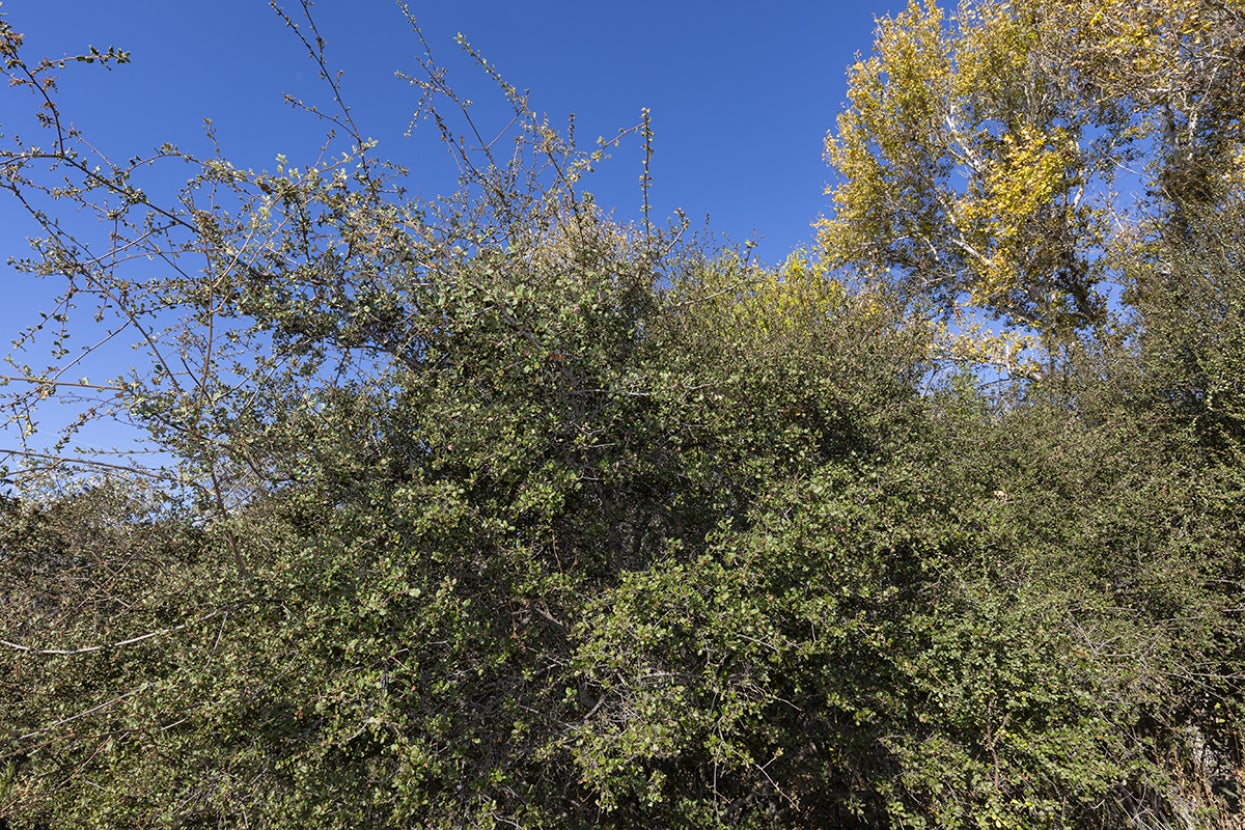
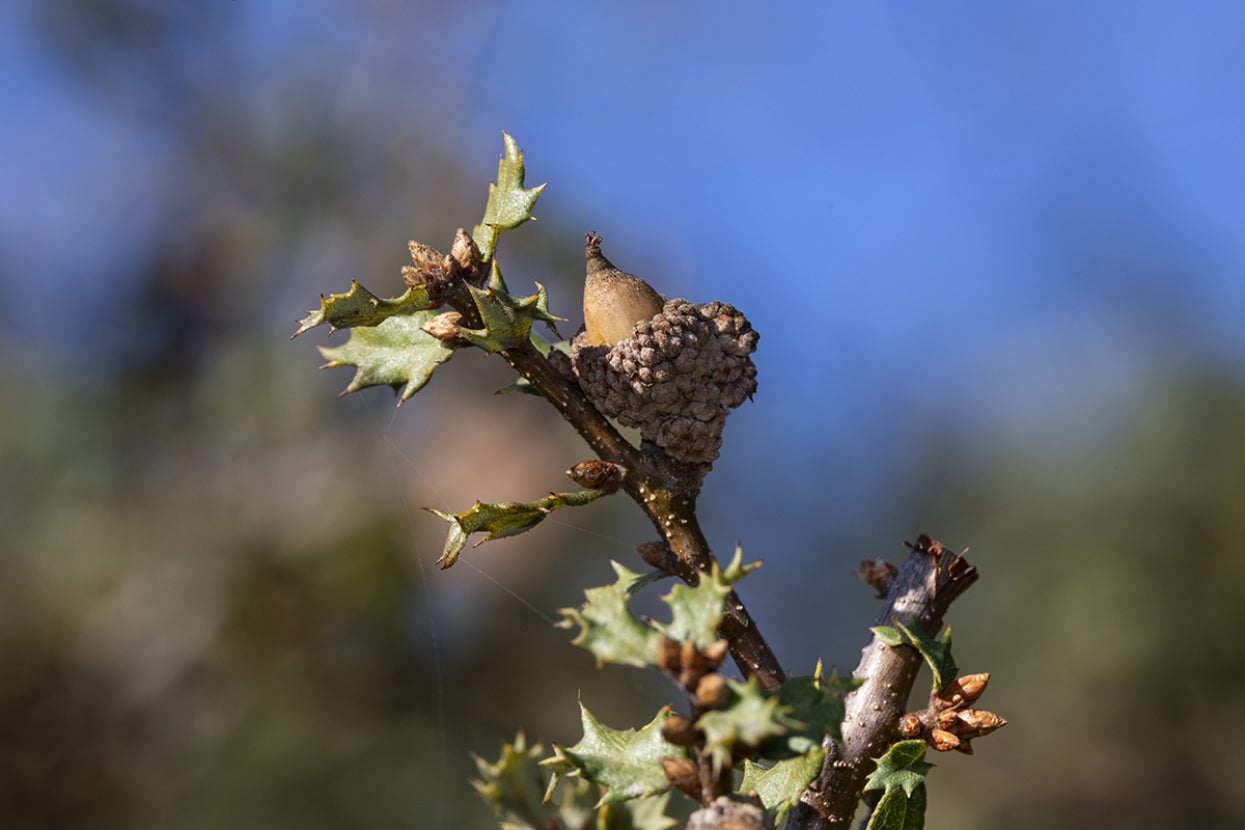
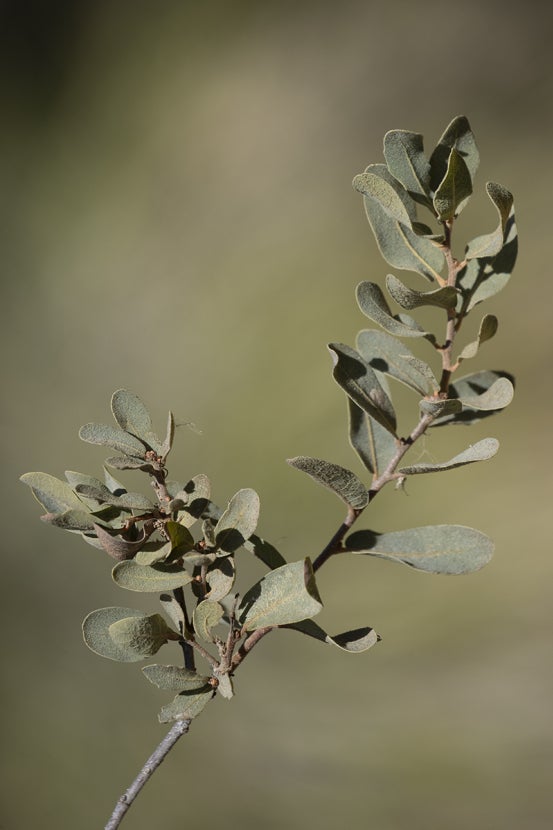
San Diego County is home to a variety of oak species, including the Nuttall's scrub oak (left two photos) and the Englemann oak (right).
Each method is individually important, and there’s been an unexpected benefit beyond simply surveying plant life. Everyone who comes to help from volunteers to students and even Alliance team members participate in experiential learning about this local ecosystem.
Madison Wilson, research coordinator on the Natural Lands team, encourages this aspect. She shares, “We invite anyone who is able to come and help, regardless of knowledge or experience. Everyone leaves knowing how to identify important native plants and how to perform our methods. Plus, they share the story of their local conservation experience with other team members and guests!”
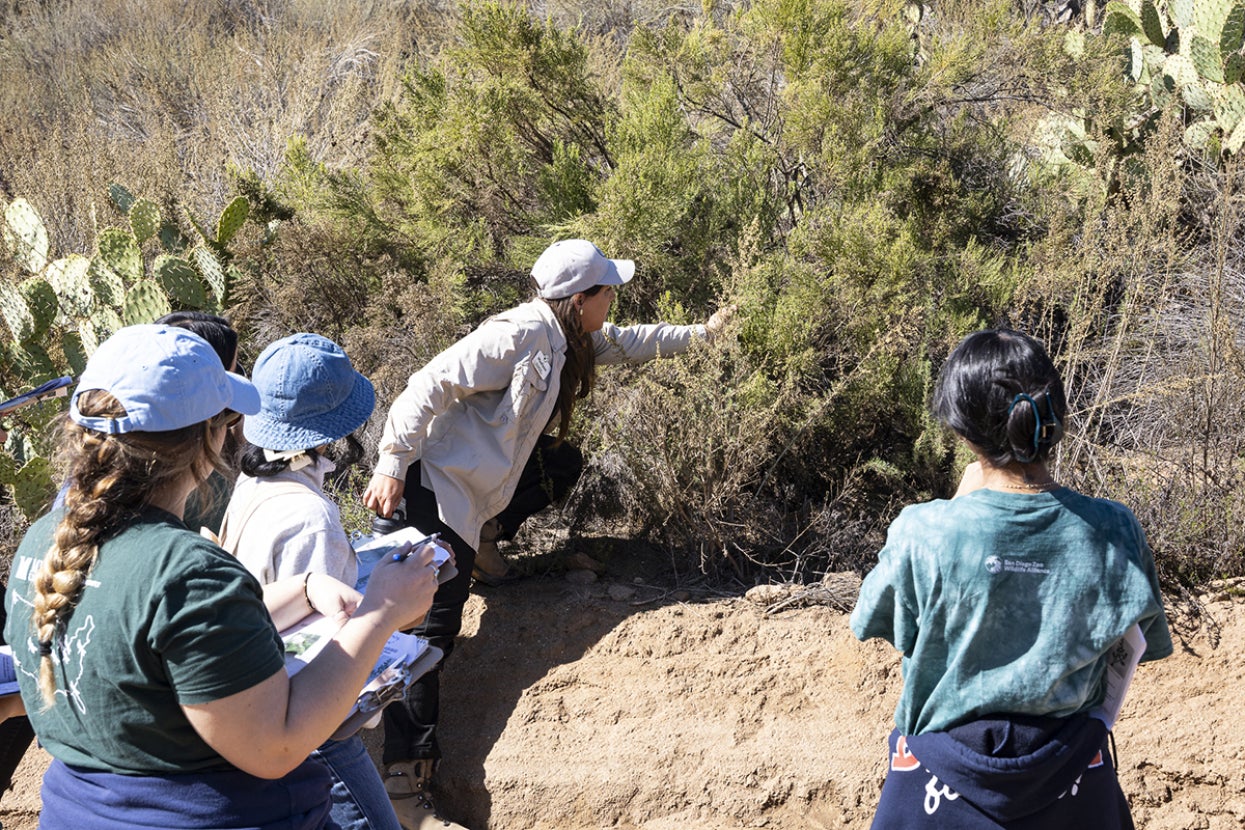
Madison Wilson shares her in-depth local plant knowledge with Advanced Inquiry Program master's degree candidates.
In the Living Classroom
One of the ways local naturalists have been able to participate in more informal surveys has been through community-based efforts called bioblitzes at both the Biodiversity Reserve and Samataguma Ranch. The goal of these is to document as much biodiversity as possible within a given space and time. After gathering this extremely useful data, participants upload it to a community science platform like iNaturalist.
Separately from bioblitzes, a group of volunteers has worked with our team for years. They hone their plant ID skills and help remove invasive species. The Biodiversity Reserve also acts as a living classroom for young people and lifelong learners alike. The Natural Lands Program engages with Advanced Inquiry Program master’s degree candidates, the Alliance’s Conservation Science summer fellows, the San Pasqual Band of Mission Indians’ Environmental Department youth group, and high school students that are part of the Alliance’s Native Biodiversity Corps.
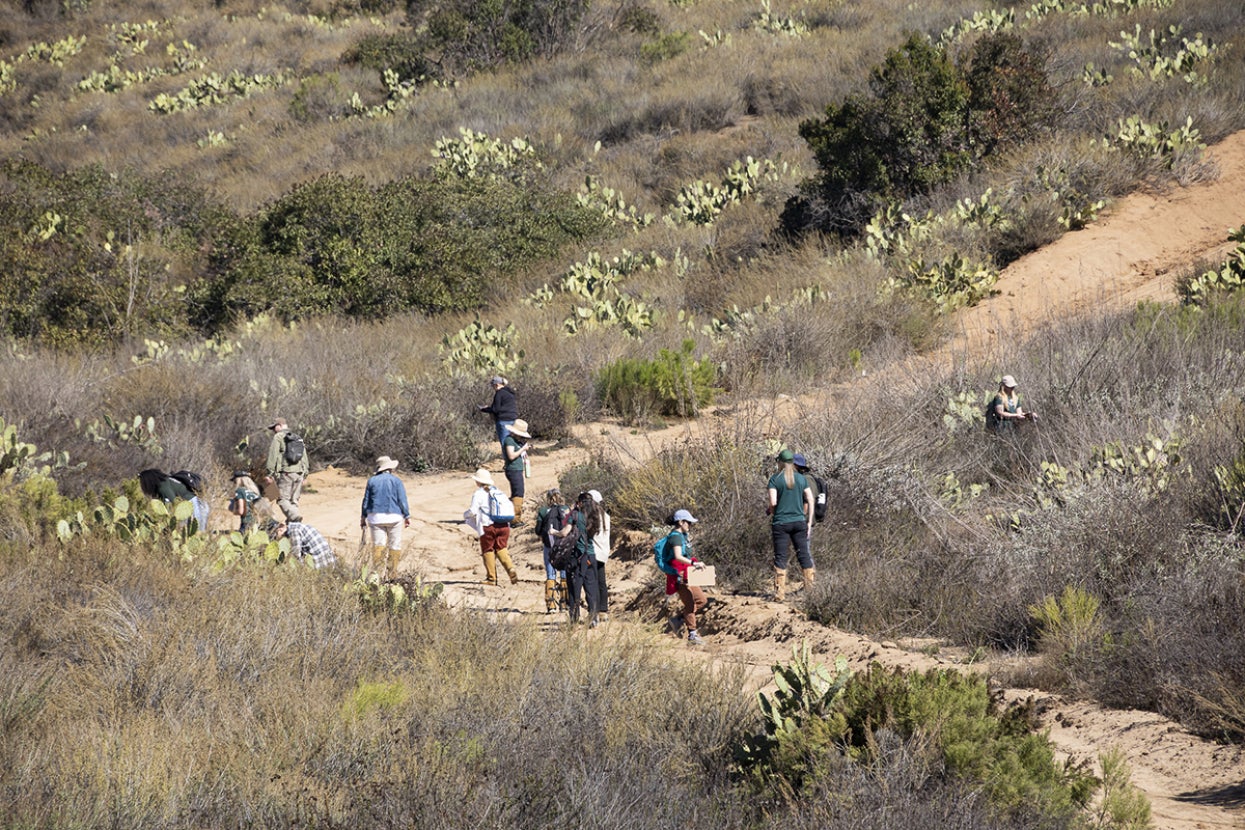
The Biodiversity Reserve also acts as a living classroom for young people and lifelong learners alike.
Harvesting the Fruits
Wildlife, people, and the landscapes we all share are inherently interconnected. To the Natural Lands team, this means continuing to welcome those who have lived in the San Pasqual Valley for thousands of years to celebrate and honor their traditions. Since 2018, we’ve joined members of the Kumeyaay Nation for a seasonal cactus fruit gathering. It’s an open invitation to local Indigenous peoples to honor their homeland and sustainably harvest from the cactus patches that their ancestors tended.
Some attendees gather fruit for their communities or themselves, others come to sing to the San Pasqual Valley, and many join the gathering simply to be together on the land. Our community partners for these gatherings are the San Pasqual Band of Mission Indians, the Pala Band of Mission Indians, the Southern Indian Health Council, in addition to the many other bands and tribes that call Southern California home.
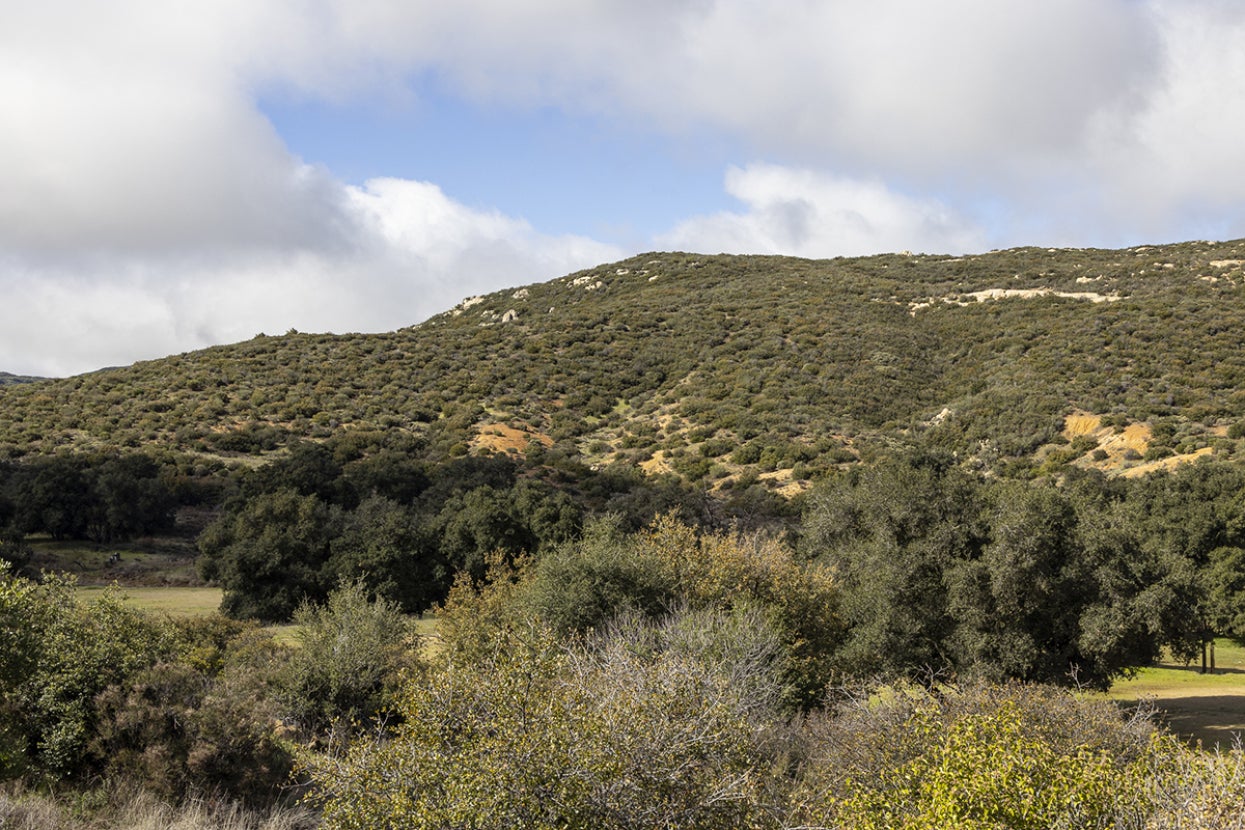
The Natural Lands Program also monitors Samataguma Ranch Reserve's rolling expanses of chaparral and oak groves.
Samataguma Ranch Reserve
Samataguma Ranch Reserve is mostly chaparral habitat, diverging from the Biodiversity Reserve’s coastal sage scrub habitat. Wilson describes the difference lies within a simple test, saying, “It’s often said that you can walk through coastal sage scrub but not chaparral.”
At the Ranch, we mostly monitor the area through surveys and trail cameras. In the meadows and oak groves within its 700-acres, both narrow leaf and woollypod milkweeds grow, making it ideal for native butterfly species. One of the focal species is the Hermes copper butterfly, which is endemic to the region. The Natural Lands team planted over 150 of its host plant, spiny redberry Rhamnus crocea and they hope to eventually create a headstarting program for this butterfly at the Ranch.
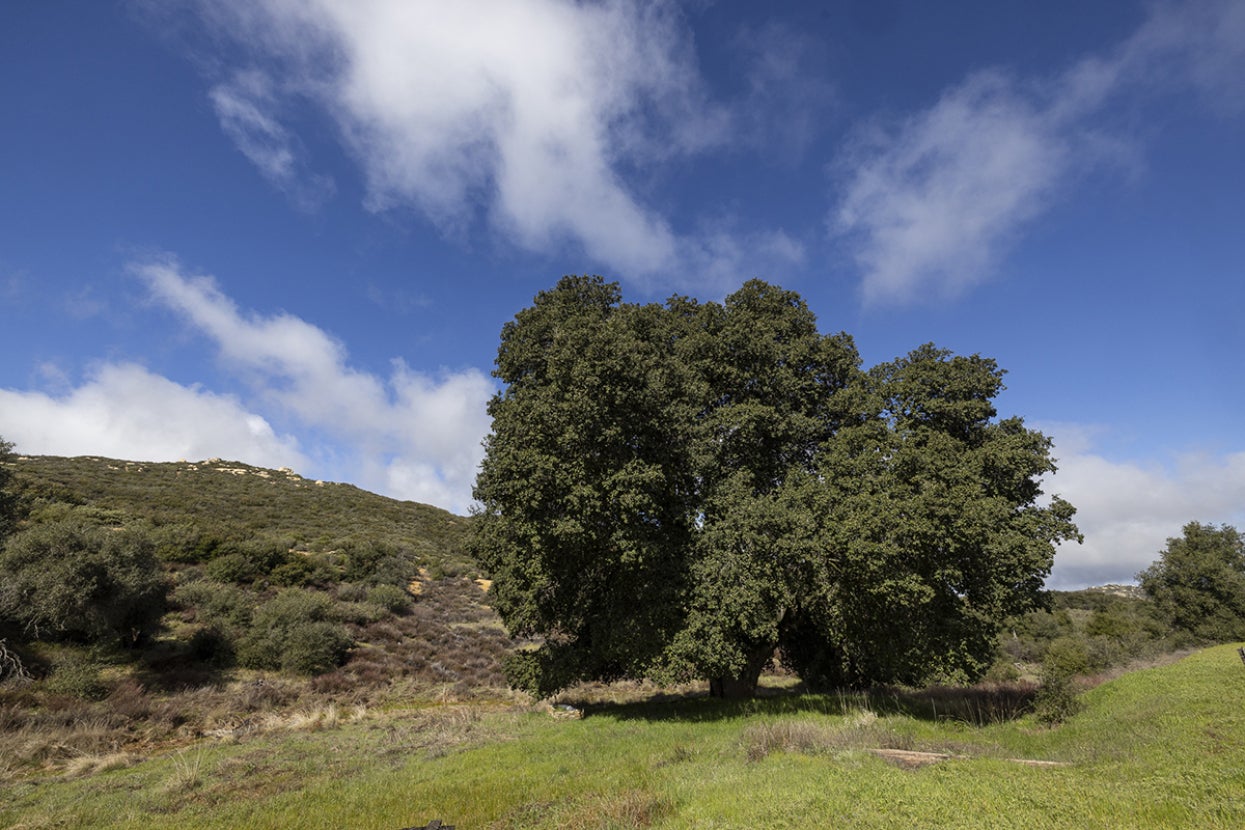
Both the Biodiversity Reserve and Samataguma Ranch (above) are designated as protected spaces by California's 30x30 initiative.
Both the Biodiversity Reserve and Samataguma Ranch Reserve were designated by 30x30 California as protected spaces. This is a state- and community-driven initiative with the goal of protecting 30 percent of California’s lands and coastal waters by 2030.
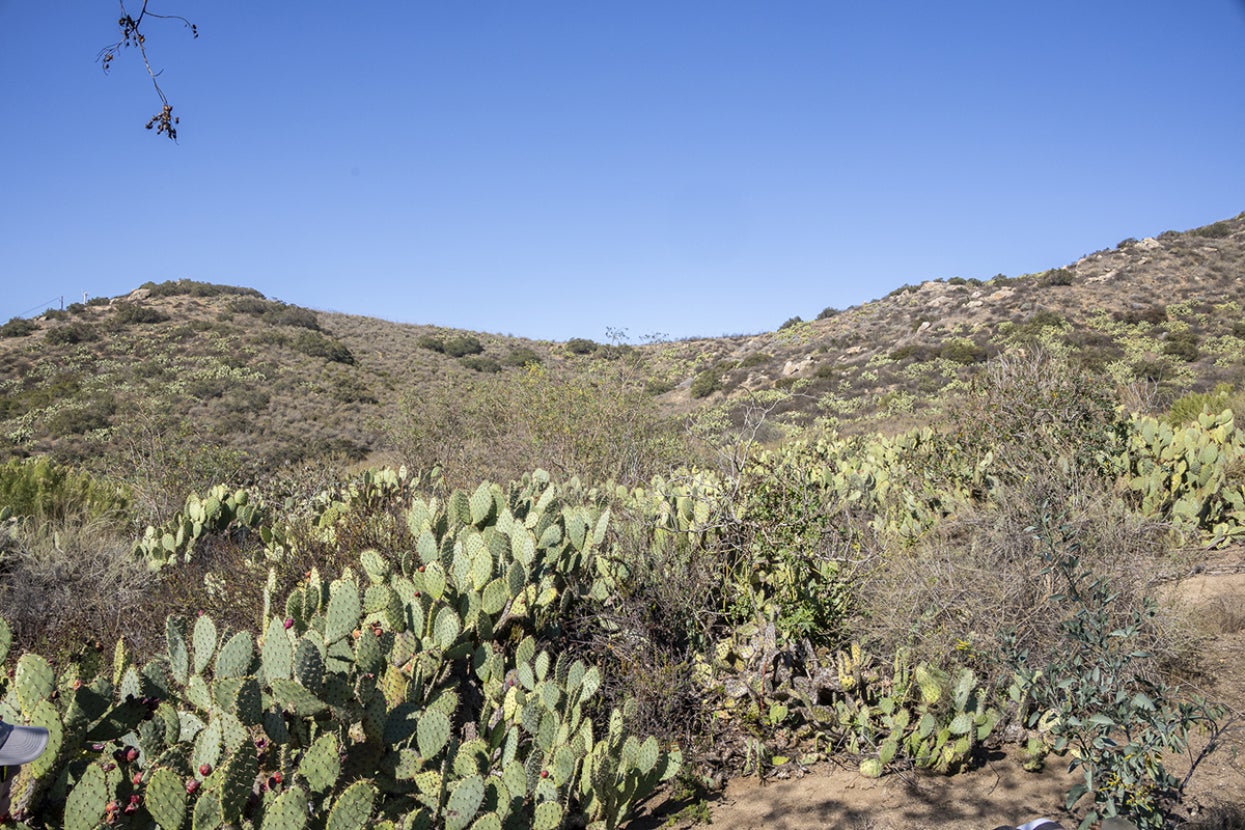
The Biodiversity Reserve's rolling hills extend for about 1,000 acres.
For Today, For Tomorrow
We’ve only scratched the surface of everything the Natural Lands Program does at the Biodiversity Reserve and Samataguma Ranch. This team of conservationists understands that people are at the heart of conservation, and they tap into that knowledge to collaborate with conservation partners, community members, and volunteers to support the Biodiversity Reserve and its wildlife through our Southwest Conservation Hub.
Next time you’re at the Safari Park, look out over the rolling hills and take in the native landscape. It’s being cared for in a way you might never have imagined before—and this care is crucial to the overall health of wildlife, people, and the region itself. These spaces are not just ours, and the Natural Lands team puts that thought into action every day.
Your support is making a difference right here in our backyard through our Southwest Conservation Hub.