




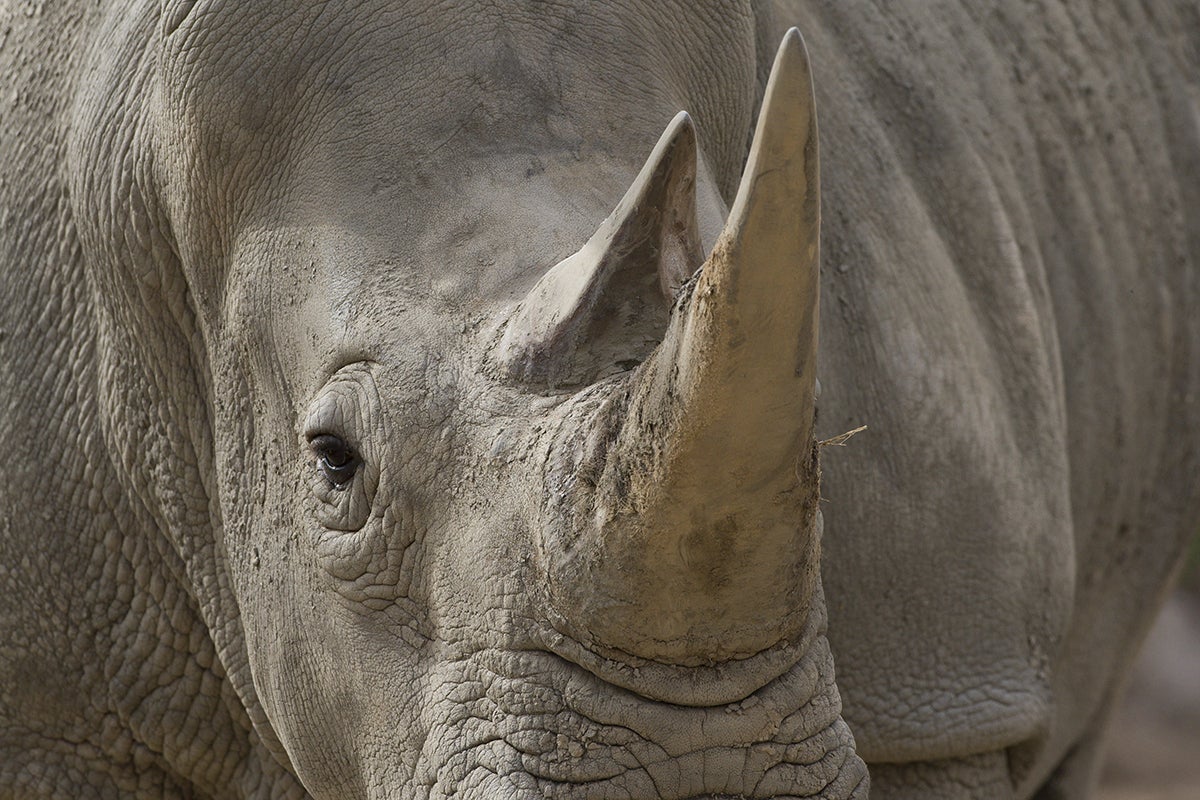

For a southern white rhino, every adaptation matters. Compact legs support thousands of pounds in weight while also empowering the rhino to quickly charge when feeling threatened. To make up for poor eyesight, super hearing and smelling senses help it move through and experience its dynamic habitat. A wide, flat mouth ensures it can graze on short grasses efficiently.
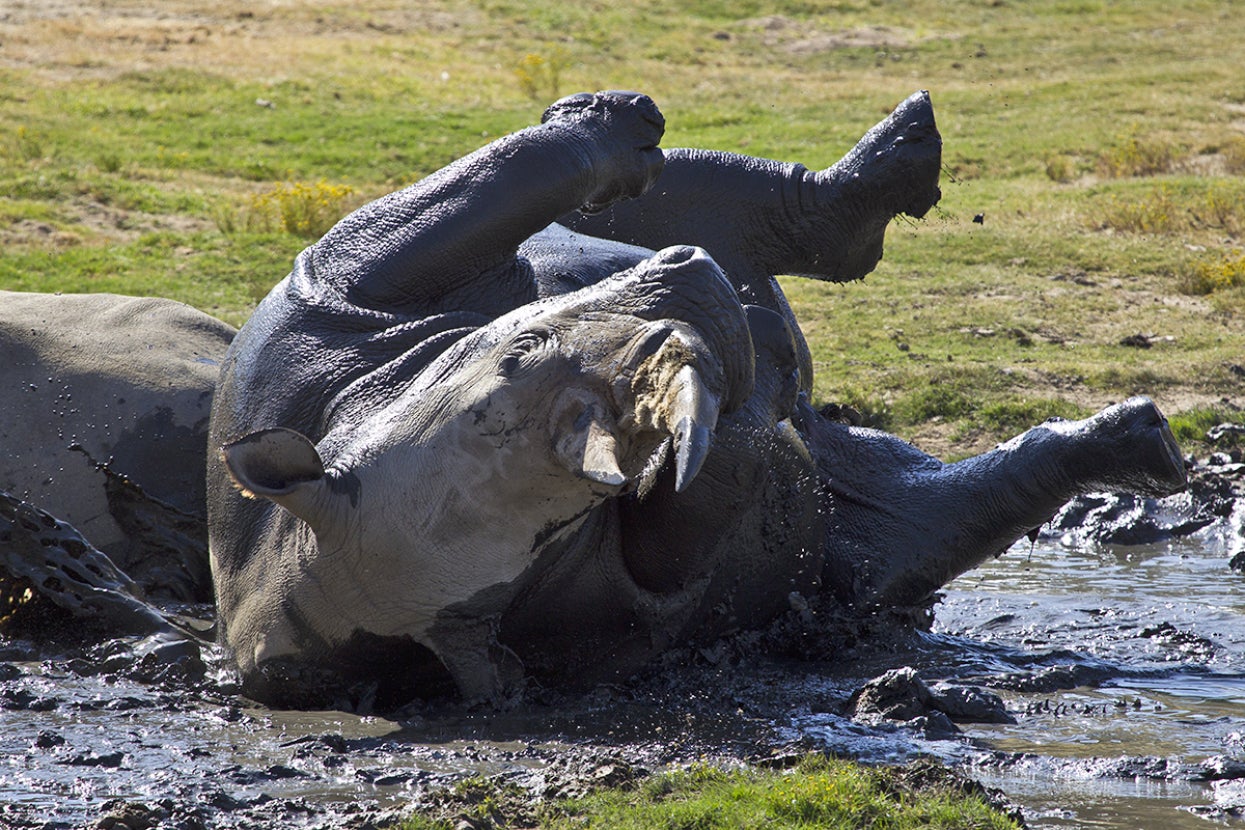
Rhinos can protect their sensitive skin by covering themselves in mud.
A Critical Component
Another essential adaptation is the skin. Inches thick, it acts as natural armor that protects the individual from the elements in its surroundings. And though it seems rather impenetrable, the skin can actually be quite sensitive due to blood vessels that sit close to the surface. In fact, rhinos will wallow in mud to protect against potential impacts, including sunburn and insect bites.
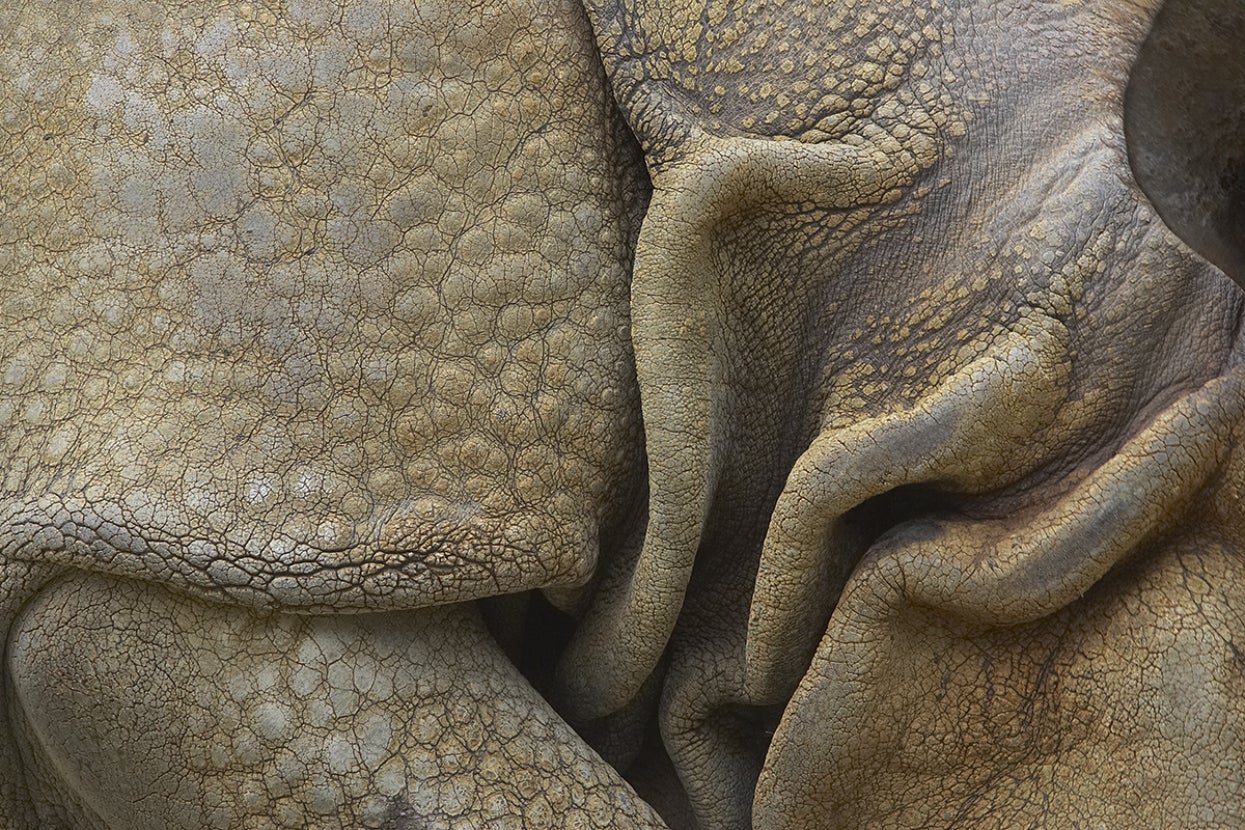
Healthy skin (pictured) is essential to an individual's overall wellness.
Collaborating for the Future
Like many species, health challenges and even disease can also cause a rhino’s skin to become irritated. After some of the rhinos we care for experienced similar symptoms a few years ago, our experts were inspired to learn more about how to treat such conditions topically.
These wildlife are a part of the global population for southern white rhinos, so advancing veterinary practices here in San Diego is essential to the conservation of their entire species—a species already threatened by poaching, habitat loss, climate instability, and other risks.
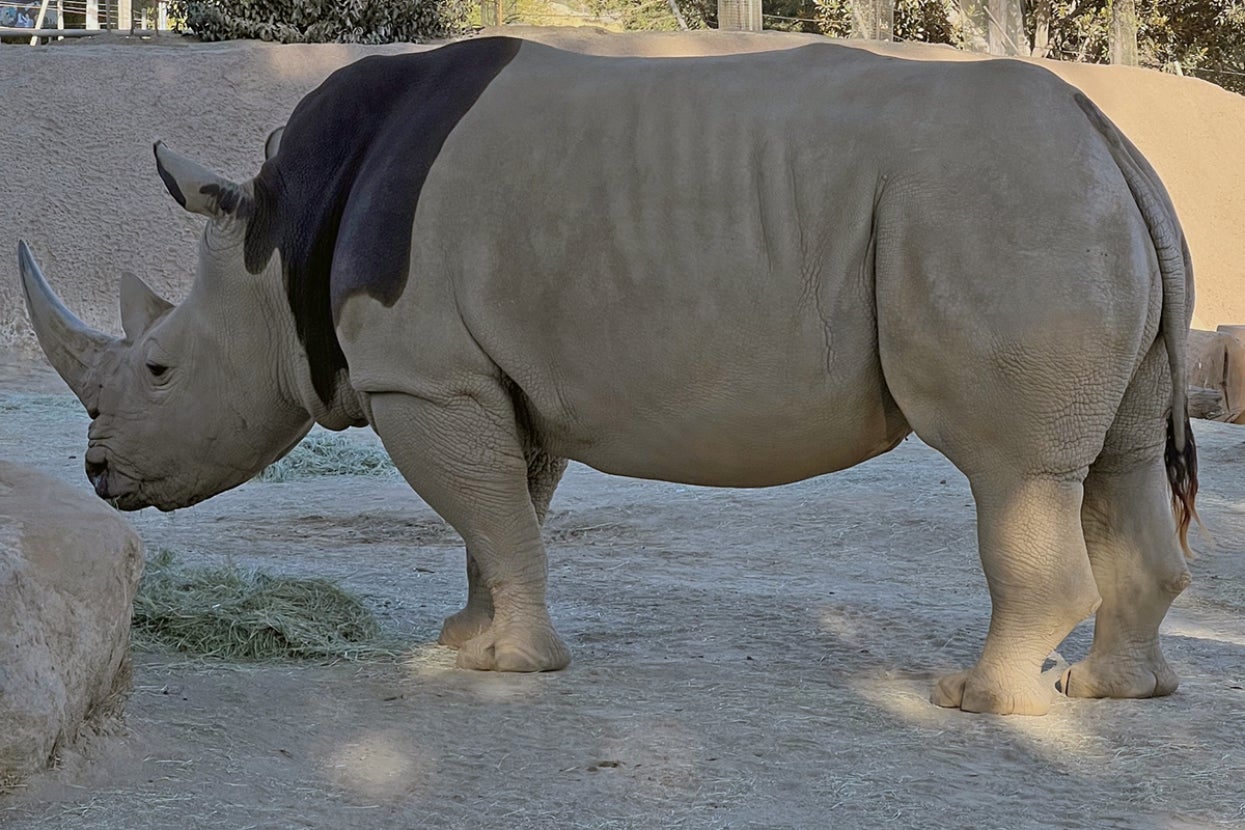
We found that applying a topical NSAID can be an effective option for treating rhinos.
What a Relief
With partners, we recently published a study in the American Journal of Veterinary Research that examined whether a rhino’s thick skin could absorb medication. Utilizing a topical non-steroidal anti-inflammatory drug (NSAID) originally manufactured for cattle, we found the painkiller helped give relief to rhinos despite their exterior. These findings are critical because it shows topical solutions can be an effective treatment, especially when an ailment may cause oral medication to be challenging.
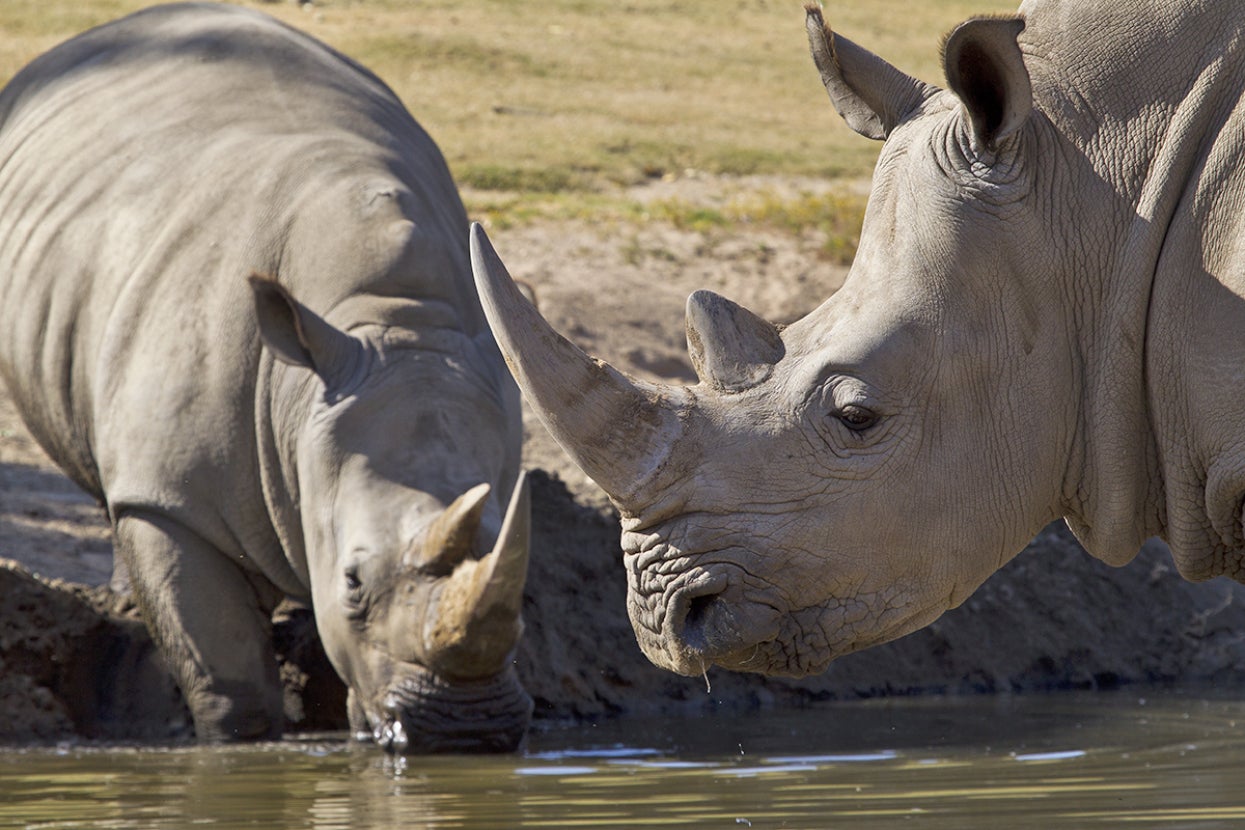
Advancing veterinary practices here in San Diego is vital to rhino conservation around the world.
To the Rescue
This publication is another great example of ingenuity in our team. Because of our expertise, we can continue protecting the future of southern white rhinos by adding this latest resource to our healthcare toolkit—ensuring the species’ thick skin isn’t a barrier to receiving it.
You’ll spot even more amazing adaptations when you connect with rhinos at the San Diego Zoo and San Diego Zoo Safari Park. Each visit supports exceptional veterinary medicine, creating a world where all life thrives.