




Southern California has a little bit of everything. In just a few hours, you can make your way from sandy beaches to snowy mountains, with countless forests, scrublands, and waterways in between. As disparate as these habitats may seem, they’re all interconnected and vital to the larger ecosystem that makes up the Southwest.
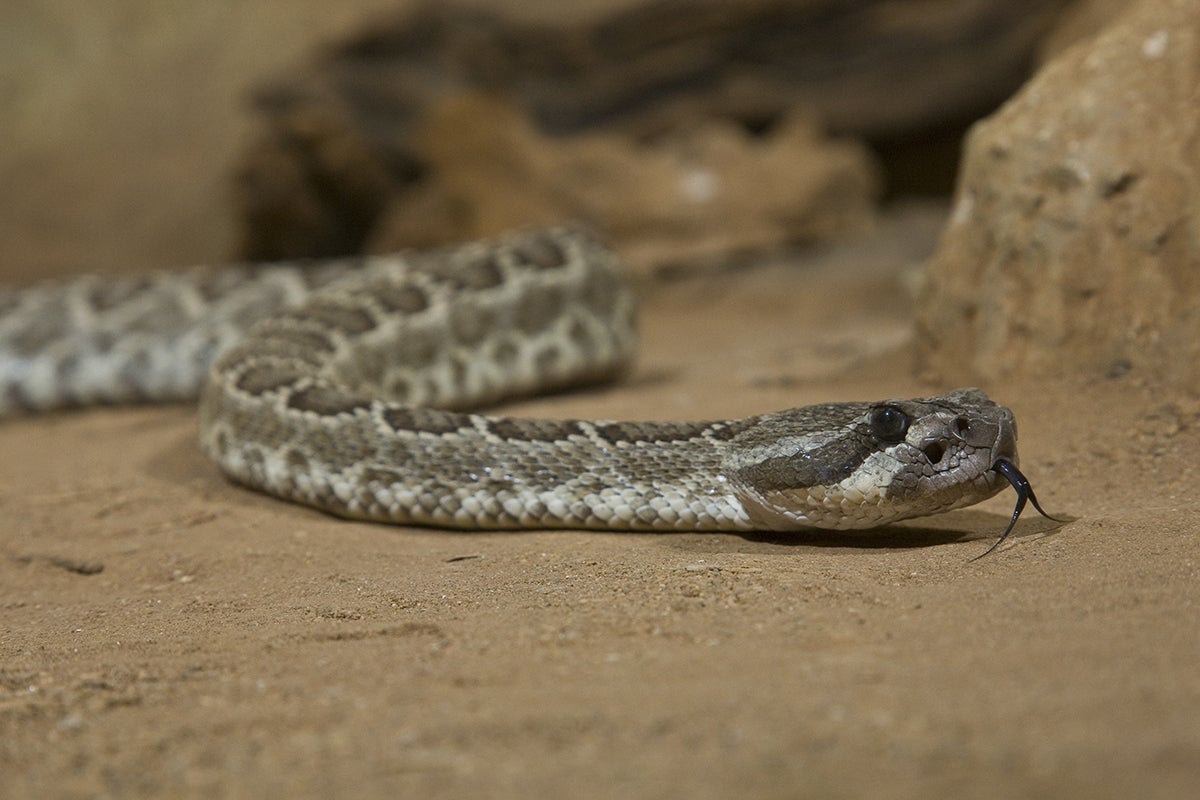
The same connectivity goes for the wildlife living there. Snakes and mice are known for their predator-prey relationship, which helps balance their native ranges. It’s this balance that requires us to care for each simultaneously, a mission we strengthened in a novel way earlier this year.
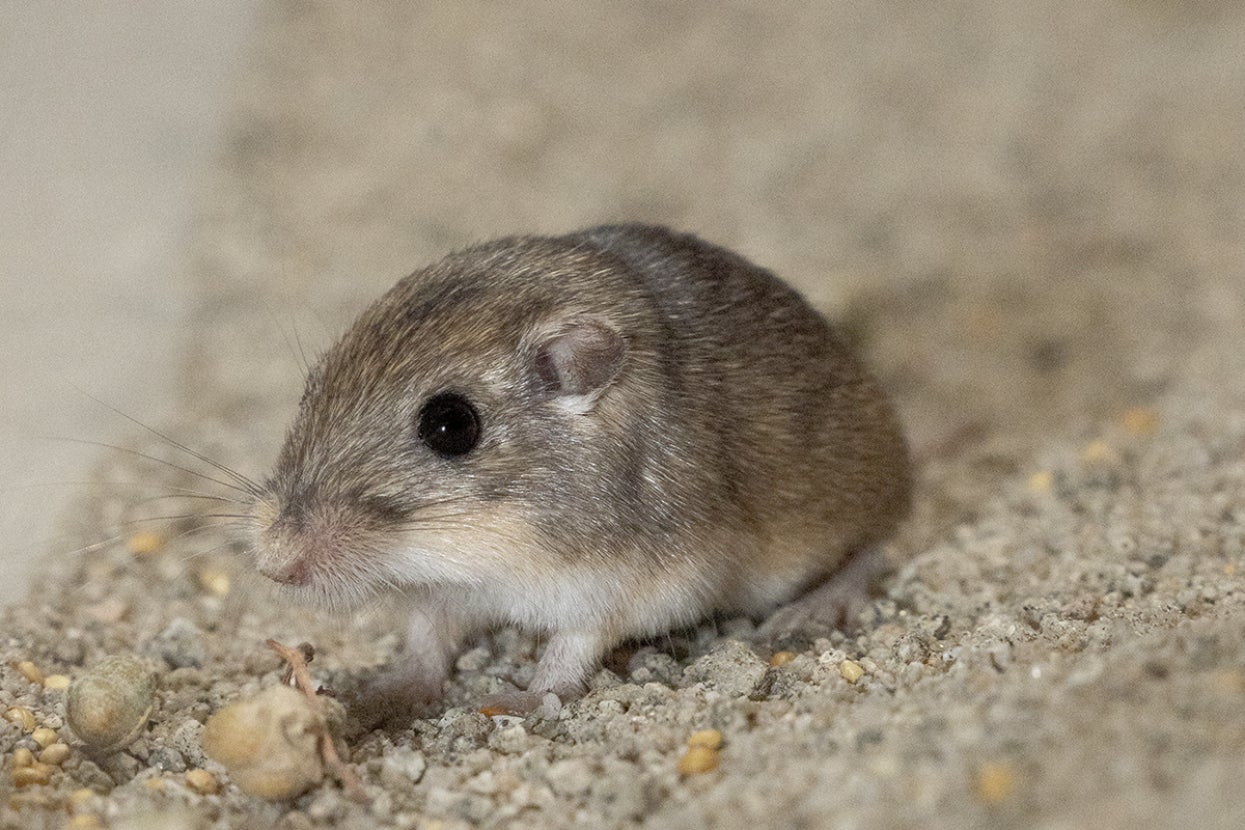
Pacific pocket mice were once thought to be extinct, but we’ve helped increase populations across Southern California.
Small Mice, Big Milestone
In 2026 we celebrated 20 years of our program to protect the Pacific pocket mouse. These tiny rodents, only the size of a human thumb, make a big impact, acting as seed dispersers essential to the health of coastal sage scrub. Once endemic to Southern California and parts of Mexico, this endangered species has unfortunately been reduced to a few small areas of the region due to urban development, wildfires, and more.
As part of this local sagebrush ecosystem, they share their landscapes with other species, including snakes. The reptiles play their own important role, and as many of them are endangered too, they need the same kind of care and protection we provide Pacific pocket mice.
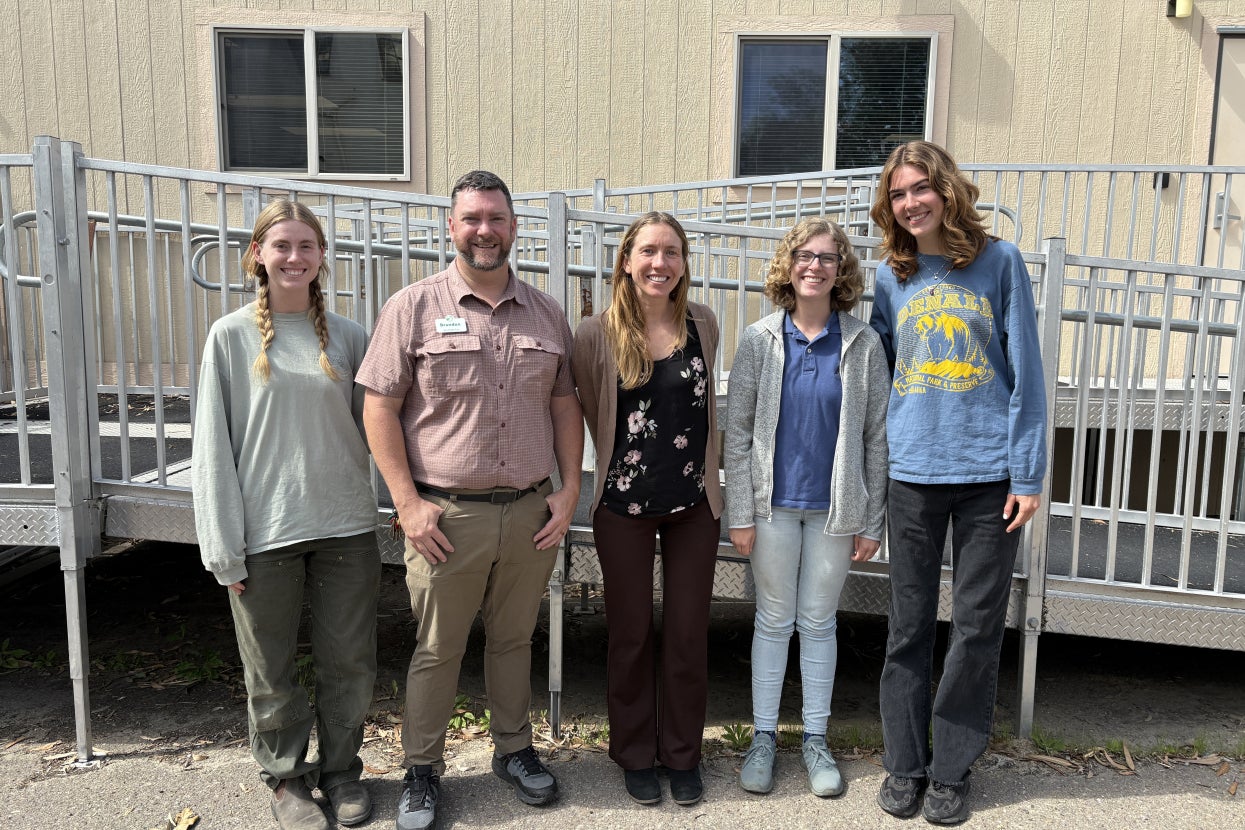
Sharing knowledge and expertise, like between our herpetology and Pacific pocket mouse conservation teams, can elevate our work in profound ways.
An Unlikely Collaboration
With this symbiosis in mind, several members of San Diego Zoo Wildlife Alliance’s Pacific pocket mouse conservation team visited the Jennings Center for Zoological Medicine at the San Diego Zoo. There they met with Brandon Scott, wildlife care manager of the Zoo’s herpetology team, for a specialized training on snakes native to the areas where we work with the mice.
While we have several structures and protocols to protect the mice in the field, nearby snakes can pose a threat if they get too close, and need to be moved to a safer location. Thoughtful education and collaboration can help keep everyone safe during this process.
Most of the team had never encountered a snake in the field before, and though there was some trepidation, it would be a worthwhile exercise. As team member Brielle said, “Snakes are living beings that deserve respect and care just the same as any other.”
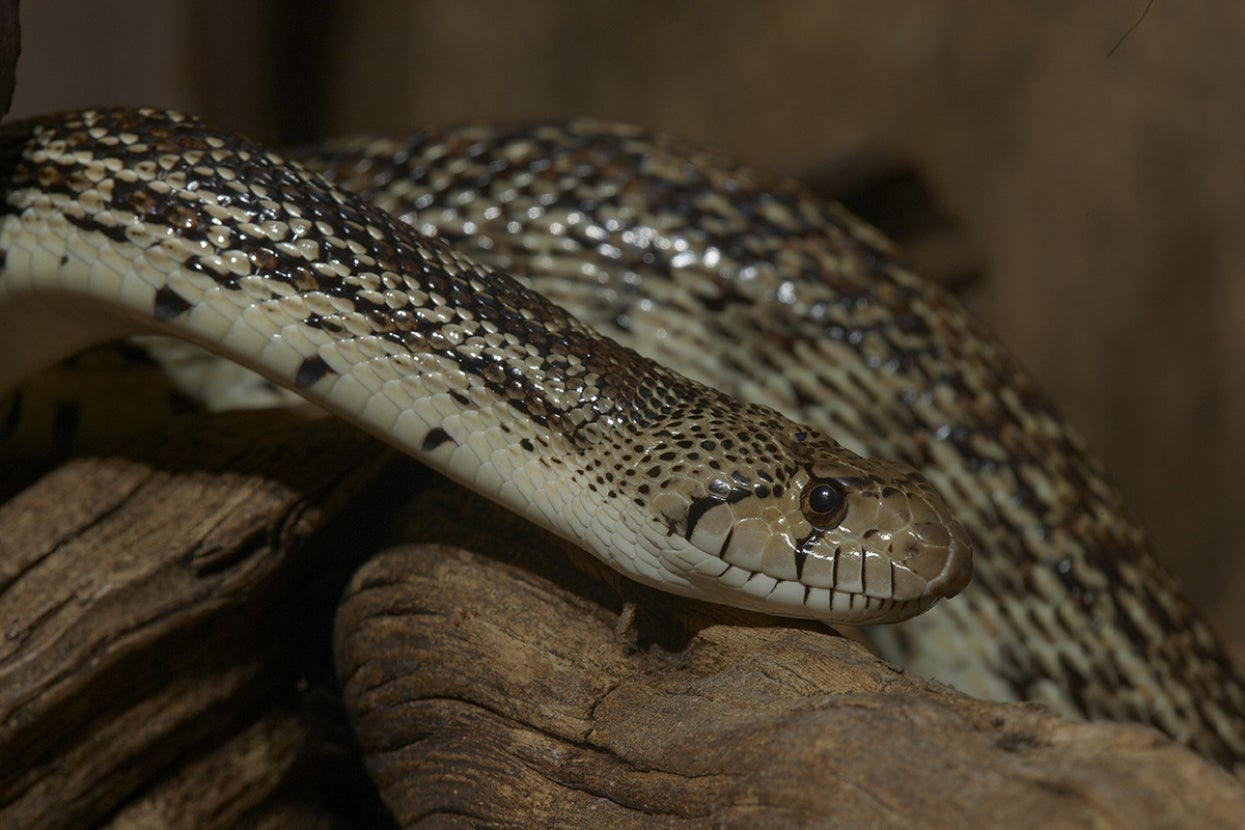
Though gopher snakes aren’t venomous, they can still be harmful to the Pacific pocket mice we care for in the field.
A Wealth of Knowledge
Before the team could learn how to engage with a snake, however, it was important to understand more about them. Brandon began by identifying different snake species in the area and explaining more about their physiology and behavior. This included which snakes are venomous and which are not, and how to tell them apart. A nonvenomous gopher snake, for example, can easily be mistaken for a rattlesnake, and recognizing them can guide the team’s response in the field.
Brandon also shared ways the team can keep themselves safe while working in scrublands. This is especially important because snakes, with their spotted scales and earthy coloring, blend in with their local habitat, and rattlesnakes don’t always rattle when a person is near them.
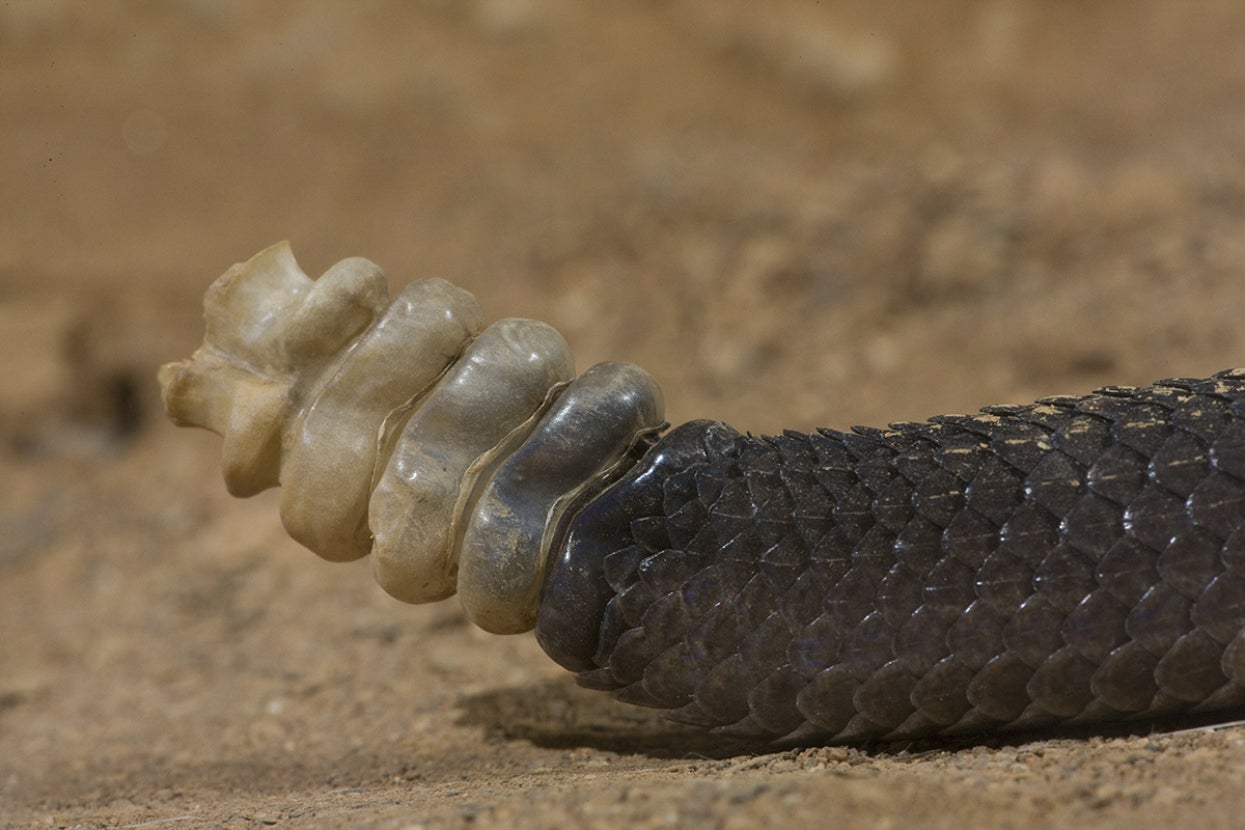
Rattlesnakes don’t always rattle when people are near, as they may be quietly camouflaging as a defense or conserving energy for their next food hunt.
Taking heavy steps while walking can alert nearby snakes that someone is coming so they can slither a safe distance away. Working in pairs can also keep people protected, and if someone is working solo in the field, they follow increased communication protocols so their safety is accounted for.
It’s very rare that anyone is bitten, but in case it happens, our teams have disinfectant on-hand, and our facilities also keep antivenom available. In fact, we have a close relationship with local hospitals, which can facilitate sharing of antivenom if either we or they need it.
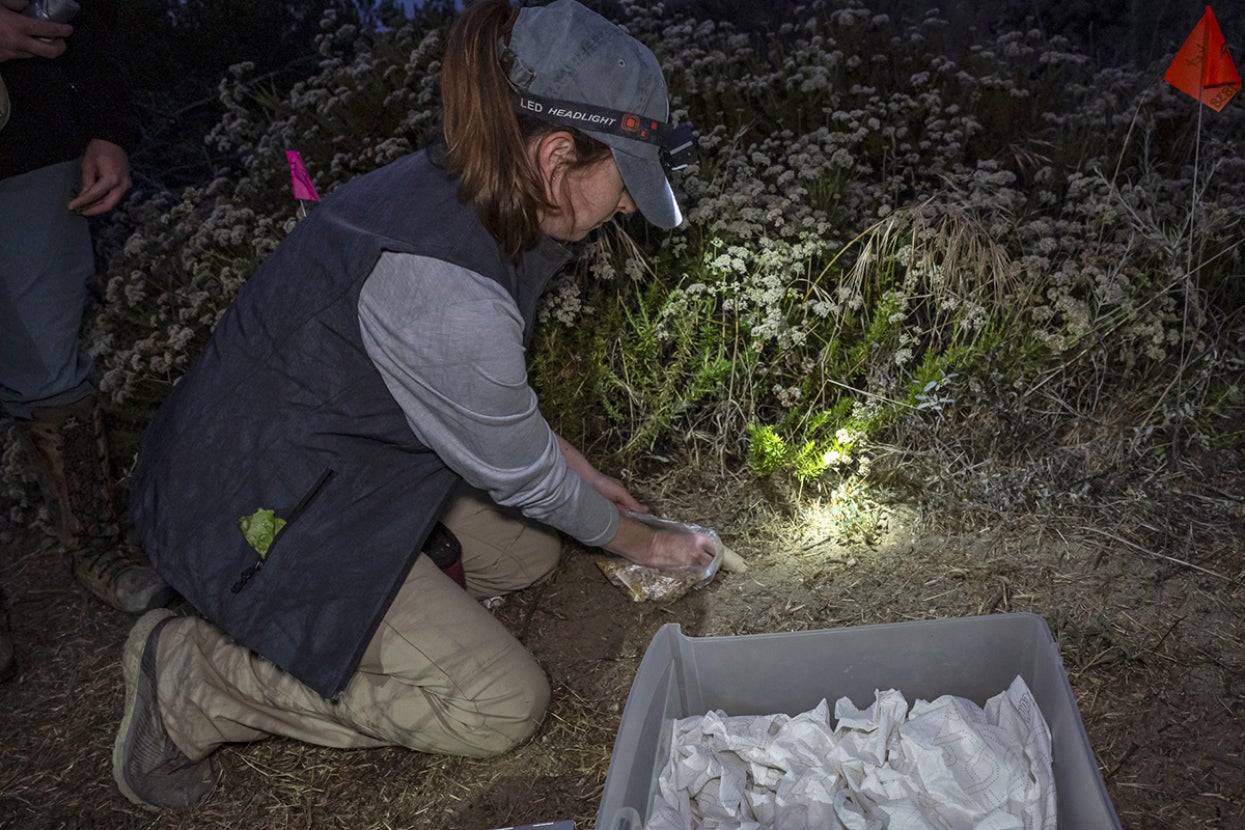
Our teams manage multiple reintroduced Pacific pocket mice populations, which includes ensuring they can thrive safely among other native species.
Setting the Record Straight
Brandon also took the opportunity to debunk some snake myths. Tourniquets are often not useful following a bite; they can actually keep toxins in a person’s limb and cause more damage. It’s also untrue that baby snakes are more venomous than adults. Though they can’t control how much venom they deliver with a bite, they have less of it and it’s less potent.
Many people have a preconceived notion of snakes and inherently fear them. It’s this fear, however, that can lead to knee-jerk reactions during an encounter and cause harm for the reptile and human alike. With increased knowledge, our teams can be more comfortable while they work.
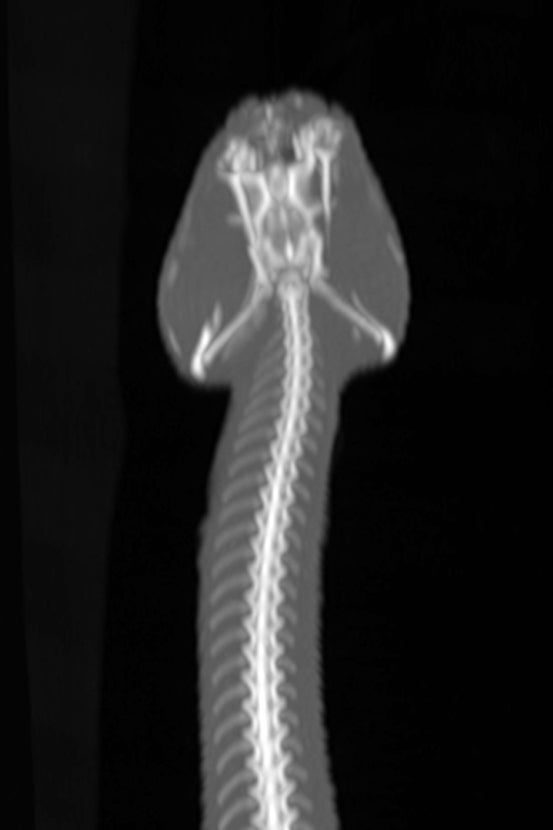
A snake’s bones are thin and lightweight relative to its length and can be easily damaged with the wrong tools.
Practice Makes Perfect
The knowledge Brandon shared also illuminated why so much care is required when moving snakes. Their bones are actually very delicate, especially in their heads, so it should be done with patience and intention.
Our teams use a tong-and-hook combination to gently remove snakes when they get too near the Pacific pocket mice. The tongs are delicate enough to hold onto the snake safely, and the hook can support the snake’s body so it doesn’t feel strain. These tools are also four feet long, which keeps the operator safe. The snake can then be placed in an approved carrier and be relocated an appropriate distance away in their habitat.
Finally, with the help of a rubber snake, each member of the Pacific pocket mouse team got to practice these protocols with the same tools they’d use in the field. Many team members were surprised how heavy a snake can be, showing why this hands-on practice mattered in preparing them for the field.
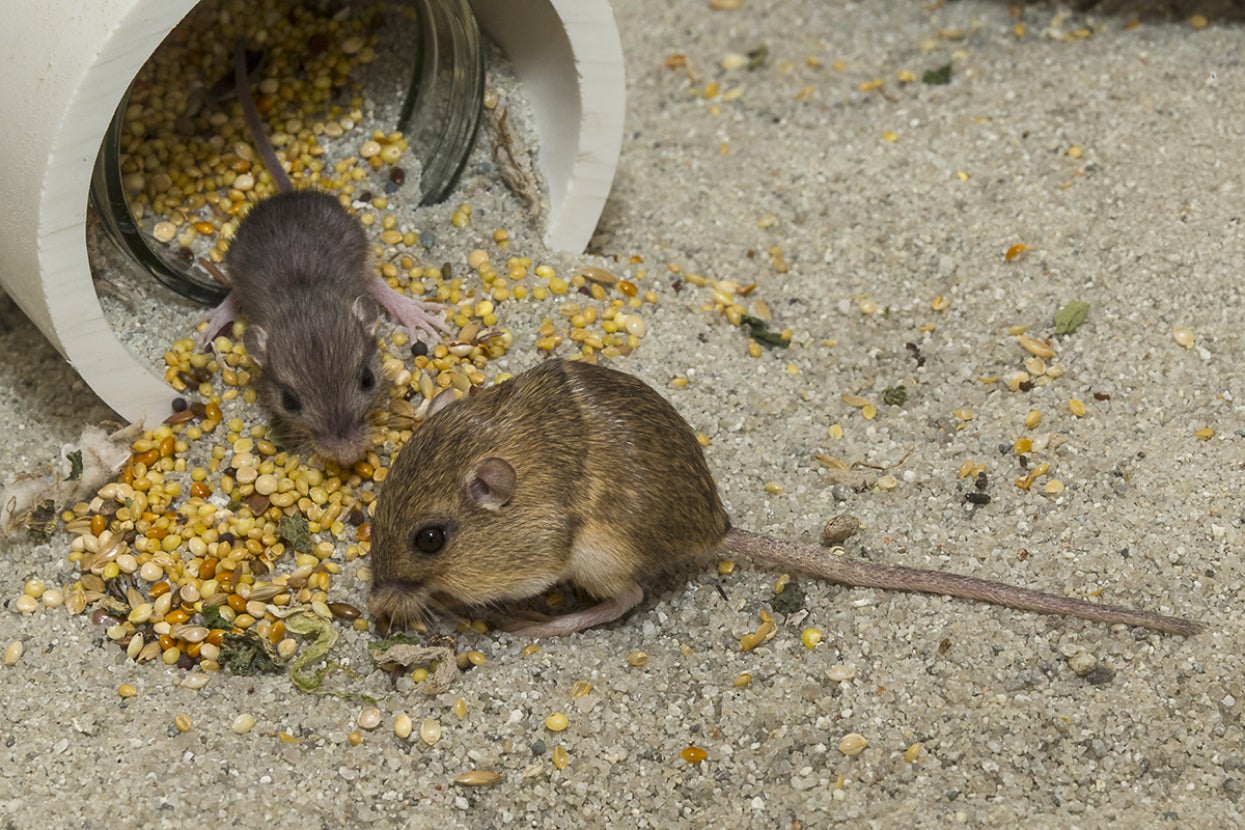
With the help of thoughtful partners, we can safeguard the next generation of Pacific pocket mice and many more to come.
Maintaining the Delicate Balance
Regardless of how much previous snake training they had, each person walked away from Brandon’s presentation feeling more prepared. Team member Sadie said, “The training helped me feel more confident in handling the snakes in a way that is safe for them.”
This sentiment carried them into the summer season, where several members of the Pacific pocket mouse team did indeed need to move a snake. Team member Finn remarked, “I have removed one gopher snake using what I learned in the training, and I felt confident throughout the process. Using a snake hook and grabber was something I hadn’t done before, but I have now been able to use the tools correctly in the field thanks to the training.”
Though it takes extra time and effort for this kind of inter-department collaboration, it’s well worth it when wildlife can be treated with safety and respect. As our Pacific pocket mouse conservation program continues into its third decade, we’ll also continue protecting their fellow species, ensuring they, and their dynamic ecosystems, stay in harmonious balance.
Mice, snakes, and all wildlife thrive thanks to allies like you. Find out more about how your support helps protect Pacific pocket mice, and connect with a myriad of snake species when you visit the San Diego Zoo and San Diego Zoo Safari Park.